

[For seniors] Fun brain training! Let’s get excited with the “Aru-Nashi” quiz

How about spending some fun time with an “Aru-Nashi” quiz? Many senior and welfare facilities run quiz-based recreation, right? The “Aru-Nashi” quiz we’re introducing this time can be enjoyed by small or larger groups alike! Using a whiteboard to present the questions makes it easy to go one by one, so it’s recommended.
With a whiteboard, you can also chat with others while tackling the quiz, which really livens things up.
Converting words into hiragana and imagining from the hiragana is said to boost creativity.
Try some brain training while having fun!
- [Brain Training] Lively Word Quiz for Seniors
- [For Seniors] Brain Training with a Whiteboard! Fill-in-the-Blank Exercises & Quizzes
- [For Seniors] Laugh-Out-Loud, Crowd-Pleasing! Fun Quiz
- [For Seniors] Fun Brain Training! A Collection of Tricky Quizzes You’ll Definitely Get Stumped By
- [For Seniors] Liven Things Up with Trick Riddles You Answer!
- [For Seniors] Lively two-choice trivia quiz. Handy to know and tidbits you'll want to share with others
- [For Seniors] Fun Brain Training! Lively Mind Exercises
- [For Seniors] Fun Brain Training! Lively Whiteboard Activities
- [For Seniors] Fun Riddles That Stimulate the Brain
- [For Seniors] Fun and Educational True-or-False Quiz
- [For Seniors] Nostalgic quizzes that bring back memories! Showa-era entertainment and sports questions
- [For Seniors] Lively Wordplay Game: Fun Recreation for Elderly Care
- [For Seniors] Challenging but Exciting! Kanji Quiz
For Seniors: Fun Brain Training! Liven Up with the 'Aru-Nashi' Quiz (1–10)
One person has “company president, Christmas, Miyagi Prefecture, Trump, refrigerator,” while the other has “senior managing director, New Year’s Eve, Iwate Prefecture, karuta, microwave.”
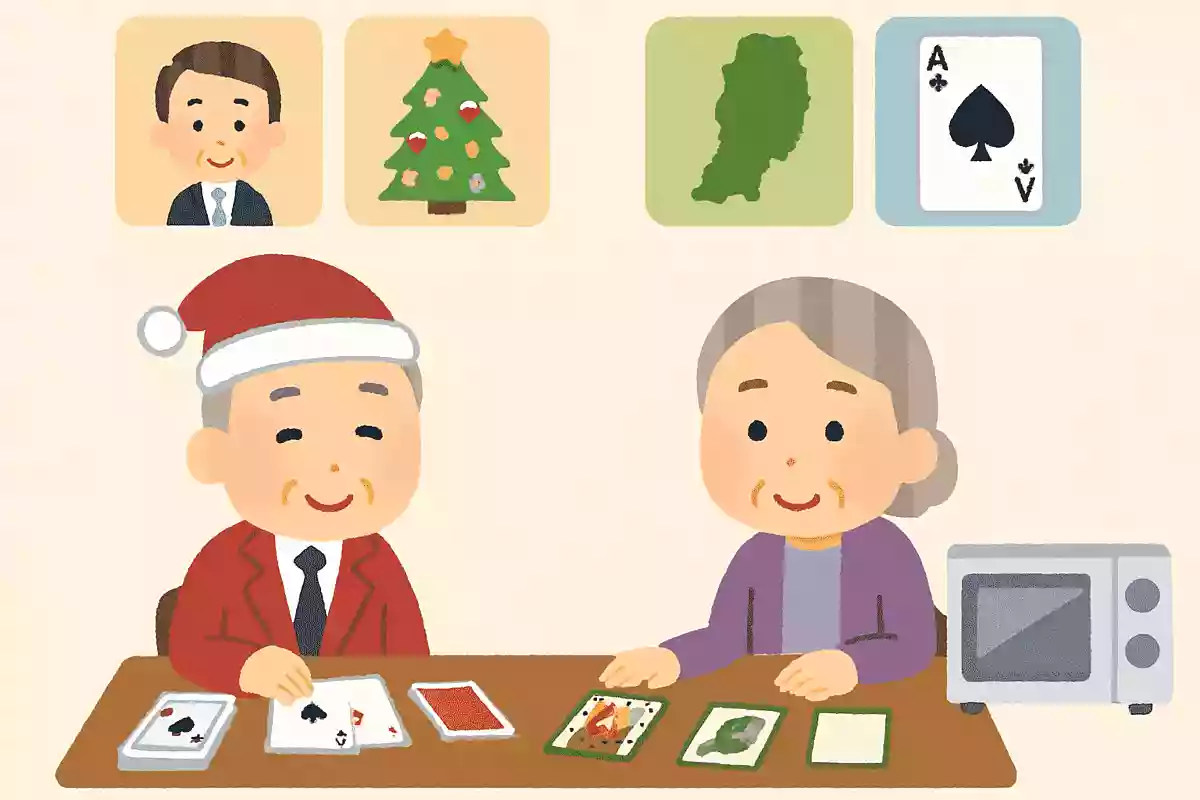
See the answer
One of them has all animal names in it.
It seems like converting kanji to hiragana or thinking of related ideas could be very effective for training the brain. For one of them, changing everything to hiragana makes it easier to solve. There’s an animal hidden within the letters of one of them. Once you figure out the pattern, it looks like a fun problem.

One side has “sheep, rabbit, boar, mouse, monkey, snake,” and the other side has “goat, squirrel, bear, hamster, gorilla, lizard.”
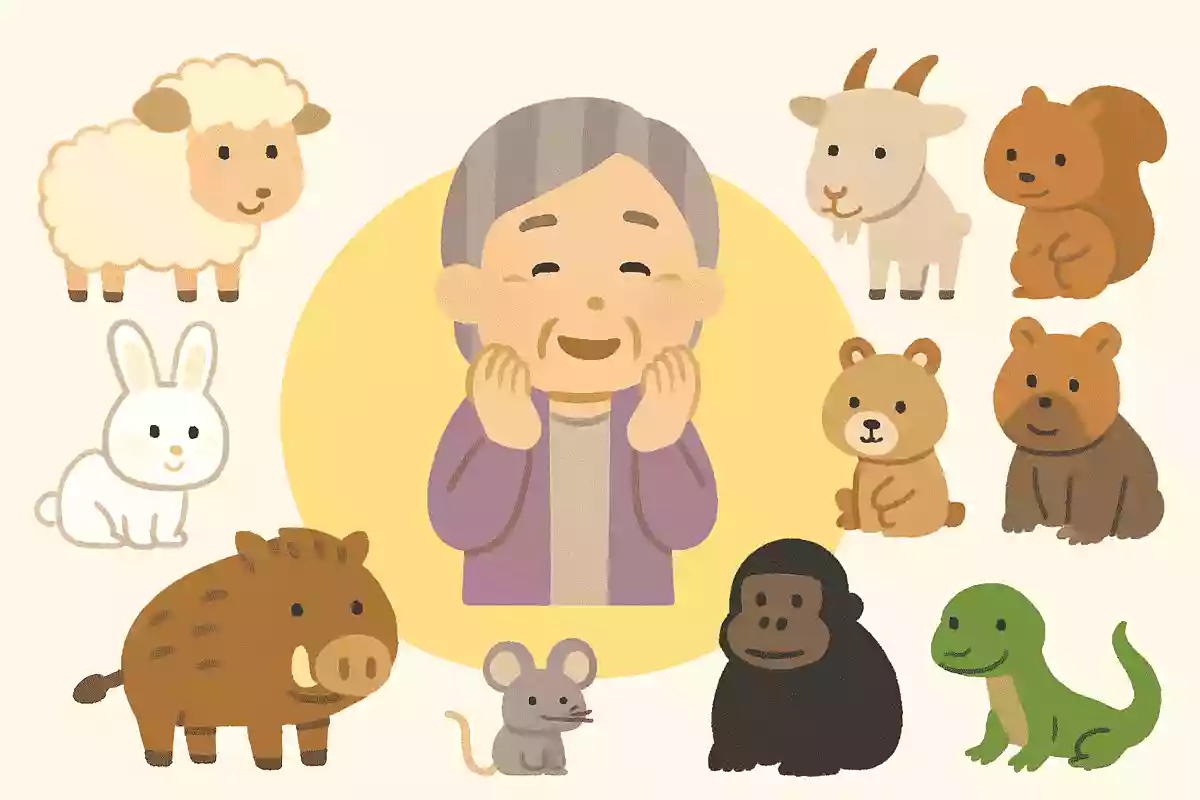
See the answer
One of them is an animal related to the Chinese zodiac.
This is an A-ru Nashi quiz related to the twelve zodiac signs that have existed in Japan since ancient times. Some older people might have immediately had a lightbulb moment upon hearing the question. By the way, although the zodiac sign “酉” is read as “tori,” it apparently refers specifically to a rooster (chicken).
One side has “hospitality, kakiage fritter, unfinished, ring, Budokan,” while the other has “reception/entertaining clients, karaage fried chicken, finished product, necklace, Kokugikan.”
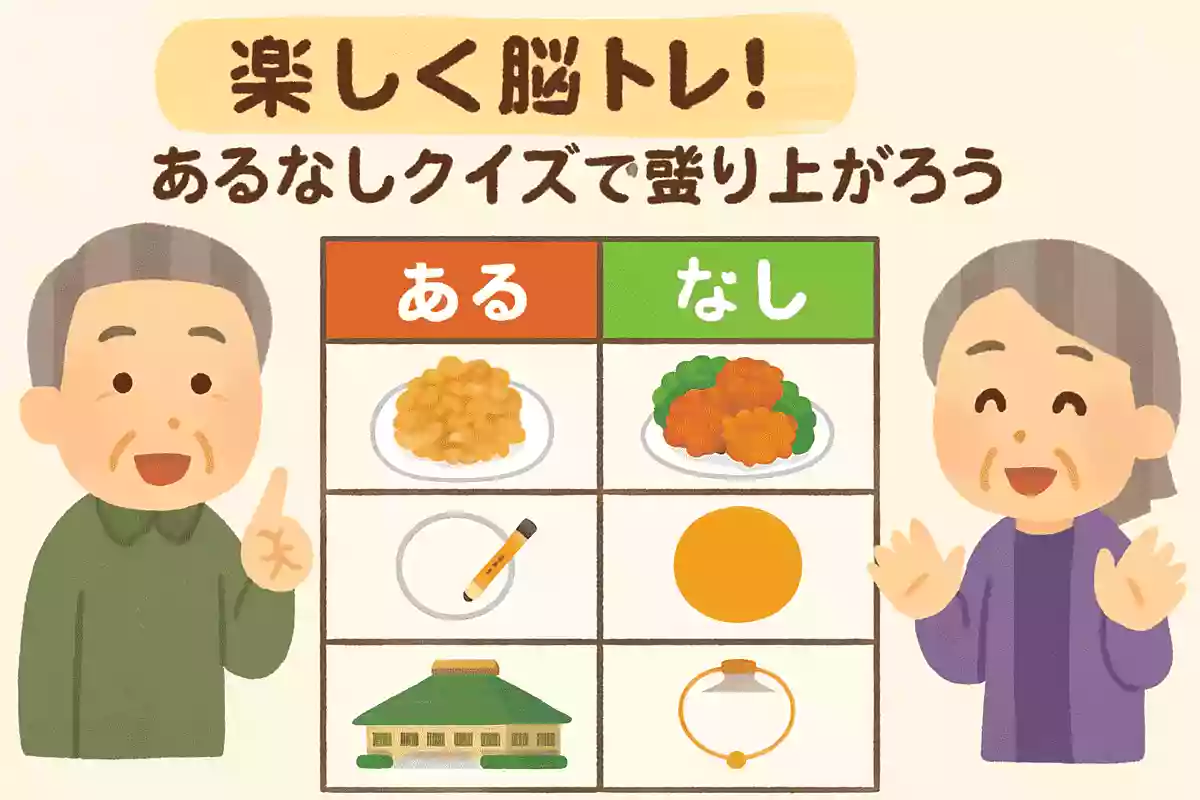
See the answer
One of them contains the name of a fruit.
It might be easier to understand if you write certain characters in hiragana. Hidden within all of those characters are names of fruits. By the way, in academic terms, fruits that grow on trees are called “kajitsu” (fruit). Things that grow on herbaceous plants, like strawberries, are considered “vegetables” in academic classification.
[For Seniors] Fun Brain Training! Liven Up with the 'Aru-Nashi' Quiz (11–20)
On one side are “fire engine, strawberry, chili pepper, octopus, cherry, mailbox,” and on the other side are “ambulance, mandarin orange, okra, squid, pear, letter.”
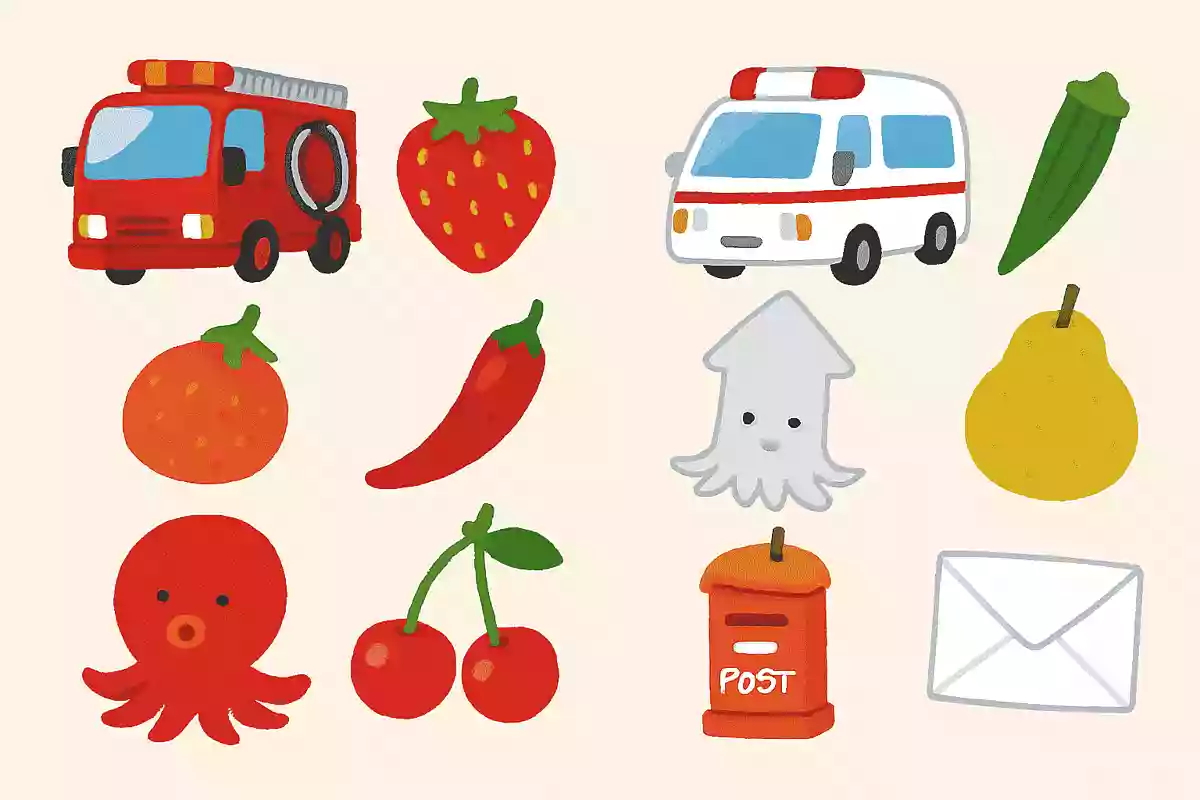
See the answer
Some are entirely red in appearance.
There are many red things in everyday life, aren’t there? Many of them might also be familiar to older people. Hearing the questions may make them easier to think about, and the answers might come more easily too. When someone can come up with an answer on their own, the enjoyment of succeeding may lead to the motivation to say, “I want to try more.”
With vs. without: “squid, thread, hippo, sickle, paper, salmon/sake, front, transplant” vs. “octopus, string, rhinoceros, hoe, origami, carp/romance, back, movement”
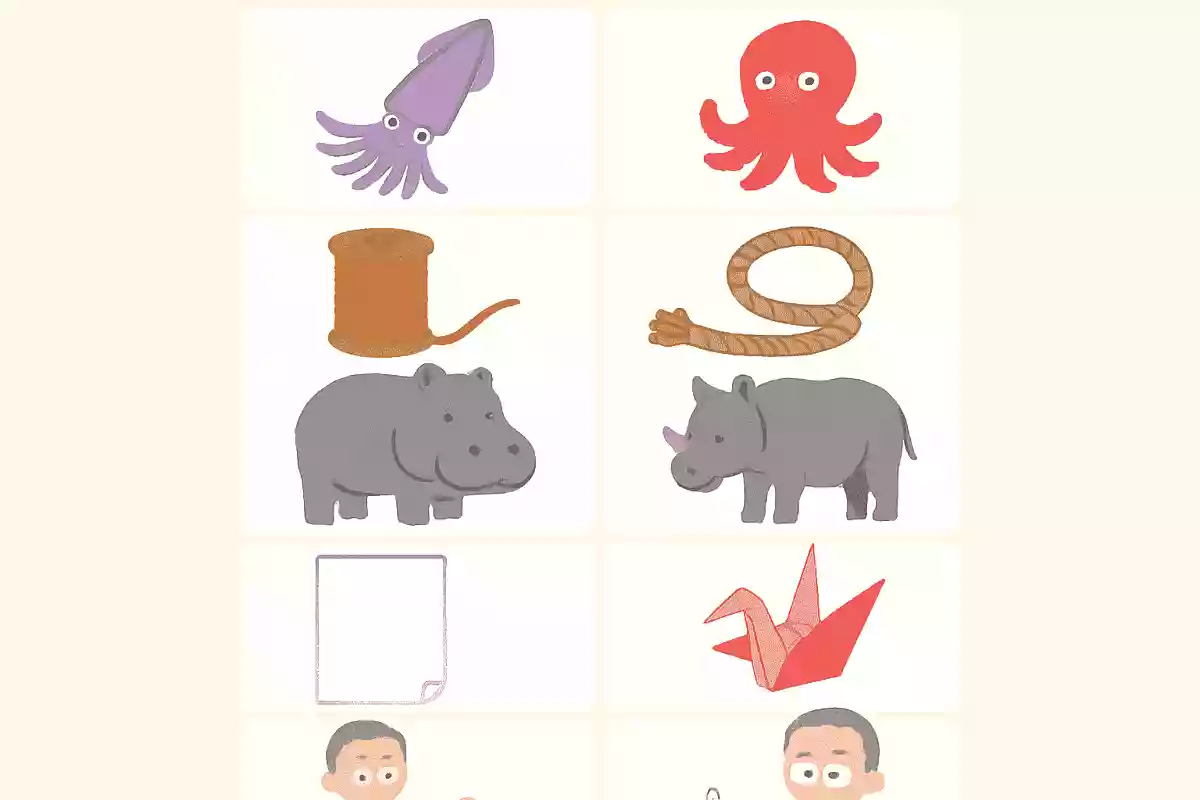
See the answer
If you add the syllable “na” to someone’s initials, it takes on a different meaning.
It becomes easier to think if you first convert the kanji to hiragana and then reason out the answer. If you add “na” above the initial letter, it takes on a different meaning! This is a great puzzle for exercising your brain, such as converting kanji to hiragana and thinking deeply. You can also enjoy searching for other words whose meanings change when “na” is added to the initial letter.
Those with it: “morning, saki, lyrics, crow, dresser, prime minister, weather.” Those without it: “night, after, melody, swan, closet, president, sky conditions.”
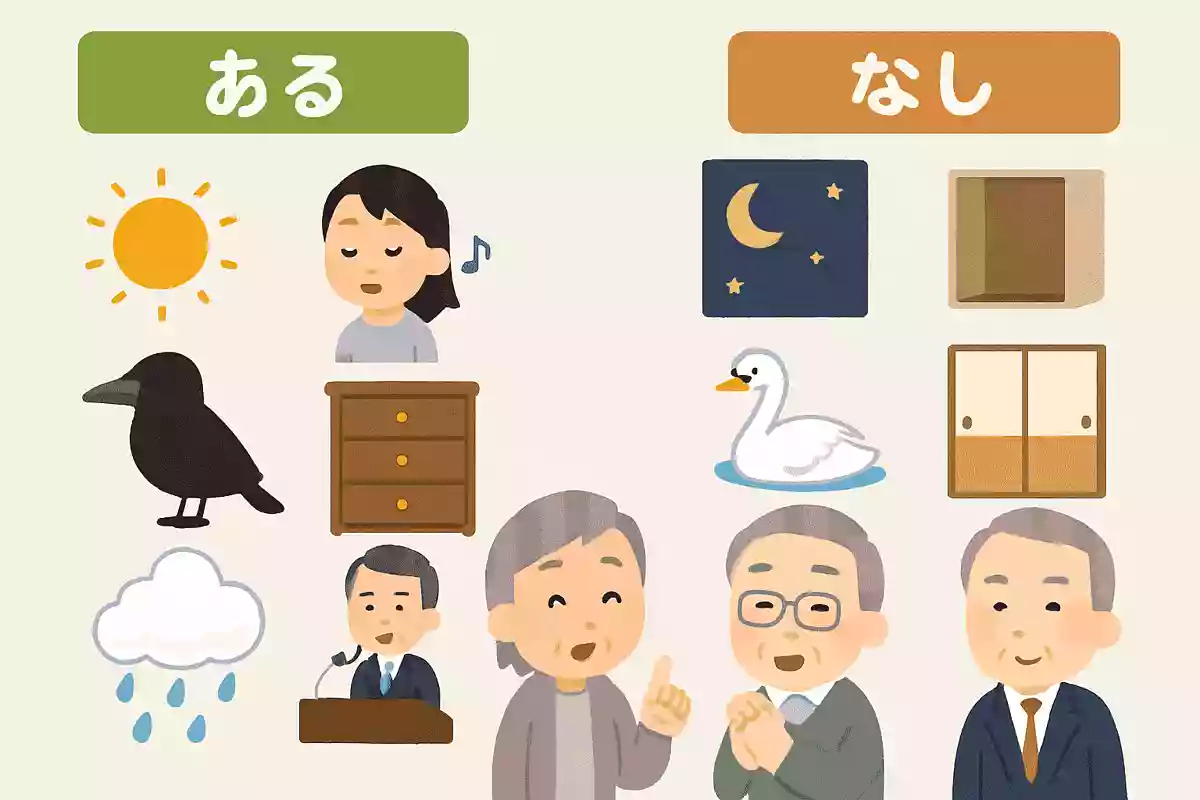
See the answer
Adding a dakuten to a certain character changes it to a different meaning.
Let's think with various possibilities in mind! For example, “asa” (morning) can become a different word like “aza” (bruise) by adding a voicing mark to one part. An “Aru-Nashi” riddle (things that are in the set vs. not in the set) is a fun puzzle that you can keep enjoying by thinking on your own even after learning the answer. It also sounds like it would be exciting to look for other examples that fit the “in” category.
One side has “lawn, cucumber, matcha, aonori (green laver), lettuce, praying mantis,” while the other side has “garden, tomato, black tea, katsuobushi (bonito flakes), bean sprouts, ladybug.”
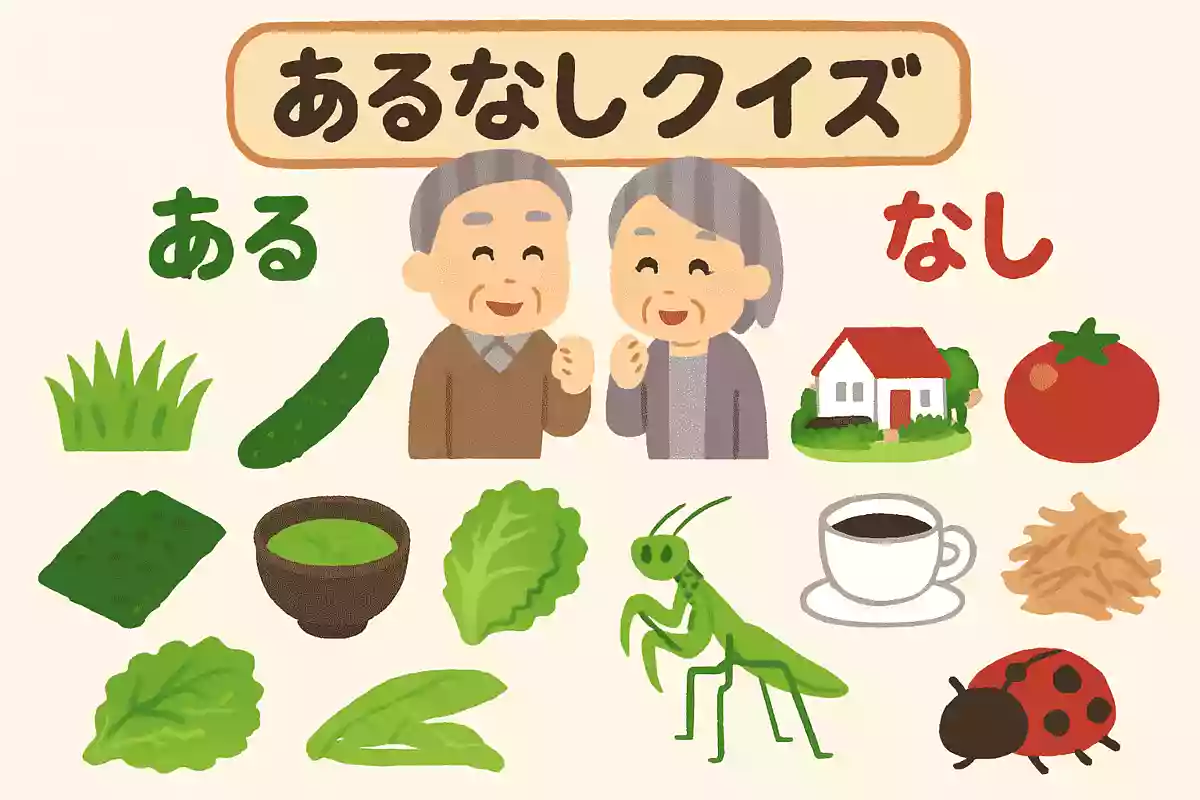
See the answer
Some of them are all green in appearance.
What they have in common is that their appearance is entirely green. Once you know the answer, you’ll think, “I see.” By the way, I’ve heard that the matcha from one and the black tea from the other are made from the same leaves. It seems they’re categorized based on differences in the manufacturing process and how the tea leaves are cultivated.