

![[For seniors] Fun brain training! Let’s get excited with the “Aru-Nashi” quiz](https://media.ragnet.co.jp/img/1200__png__https://www.ragnet.co.jp/files/2025/05/ec1781545637f7bf1e9674008e1987f5.webp)
[For seniors] Fun brain training! Let’s get excited with the “Aru-Nashi” quiz

How about spending some fun time with an “Aru-Nashi” quiz? Many senior and welfare facilities run quiz-based recreation, right? The “Aru-Nashi” quiz we’re introducing this time can be enjoyed by small or larger groups alike! Using a whiteboard to present the questions makes it easy to go one by one, so it’s recommended.
With a whiteboard, you can also chat with others while tackling the quiz, which really livens things up.
Converting words into hiragana and imagining from the hiragana is said to boost creativity.
Try some brain training while having fun!
For Seniors: Fun Brain Training! Liven Up with the 'Aru-Nashi' Quiz (1–10)
One side has “cat, pigeon, target, grave, summer”; the other side has “dog, crow, bow and arrow, home, winter.”
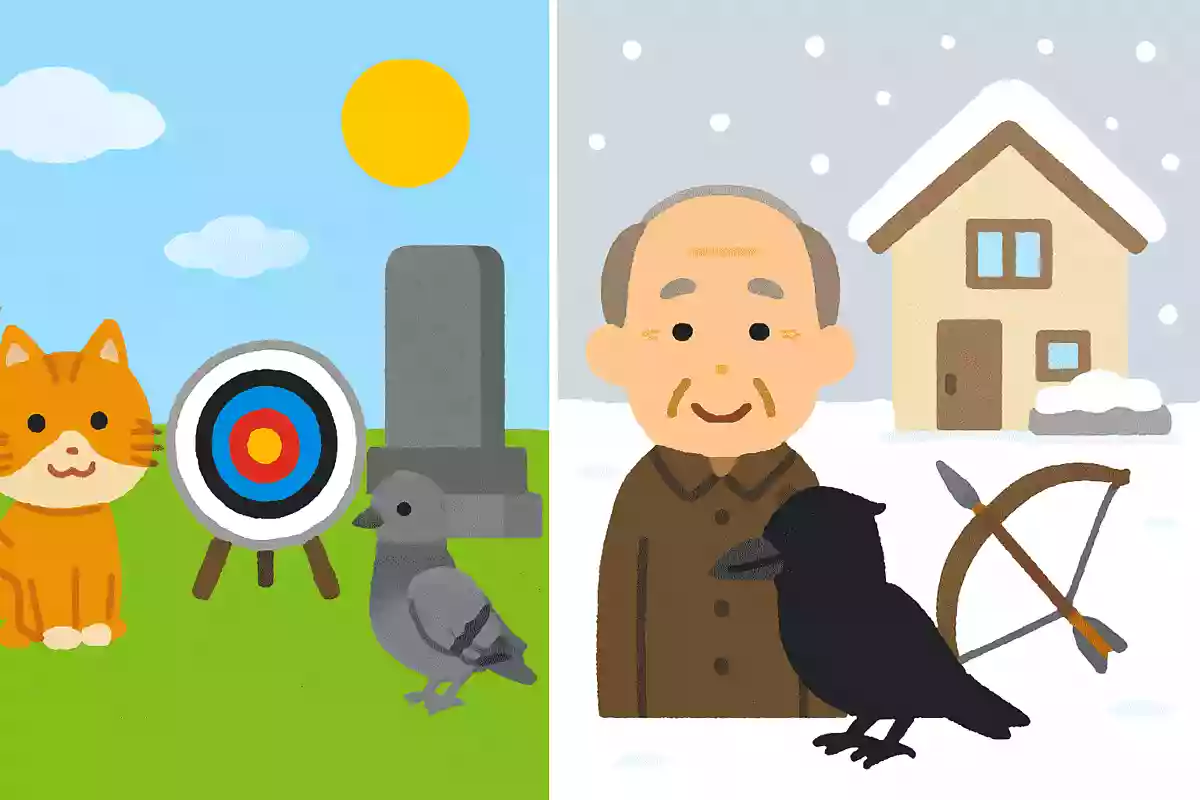
See the answer
If you insert a small 'tsu' in the middle of someone's words, it takes on a different meaning.
Many people feel a sense of joy when they figure out the answer to an “Aru-Nashi” quiz on their own. It can also serve as brain training for older adults by letting them think while having fun. It seems like a question that could spark various ideas and get everyone excited.

One set has “sea lion, letter, fireworks, fried egg, earthworm,” while the other set has “fur seal, stamp, incense stick, rolled omelet, inchworm.”
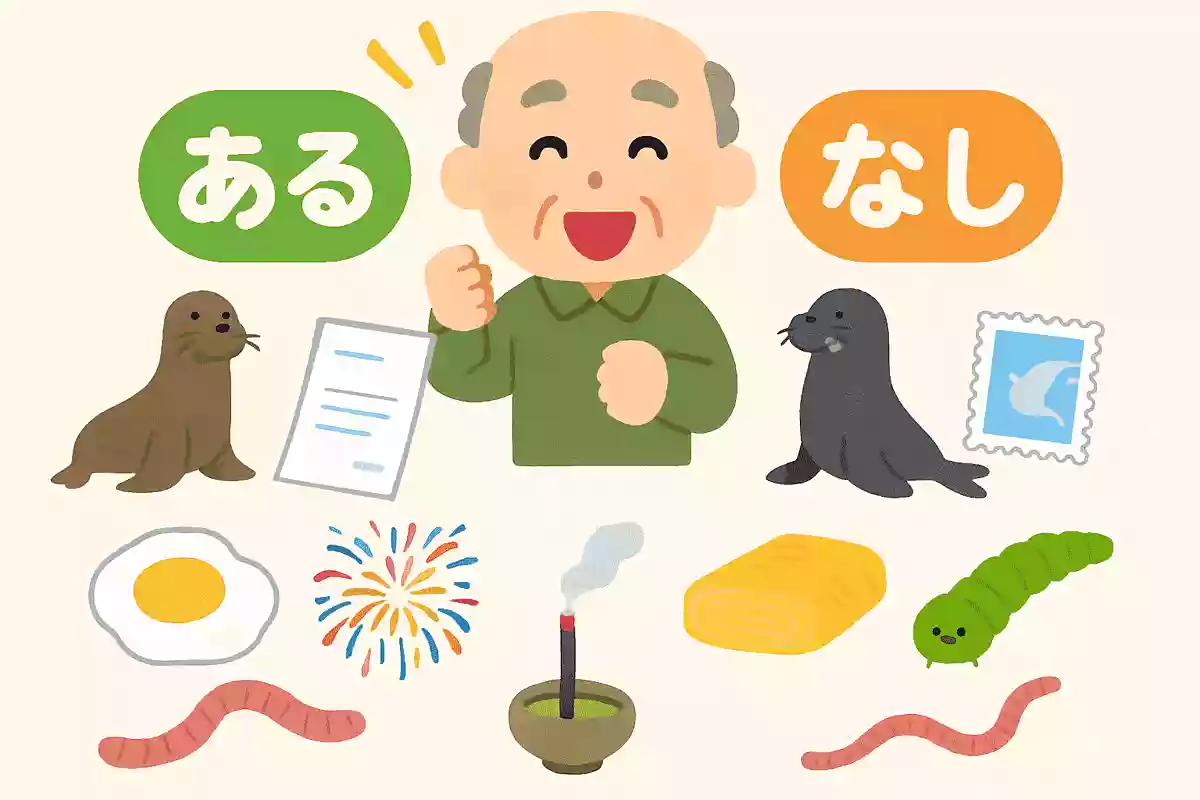
See the answer
Part of someone's body is inside.
Whether it has something or doesn’t, at first glance they seem like words with no connection. It’s important to think deeply with a “maybe” mindset and form an image. The one that has something includes a part of the body. If what you imagined turns out to be right, you’ll probably feel a sense of accomplishment, like “I did it.”
One set has “goat, fish, twins, crab, maiden,” the other set has “sheep, meat, triplets, shrimp, boy.”
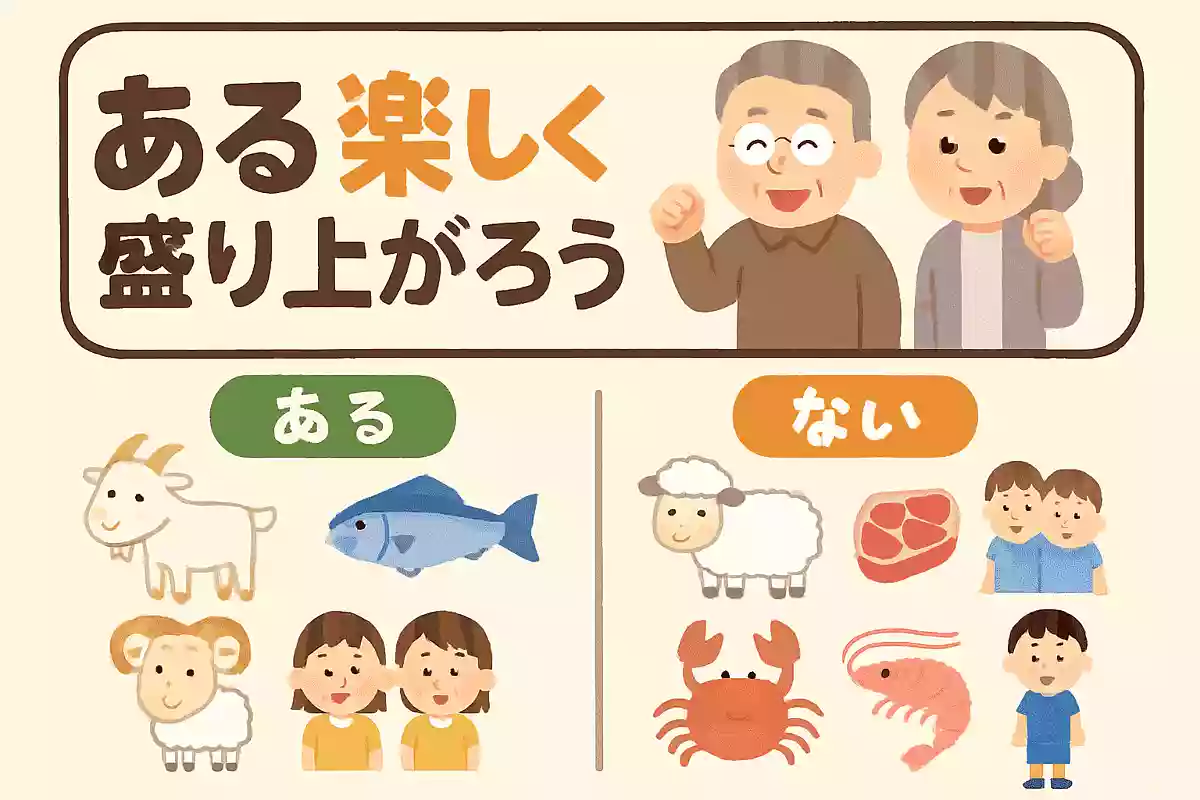
See the answer
If you add 'zodiac' (the character for 'za') to certain words, they become the 12 constellations.
If you add the suffix “-za” to certain words, you get things like Yagi-za (Capricorn), Uo-za (Pisces), Futago-za (Gemini), Kani-za (Cancer), and Otome-za (Virgo)! Since there are 12 zodiac signs, it seems possible to make more questions with the other constellations. The constellations are based on Greek mythology. Using a quiz as a starting point, it could be fun to get excited talking about constellations and myths.
On the one hand: chicks, corn, lemon, tamagoyaki (Japanese rolled omelet), banana; on the other hand: chicken, tomato, kabosu (a citrus fruit), boiled egg, apple.
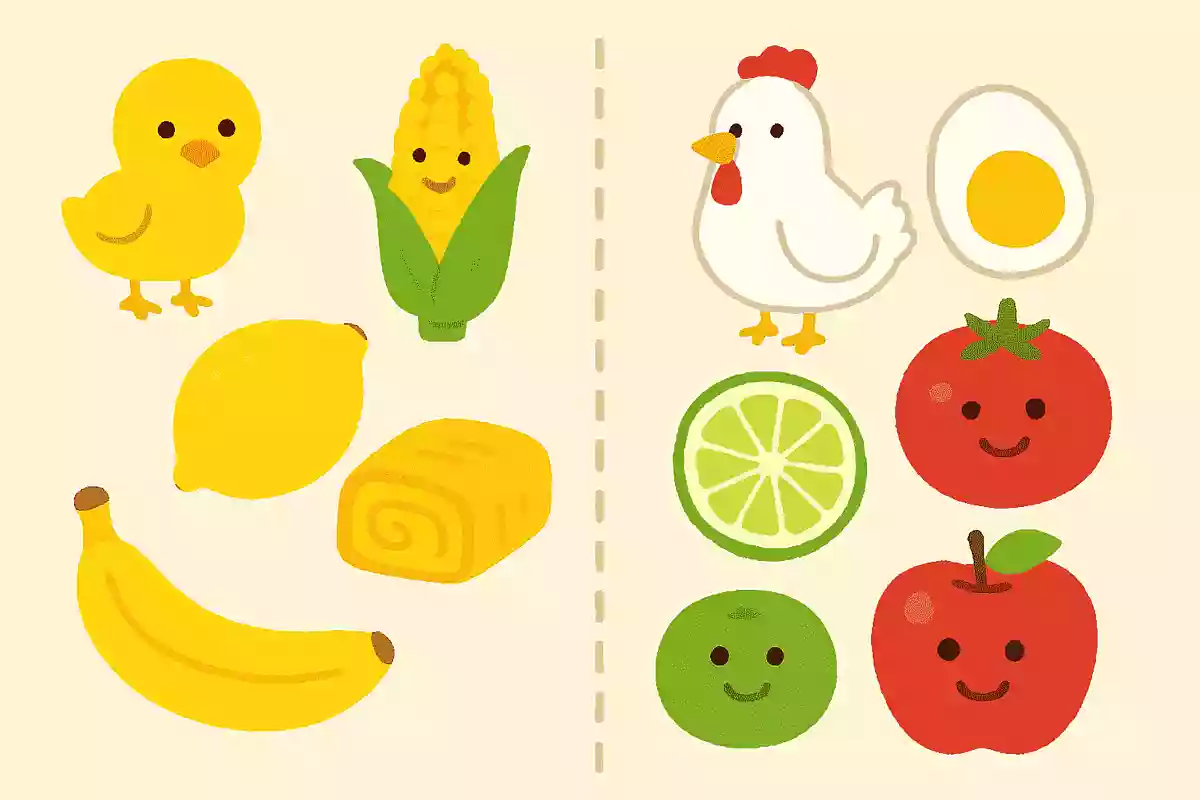
See the answer
One person is entirely yellow in appearance.
If we imagine all of a certain person’s items, it seems like we might have a breakthrough. What they all had in common was that everything was yellow in appearance! When you turn familiar, everyday objects into questions, it becomes easier for older adults to engage. You could also adapt it to create questions using different colors.
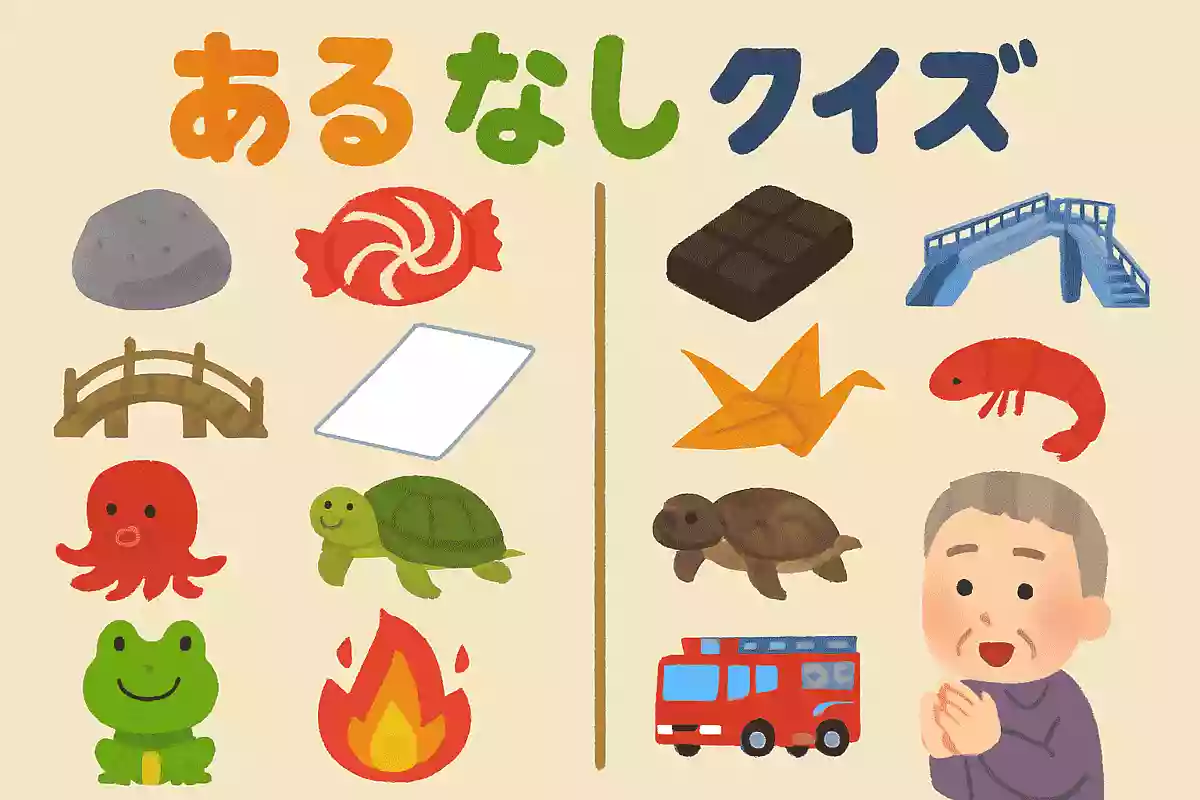
One side has: “stone, candy, bridge, paper, octopus, turtle, frog, fire.” The other side has: “rock, chocolate, pedestrian bridge, origami, shrimp, softshell turtle, tadpole, fire engine.”
See the answer
There are words that have the same reading but different meanings.
Words that have the same pronunciation but different meanings are called homophones. Some kanji characters fall entirely into this category, where words with the same reading carry different meanings. For example, for 石 (ishi), there are words like 意思 (intention) and 医師 (doctor). It’s said that the most common homophone in Japanese is “koshō,” with over 40 different meanings.
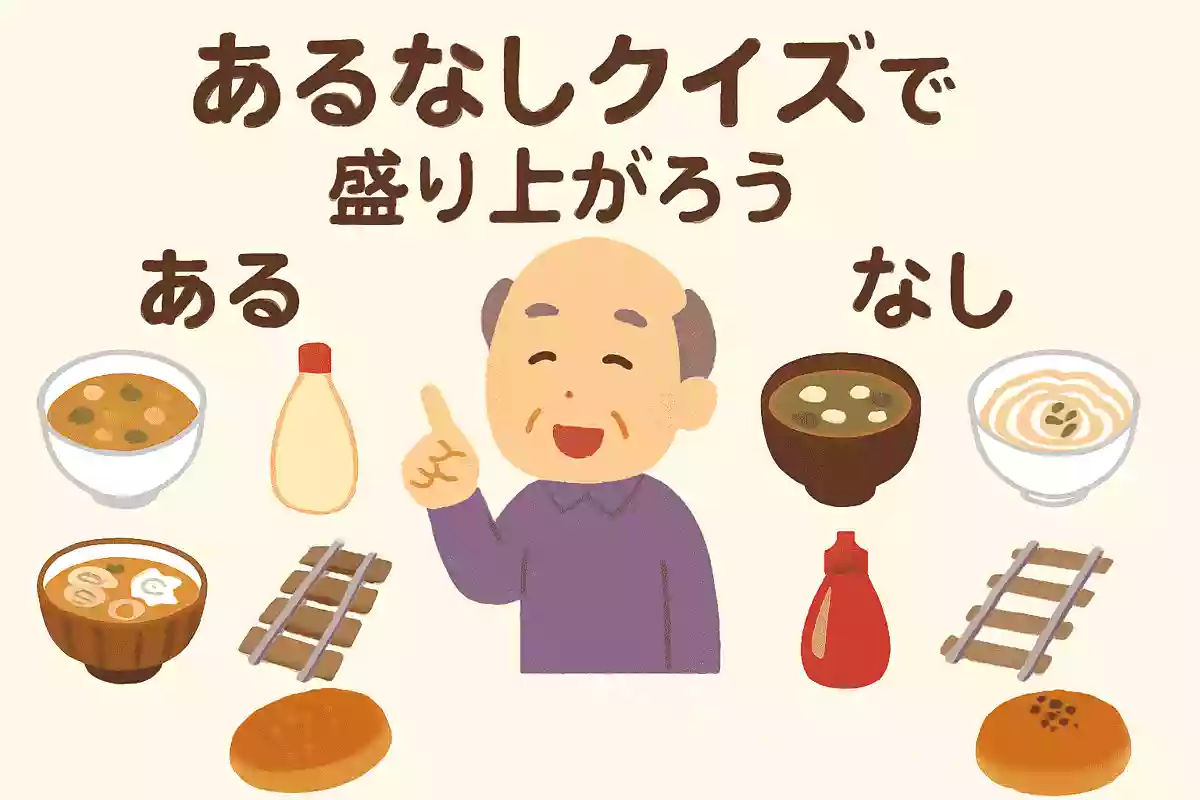
For the ones that have it: “soup, mayonnaise, ramen, rail, curry bread”; for the ones that don’t: “miso soup, ketchup, udon, railroad tracks, anpan.”
See the answer
For some people, a long dash “ー” is inserted between the characters.
If you look at each of a certain person’s strings, you’ll find a common feature. The elongation mark “ー” appears in some of theirs, doesn’t it? Used when writing in katakana, this symbol is called a chōon mark or chōonpu.
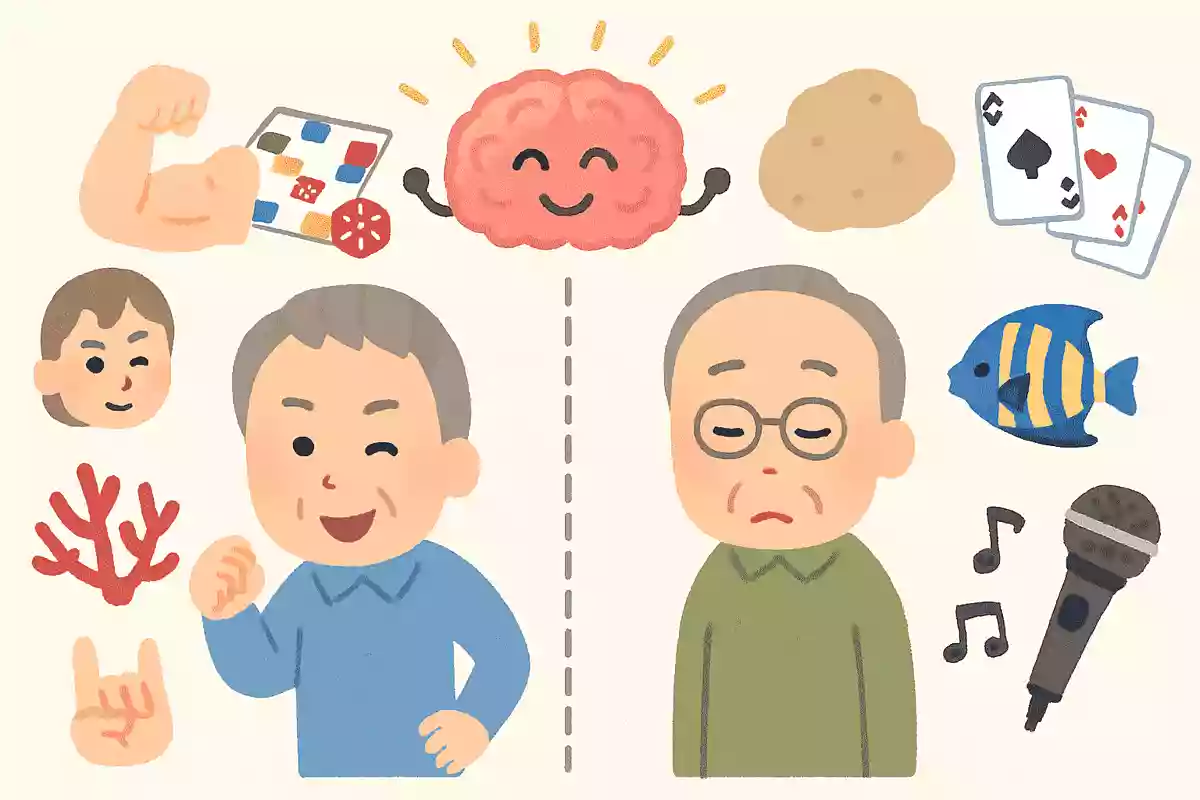
With: “muscles, sugoroku (a Japanese board game), wink, coral, rock” / Without: “fat, playing cards, blink, tropical fish, kayōkyoku (Japanese pop songs)”
See the answer
Some people have the multiplication table memorized.
Some people include “multiplication.” For example, with “kinniku” (muscle), you can take “niku” (meat) as 2×9! It might remind some of you of learning multiplication back in school. Even after you figure out the answer, it’s a fun puzzle where you can keep solving different people’s “multiplication” problems!