

![[For Seniors] Fun and Exciting! Difficult Kanji Quiz](https://media.ragnet.co.jp/img/1200__png__https://www.ragnet.co.jp/files/2025/04/3c059b8490c58572e6a65d506a66e471.webp)

Brain training is a type of recreation that’s easy for anyone to try, regardless of gender.
Because you can participate while seated, it’s accessible even for those who have difficulty moving their bodies.
Kanji brain-training quizzes in particular are said to help train the brain by recalling information from memory and sparking new ideas.
So this time, we’ll introduce a set of difficult kanji quizzes.
With quizzes, people can enjoy the sense of achievement and satisfaction when the answer they worked hard to come up with turns out to be correct.
Some older adults may overthink when it comes to difficult kanji.
Try adding creative touches like providing hint illustrations or photos that lead to the answer.
- [For Seniors] Challenging but Exciting! Kanji Quiz
- [For Seniors] How many can you read? A comprehensive showcase of difficult food kanji
- [For Seniors] Fun Brain Training! Prefecture Quiz
- [For Seniors] Nostalgic quizzes that bring back memories! Showa-era entertainment and sports questions
- [For Seniors] Laugh-Out-Loud, Crowd-Pleasing! Fun Quiz
- [For Seniors] Perfect for Dementia Prevention! Jumbled Kanji Quiz
- Hand games that liven things up for seniors—also great brain training
- [For Seniors] Have Fun with Wordplay Characters! A Collection of Funny Puzzles
- [For Seniors] Guaranteed to Liven Things Up! A Collection of Brain Training Activities That Will Spark Laughter
- [For Seniors] Fun! Let’s Get Excited with Japan’s Number One Quiz
- [For Seniors] Today’s recommended quiz. Daily brain-training quiz!
- [Fun Brain Training!] Introducing a quiz on the world’s least-stroke-count kanji
- [For Seniors] Kanji Decomposition Quiz: Assemble the scattered characters
[For Seniors] Fun and Lively! Difficult Kanji Quiz (1–10)
squid

It’s written with the characters “烏賊” and read as ‘ika’ (squid).
The first character in 烏賊 is not 鳥 (bird) but 烏, which is read “karasu” (crow).
Why use the character for ‘crow’ for a sea creature? One theory traces the etymology to a story recorded in an ancient Chinese text.
A crow spotted a squid floating at the surface, feigning death, and came to peck at it with its beak.
The squid wrapped its arms around the crow and dragged it down into the sea.
From this tale, the compound 烏賊 came to mean “a bandit that attacks crows”—with 烏 (crow) and 賊 (bandit).
Incidentally, squid can also be written with the fish radical as 魷 or 鰇.
rhinoceros

The character 犀 is read as “sai.” It refers to that large land animal with thick, tough skin—the rhinoceros.
The on-yomi (Sino-Japanese readings) of 犀 are “sei” and “sai,” and the kun-yomi (native Japanese readings) are “surudoi” (sharp) and “katai” (hard).
Indeed, it has “hard” skin and a “sharp” horn on its nose.
The radical of the character is the “cow/ox” radical (牛), and in Chinese it’s written 犀牛.
By the way, the “sei” in kinmokusei (osmanthus fragrans), known for its sweet scent in autumn, is this same 犀.
It is said to be because the tree’s bark resembles a rhinoceros’s skin.
iris

The characters 菖蒲 are read as “shōbu.” Shōbu is believed to have a strong fragrance that wards off evil, and there is a custom on the Boys’ Festival (Tango no Sekku), which prays for children’s health and growth, of drinking shōbu-sake made by steeping its roots and of bathing in shōbu-yu made by bundling its leaves and roots.
Incidentally, the same characters 菖蒲 can also be read as “ayame.” Ayame and hanashōbu (Japanese iris) are both in the iris family and look very similar, so they are often confused.
Meanwhile, shōbu (sweet flag) is in the arum family and is a completely different plant from hanashōbu.
udon
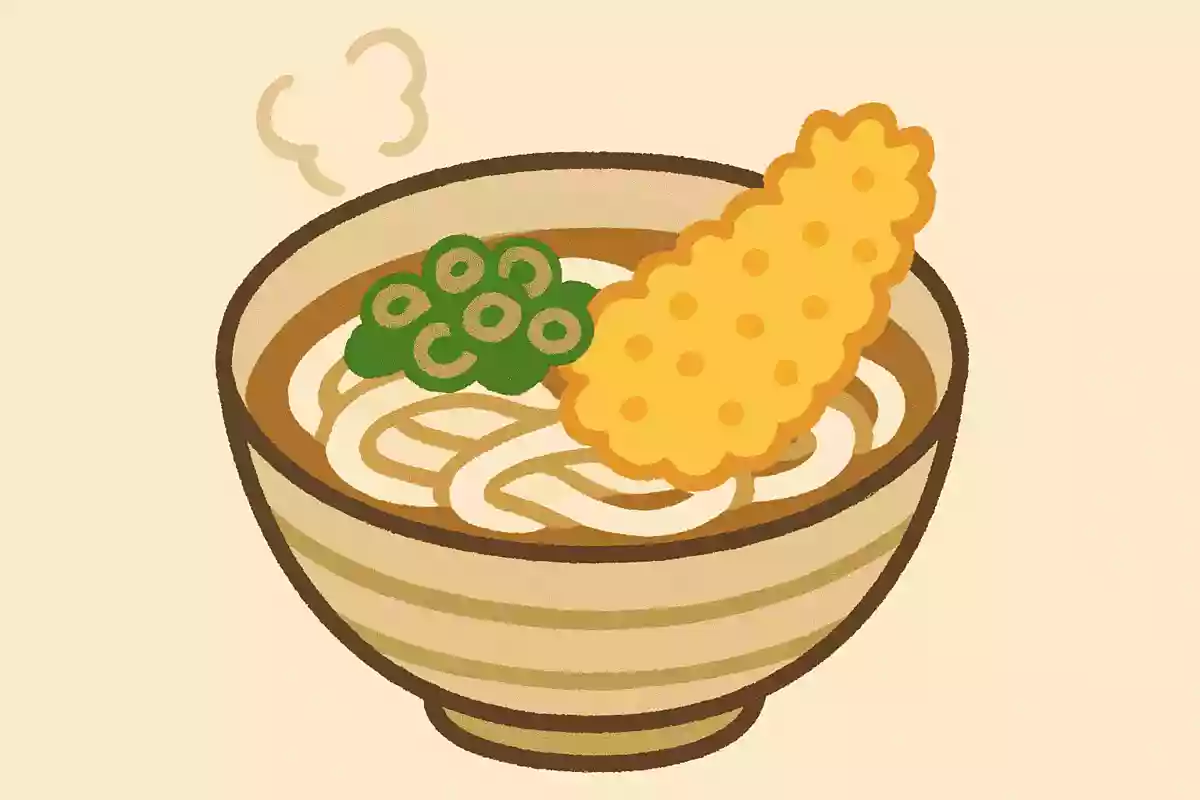
The characters “饂飩” are read as “udon.” There are various theories about the origin of the word “udon,” but a leading one traces it to the Nara period, to a Chinese sweet called “hundun” (混飩)—balls of wheat flour with a filling, boiled.
Because it was food, 混飩 later came to be written as 餛飩; because it was served warm, it was also written as 温飩; and then, again emphasizing that it was food, the characters shifted to 饂飩.
The pronunciation evolved as well: from the Sino-Japanese reading “onton” to “unton” and “undon,” eventually becoming today’s “udon.”
ocean sunfish

The kanji “翻車魚” refers to a certain large sea creature—do you know what it is? It’s displayed at some aquariums in Japan, and you might be astonished when you see how big it is.
As its classification in the order Tetraodontiformes suggests, its eyes and mouth resemble those of pufferfish, but its body doesn’t appear puffed up.
In Japan, it has various regional names derived from local dialects, such as “Uonotayū” and “Ukiki.” So, what is this creature’s name? It’s the ocean sunfish, known in Japanese as “manbō.” Despite its round, cute eyes, it has an enormous body.
If you visit an aquarium, be sure to check it out!

cactus

The word is written 仙人掌 and read as “saboten” (cactus).
The kanji 仙人掌 is said to originate from an emperor of China’s Han dynasty.
Emperor Wu, the seventh emperor, had a giant statue made of an immortal hermit holding a dish—called “xianrenzhang”—to compound an elixir of immortality.
Because its appearance resembled a cactus, the term 仙人掌 came to mean “cactus.” Incidentally, there’s a theory that the reading “saboten” comes from Portuguese.
The Portuguese who introduced cacti to Japan used them as a substitute for soap.
The plant supposedly came to be called “sekken-tai,” read as “sabontei” (from Portuguese sabão/’soap’), which then shifted from “shaboten” to “saboten.”
horse mackerel
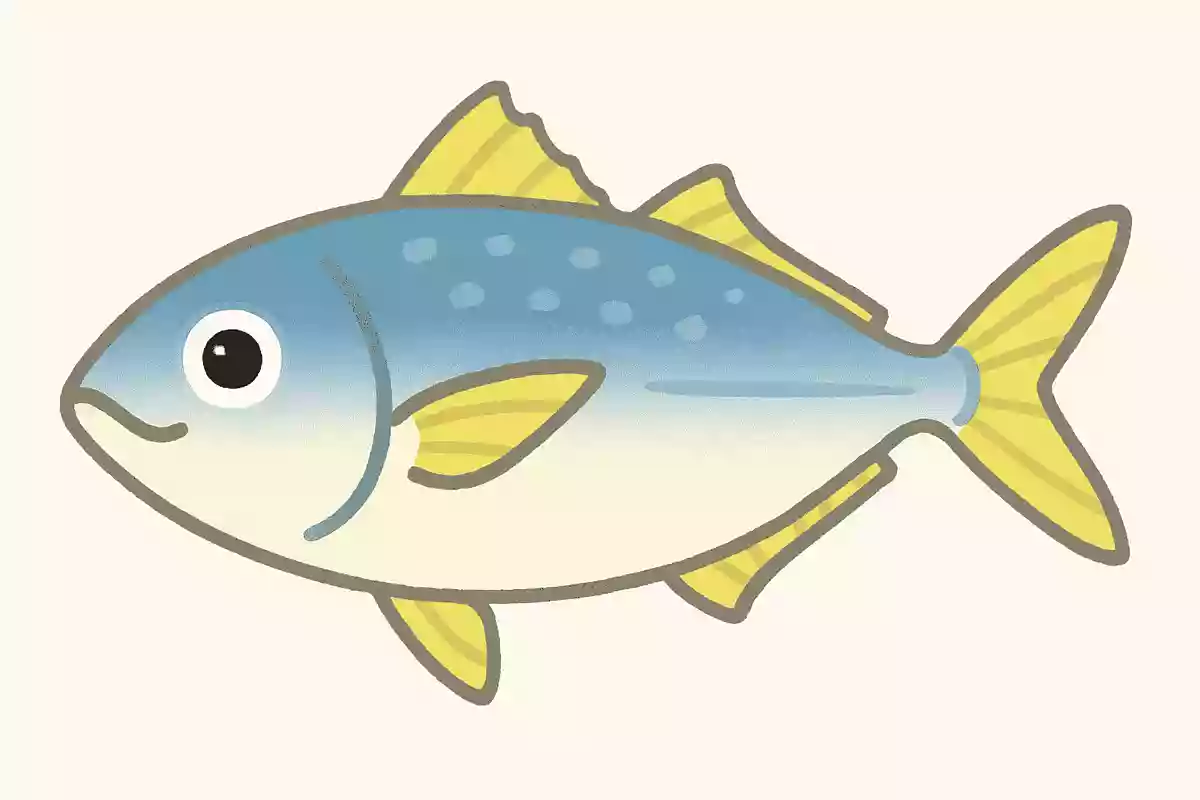
There are fish names written with a single kanji character, such as “鮪” (tuna), “鯛” (sea bream), and “鰻” (eel).
同様に、「魚」という漢字に「参」という漢字を組み合わせると、「アジ(鯵)」と読みます。
The word’s etymology is simply “aji” meaning “taste,” said to come from how good it tastes.
Regarding the kanji, there are a couple of theories: one is that the peak season for aji is the third month of the old lunar calendar, hence the numeral 参; another is that it suggests “it’s so delicious you’re overwhelmed” (maitte shimau).
Speaking of aji, what comes to mind is fried aji (aji-fry).
For those who enjoy alcohol, perhaps aji namerō.