

[For Seniors] Recommended Even for People with Dementia! Simple Recreational Activities

Recreation activities conducted at nursing and care facilities aim to improve brain and physical functions.
They are said to help activate the brain and can be expected to prevent dementia or slow its progression.
However, it is also important to maintain emotional well-being through feelings like “this is fun, I feel happy” and communication with others.
If people push themselves too hard for functional improvement and the things they “can’t do” become a source of stress, they won’t be able to enjoy the activities.
So this time, we’re introducing “simple recreation” ideas!
These are easy, accessible activities designed for older adults to enjoy.
Please feel free to make use of them.
- [For Seniors] Easy and fun seated activities you can do in your room
- Simple games for preventing and improving dementia
- [For Seniors] Fun Recreational Activities Without Equipment
- Recommended recreational activities for older adults with dementia
- [Brain Training for Seniors] Recommended Hand-Play Recreation for Dementia Prevention
- [For Seniors] Fun and Engaging Brain-Training Recreation
- [Elderly Day Service] Let’s all have fun! Games and recreational activities
- [For Seniors] A Collection of Fun Classic Caregiving Activities
- [For Seniors] Today’s Recommended Activity: Fun and Engaging
- Hand games that liven things up for seniors—also great brain training
- [For Seniors] Easy to try. Fun, crowd-pleasing recreation
- [For Seniors] Simple Recreational Activities You Can Enjoy While Seated
- For Seniors: Effective Recreation for Preventing Care Needs—Have Fun While Staying Healthy
For Seniors: Recommended for People with Dementia Too! Simple Recreational Activities (31–40)
Both the Japanese plum and the peach are kinds of peaches; the peach and the Japanese plum are both kinds of peaches.
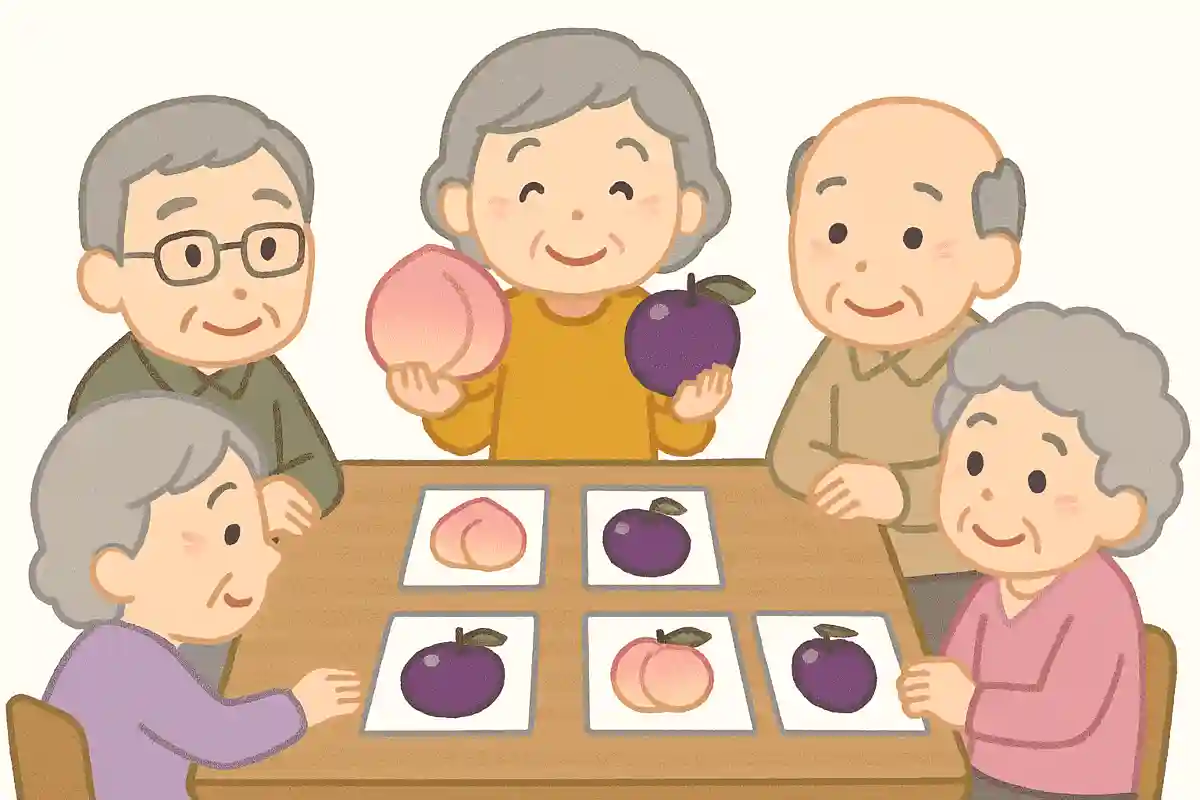
Plums come into season around mid-June.
Plums are a size smaller than peaches and are known for their sweet-and-tart flavor.
Although they’re said to be smaller than peaches, their shapes are similar, which is why there’s a tongue twister: “Sumomo mo momo mo momo no uchi; momo mo sumomo mo momo no uchi,” roughly meaning “Both plums and peaches are kinds of ‘momo.’” Because of this tongue twister, some older adults may have the impression that plums and peaches are the same variety.
However, plums belong to the genus Prunus in the rose family, while peaches belong to the genus Amygdalus (also within the rose family), so they are different.
Indeed, while their shapes are similar, plums have smooth skin, whereas peaches have a fine fuzz.
In fact, plums are said to be more closely related to apricots than to peaches.

Hard-to-pull nails, nails that are difficult to remove, nails pulled out with a nail puller
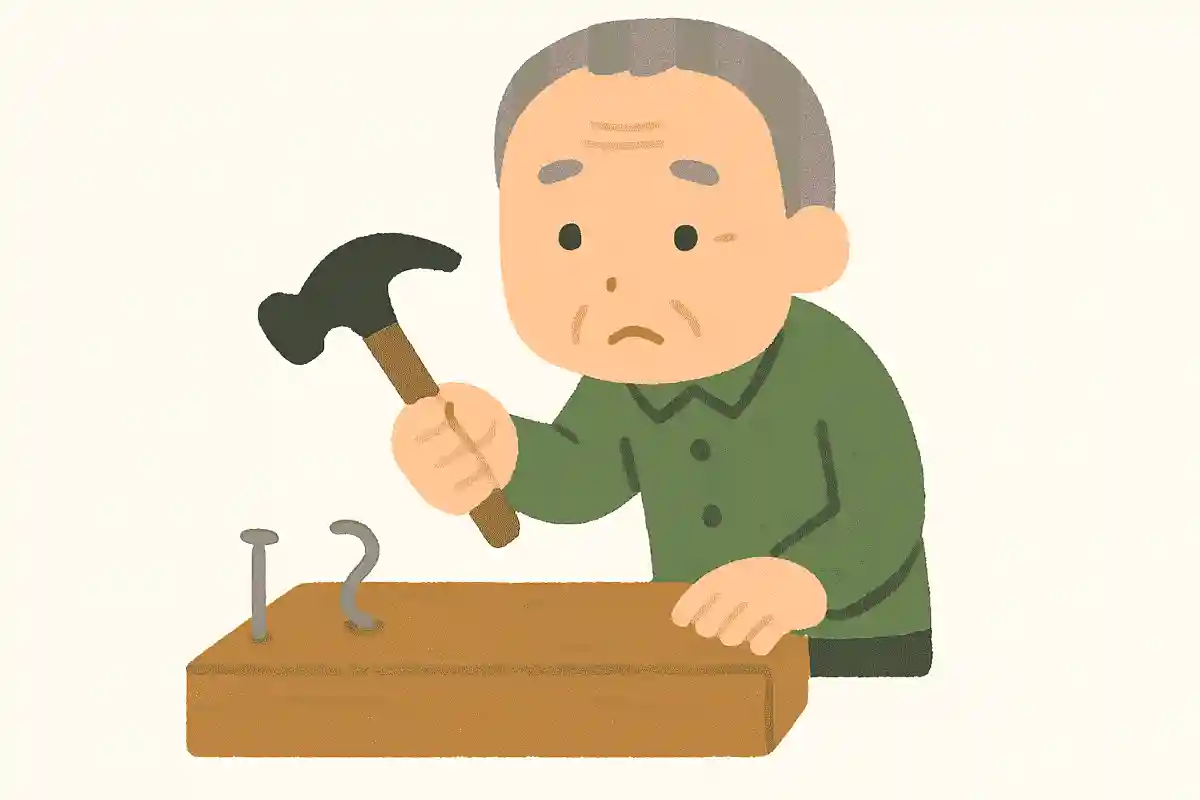
“A nail that’s hard to pull out, a nail that’s difficult to draw out, a nail pulled with a nail puller”—this tongue-twister also brings to mind scenes of carpenters or families doing DIY at home.
You can really picture someone struggling to pull out a stubborn nail.
Because of that, it repeats the same or similar words quite a lot.
It might be easier to say if you consciously break it into words like: hard-to-pull, nail; hard-to-draw-out, nail.
It’s a tongue-twister that may even help older adults recall their own DIY experiences.
Ultimate luxury aircraft at a deserted Kyushu airport

The tongue twister “kuukyo na Kyushu kuukou no kyuukyoku koukyuu koukuuki” (empty Kyushu airport’s ultimate luxury aircraft) feels difficult just by looking at it written down.
The sentence is also on the longer side for a tongue twister, and it’s characterized by a mix of hard k sounds and kya-kyu-kyo clusters.
Because of that, it’s said to be hard to say without tripping up.
To be able to say tongue twisters, the key is to be conscious of each word and pronounce every one clearly and distinctly.
By the way, there is no actual airport called “Kyushu Airport.” If you were to use a real airport in a tongue twister, it would be one of the airports in the Kyushu region, such as Kitakyushu Airport.
2-beat 3-beat game

This exercise involves moving your arms in large motions with different rhythms for each hand to thoroughly engage your arm muscles and brain.
Use a 3-beat rhythm for one hand and a 2-beat rhythm for the other, and focus on keeping each movement from slipping out of sync.
Because concentrating on the motions can disrupt your focus on rhythm, it’s also recommended to perform the exercise along with a children’s song or similar music.
Once you get used to it, try switching which arm does which rhythm or adding leg movements—these variations can further stimulate your brain.

I love you after 43 years

43 Years Later, I Love You is a film that portrays an elderly man who lies his way into the same care facility in order to reunite with his former lover.
Because the facility is a place for people with Alzheimer’s, the story emphasizes how he faces a past love who no longer remembers him.
Through the lens of Alzheimer’s disease, the film depicts the preciousness of memory, love, and life, and powerfully conveys the importance of bonds.
It’s a work that also prompts us to look back on the path we’ve walked so far and reflect on the kinds of love and connections we’ve had.
[For Seniors] Recommended for People with Dementia Too! Easy Recreational Activities (41–50)
Ojami Wobble Game

Many older adults have probably played otedama (beanbag juggling) before, right? Some may have even skillfully used their hands and fingers to juggle two or three beanbags in the air.
Let’s play a fun game that uses familiar otedama to work the fingertips.
Place a paper plate on top of a short piece of a cut plastic wrap or foil core.
Then, place the beanbags on the paper plate one by one.
Since the paper plate is unstable, it wobbles each time you add a beanbag, creating a thrilling, heart-pounding effect.
It seems like older adults can enjoy a bit of tension while engaging in the game.
By the way, “ojami” is what otedama is called in the Kansai region.
Beanbag Bingo

This is a game where players alternately place beanbags on a grid, and the first to make a line of four wins.
It’s important to aim to complete a line with your own color, but you should also be mindful of blocking your opponent’s line.
Using beanbags is another key feature—the action of carrying and placing them on the grid helps develop grip strength and provides arm exercise.
The game strongly emphasizes strategic thinking, as play style varies by player, so you’ll need to adapt your strategy depending on your opponent.
By playing repeatedly, you may even discover your own surefire winning methods.