

[For Seniors] Easy to try. Fun, crowd-pleasing recreation

For those who use senior care facilities or day services, lively recreational activities are important, aren’t they?
In this article, we introduce activities that everyone can try together as well as ones individuals can enjoy on their own.
All of them are exciting and easy to try once you learn the simple rules.
Even games that might look difficult at first—like rock-paper-scissors relays or ball bowling—can be done while seated, so no worries.
We hope you’ll all give them a try so that recreation can help invigorate the minds and bodies of older adults.
- [For Seniors] Easy and fun seated activities you can do in your room
- [For Seniors] Simple Tabletop Games: Fun and Engaging Recreational Activities
- [For Seniors] Simple Recreational Activities You Can Enjoy While Seated
- [For Seniors] Exciting! Ball-Based Recreation
- [For Seniors] Fun Recreational Activities Without Equipment
- [For Seniors] Enjoy safely even during the COVID-19 pandemic: Seated activities
- [For Seniors] Enjoyment at Day Care: A Roundup of Games and Recreational Activities
- [For Seniors] Today’s Recommended Activity: Fun and Engaging
- [For Seniors] Guaranteed to Be a Hit! Popular Day Service Recreational Activities
- [For Seniors] Enjoyable Day Service: A Collection of Fun Event Ideas
- [For Seniors] Introducing Recreational Activities Anyone Can Enjoy at Geriatric Health Facilities!
- [For Seniors] Enjoyable Indoor Activities! Recreations and Games That Engage the Mind and Body
- [For Seniors] Exciting Team-Based Recreational Activities
[For Seniors] Easy to Try: Fun, Engaging Recreational Activities (1–10)
Kick CurlingNEW!

Let’s enjoy an indoor sport called “Kick Curling,” which uses the rolling properties of plastic bottles.
The game is played between teams, so please color-code the bottles in advance, such as by wrapping them with colored tape.
Once the game starts, use your foot to roll the plastic bottles toward the target house.
The house has points written on it, so aim for the highest-scoring areas.
Bottles with a duck inside are worth double points.

bowlingNEW!

Many older adults have probably played bowling at least once, right? It feels great when the ball you roll knocks down all the pins.
You can roll the ball while seated, so it’s an activity that people who have difficulty standing can enjoy.
Another nice thing about bowling is that you can play competitively in teams or on your own.
It would likely be a hit as an activity at a care facility event.
Bowling sets with balls and pins are sold at 100-yen shops, so preparation is easy.

Intro quiz for seniorsNEW!

Let’s enjoy an intro quiz with Showa-era hit songs! This version is for beginners, and about 15 seconds of the intro will play.
If you know the answer, please say the song title.
There are 30 questions, so you can enjoy it as a recreational activity.
Thinking about which song it is makes for good brain training, and the nostalgic intros make it a perfect game for seniors.
It’s also a chance to test your knowledge and memory, so give it a try!
[For Seniors] Easy to Try: Fun, Crowd-Pleasing Recreational Activities (11–20)
Bread Carrying RaceNEW!

A “bread-carrying race” that’s safe and fun using cardboard.
Place pictures of bread in red and white cardboard boxes, then pull them in with a ribbon (suzuran tape) to deliver the bread to your hands.
It’s appealing because it’s easy to join even while seated.
It takes concentration to reel it in without dropping the bread, and participants often draw cheers from those around them.
Adding obstacles on the course makes it interesting by requiring not just pulling straight, but controlled adjustments of speed.
Players can strategize—pulling slowly, gauging the situation, and modulating force—and because it engages the hands, arms, and other upper limbs, it encourages arm movement while having fun and thinking.
It’s an event that brings the whole venue to life.

ring tossNEW!
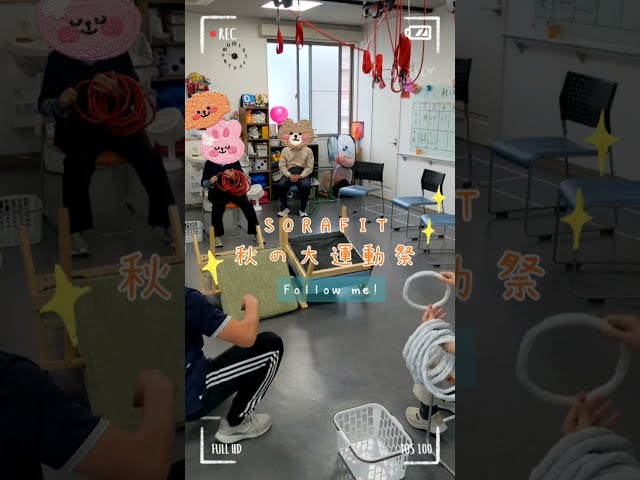
Ring toss is a classic event with easy-to-understand rules that anyone can join casually.
You throw ten rings in order, and the winner is decided by the total number that land on pegs marked with points—its simplicity and the instant results are part of the appeal.
Careful aiming and calm throws lead to success.
It’s also nice that you can prepare it easily with familiar items like plastic bottles or upturned chairs.
Plus, if you include a high-risk, high-reward peg for a dramatic comeback, the outcome stays uncertain right up to the end, making it even more exciting.
Play it safe, or go for the big swing? It’s the kind of event that makes even spectators want to cheer out loud.
Fishing gameNEW!

An indoor fishing game you can enjoy all year round will liven up any event.
Even if fishing isn’t your hobby, seeing the colorful fish lined up on a blue tarp makes you feel an irresistible urge to reel in a big one! You don’t have to buy a fishing set; it’s easy to make by combining scrap materials and items from a dollar store.
In fact, making it yourself might be even more fun, since you can create all kinds of fish.
Try setting a time limit and competing to see how many you can catch.
It’s also fun to specify which fish to catch and race for speed.
Cup PinballNEW!

Enjoy the simple fun of just dropping a ball! Introducing Cup Pinball.
You can make it yourself using cardboard, paper cups, pool noodles, a basket, and a ball! First, cut the cardboard into a large rectangle and make holes slightly smaller than the rims of the paper cups.
Insert paper cups into some of the holes, and attach pool noodles along the long edges of the cardboard base.
Next, prop the base at an angle using a table or chairs, and place a basket where the ball will drop—then you’re done! Adjust the difficulty by changing the number of holes.