

[For Seniors] Fun and Engaging Brain-Training Recreation

We’ve put together a collection of brain-training puzzles and simple exercises that you’ll want to actively incorporate into recreational activities.
It’s easy to get bored with the same types of puzzles and games, right?
Let’s liven up your recreation time with puzzles you haven’t tried before, or some quirky and fun challenges and exercises!
If it’s difficult, try allowing more time to think or offering hints so everyone can enjoy it as they go.
We’re also introducing plenty of activities that can make people laugh and lighten the mood, even if they don’t know the answer.
Feel free to use these as a reference and put them to good use!
- [For Seniors] Fun Brain Training! Lively Mind Exercises
- [For Seniors] Fun and Lively! Recommended Quiz Questions
- [For Seniors] Hand and finger play roundup: Finger exercises that lead to brain training
- [For Seniors] Easy and fun seated activities you can do in your room
- [For Seniors] Fun Brain Training! A Collection of Tricky Quizzes You’ll Definitely Get Stumped By
- Hand games that liven things up for seniors—also great brain training
- [For Seniors] Fun Recreational Activities Without Equipment
- [For Seniors] Find daily brain training. Today’s recommended brain workout.
- [For Seniors] A Brain-Training, Crowd-Pleasing Word Search Game
- Fun Brain Training! Memory Games for Seniors
- [For Seniors] Lively Wordplay Game: Fun Recreation for Elderly Care
- [For Seniors] Today’s Recommended Activity: Fun and Engaging
- [Brain Training for Seniors] Recommended Hand-Play Recreation for Dementia Prevention
[For Seniors] Fun and Engaging Brain-Training Recreational Activities (261–270)
Find the theme words

Find answers that match a given theme from jumbled letters.
The themes include fruits, flower names, vegetable names, animal names, food names, Japanese events, and greetings, and both the number of answers and how many you need to find gradually increase.
In the latter half, the number of letters grows, and combined with the time limit, the difficulty rises.
It’s important to stay calm and read the questions carefully.
Watching as a video works well, and turning it into a whiteboard or printed activity makes it fun for both small groups and larger groups.
It’s also recommended for recreational activities at senior facilities.

Find the same items

We’d like to introduce a matching game that’s recommended even for people who find arithmetic or reading and writing difficult, as well as for seniors who aren’t comfortable with them.
Look for items in a picture that match the prompt.
Searching for images that are the same as the prompt requires observation and memory skills, which helps stimulate the brain.
You can focus and play on your own, or enjoy it while chatting in a larger group.
With a big group, forming teams of several seniors and doing a team competition could be exciting.
It may also encourage interaction with others.

Kanji Quiz

Quiz shows are all the rage right now, and every TV network is airing programs packed with clever twists.
Brainy celebrities and university students from top schools take on tough, quirky questions, livening up living rooms across the country.
One segment that always gets the crowd excited is “How do you read this kanji?” From hard-to-read characters like 驢馬 (donkey) and 海豚 (dolphin) to everyday words like 就職 (employment) and 挨拶 (greeting), whether you can read them or not, everyone ends up smiling! Even though you can look up kanji on your smartphone, it still takes a person to decide whether osameru should be written as 収める, 納める, or 治める.
It just goes to show that learning matters at any age! Why not join a regular quiz night, too?
Brain-Training Rhythm Exercises

On days when the rain keeps falling, you might not be able to go out and end up lacking exercise.
At times like that, try refreshing your mind and body with “brain-training rhythm exercises.” The classic move is the open–close hand exercise where you switch the shapes of your right and left hands.
If you add finger positions that aren’t used in rock-paper-scissors, the difficulty jumps up.
Recommended options are the OK sign made with your index finger and thumb, and the thumbs-up sign.
If you want to use your whole body, try an exercise where you follow the shape of your right arm—it’s a fun way to move while engaging your brain.
You can also take inspiration from comedy acts like Fujisaki Market’s “La La La Lai Exercise” and COWCOW’s “Atarimae Taiso” to make your workout time more enjoyable!
[For Seniors] Fun and Lively Brain Training Recreations (271–280)
Calculation Quiz

We would like to introduce a “calculation quiz” that cultivates logical thinking, memory, and arithmetic skills.
There are four problems in total; the answers to three are known.
The final problem provides a hint, and it’s a quiz where you deduce the answer by working through the calculations leading up to it.
Starting from the answer and working backward, you calculate which numbers fit into the parts marked with symbols such as circles and squares, and you need to remember the numbers used along the way.
Because it requires performing multiple activities simultaneously, it provides stimulating content for the brain.
There is also a time limit, so it’s important to proceed calmly without rushing.
Baseball card game

This is a card game where, just like real baseball, players alternate between offense and defense to try to score points.
For defense, you prepare ball cards that show different pitch types, and for offense, you prepare bat cards that show pitch types.
At a signal, both players reveal their cards while trying to predict the opponent’s choice.
If the pitch type on the cards matches, the offensive player scores points, so the key is the mind game of anticipating your opponent’s card.
It’s a game that gives your brain a workout through prediction while also naturally sparking conversations about baseball.

A bingo game that uses both the head and the body to have fun
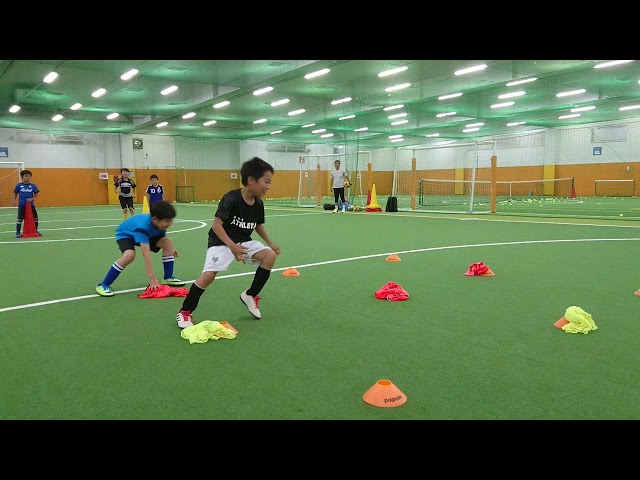
This is a game where you toss beanbags into targets arranged in a grid, aiming to line up a row.
By adjusting the number and size of the squares and the distance to the targets, you can tailor the rules to the participants and make it exciting.
The key is how you throw the beanbags so they reach the targets; it helps build concentration for gauging distances to far objects and for adjusting throwing strength.
Assess your own abilities carefully and decide which targets you’re more likely to reach.