

[For Seniors] Introducing Recreational Activities Anyone Can Enjoy at Geriatric Health Facilities!

In nursing care facilities, there are residents with a wide variety of backgrounds.
Many use wheelchairs as well.
As people grow older, they tend to have fewer interactions with others, which can lead them to stay in their rooms more often.
In such circumstances, some may wonder whether there are recreational activities that anyone can enjoy.
This time, we’re introducing recreational activities at nursing care facilities that everyone can enjoy.
Please engage in these activities while interacting with those around you.
- [For Seniors] Fun and Engaging Recreational Activities in Nursing Homes
- [For Seniors] Easy and fun seated activities you can do in your room
- For Seniors: Effective Recreation for Preventing Care Needs—Have Fun While Staying Healthy
- [For Seniors] Recreational Activities at Special Nursing Homes That Everyone Can Join
- Recommended recreational activities to help seniors enjoy their time in care facilities
- Recommended Indoor Exercises for Seniors
- [For Seniors] Today’s Recommended Activity: Fun and Engaging
- [November Health Topic] Indoor Recreation Ideas for Older Adults
- [For Seniors] Recommended Handmade Activities! Simple Ideas
- [For Seniors] Fun Even Without Sight! Recreation Ideas
- Hand games that liven things up for seniors—also great brain training
- For Seniors: Fun and Lively Exercise Recreation
- Liven up the Respect-for-the-Aged gathering: A roundup of recreational activities everyone can enjoy.
[For Seniors] Introducing Recreational Activities Anyone Can Enjoy at Nursing Care Facilities! (61–70)
10-minute full-body workout

In just 10 minutes, you can do a full-body workout while sitting in a chair.
Move your legs by lifting them while seated and spreading both legs apart.
These exercises strengthen your leg muscles and make walking easier, and they may also help prevent falls.
You can also work your upper body and abs by sliding your arms sideways at face height and leaning forward to bring your elbows and knees closer together.
It’s only a 10-minute routine, but it engages your whole body.
Since it’s done while sitting, it’s safe for older adults as well.

Three-letter shiritori

What’s the very first game you remember learning as a child? Tag, rock-paper-scissors, and of course some might say shiritori.
Let’s spice things up with a twist—not just regular shiritori, but “three-letter shiritori.” Writing answers on a whiteboard takes a bit more time, but seeing each person’s handwriting and simple doodles can spark all kinds of conversation.
Plus, using your hands makes it a nice brain workout.
If you have a whiteboard, you can also enjoy illustrated shiritori just as it is.
I love you after 43 years

43 Years Later, I Love You is a film that portrays an elderly man who lies his way into the same care facility in order to reunite with his former lover.
Because the facility is a place for people with Alzheimer’s, the story emphasizes how he faces a past love who no longer remembers him.
Through the lens of Alzheimer’s disease, the film depicts the preciousness of memory, love, and life, and powerfully conveys the importance of bonds.
It’s a work that also prompts us to look back on the path we’ve walked so far and reflect on the kinds of love and connections we’ve had.

Shoo Away Game

Let’s play a fun game using balls made from crumpled paper.
It’s called the “Shoo-It-Away Game.” Crumple up sheets of paper or newspaper into balls and place them in a horizontal line in the center of the table.
Before you start, put a strip of tape across the middle of the table to mark the center line.
This tape divides the table into your side and your opponent’s side.
When the game begins, use your hands to push the paper balls into your opponent’s territory on the opposite side.
The rules are simple, but it sounds like it could get exciting.
If you make the paper balls pink, they’ll look like cherry blossoms—perfect for an April game.
It also encourages conversation among participants and can help promote communication among older adults.
Arunashi quiz

It’s a game where you’re shown words divided into two groups—“has” and “doesn’t have”—and you have to figure out what they have in common.
The tricky part is that the shared feature can take many forms, such as something that appears when you add a word before or after, or a property hidden within the word itself.
The breadth of possible commonalities makes it challenging, but it also stimulates the brain by encouraging diverse approaches.
Since that same breadth can make it hard, let’s provide hints gradually to help guide the thinking process.
If you try reading the words out loud, you might notice something that brings you closer to the answer.
I’ll go on alone, brash and headstrong.
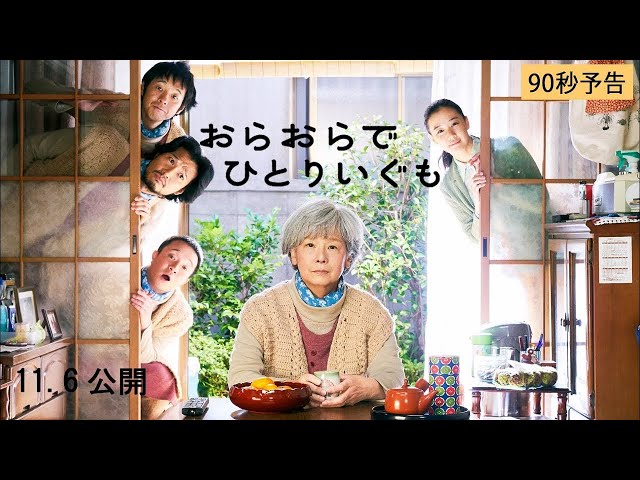
The film Ora, Ora Be Goin’ Alone is based on Chisako Wakatake’s novel and was released in 2020.
It portrays, with touches of humor, a protagonist who has lost her husband and faces loneliness while continuing to live true to herself.
Though it deals with themes like loneliness and aging, it never becomes pessimistic; instead, it conveys the richness and fascination of life.
The distinctive visual style, in which flashbacks and reality intersect, is also striking and seems likely to prompt viewers to reflect on their own lives.
Beanbag Tower

Many older adults may have played with beanbags when they were young.
Some may have also played beanbag games with their own children or grandchildren.
Here’s a game that uses those beanbags to build a tower.
The rules are simple: compete to see how many beanbags you can stack on top of an upside-down paper cup.
By holding and stacking the beanbags, you can expect to improve or maintain fine motor balance and concentration.
You can focus and play on your own, or make it a team competition for extra excitement.
If you like, please give it a try.