

[For Seniors] Introducing Recreational Activities Anyone Can Enjoy at Geriatric Health Facilities!

In nursing care facilities, there are residents with a wide variety of backgrounds.
Many use wheelchairs as well.
As people grow older, they tend to have fewer interactions with others, which can lead them to stay in their rooms more often.
In such circumstances, some may wonder whether there are recreational activities that anyone can enjoy.
This time, we’re introducing recreational activities at nursing care facilities that everyone can enjoy.
Please engage in these activities while interacting with those around you.
- [For Seniors] Fun and Engaging Recreational Activities in Nursing Homes
- [For Seniors] Easy and fun seated activities you can do in your room
- For Seniors: Effective Recreation for Preventing Care Needs—Have Fun While Staying Healthy
- [For Seniors] Recreational Activities at Special Nursing Homes That Everyone Can Join
- Recommended recreational activities to help seniors enjoy their time in care facilities
- Recommended Indoor Exercises for Seniors
- [For Seniors] Today’s Recommended Activity: Fun and Engaging
- [November Health Topic] Indoor Recreation Ideas for Older Adults
- [For Seniors] Recommended Handmade Activities! Simple Ideas
- [For Seniors] Fun Even Without Sight! Recreation Ideas
- Hand games that liven things up for seniors—also great brain training
- For Seniors: Fun and Lively Exercise Recreation
- Liven up the Respect-for-the-Aged gathering: A roundup of recreational activities everyone can enjoy.
[For Seniors] Introducing Recreational Activities Anyone Can Enjoy at Geriatric Health Facilities! (21–30)
Rolling Table Tennis
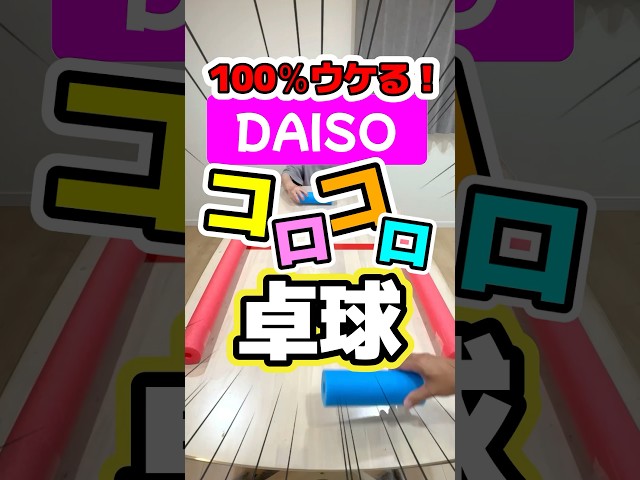
Here’s an introduction to playing table tennis using pool noodles, which are also sold at 100-yen shops.
Pool noodles are soft, sponge-like sticks.
Although they’re originally used for swimming, their soft material and shape make them useful for all kinds of games.
This time, we’ll attach pool noodles to a table or cut them to a handheld length.
If you prepare a ping-pong ball, you can enjoy a version of table tennis you can play on a table.
Since everything used for this game is soft and lightweight, it should be easy for older adults to handle.
You simply roll the ball across the tabletop, so it doesn’t require much strength, which is another nice benefit.

Parachute Game

Let me introduce a simple parachute game that’s easy to prepare.
Get some clothespins, a bag, and a target, and let’s have fun.
Clip a clothespin to the bottom of the bag to make a weight—your parachute is ready.
Throw the parachute toward the target.
The target has point values written on it, and you’ll add up your points.
The person with the highest score at the end wins.
It’s a parachute game everyone can enjoy together, so give it a try! It’s also a great way to spark conversation.

[For Seniors] Introducing Recreational Activities Anyone Can Enjoy at Nursing Care Health Facilities! (31–40)
Turtle scooping

Here’s a turtle scooping activity that also helps practice finger and wrist movements.
Prepare turtles made from construction paper, protected with lamination, and attach a plastic bottle cap to the back of each one.
Using a ladle to scoop the turtles is recommended.
Try scooping the turtles placed inside a box.
The bottle cap on the back makes them a bit unstable, which is part of the fun.
If using a ladle is too difficult, feel free to scoop with your hands—be flexible so everyone can enjoy it.
It might get lively, just like goldfish scooping at a festival.
Paper Cup Curling

Let me introduce Paper Cup Curling.
Prepare some paper cups, marbles, and a sheet with point values, and let’s get started.
Attach the scoring sheet lengthwise to the table.
The key is to place the higher-point areas a bit farther away.
Participants sit in front of the scoring sheet, put a marble into a paper cup, and slide it forward with momentum.
Choose which score you want to aim for and slide the cup toward that target.
The person with the highest total score wins.
Experiment with how hard to push and how to slide the paper cup—good luck!
Stacking paper cups

Here’s a cup-stacking game that boosts finger strength and concentration.
Get some paper cups and clothespins ready and have fun.
Use the clothespins to stack the paper cups.
Whoever stacks five cups before their opponent wins.
The key is the grip strength you use to open and close the clothespins while stacking.
Once you get used to it, try setting a time limit or playing in teams for an extra challenge.
It’s a game you can enjoy over and over, so give it a try!
String Balloon Relay

It’s a game where you work with the person across from you to skillfully control a string you’re holding and carry a balloon to a target location.
Because you can’t move the balloon well with your own power alone, you feel a bit of frustration, but also the fun of cooperation.
If you make it like a relay where you pass the balloon to the next person, not only coordination with the person opposite you but also strategy with the person before and after you is tested, which makes the game even more engaging.
It’s a game where the spirit of cooperation is key, including how you tension and move the string.

karaoke

For older adults who enjoy singing, karaoke can be a delightful time.
Singing can help relieve stress and also trigger memories from when the songs were popular.
Some may find themselves reminiscing about the past, thinking, “Back then, this and that happened,” as they sing or listen to nostalgic songs.
In addition, moving the mouth while singing can be expected to have benefits as an oral exercise.
Even older adults who are not comfortable singing in front of others can still enjoy themselves by listening, clapping along, or humming together.