

![[For Seniors] Recreational Activities at Special Nursing Homes That Everyone Can Join](https://i.ytimg.com/vi_webp/1sJsX6YWvgk/maxresdefault.webp)
[For Seniors] Recreational Activities at Special Nursing Homes That Everyone Can Join

In special nursing homes for the elderly, recreational activities are held frequently.
Among residents with a wide range of physical conditions living together, some staff members may be wondering, “Is there a recreation activity that everyone can enjoy?”
In this article, we introduce recreational activities that people with varying physical conditions can enjoy.
Recreation is important not only for maintaining motor functions and cognitive abilities, but also for deepening interaction with others.
We cover a wide range—from brain-training activities to those that involve physical movement.
Please use this as a reference!
[For Seniors] Recreational Activities at Special Nursing Homes That Everyone Can Join (1–10)
round (canon)NEW!

A round is a method of singing where you divide the singers into two or more groups and have them sing the same song with staggered entries.
It’s the same piece, but it creates a different kind of harmony than when everyone sings together.
The key point to watch out for is not getting pulled along by another group.
If you don’t keep track of your own cue and where you are in the song, you’ll end up following another group and won’t be able to get back.
For the starting cue, it’s a good idea for a staff member to give a “ready, go” signal.

Baton relayNEW!

Participants sit on chairs arranged in a circle facing outward.
Make sure the teams are split exactly halfway around the circle.
Prepare two long strings, and have the first and last person on each team hold the ends.
At the starting signal, begin threading batons onto the string one after another.
The team that finishes threading the specified number first wins! If the string sags, the batons will get caught, so everyone should work together.
Wrapping tape around both ends of the string makes it easier to thread the batons.
Flag-raising gameNEW!

The “Flag-Raising Game” is an event that anyone can easily join, where you can enjoy moving according to instructions.
Using red and white flags, participants raise and lower the flags in response to cues like “Raise red” and “Lower white.” The rules are simple and easy to pick up even for first-timers.
Another advantage is that it can be played while seated, allowing many people to participate with confidence.
Because players must listen to instructions and make quick decisions, it also helps build concentration.
Moving the arms while holding the flags provides upper-limb exercise as well, letting participants be active while having fun.
When you succeed, you get applause, and even mistakes draw laughter, making it an event that brightens the atmosphere of the entire venue.

Bingo gameNEW!
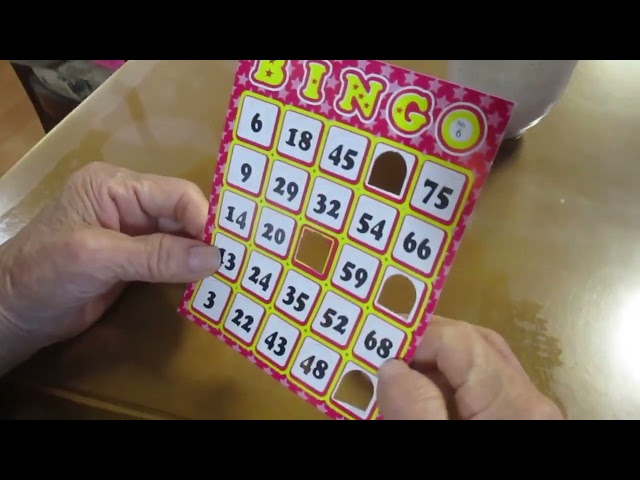
A classic game that everyone can enjoy using numbers.
You check the numbers being called while looking at the card in your hand.
Each time the numbers line up, the excitement builds, and the “just one more” moment makes your heart race even more.
When you complete a line, the joy is so great that applause and cheers naturally spread.
You can participate comfortably while seated, and even first-timers can enjoy it with confidence.
As you call out to the people around you and proceed together, a sense of unity forms, creating a fun, smile-filled time.
Its appeal is that anyone can join in easily.

Guu-Choki-Paa Exercise

We’d like to introduce an exercise that stimulates the brain using the hand movements of rock–paper–scissors.
The hands contain many nerves, and by using the fingertips, a wealth of stimuli is transmitted to the brain—hence hands are often called the “second brain.” In this exercise, you not only go through rock–paper–scissors in order, but also reverse the sequence and add claps in between, continually delivering fresh input so the brain doesn’t get bored.
It also includes playful elements that are sure to make you chuckle.
Research suggests that laughter can boost immunity, so this makes for an ideal routine to help maintain health and prevent declines in cognitive function.
oral exercises

Oral exercises strengthen the muscles around the mouth, inside the mouth, and the tongue.
These important exercises help make essential eating movements—chewing and swallowing—smoother and help prevent aspiration.
Why not enjoy doing these valuable oral exercises together? Since they basically involve moving the mouth, you don’t need any equipment or space, making them an easy, on-the-spot recreational activity.
They’re often done to music as well, so staff can sing children’s songs, or you can play music from a computer or speakers while enjoying the exercises.
It’s great to let everyone train while having fun as a recreation.

Seated Rhythm Exercises to Classic Showa-Era Hits

This time, we’ll introduce a singing exercise routine that moves your body to nostalgic Showa-era classics.
Since it involves physical movement, it’s best to start with songs at a slower tempo.
When you move your body to music, your brain continuously engages in activities like keeping rhythm, coordinating movement, and deciding what to do next.
Because of this, the abundant stimulation activates the brain and is said to offer cognitive training benefits.
Once you get used to it, adding singing while you move can further stimulate your brain.
Do it within a comfortable range, and enjoy yourself as you go.