

[For Seniors] Fun and Informative Trivia Quiz Collection

There may be older adults who are spending monotonous days.
So this time, we’ll introduce some useful trivia quizzes that will make you think, “I see!”
You can use them as brain training by asking the questions, and they’re also fun to bring up in casual conversations with seniors.
Because they spark interest easily, they’re likely to be a hit as a recreational activity, too!
With trivia quizzes, you can hear the answers and gain new knowledge.
People often feel like sharing the trivia they’ve learned with others, which can naturally encourage communication.
- [For Seniors] Fun and Informative! Health Trivia Quiz
- [For Seniors] Laugh-Out-Loud, Crowd-Pleasing! Fun Quiz
- [For Seniors] Fun and Informative! Trivia and Quizzes Introduced
- [For Seniors] Trivia Multiple-Choice Quiz
- [For Seniors] Boost Your Knowledge! Fun Trivia Quiz
- [For Seniors] Today’s recommended quiz. Daily brain-training quiz!
- [For Seniors] Brain Training! Recall Quiz Collection!
- [For Seniors] Fun! Let’s Get Excited with Japan’s Number One Quiz
- [For Seniors] January Trivia Quiz & Fun Facts. Brain training with quizzes about New Year and winter.
- [For Seniors] Liven Things Up! 3-Choice Ranking Quiz
- [Brain Training] Lively Word Quiz for Seniors
- [For Seniors] Surprising Facts! Multiple-Choice Trivia Quiz (4 Options)
- [For Seniors] Fun and Educational True-or-False Quiz
[For Seniors] Fun and Useful Trivia Quiz Collection (31–40)
It’s said that there are more dentists than a certain type of shop, but which of the following shops are there fewer of?

- convenience store
- bookstore
- supermarket
- drugstore
See the answer
convenience store
As of 2022, there were 55,956 convenience stores nationwide, compared to 67,886 dental clinics. It’s striking to realize that there are more dentists than convenience stores, which you see everywhere.

Trivia Quiz: Japan’s Three Great ___ — What’s the last one?

There’s a joke that goes like this: when people talk about Japan’s Three Great Hot Springs, everyone says “Kusatsu Onsen, Beppu Onsen, and… [their own hometown’s onsen]” as the third one.
It might be more common than you’d think.
So let’s try a “Japan’s Three Great ___: what’s the last one?” quiz.
For example: “Japan’s three great rivers are the Tone River, the Ishikari River, and what’s the third?” or “Japan’s Three Scenic Views are Matsushima, Miyajima, and what’s the last one?” Many of these quizzes leave you thinking, “The answer is on the tip of my tongue…,” which can be delightfully frustrating.
Highly recommended for travel lovers!
What is the name of the structure that became the symbol of the Japan World Exposition held in Osaka in 1970?
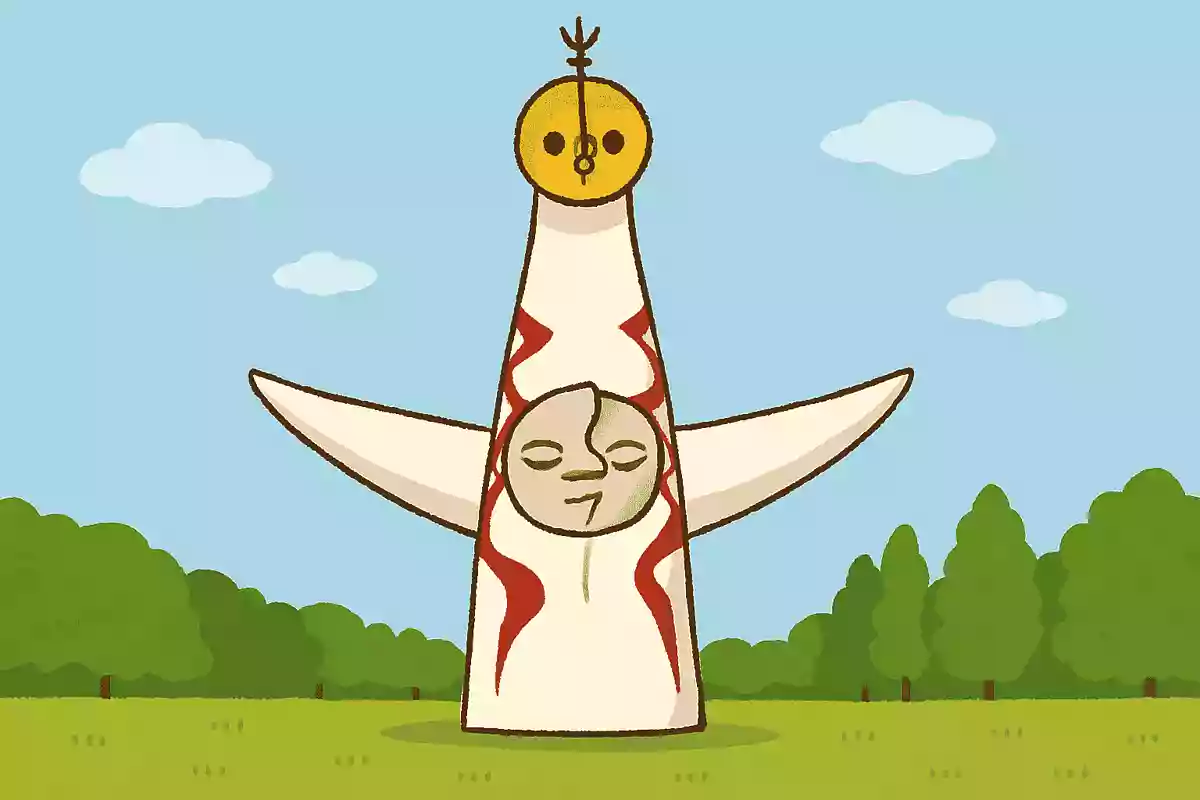
The Tower of the Sun, designed by artist Taro Okamoto, became the symbol of the Japan World Exposition held in 1970.
It’s a distinctive tower with a large white body and three faces—two on the front and one on the back.
The face at the top is called the Golden Face, the one on the front is the Sun Face, and the one on the back is the Black Sun.
Many older people may have seen the Tower of the Sun.
Its impactful design captivated many at the time.
Although it was originally scheduled to be dismantled after the Osaka Expo closed, a large number of requests for its preservation led to the decision in 1975 to preserve it permanently.

What does the term “zenchi” (as used when someone is injured) mean?
- No longer having difficulties in daily life
- That the treatment at the hospital has been completed.
See the answer
That the treatment at the hospital has been completed.
“Zenchi” is written with the characters for ‘everything’ and ‘healed,’ so you might think it means a complete recovery and being able to live your daily life as before. However, the term actually refers to the end of medical treatment at the hospital. Recovering to the point where there is no hindrance to daily life is called “kanchi,” or complete recovery.

Which part of a daikon radish is spicier, the top or the bottom?
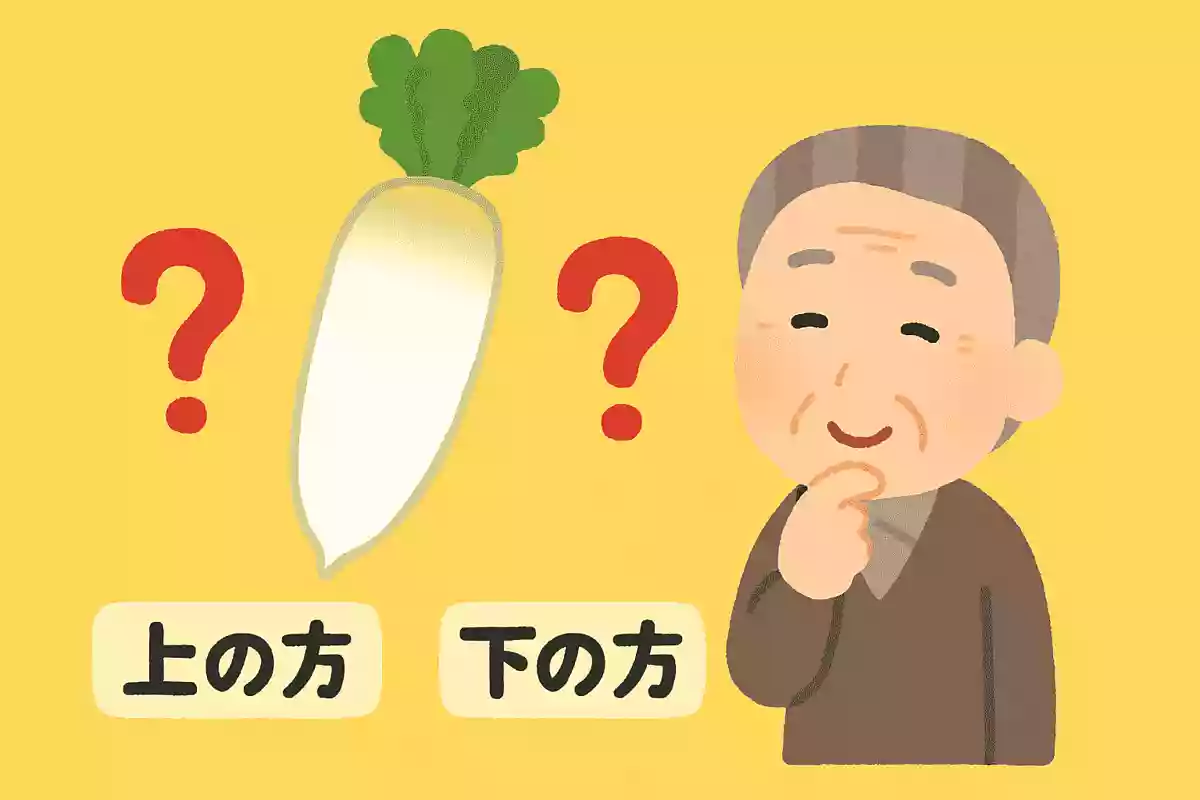
It’s said that daikon radishes are sweeter at the top and spicier toward the bottom.
The upper part is sweeter and juicier, making it ideal for salads and raw preparations.
The lower part is spicier, more fibrous, and firmer, so it’s great for grated daikon or pickles like takuan.
The middle section has a moderate tenderness and can be used in a wide range of dishes such as simmered or stir-fried recipes.
Learn how to use each part of the daikon to make delicious dishes.
By understanding the characteristics of each section, you can add an extra touch to elevate your cooking.

[For Seniors] Fun and Educational Trivia Quiz Collection (41–50)
What was the original purpose of kombu-jime?
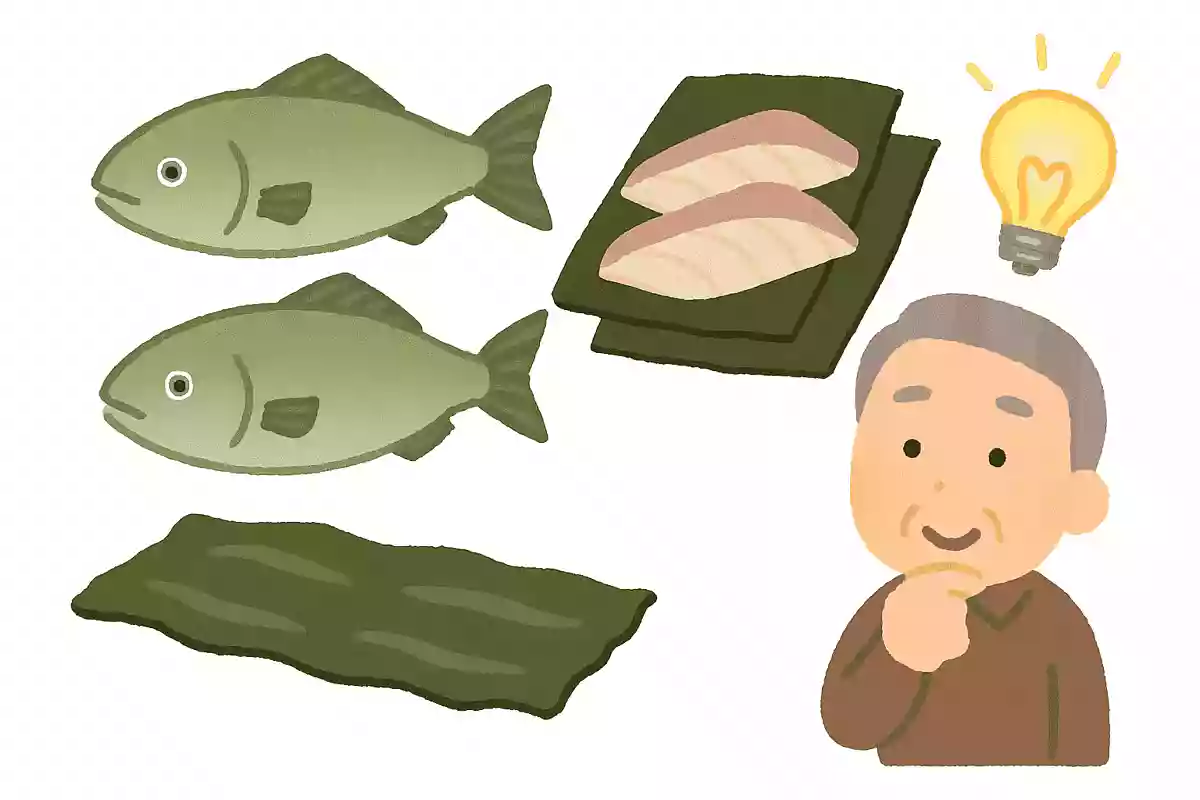
Knowing the origins can change how you see a dish! Here’s a trivia quiz: What was the original purpose of kombu-jime (curing with kelp)? The correct answer is “to make it last longer.” In the days before refrigerators, our predecessors found ways to extend the shelf life of fish and meat by drawing out excess moisture.
Most households now have refrigerators, but this method is still loved today.
Even the dishes we take for granted reflect the ingenuity of those who came before us, inspiring a renewed sense of gratitude.
In which prefecture in Japan can you see the latest autumn foliage?
Japan is a country where you can feel temperature differences depending on the region, and natural phenomena seem to shift in particular directions as well.
Among these changing natural phenomena, let’s focus on autumn foliage: which prefecture sees the latest autumn colors? Here’s a hint: it’s a warm place where the temperature doesn’t drop easily.
If imagining “not getting colder” is tricky, you might think of places that get especially hot in summer.
The answer is Shizuoka Prefecture.
In particular, the autumn leaves at Atami Plum Garden reach their peak from late November to December, earning it the nickname “the latest autumn foliage in Japan.”
