

[For Seniors] Challenging but Exciting! Kanji Quiz


In this article, we introduce kanji quizzes designed for older adults!
These quizzes are often used as activities at day service centers, and this time we’ve gathered ones that focus on kanji.
With people using mobile phones more often and being able to convert text so easily, many can read kanji but find writing them difficult, don’t you think?
It’s great to let each person think carefully on their own, and it’s also fun to solve the questions everyone’s unsure about by chatting and consulting together.
Kanji quizzes are a win-win—they train the brain and help with studying—so be sure to give them a try!
- [For Seniors] Fun and Exciting! Difficult Kanji Quiz
- [For Seniors] Lively Wordplay Game: Fun Recreation for Elderly Care
- [For Seniors] Perfect for Dementia Prevention! Jumbled Kanji Quiz
- [For Seniors] How many can you read? A comprehensive showcase of difficult food kanji
- [For Seniors] Fun! Let’s Get Excited with Japan’s Number One Quiz
- [For Seniors] Quiz on Kanji with Many Strokes
- [For Seniors] Fun and Lively! Recommended Quiz Questions
- [For Seniors] Have Fun with Wordplay Characters! A Collection of Funny Puzzles
- [Interesting] Summary of Kanji Reading Quiz Questions
- [For Seniors] Today’s recommended quiz. Daily brain-training quiz!
- [Brain Training] Lively Word Quiz for Seniors
- [For Seniors] Kanji Decomposition Quiz: Assemble the scattered characters
- [For Seniors] Fun Riddles That Stimulate the Brain
[For Seniors] Challenging but Exciting! Kanji Quiz (31–40)
“Power” + “Ten” + “Power” + “Power” + “Power” =
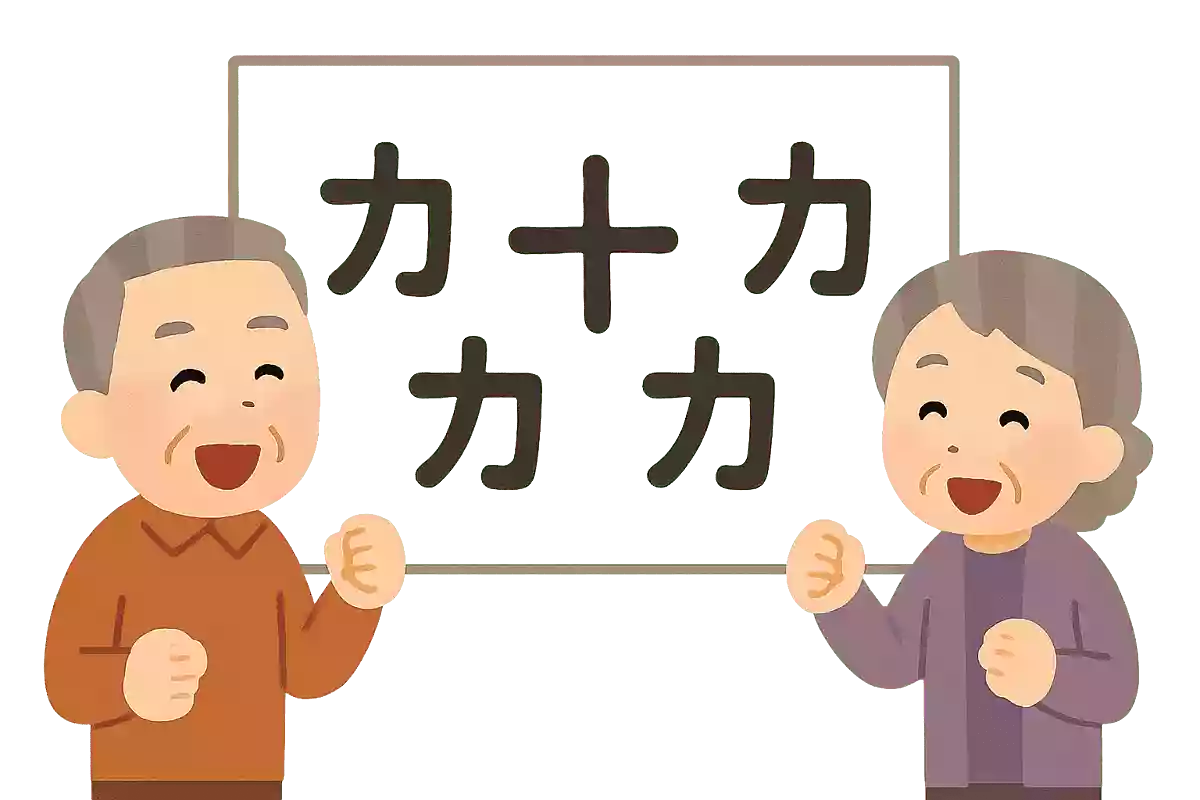
What word can you make using “力,” “十,” “力,” “力,” and “力”? Since there are many “力” characters, it might be best to start by looking for a kanji that contains many “力” within a single character.
You could give hints like “doing something together,” for example.
The kanji you can make with these characters is, precisely, 協力 (cooperation).
First, use “十” as the radical and place three “力” to the right to form 協.
Then, combine it with the remaining “力” to make the kanji 協力.

“ten” + “ten” + “sun/day” + “moon/month” + “moon/month” + “sun/day” =
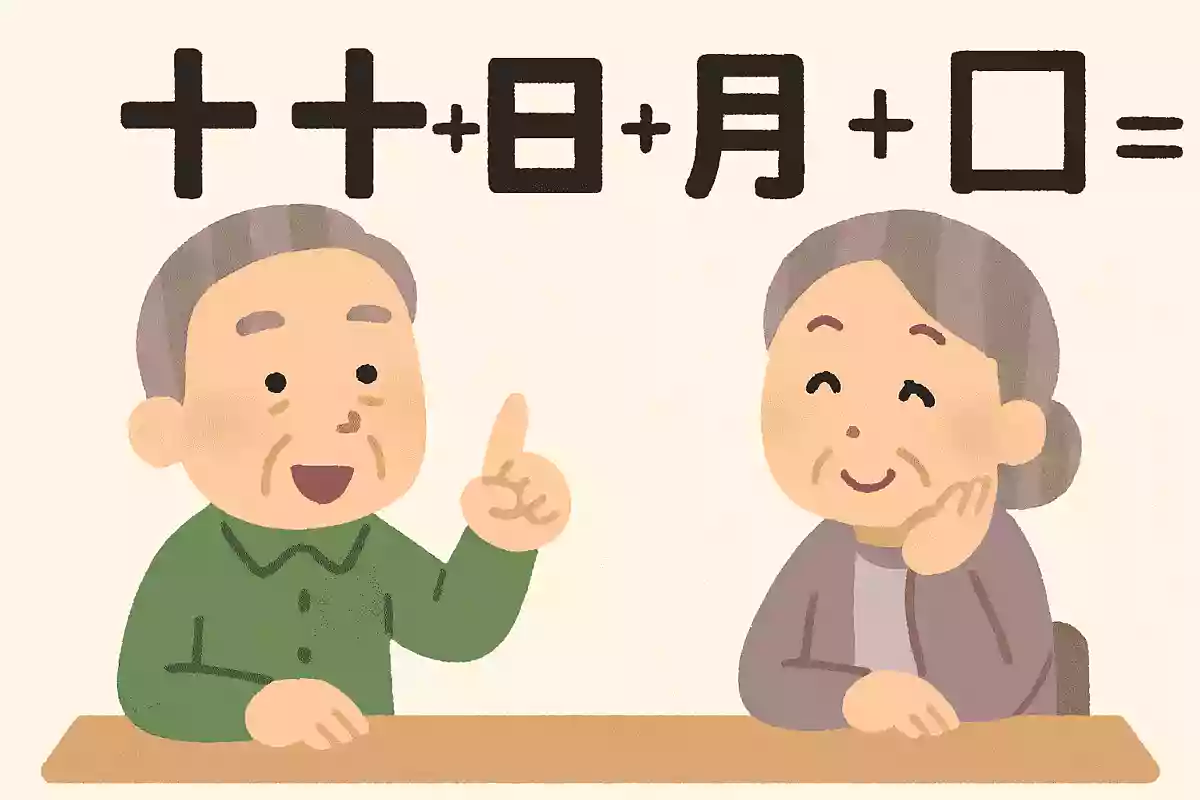
Let’s think of words that are formed by combining multiple kanji.
Because the parts are simple, the process of considering different combinations becomes good brain training.
You are given two instances each of the kanji “十” and “日,” so how you arrange them is the key point.
The answer is “early morning.”
「十」と「十」の間に「日」を挟んで一つの文字を作り、残った「日」はそのまま使うという発想に至るのは難しいことがあります。
If you’re giving a hint, it’s clearer to say that the word combines “a kanji made from four parts” with “a kanji used as-is.”

"合" + "竹" = "box"
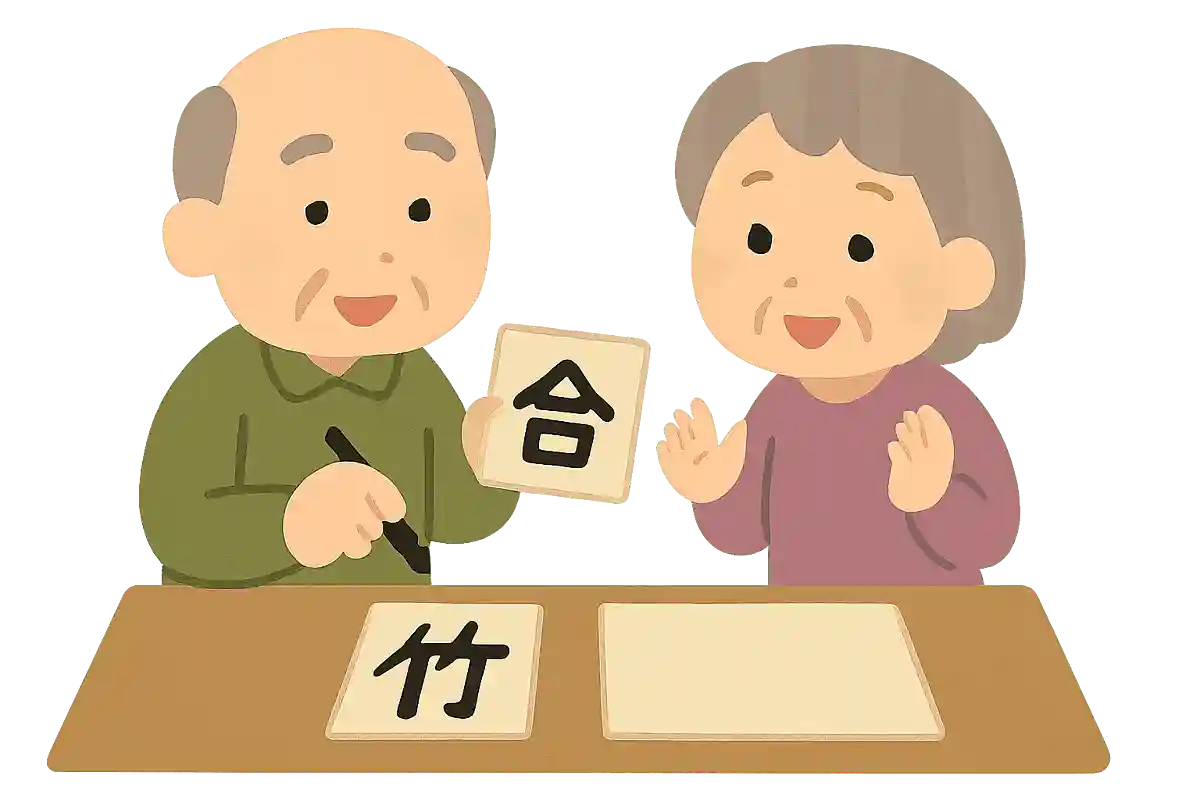
Let’s think of a kanji that can be completed using “合” and “竹.”
It’s important to try different arrangements—top and bottom or left and right—and experiment with the placement.
In this case, the correct arrangement is top and bottom, and if you notice that “竹” serves as the radical, you’ll likely find the answer.
答えは漢字の「答」です。
また、「竹」は部首として使われるときに少し形が変わることにも注意してください。
The key is realizing it’s a top-and-bottom combination, so if you present the puzzle in horizontal writing, the difficulty increases—highly recommended for an extra challenge.
“Sun” + “sword” + “mouth” + “grain” + “mouth” =
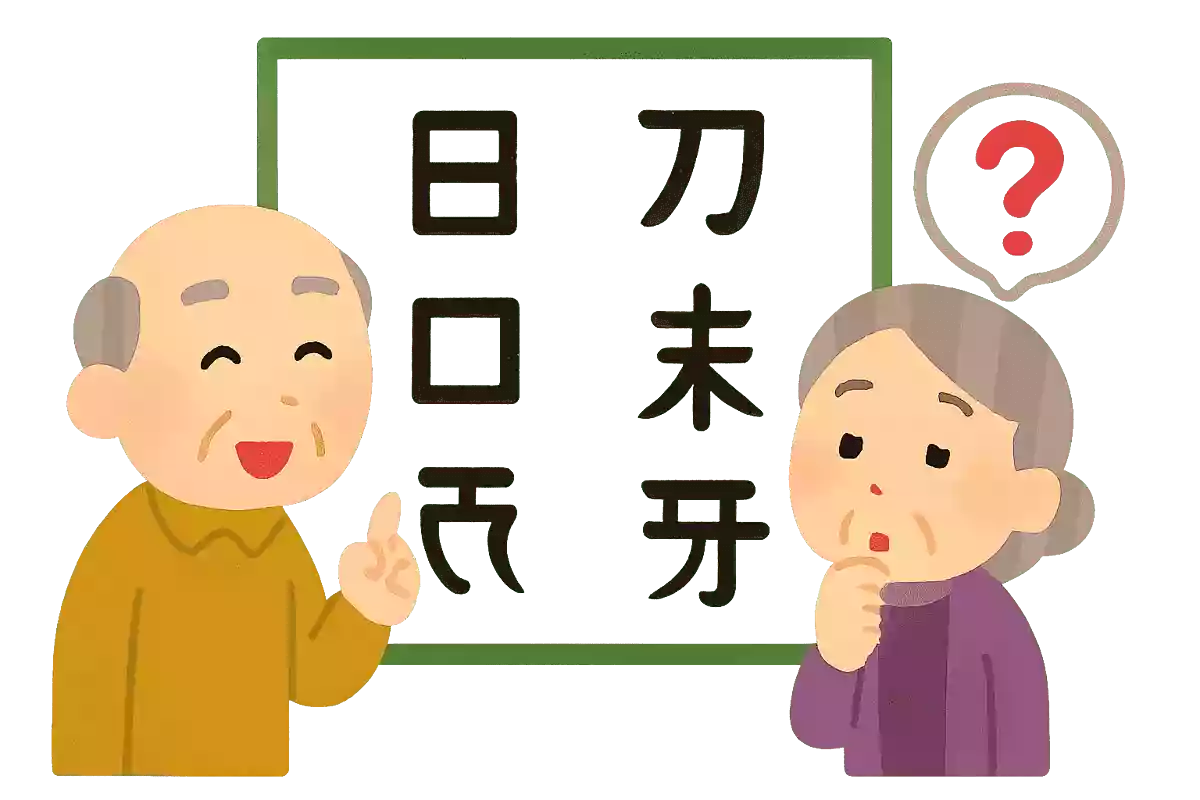
What compound character can be formed using these components: 日, 刀, 口, 禾, and 口? Since 日 and 禾 are often used as radicals, it might help to start from those.
It represents the name of a historical era—one that many elderly people lived through.
そのヒントを踏まえると、答えは昭和(Shōwa)です。
Place “刀” and “口” to the right of “日” to make “昭,” and place “口” to the right of “禾” to make “和,” forming “昭和.”
“field” + “power” =
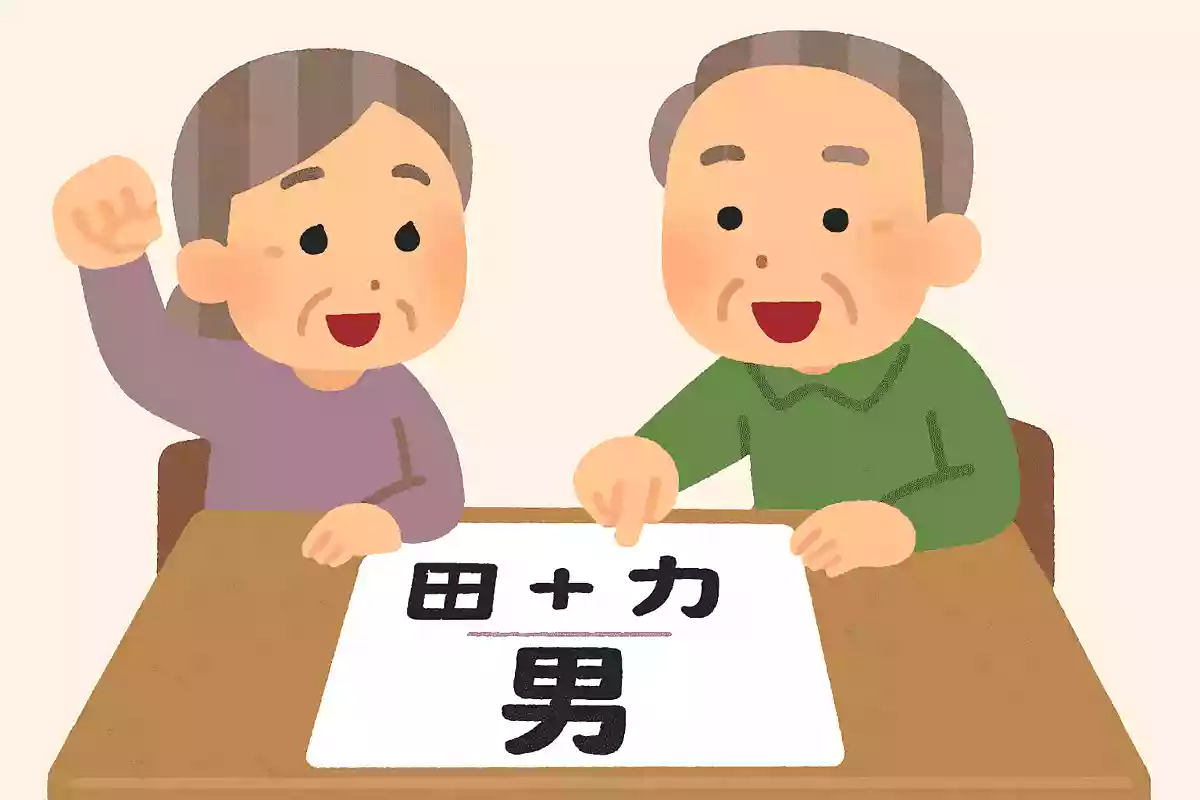
Let’s think of a kanji that combines 田 (ta) and 力 (chikara).
Because the parts are simple, their placement is crucial.
The answer is “男” (otoko), and realizing that the correct arrangement is vertical (one above the other) is the key to arriving at the solution.
If you simply stack them from top to bottom, you get the character 男, so saying it’s “a combination of 力 and 田” is a helpful hint.
It’s also interesting that, because the parts are so simple, different arrangements can still look like plausible kanji.
[For Seniors] Difficult but Exciting! Kanji Quiz (41–50)
“thread” + “book” + “meeting” =
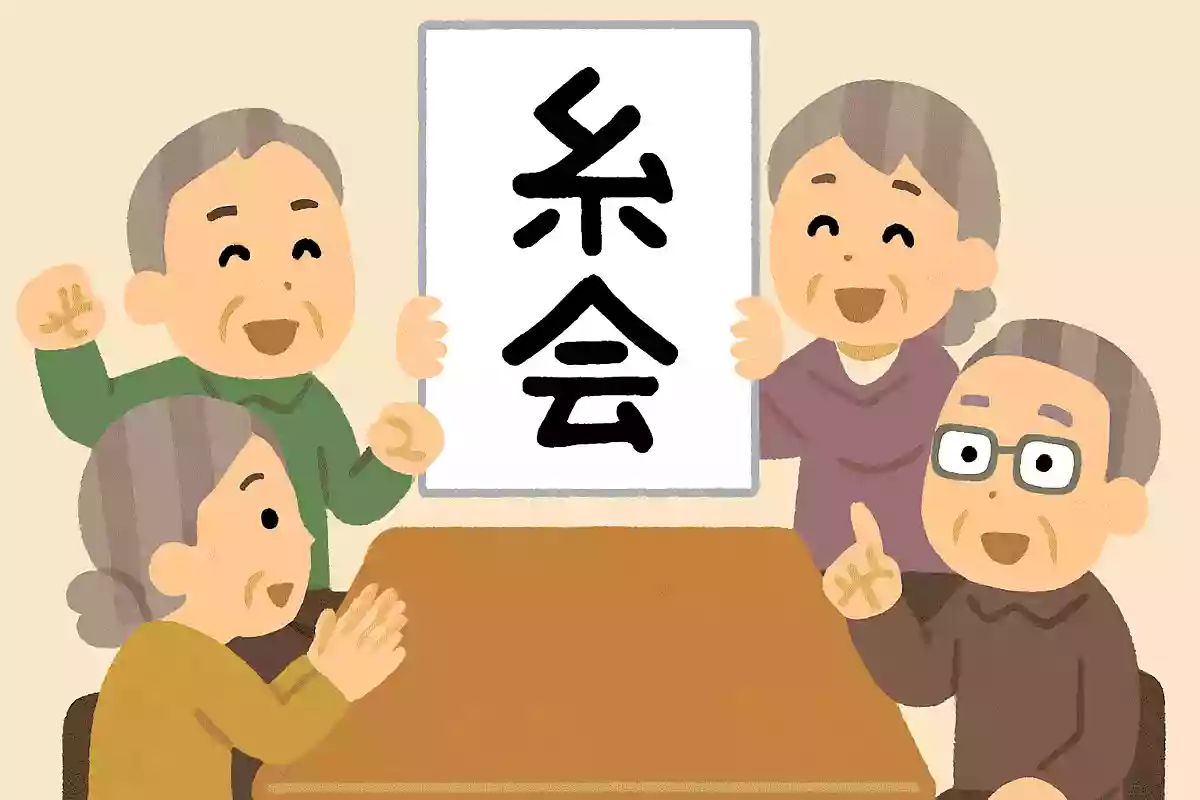
Combine “糸” (thread), “本” (book), and “会” (meet) to complete a word.
You’re not making a single character, but forming a word.
The key point is not just the arrangement but the choice of parts.
The answer is “絵本” (picture book).
It’s a puzzle that trains the brain by trying various patterns—considering how to construct kanji while also deciding which parts to leave as they are.
It seems easier to start by thinking about which kanji can be made from the given parts without insisting on using all of them at first.
“feather” + “white” + “thread” + “east” =
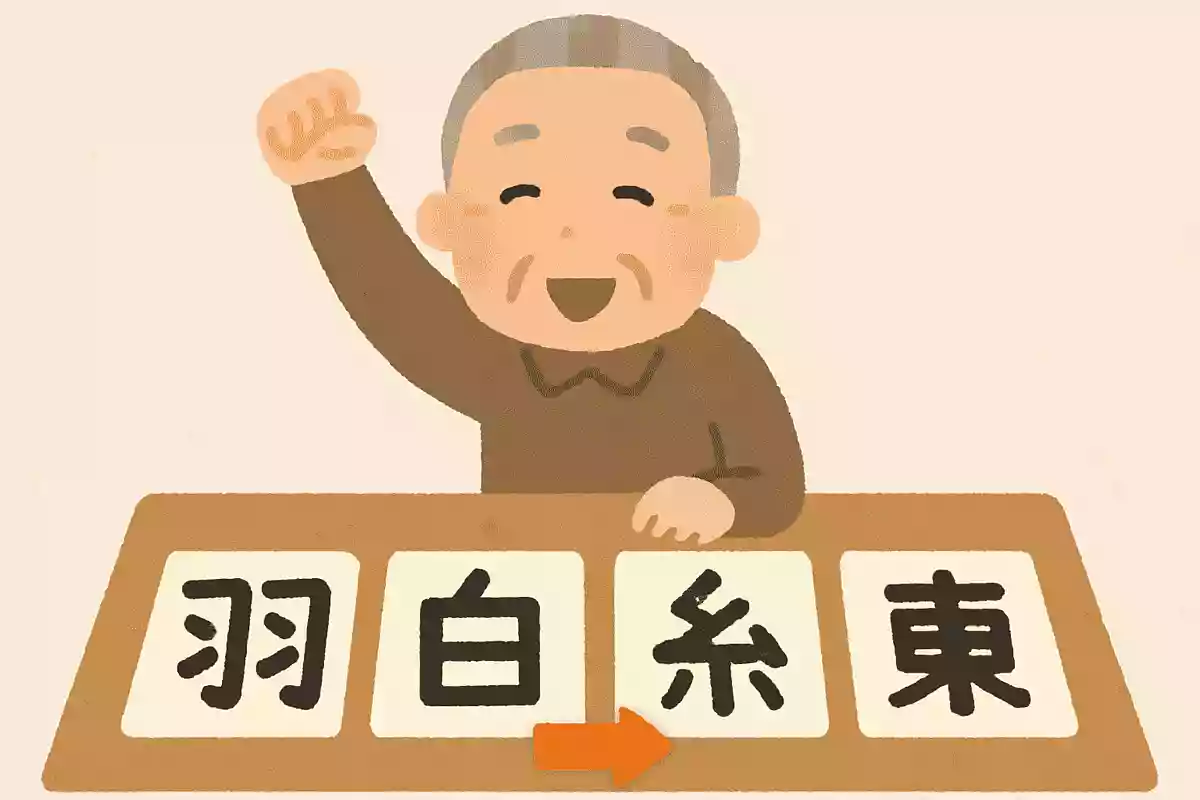
Combine the kanji “羽” (feather), “白” (white), “糸” (thread), and “東” (east) to complete a word.
The key points are which parts you choose and how you arrange them.
答えは「練習」です。部品の配置の違い、つまり横に積み重ねて「練」を作り、縦に積み重ねて「習」を作ることを考えることで、効果的に頭を働かせるという意味です。
Because this is a simple pattern of just arranging parts, you can enjoy trying various combinations and feeling yourself get closer to the answer.