

[For Seniors] Challenging but Exciting! Kanji Quiz


In this article, we introduce kanji quizzes designed for older adults!
These quizzes are often used as activities at day service centers, and this time we’ve gathered ones that focus on kanji.
With people using mobile phones more often and being able to convert text so easily, many can read kanji but find writing them difficult, don’t you think?
It’s great to let each person think carefully on their own, and it’s also fun to solve the questions everyone’s unsure about by chatting and consulting together.
Kanji quizzes are a win-win—they train the brain and help with studying—so be sure to give them a try!
- [For Seniors] Fun and Exciting! Difficult Kanji Quiz
- [For Seniors] Lively Wordplay Game: Fun Recreation for Elderly Care
- [For Seniors] Perfect for Dementia Prevention! Jumbled Kanji Quiz
- [For Seniors] How many can you read? A comprehensive showcase of difficult food kanji
- [For Seniors] Fun! Let’s Get Excited with Japan’s Number One Quiz
- [For Seniors] Quiz on Kanji with Many Strokes
- [For Seniors] Fun and Lively! Recommended Quiz Questions
- [For Seniors] Have Fun with Wordplay Characters! A Collection of Funny Puzzles
- [Interesting] Summary of Kanji Reading Quiz Questions
- [For Seniors] Today’s recommended quiz. Daily brain-training quiz!
- [Brain Training] Lively Word Quiz for Seniors
- [For Seniors] Kanji Decomposition Quiz: Assemble the scattered characters
- [For Seniors] Fun Riddles That Stimulate the Brain
[For Seniors] Difficult but Exciting! Kanji Quiz (21–30)
Witty characters using the kanji for ‘insect’

Let's think flexibly! Here's a wordplay puzzle using the character for 'insect' (虫).
The character 虫 is shown as if it has fallen over—what does that represent? The hint is to focus on the fact that it’s “an insect” and that it’s fallen.
If you consider whether the action “to fall over” (korobu) can be expressed with a different word, you might reach the answer.
The answer is “ladybug” (tentōmushi).
That’s because “to fall over” (korobu) can be rephrased as “転倒” (tentō), so we get “テントウ虫” (tentōmushi, ladybug).
It’s one of those puzzles that makes you say, “Ah, I see!”
banana (plantain)
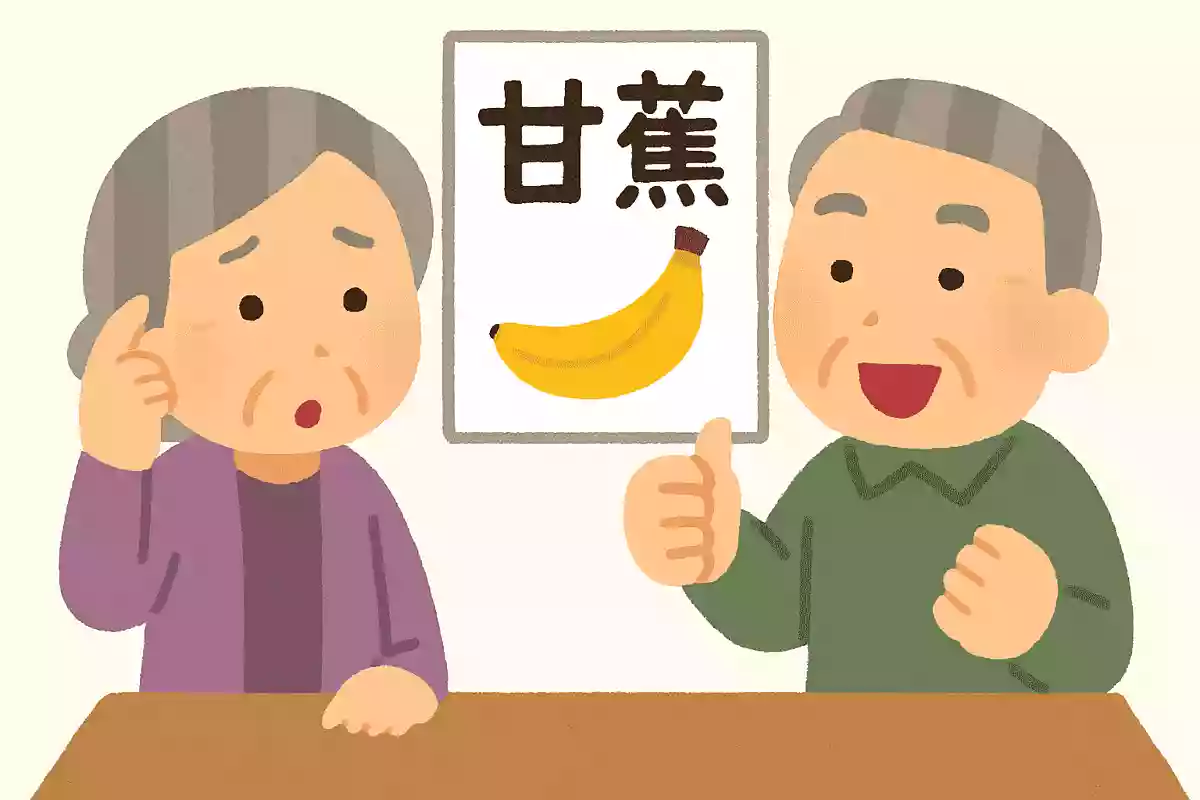
“甘蕉” is read as “banana.” Because many people write “banana” in katakana, some may find the kanji form a bit difficult.
The character “甘” represents the sweetness of bananas, and “蕉” is said to denote the type of plant.
Sweet bananas with yellow peels are popular with people of all ages.
There are many varieties—some are small, some are reddish, and so on.
While bananas are now a popular fruit easily found in supermarkets, they used to be a luxury item in the past.
The kanji may be a little challenging, but do try to remember it!

Speech + Mouth + Myself + Jewel =
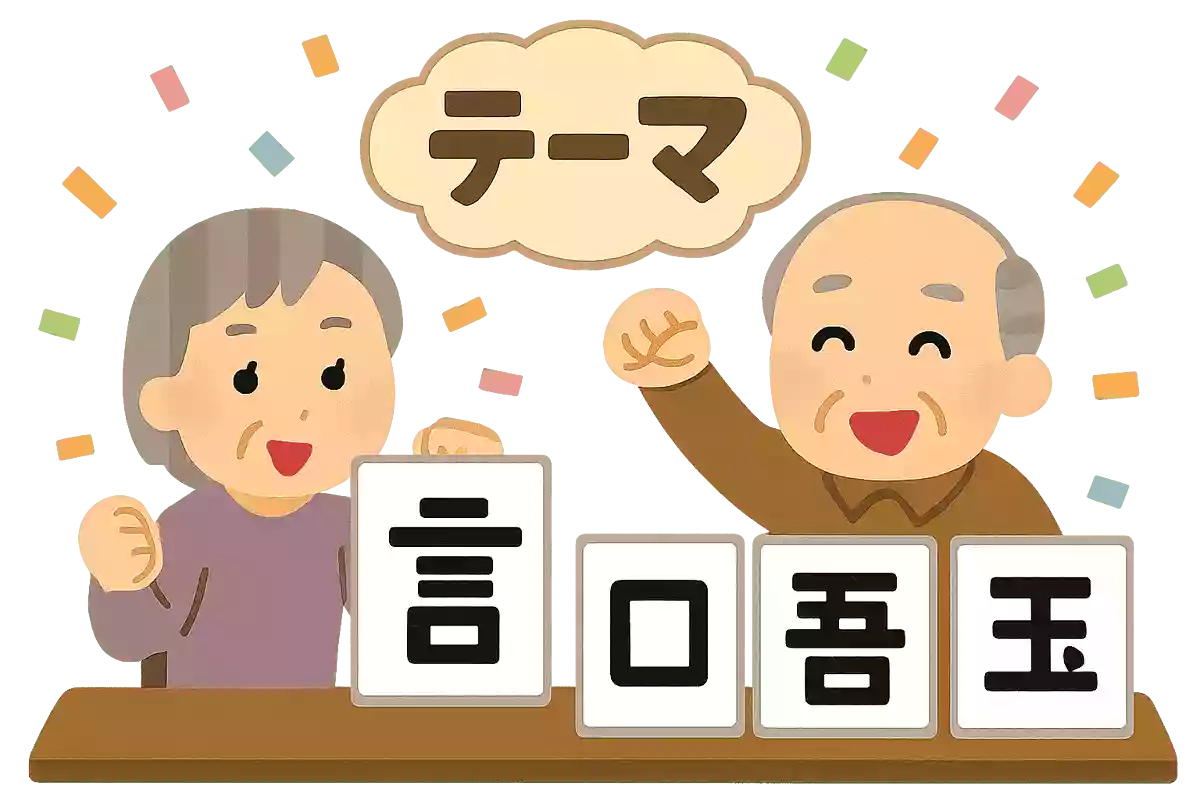
Let's think of a word formed by combining four kanji: 言 (word), 口 (mouth), 吾 (I), and 玉 (jade).
This puzzle involves creating two kanji from these parts and then forming a word, so exploring different combinations is a good brain workout.
The answer is 国語 (national language/Japanese), and the key insight is realizing you can place 玉 inside 口.
Since this problem requires a knack for combining components, it’s helpful to give a hint that 言 and 口 serve as radicals in each resulting kanji.
To increase the difficulty, you could even split 吾 into the parts 五 and 口 before presenting the puzzle—that might make it even more interesting.

iris
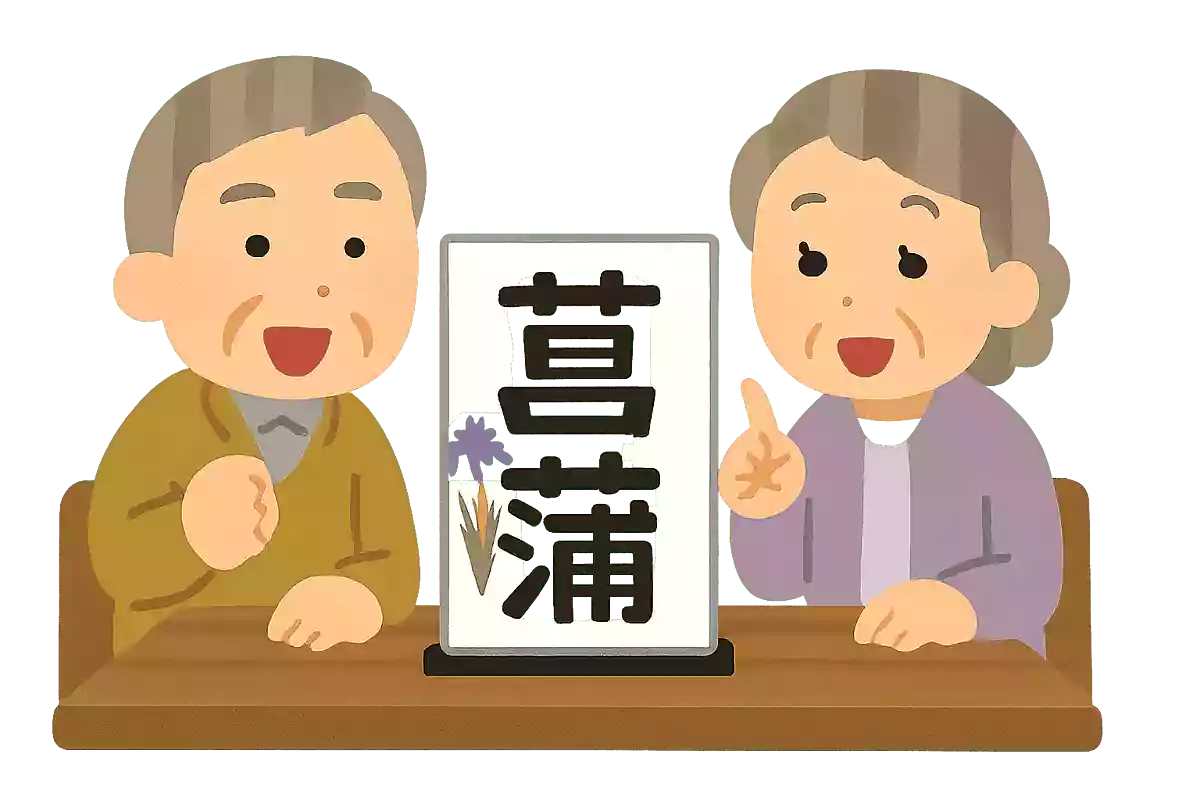
“Shōbu” is read as “shōbu.” Shōbu is believed to have a strong fragrance that wards off evil, so during the Boys’ Festival (Tango no Sekku), which prays for children’s health and growth, there is a custom of drinking “shōbu-zake,” made by steeping its roots, and taking “shōbu-yu” baths with bundles of its leaves and roots.
Incidentally, the same characters “菖蒲” can also be read as “ayame.” Because ayame (Iris) and hanashōbu (Japanese iris) are both in the Iris family and look very similar, they’re often confused.
Meanwhile, shōbu (sweet flag) belongs to the Araceae (arum) family and is a completely different plant from hanashōbu.
watermelon
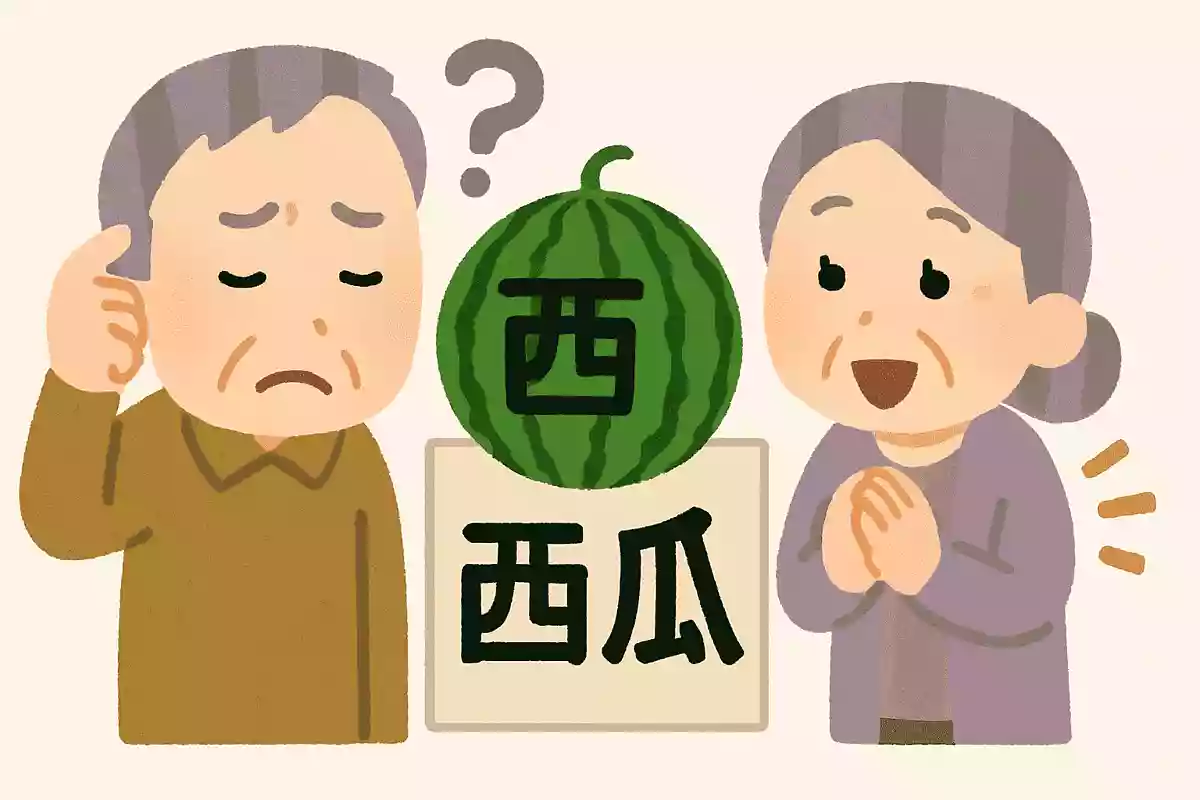
Have you ever seen the kanji “西瓜”? The features of the watermelon are its large, round shape and bright red flesh.
The flesh is sweet and juicy, and it’s loved as a symbol of summer.
The correct name for this food is “suika”! Watermelon is rich in potassium, which helps reduce swelling and prevent high blood pressure.
The seeds are small but plentiful, so be careful not to swallow them and start choking!

Compound-word quiz: idioms that repeat the same kanji twice

If you can read them, awesome! Here’s an idea for a quiz featuring compound words that repeat the same kanji twice.
The origins of kanji and the ways they combine each carry meaning and are fascinating, right? This time, there might even be questions that make you think, “There’s a combination like that?!” For example, you might see the word 「細々」 and be asked, “How do you read this kanji?” There are 25 such questions.
The difficulty increases in the latter half, so it could be a good idea to discuss and work together to figure out the answers.
Common Knowledge Kanji Quiz

Is being able to read it a given!? Here are some ideas for a common-knowledge kanji quiz.
Even with so-called common kanji, everyone makes mistakes… Try training your brain while taking on the quiz.
For example, you might see the word “出汁” and get a question like, “How do you read this kanji?” There are 20 such questions.
Try to focus and take on the quiz so you can answer within the 10-second time limit.
Getting the answers right might even boost your self-esteem!