

[For Seniors] Challenging but Exciting! Kanji Quiz


In this article, we introduce kanji quizzes designed for older adults!
These quizzes are often used as activities at day service centers, and this time we’ve gathered ones that focus on kanji.
With people using mobile phones more often and being able to convert text so easily, many can read kanji but find writing them difficult, don’t you think?
It’s great to let each person think carefully on their own, and it’s also fun to solve the questions everyone’s unsure about by chatting and consulting together.
Kanji quizzes are a win-win—they train the brain and help with studying—so be sure to give them a try!
- [For Seniors] Fun and Exciting! Difficult Kanji Quiz
- [For Seniors] Lively Wordplay Game: Fun Recreation for Elderly Care
- [For Seniors] Perfect for Dementia Prevention! Jumbled Kanji Quiz
- [For Seniors] How many can you read? A comprehensive showcase of difficult food kanji
- [For Seniors] Fun! Let’s Get Excited with Japan’s Number One Quiz
- [For Seniors] Quiz on Kanji with Many Strokes
- [For Seniors] Fun and Lively! Recommended Quiz Questions
- [For Seniors] Have Fun with Wordplay Characters! A Collection of Funny Puzzles
- [Interesting] Summary of Kanji Reading Quiz Questions
- [For Seniors] Today’s recommended quiz. Daily brain-training quiz!
- [Brain Training] Lively Word Quiz for Seniors
- [For Seniors] Kanji Decomposition Quiz: Assemble the scattered characters
- [For Seniors] Fun Riddles That Stimulate the Brain
[For Seniors] Difficult but Exciting! Kanji Quiz (41–50)
“Insect” + “World” + “Tree” =
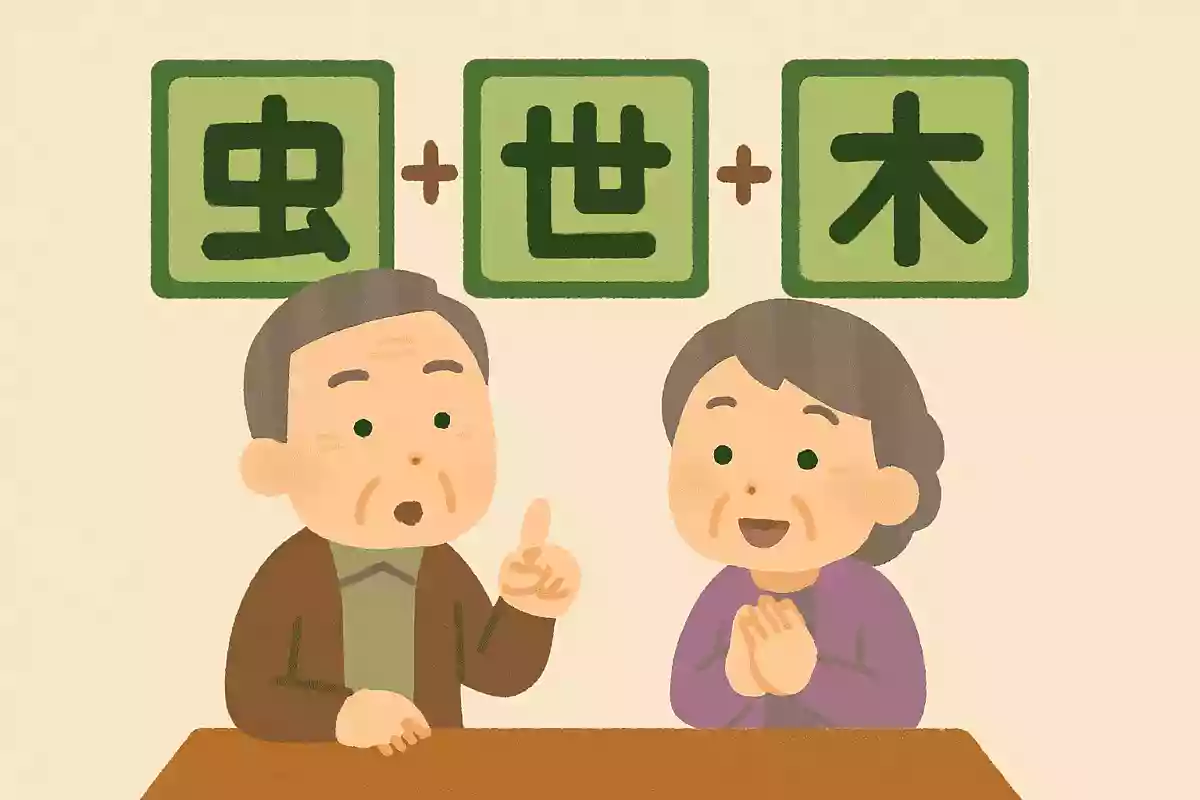
Let's think of a kanji that is completed by combining the three parts: '虫' (insect), '世' (world), and '木' (tree).
It’s important to consider which component becomes the radical and how to arrange them to form a kanji.
The answer is 蝶 (butterfly).
「虫」が部首であることに気づくのが重要なだけでなく、その横に配置するための構成要素として「葉」を作れることを理解するのも同様に重要です。
また、「木」を部首として使いたくなるかもしれませんが、そうすると他の必要な要素を構成できなくなることにも注意が必要です。

cactus

It’s written with the characters for “immortal’s palm” (仙人掌) and read as “saboten.” The kanji spelling 仙人掌 is said to originate from an emperor of China’s Han dynasty.
Emperor Wu, the seventh emperor, had a giant statue made of an immortal holding a dish in his hand, called “Xianrenzhang” (immortal’s palm), in his quest to concoct an elixir of immortality.
Because its appearance resembled that of a cactus, the term 仙人掌 came to mean “cactus.” Incidentally, there is a theory that the reading “saboten” comes from Portuguese.
The Portuguese who introduced cacti to Japan used them as a substitute for soap.
The plant came to be called “sekken-tai” (soap body), pronounced “sabontei,” which then shifted from “shaboten” to “saboten.”
There are four prefecture names that contain the names of animals. Which ones are they?
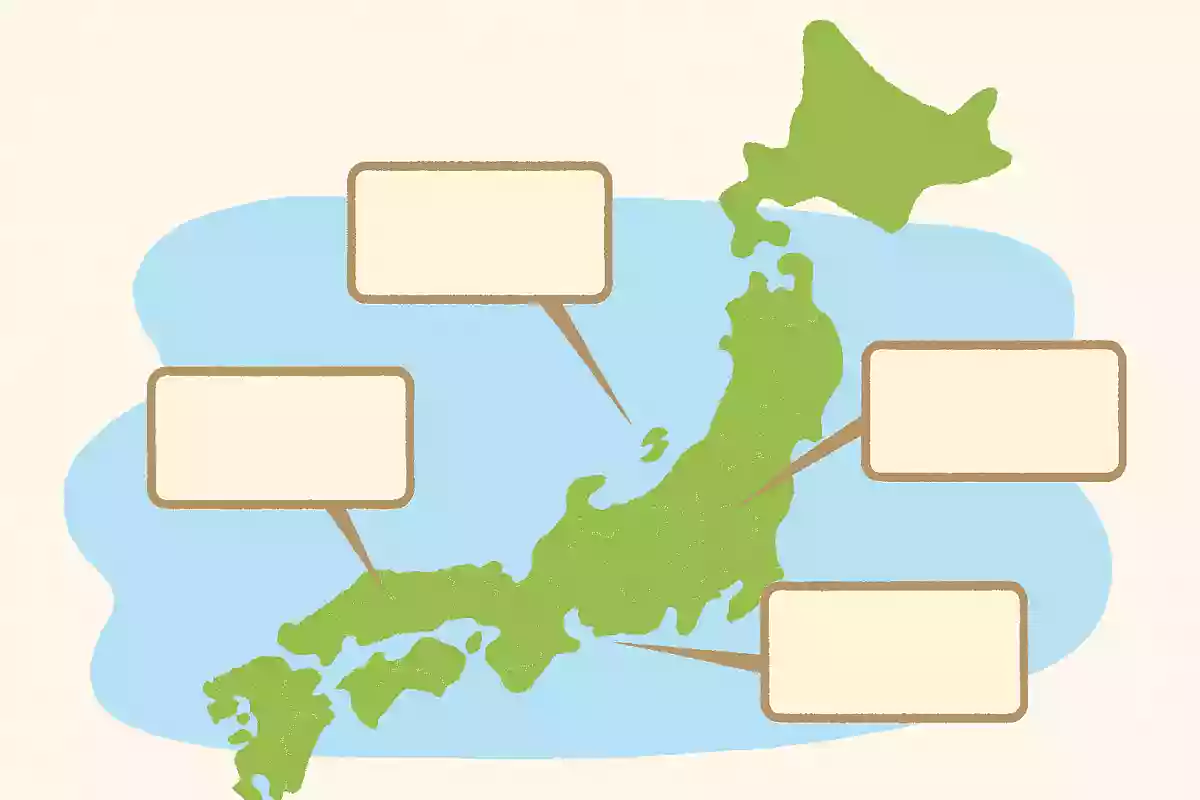
This is a simple quiz where you think of prefecture names that include animal names.
There are quite a few, so the key is how quickly you can recall the names of the prefectures.
If you go through them in order, you should be able to come up with a fair number, but if you get stuck, use each region as a hint.
The answers are Gunma, Tottori, Kumamoto, and Kagoshima.
It could be fun to reminisce about your memories of each place as well.
rhinoceros
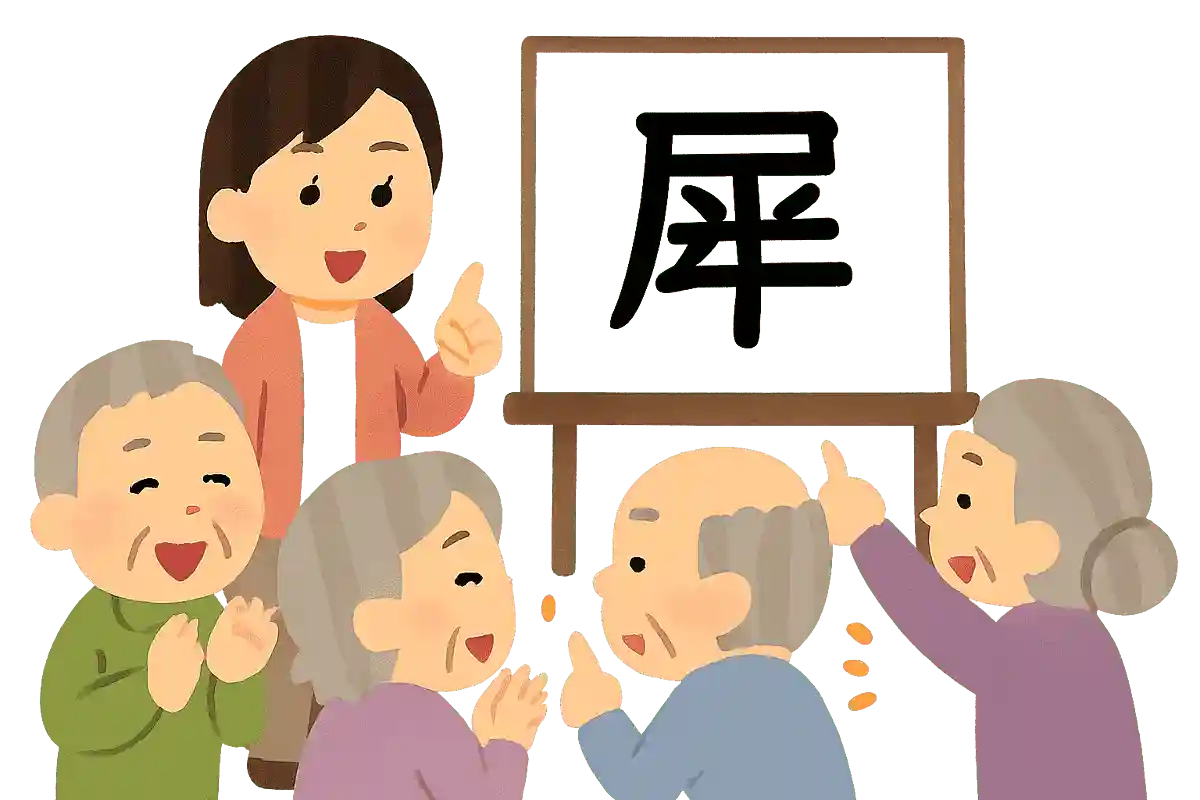
The character 犀 is read as “sai.” It refers to that large land animal with thick, tough skin—the rhinoceros.
The on-yomi (Sino-Japanese readings) of 犀 are “sei” and “sai,” and the kun-yomi (native Japanese readings) are “surudoi” (sharp) and “katai” (hard).
Indeed, it has “hard” skin and a “sharp” horn on its nose.
The radical of the character is the “cow/ox” radical (牛), and in Chinese it’s written 犀牛.
By the way, the “sei” in kinmokusei (osmanthus fragrans), known for its sweet scent in autumn, is this same 犀.
It is said to be because the tree’s bark resembles a rhinoceros’s skin.
corn
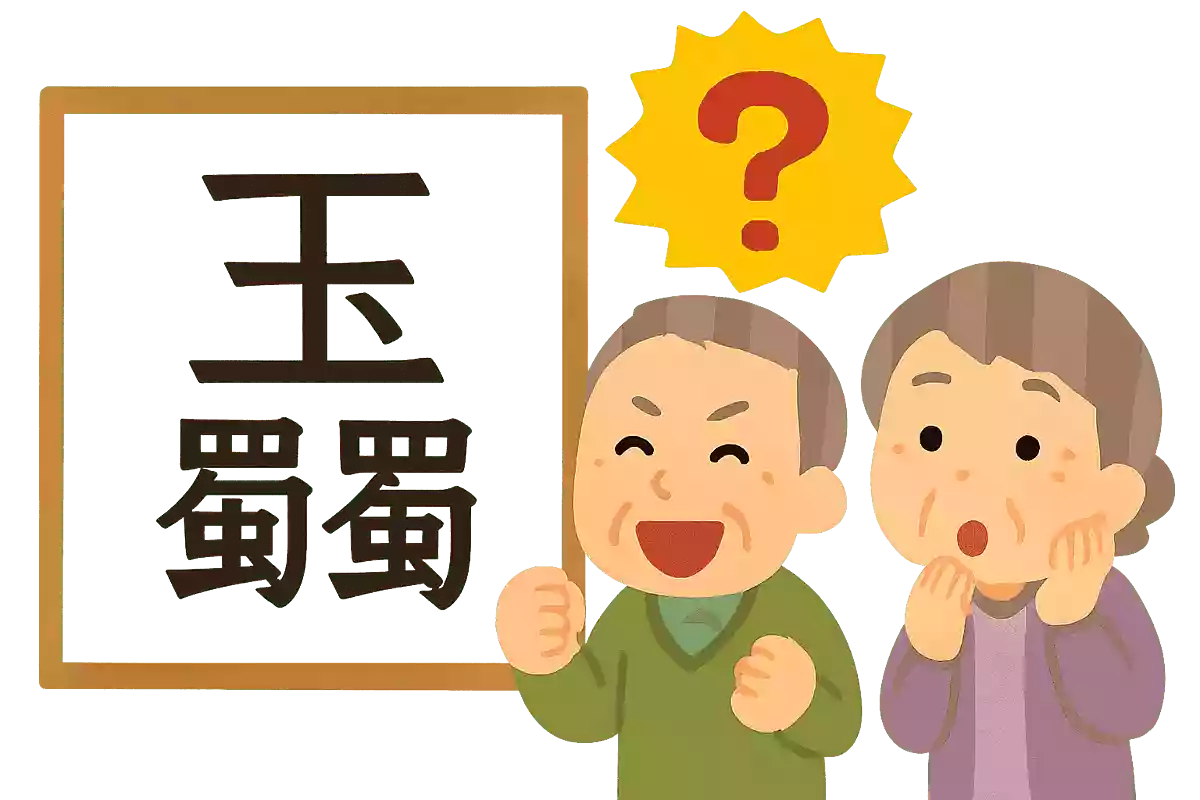
These unfamiliar-looking characters, 玉蜀黍, are the kanji for one of the world’s three major grains that is in season in summer.
The word written with these characters is the common name for this food, but in Japan it’s called various names depending on the region, such as “tōkibi” or “nanba.” By introducing regional nicknames as hints, older adults might recognize the term from their birthplace and quickly arrive at the answer.
The correct reading of this kanji is, precisely, “corn.” It’s also effective for recovering from summer fatigue, so after solving the quiz, be sure to give it a try!

jade
This kanji, 翡翠, makes you want to read it as “hisui,” but in fact it’s the name of a certain bird.
The bird has a blue head and wings, and its belly is a yellow or orange color.
Thanks to its beautiful coloration, it’s called things like a blue jewel or the jewel of mountain streams.
It’s a little larger than a sparrow and often seen near water—the bird’s name is, precisely, the common kingfisher (kawasemi)! While the kanji suits its appearance and nicknames perfectly, it’s still a bit surprising, isn’t it? That said, the bird actually used this kanji before the gemstone jade (hisui) did.
walrus

The characters 膃肭臍 are read as “ottosei” (fur seal).
In China, the term 膃肭 meant “chubby” or “well-fleshed,” but the navel (臍) of the fur seal was brought to Japan as a valuable traditional medicine, and over time the entire animal came to be called 膃肭臍.
Speaking of ottosei, many people picture an aquarium show with a ball balanced on its nose—but isn’t that an “ashika show” (sea lion show)? Compared to sea lions, fur seals are smaller, with a glossy dark gray or brownish coloration.