

[For Seniors] Haiku for March: Enjoying a Spring Moment with Famous Verses


As March arrives, the days gradually grow warmer, and there are more moments when we can feel the coming of spring.
Haiku that capture these seasonal changes in the 5-7-5 form are perfect for recreational activities for older adults.
Famous verses that depict March’s unique scenes—such as the Doll’s Festival, fields of rapeseed blossoms, and the song of the bush warbler—carry a comforting warmth that soothes the heart just by reading them.
This time, we will introduce March haiku, focusing on approachable poets like Kobayashi Issa and Masaoka Shiki.
Why not savor a spring moment while recalling nostalgic landscapes?
- [For Seniors] Spring Haiku. Spring Activity
- [For seniors] April haiku. Exciting
- Spring Event Quiz for Seniors to Enjoy in March
- [For Seniors] Summer Haiku: Ideas to Feel the Season
- [For Seniors] Making a March Calendar: Introducing Spring-Themed Motifs and Arrangements
- [March Health Topic] Introducing Recreational Activities for Seniors!
- [For Seniors] Interesting spring haiku: introducing verses with striking kigo and unique expressions
- [For Seniors] Haiku for February: A Collection of Famous Verses Depicting the Transition from Winter to Spring
- [For seniors] Classic spring kigo: beautiful words that evoke the seasonNEW!
- [Elderly] Feel the Arrival of Spring with Snack Activities! Recommended Menus for March
- [For Seniors] Songs to Hum in March: Heartwarming Moments with Nostalgic Classics that Evoke Spring
- [For Seniors] Haiku Introductions for May: A Fun Recreation Activity
- [For Seniors] Famous Haiku About January: Learn New Year Season Words and Tips for Composing
[For Seniors] Haiku for March: Enjoying a Spring Moment with Famous Verses (21–30)
A nightingale— when the shoji slide open, Higashiyama.Soseki Natsume

This is a haiku by Natsume Sōseki, renowned as a leading literary figure of the Meiji era.
“Uguisu ya shōji akureba Higashiyama” evokes a gentle spring day from the opening word, uguisu (bush warbler).
In Kyoto, hearing the uguisu and sliding open the shōji carries a sense of refined beauty.
Beyond the opened shōji, an unexpected vista of Higashiyama must have unfolded.
One can imagine a magnificent scene where blossoming cherry trees mingle with the rivers flowing through the city and its buildings—truly breathtaking.
It seems Sōseki himself was captivated by the beauty.
It’s easy to think this was a moment that prompted him to compose the haiku on the spot.

Evening cherry blossoms—today, too, has turned into the past.Kobayashi Issa
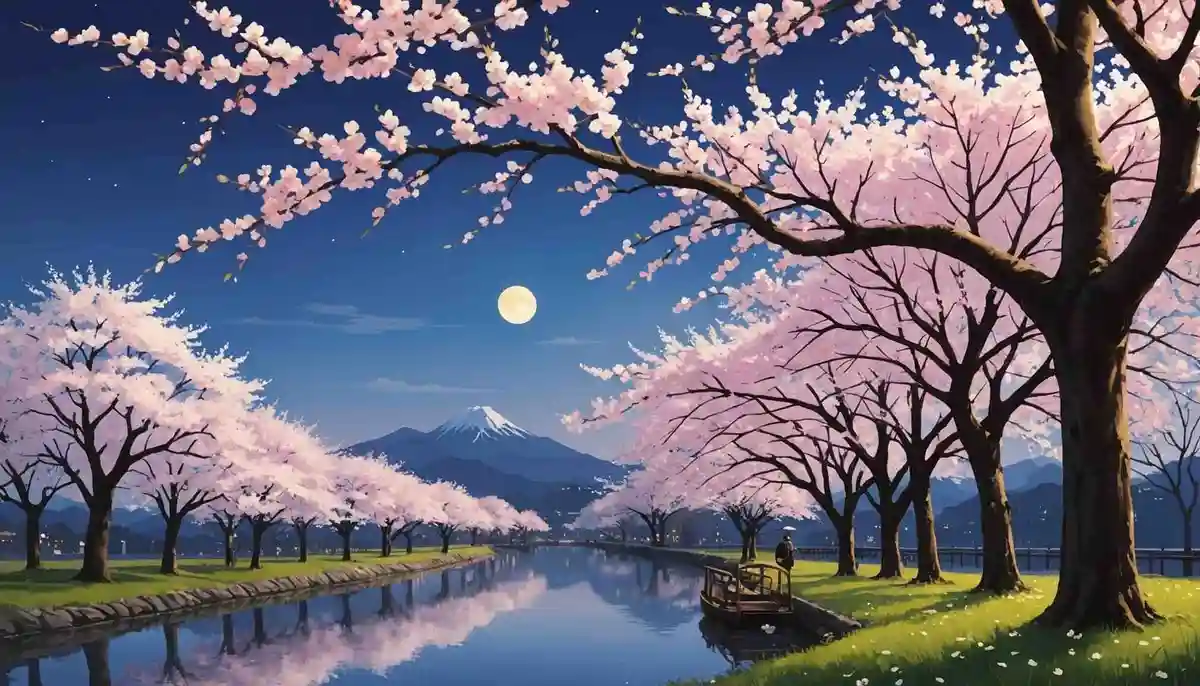
Kobayashi Issa is one of the representative haiku poets of the Edo period, alongside Matsuo Bashō and Yosa Buson, and he established a distinctive haiku style known as Issa-chō.
Rendered in modern language, this poem means that even the beauty of the evening cherry blossoms before our eyes is already turning into the past as we look at it.
The present moment does not last; its beauty is fleeting.
It reminds us, even amid our busy daily lives, of the importance of pausing to gaze at the scenery around us and what is right in front of us.
It is a poem that teaches us the value of having that kind of spaciousness in our hearts.

Even this humble grass-thatched hut—now time to move; it becomes a doll’s house.Matsuo Bashō
Matsuo Bashō, known as the Saint of Haiku, is the most famous haiku poet in Japan—said to be known by everyone.
From his forties onward, Bashō spent his days traveling and composing haiku, and he had been thinking that once it grew warm, he wanted to journey to the Tōhoku region he had yet to see.
At last, he made up his mind.
He sold the house he had been living in to fund his travels.
The poem he composed at that time is this one.
In modern language, it means: “It’s finally time to part with this shabby little house.
Perhaps the person who lives here after me will someday decorate it with Hina dolls and make it look splendid.” It reflects on the life he had led and imagines the life of a yet-unknown future resident.
Thinking that this decision led to the journey that gave birth to The Narrow Road to the Deep North, one can almost feel a fragment of Bashō’s state of mind.
Pale-reddened, the faces line up—peach wine.Masaoka Shiki

Masaoka Shiki left behind striking haiku that depict nature and events just as they are seen.
In “Pale-reddened faces lined in a row—peach wine,” you can sense people sharing drinks during the March Peach Festival.
Because they have been drinking, everyone’s cheeks seem to have turned red.
You can also picture a family celebrating the festival with a seven-tiered display of Hina dolls and a table of delicacies.
The atmosphere of the moment comes through, and calling it “peach wine” further conveys a gentle, harmonious setting.
It’s a haiku that lets you feel both the warmth of the season and the warmth of the heart.
The path I have come—sunlight over a field where pieris (andromeda) blooms.Akiko Mizuhara

Let me introduce the haiku by Mizuhara Shuoshi: “Kishikata ya / ashibi saku no no / hi no hikari.” Ashibi (Japanese andromeda) is a seasonal word that signifies spring.
In spring, ashibi bears small, delicate white blossoms, but the plant is poisonous and even animals don’t eat it.
This haiku was composed when Mizuhara Shuoshi was visiting Nara.
Around Kasuga Taisha in Nara, the deer don’t eat ashibi, so it grows in abundance.
For that reason, ashibi has become a symbol of Nara.
Shuoshi himself felt a strong longing for Nara, so he likely wove ashibi into the path he had walked and embedded it in his haiku.
It’s also lovely to think one can say one’s life is like the light of a spring day.