

[For Seniors] Haiku Introductions for May: A Fun Recreation Activity

When we think of May, it’s a season of refreshing new greenery and gentle, pleasant breezes.
This is the perfect time to enjoy haiku, as we can feel the changes in nature!
Haiku that capture the seasons can bring a sense of richness and refreshment to older adults as well.
Still, you might find yourself wondering, “What kind of haiku suit May?” or “How can I express the feeling of the season well?”
In this article, we’ll introduce haiku that are perfect for May!
Shall we enjoy the world of haiku together while feeling the beauty of nature and the seasons?
- [For Seniors] Interesting spring haiku: introducing verses with striking kigo and unique expressions
- [For Seniors] June Haiku Showcase: Ideas to Feel Summer
- [For Seniors] Enjoy May! Recommended Recreational Activities and Games
- [For Seniors] Haiku for March: Enjoying a Spring Moment with Famous Verses
- [For Seniors] Evoking autumn scenes: Introducing beautiful haiku for October
- [For Seniors] Enjoy May: A Collection of Seasonal Craft and Wall Decoration Ideas
- [For Seniors] Spring Haiku. Spring Activity
- [For Seniors] Haiku for September: Introducing Verses Perfect for Autumn
- [For Seniors] Haiku Selections for July: Ideas to Feel the Summer
- [For Seniors] Summer Haiku: Ideas to Feel the Season
- For Seniors: Snacks to Make in May That Capture the Season
- [For Seniors] A Collection of Famous Autumn Haiku: Introducing Beautiful Verses That Evoke Vivid Scenery
- [For seniors] April haiku. Exciting
[For Seniors] Haiku Selections for May: Fun Recreation (1–10)
When May arrives, sweet bean candies become a troublesome temptation.
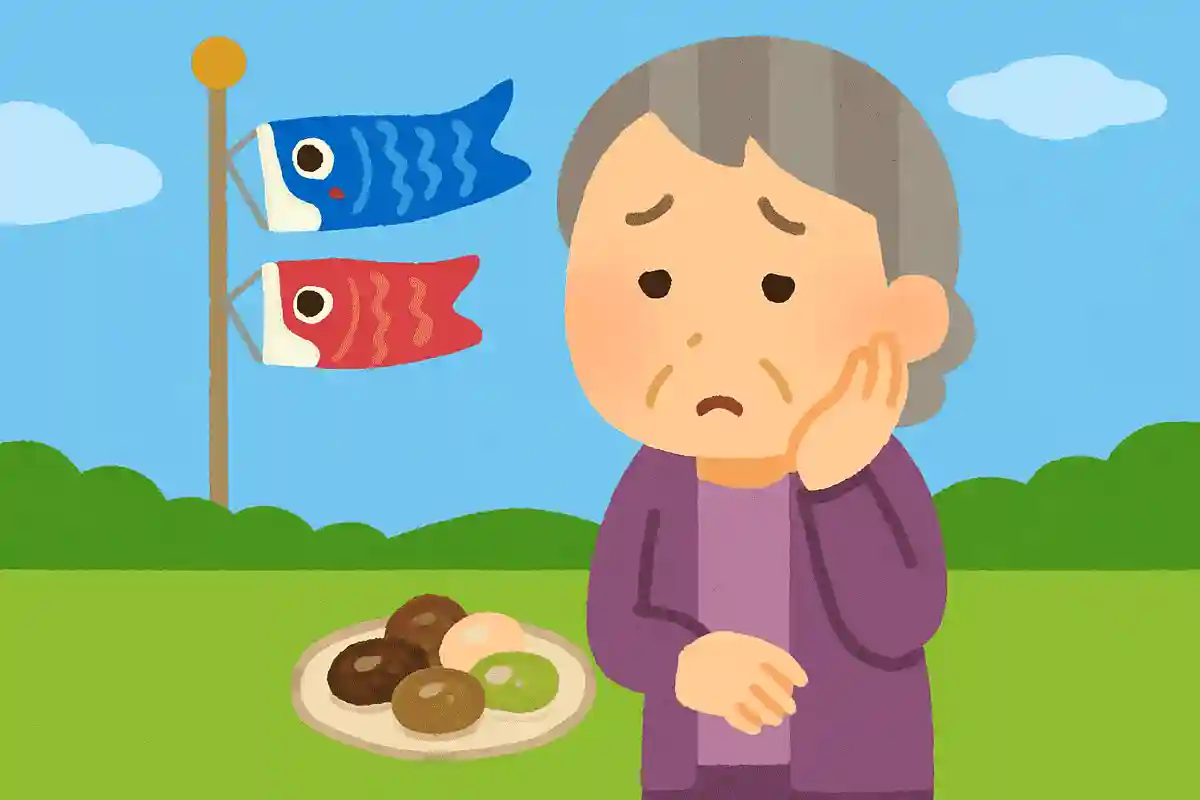
Toshinori Tsubouchi, who composed this haiku, expresses the seasons through amanattō (candied beans).
In addition to May, he wrote haiku featuring amanattō for each of the twelve months.
They’re even known as the “Twelve Amanattō Haiku.” Among them, the one for March—“In March, amanattō, ufufufufu”—is famous.
The March haiku appears in textbooks, but in class the meaning of the haiku is left to each student’s individual interpretation.
As for “May comes, and I’m at a loss—amanattō,” is it a world seen from the perspective of the sweet, soft amanattō, or is it about the people around the amanattō? It might be interesting to think together with older adults about what becomes troublesome in May.

May has come—my heart opens—May has come.
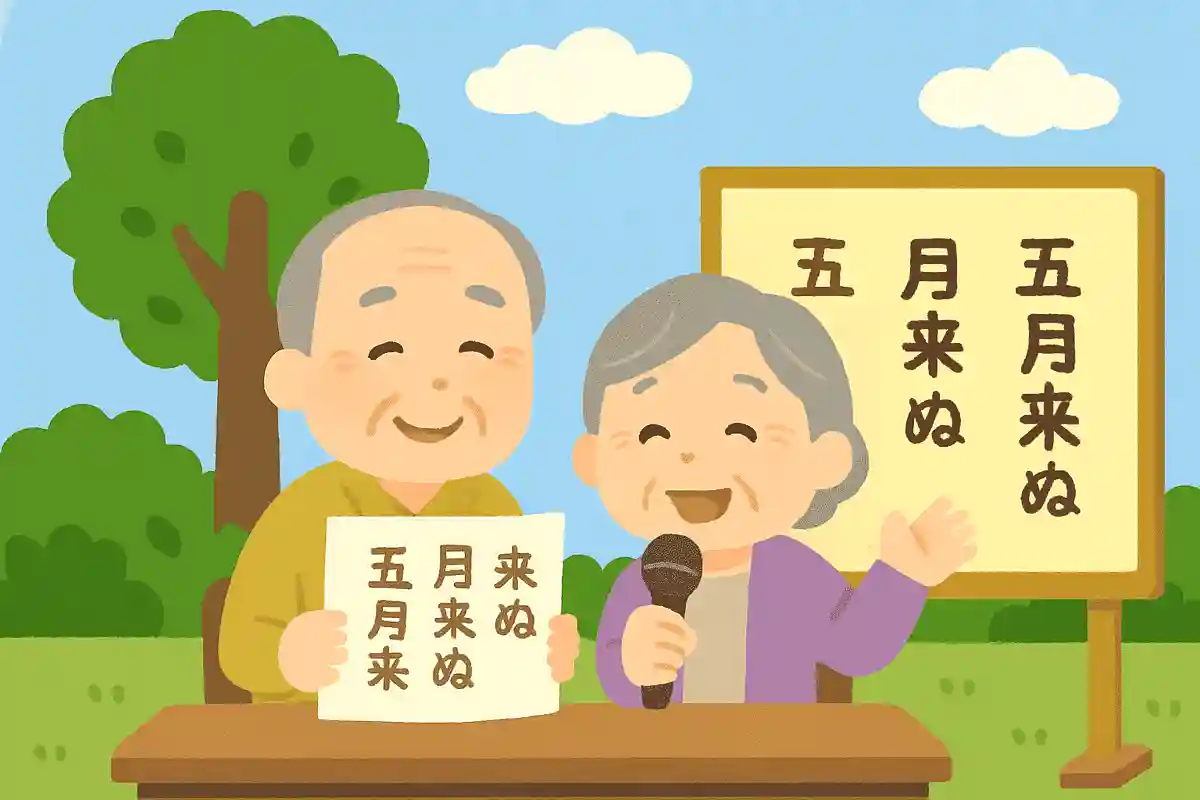
Tatsuko Hoshino was a haiku poet of the Showa era who founded and led Tamamo, the first women-led haiku magazine.
In this haiku, “May” is read as satsuki, a summer season word.
Shoman, one of the 24 solar terms beginning on May 20, marks the time when plants deepen their green and all kinds of life grow more active as full summer approaches.
Perhaps the poem expresses the anticipation of this most comfortable, uplifting time of year.
In modern terms, it might be like saying, “I can’t wait for my beloved May to come.” It seems that, then as now, people have always looked forward to the most pleasant seasons.

In great Edo— even dogs get a taste of the first bonito.
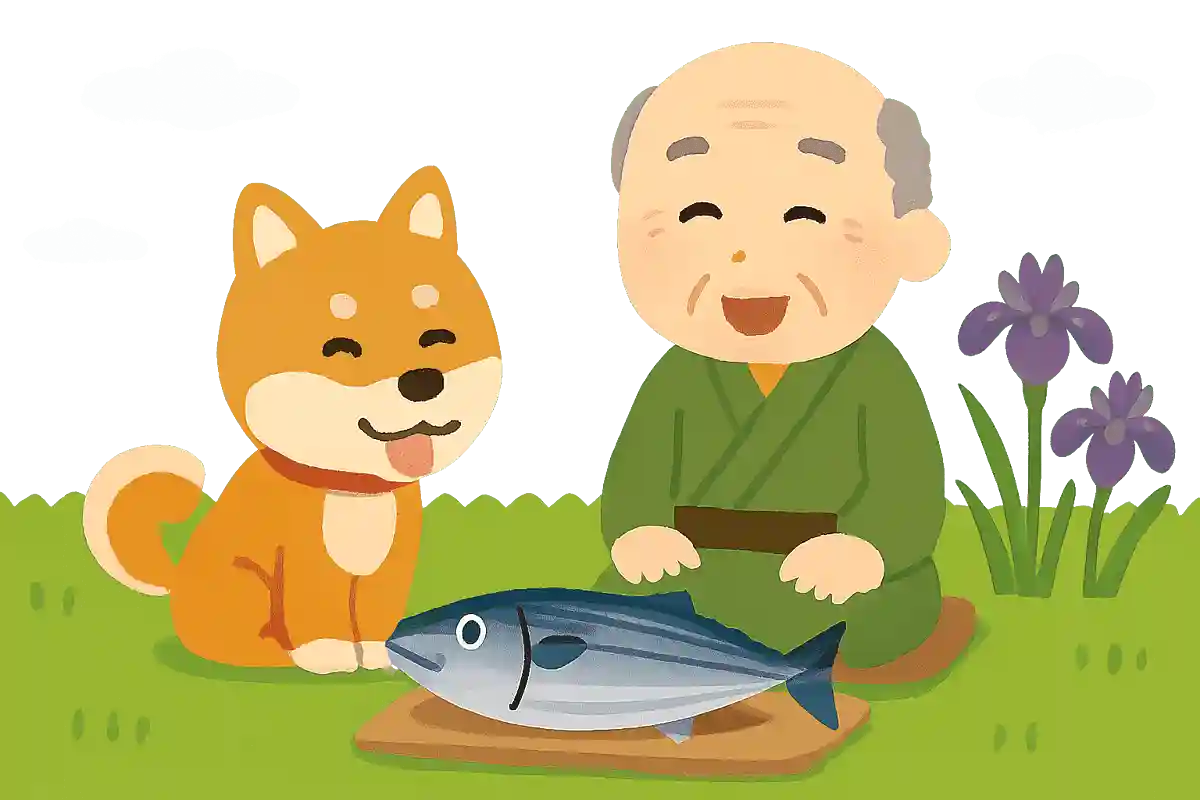
Kobayashi Issa is one of the leading haikai poets of the Edo period, who established his own distinctive style known as the Issa manner.
In the Edo period, “hatsumono,” the first produce of the season, was highly prized; there was even a saying that eating it would extend one’s life by seventy-five days.
Among these, bonito (katsuo) was seen as a lucky charm—the word sounding like “to win”—and the first bonito of the season was so popular that people said, “Eat it even if you have to pawn your wife.” From this poem, we can glimpse how everyone in Edo was swept up in the fervor for the first bonito, and how its deliciousness was such that even dogs would eat it.
[For Seniors] Haiku Introductions for May: Enjoyable Recreation (11–20)
Magoroku engraves the sword’s inscription—how fitting for Boys’ Day.
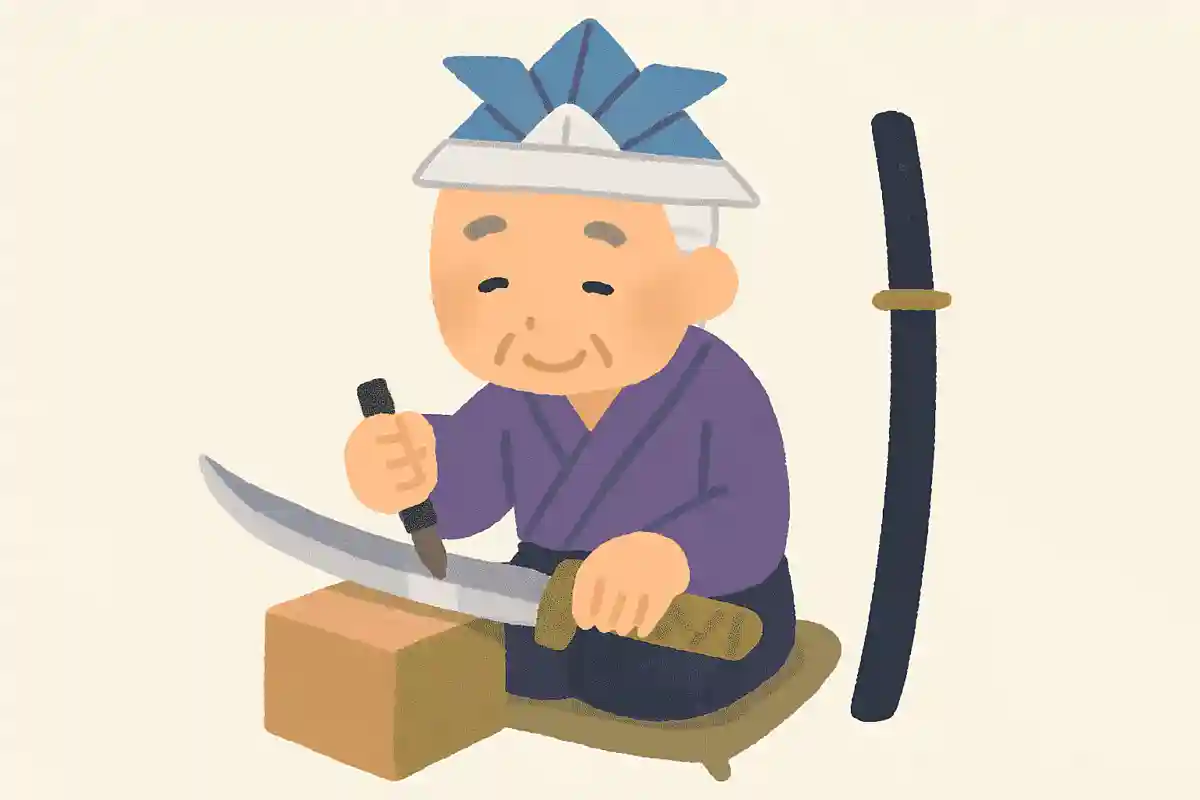
Some families display helmets, swords, and bows and arrows for Tango no Sekku (Boys’ Day), don’t they? The tachi (long sword) that appears in the haiku by Tagawa Horo—“Magoroku engraves his name on the tachi—how fitting for Tango”—has a proper meaning when displayed together with a helmet.
We tend to associate a tachi with an exceptionally sharp blade, but it isn’t displayed as a weapon.
There’s a tradition that evil spirits dislike shiny things, so a beautifully gleaming tachi serves as a talisman to ward them off and protect the household.
It’s a fun bit of trivia you might share with older folks who have grandchildren at home.
By the way, the ‘Magoroku’ in the haiku refers to Magoroku Kanemoto, a swordsmith lineage continuing from the Muromachi period to the present.
The mei is the maker’s signature.
A kashiwa-mochi, its oak-leaf wrapper parting—opened alone.
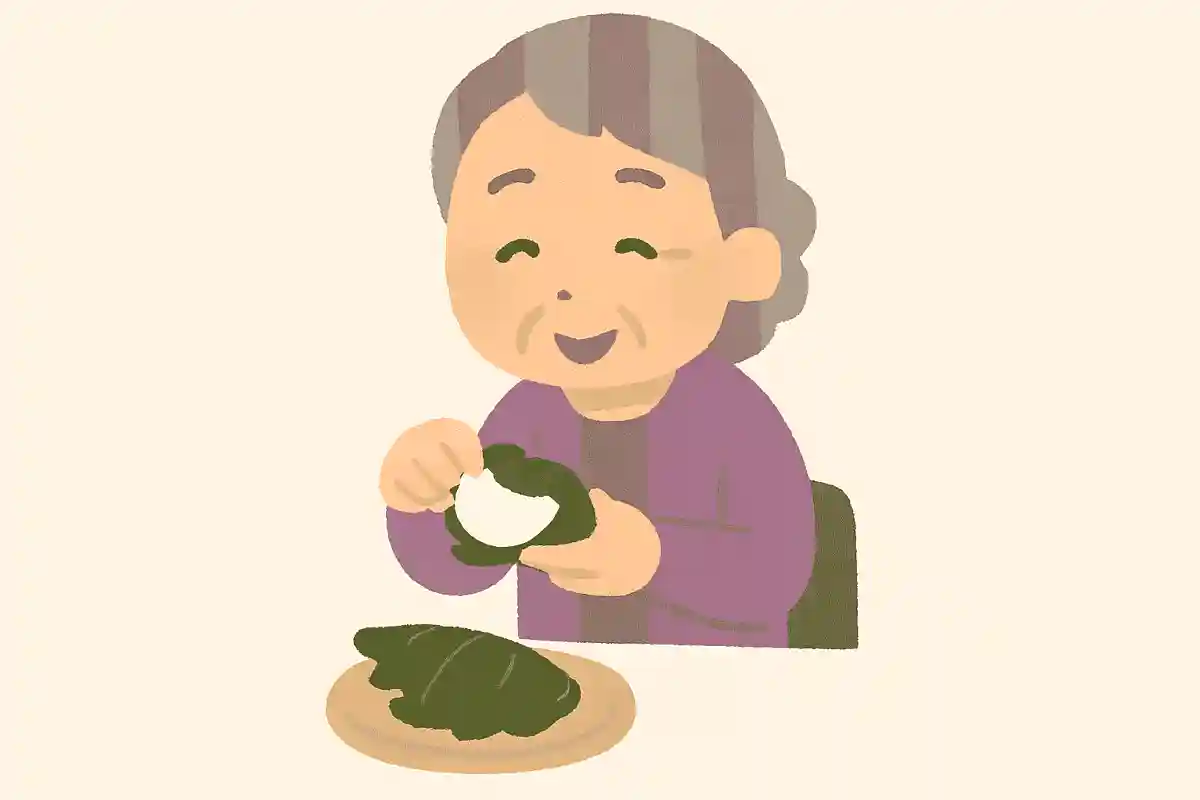
May 5 is Tango no Sekku, the Boys’ Festival.
There is a custom of eating kashiwa mochi on this day, and it is said to have started in the mid-Edo period.
The oak leaves used for kashiwa mochi do not fall until new buds appear.
Because of this, the new buds are seen as children and the old leaves as parents, and kashiwa mochi came to be eaten as a good-luck charm signifying the prosperity of one’s descendants.
In Seishi Yamaguchi’s haiku, “Folded skin— the kashiwa mochi leaf opens by itself,” he describes how the folded oak leaf opens on its own after the mochi has been eaten.
From this haiku, you can glimpse a small scene from everyday life in May.
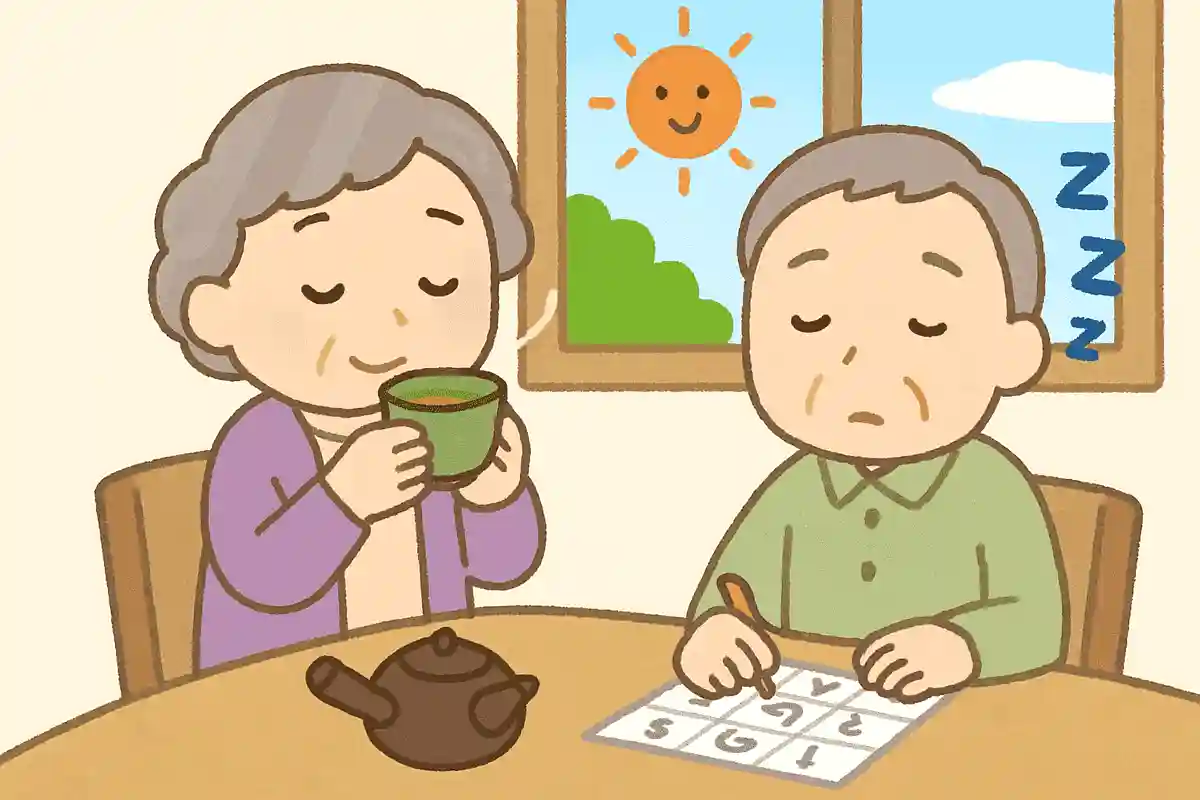
The scent of new tea—my midday drowsiness has turned.
Kobayashi Issa was a haiku poet active in the late Edo period.
He wrote about everyday moments and the emotions shown by common people, crafting haiku that used familiar language and onomatopoeia.
His style seems to have resonated with readers’ hearts, inviting empathy.
“The fragrance of new tea turns my midday drowsiness” is a haiku perfect for the season of fresh tea in May.
May is also the peak time for picking new tea leaves.
After lunch, it’s easy to feel sleepy in the afternoon, isn’t it? But from this haiku, we can sense that the aroma of the new tea has chased that drowsiness away.
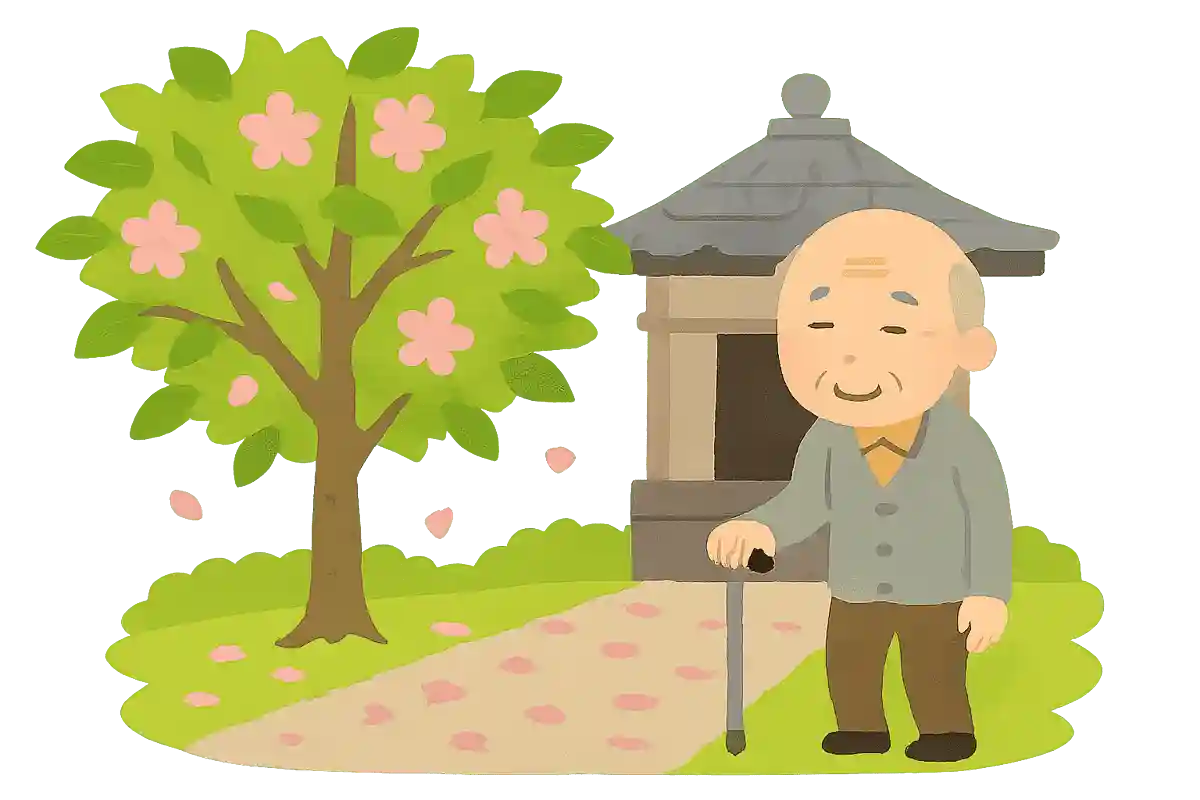
A lone cherry tree in leaf—how lonely—before the temple hall.
Santō Kigi was a haiku poet of the mid-Edo period.
In the Shimabara pleasure quarter of Kyoto, he established the Fuyā-an (Sleepless Hermitage), where he taught courtesans haikai and calligraphy, contributing to the revitalization of the entertainment district.
He later joined his close friend Yosa Buson in forming the Sankasha.
The hazakura described in this verse is a summer seasonal word, expressing a sense of regret that the cherry blossoms in front of the hall have fallen and the trees have become “leaf-cherry.” Yet even if the scene seems lonely after the delicate petals have dropped, there is also an aspect in which the fresh, vigorous green leaves convey a sense of clarity and strength.
Perhaps the Japanese feeling for cherry blossoms is indeed something special.