

[For Seniors] Oral Exercises to Keep Eating Deliciously and Enjoyably

Daily meals are important for staying healthy for years to come.
To help older adults enjoy their meals, try actively incorporating oral exercises into your daily routine.
As we age, it becomes harder to swallow food, and the risk of choking and aspiration increases.
To help prevent aspiration, simple oral exercises before eating are recommended.
In this article, we introduce easy pre-meal oral exercises recommended for older adults.
To improve swallowing, it’s important not only to exercise the mouth but also to loosen the muscles around the mouth, as well as the shoulders and neck.
Incorporate these oral exercises and enjoy your meals.
- [For Seniors] Let's try customizing the usual Pa-Ta-Ka-Ra exercises!
- [For Seniors] Spice Up Your Usual Oral Exercises! Patakara Exercises and Tongue Twisters
- [For Seniors] Boost Oral Function with Tongue Twisters! Recommended Picks to Try
- [For Seniors] Stay Healthy Through Your Mouth with the A-I-U-BE Exercises!
- For seniors: Enjoyable exercises done while seated, accessible for wheelchair users.
- Energetic and Lively! Sing-and-Exercise Program for Seniors
- [For Older Adults] Games to Enhance Oral Function: Enjoyable and Easy to Do
- Summary of exercises for seniors: introducing preventative care movements by body part.
- [October Health Topic] Introducing Recreational Activities for Seniors!
- [For Seniors] Today’s Recommended Activity: Fun and Engaging
- [Today's Recommendation] Gentle Health Exercises for Seniors
- [For Seniors] Recommended Muscle Training Gear. Simple and Easy
- [For Seniors] Hand and finger play roundup: Finger exercises that lead to brain training
[For Older Adults] Oral Exercises to Keep Eating Deliciously and Enjoyably Forever (31–40)
Patakara Exercise Song

This is an exercise where you say “pa-ta-ka-ra” in time with the Patakara Exercise Song to train the muscles around the mouth.
By vocalizing “pa-ta-ka-ra,” you can expect various benefits such as maintaining and improving chewing and swallowing strength, promoting saliva secretion, and stabilizing pronunciation.
Doing it especially before meals prepares your mouth and increases the effectiveness in preventing aspiration.
Continuing the exercise enhances its benefits.
Try to do it at least once a day, preferably before meals.

Patakara Zoo

Introducing the idea for the Patakara Exercise: the Patakara Zoo, where you sing animal names that include the syllables “pa,” “ta,” “ka,” and “ra” to a simple melody.
As you sing names like panda, tanuki (raccoon dog), crow, and lion, you imitate their sounds and characteristics, making it easy to smile and have fun.
It can be done seated in a chair, right where you are, so it doesn’t require a special space.
It’s also recommended as a recreation activity in senior facilities.
Please give it a try!
Hand and mouth Pa-Ta-Ka-Ra exercises

We would like to introduce ideas for the Patakara exercises, which allow you to care for your mouth and get some exercise while seated in a chair.
By pronouncing “pa,” “ta,” “ka,” and “ra” while performing full-body movements, these exercises are highly efficient, benefiting not only your physical function but also helping to maintain and improve oral function.
In addition, because you perform two actions simultaneously—movement and pronunciation—the increased positive stimulation to the brain is expected to help prevent cognitive decline.
It may feel complicated at first, but please try it slowly at your own pace.
An exercise that can prevent aspiration and choking just by reading aloud: the Pa-Ta-Ka-Ra exercise

Patakara exercises are exercises that stimulate oral functions through pronunciation.
This time, we’ll introduce a method that uses reading aloud.
All you need to do is read the sentences written on a whiteboard out loud, so you can proceed at your own pace.
Another advantage is that if you jot the sentences down, you can do the exercises anywhere, including at home.
Benefits include improving chewing strength to aid digestion, enhancing swallowing ability to prevent accidental aspiration and the pneumonia it can cause, and increasing saliva production, which helps sterilize and disinfect the mouth.
Doing the exercises before meals can make them even more effective.
Patakara exercises with the song ‘Back-to-Back Height Comparison’

Here’s an idea for mouth exercises using the well-known children’s song “Sekkura-be.” It’s very simple: just change the song’s lyrics to the sounds pa-ta-ka-ra and sing them out loud.
If you’re doing this in a senior care facility, it may be easier to first sing the original song once and then switch to pa-ta-ka-ra.
It’s also helpful to write the lyrics on a whiteboard or print them on paper so everyone can see them.
Doing this before meals can be especially effective in preventing choking, and practicing every day can lead to even better results.
Please give it a try!
[For Seniors] Oral Exercises to Keep Eating Deliciously and Enjoyably Forever (41–50)
Patakara exercises with insect sounds

Here’s an idea for doing the Patakara mouth exercises to the tune of the well-known Japanese children’s song “Mushi no Koe” (Voices of Insects).
It’s simple: replace the insect names with “Pata-insect” and “Kara-insect,” and change their chirping sounds to “pata-pata” and “kara-kara” as you sing.
Many older adults are familiar with this short song, so it’s easy to try.
You don’t even need accompaniment—using a tablet or similar device lets you do it anywhere.
Enhancing oral function can also help prevent cognitive decline, so please try it proactively.
It’s especially effective when done before meals.
The plum that Mr. Umeda from Ome planted turned into delicious umeboshi.
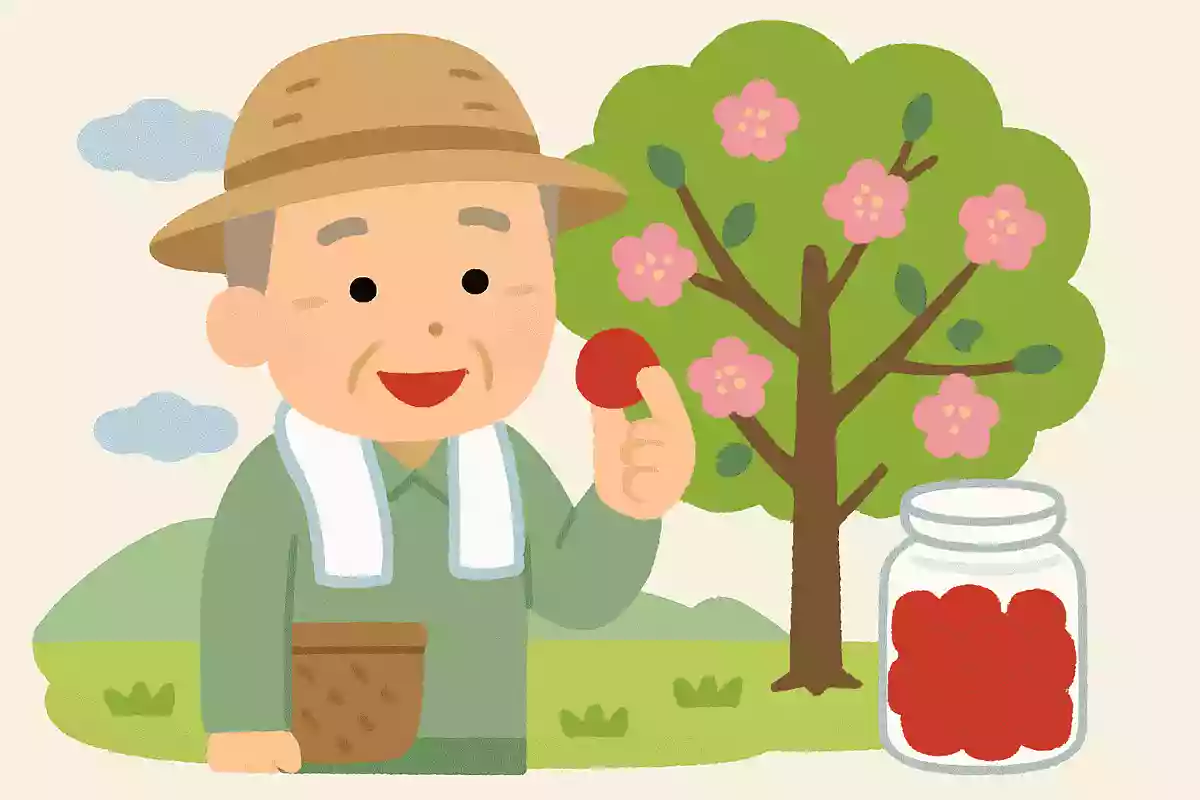
This is a tongue twister that tells a plum-themed story, notable for its repeated use of the word “ume.” Push your lips forward when pronouncing the “u” sound, and be mindful of the contrast with the following sounds to move your mouth fully.
Another key point is that “ue” is mixed in with “ume,” which makes the overall phrase trickier to say due to its accent pattern.
If you pay attention to your lip movements and clearly visualize the story, it should become easier to pronounce.
