

[For Seniors] Oral Exercises to Keep Eating Deliciously and Enjoyably

Daily meals are important for staying healthy for years to come.
To help older adults enjoy their meals, try actively incorporating oral exercises into your daily routine.
As we age, it becomes harder to swallow food, and the risk of choking and aspiration increases.
To help prevent aspiration, simple oral exercises before eating are recommended.
In this article, we introduce easy pre-meal oral exercises recommended for older adults.
To improve swallowing, it’s important not only to exercise the mouth but also to loosen the muscles around the mouth, as well as the shoulders and neck.
Incorporate these oral exercises and enjoy your meals.
- [For Seniors] Let's try customizing the usual Pa-Ta-Ka-Ra exercises!
- [For Seniors] Spice Up Your Usual Oral Exercises! Patakara Exercises and Tongue Twisters
- [For Seniors] Boost Oral Function with Tongue Twisters! Recommended Picks to Try
- [For Seniors] Stay Healthy Through Your Mouth with the A-I-U-BE Exercises!
- For seniors: Enjoyable exercises done while seated, accessible for wheelchair users.
- Energetic and Lively! Sing-and-Exercise Program for Seniors
- [For Older Adults] Games to Enhance Oral Function: Enjoyable and Easy to Do
- Summary of exercises for seniors: introducing preventative care movements by body part.
- [October Health Topic] Introducing Recreational Activities for Seniors!
- [For Seniors] Today’s Recommended Activity: Fun and Engaging
- [Today's Recommendation] Gentle Health Exercises for Seniors
- [For Seniors] Recommended Muscle Training Gear. Simple and Easy
- [For Seniors] Hand and finger play roundup: Finger exercises that lead to brain training
[For Seniors] Oral Exercises to Keep Eating Deliciously and Enjoyably Forever (51–60)
Parent turtle, child turtle, grandchild turtle
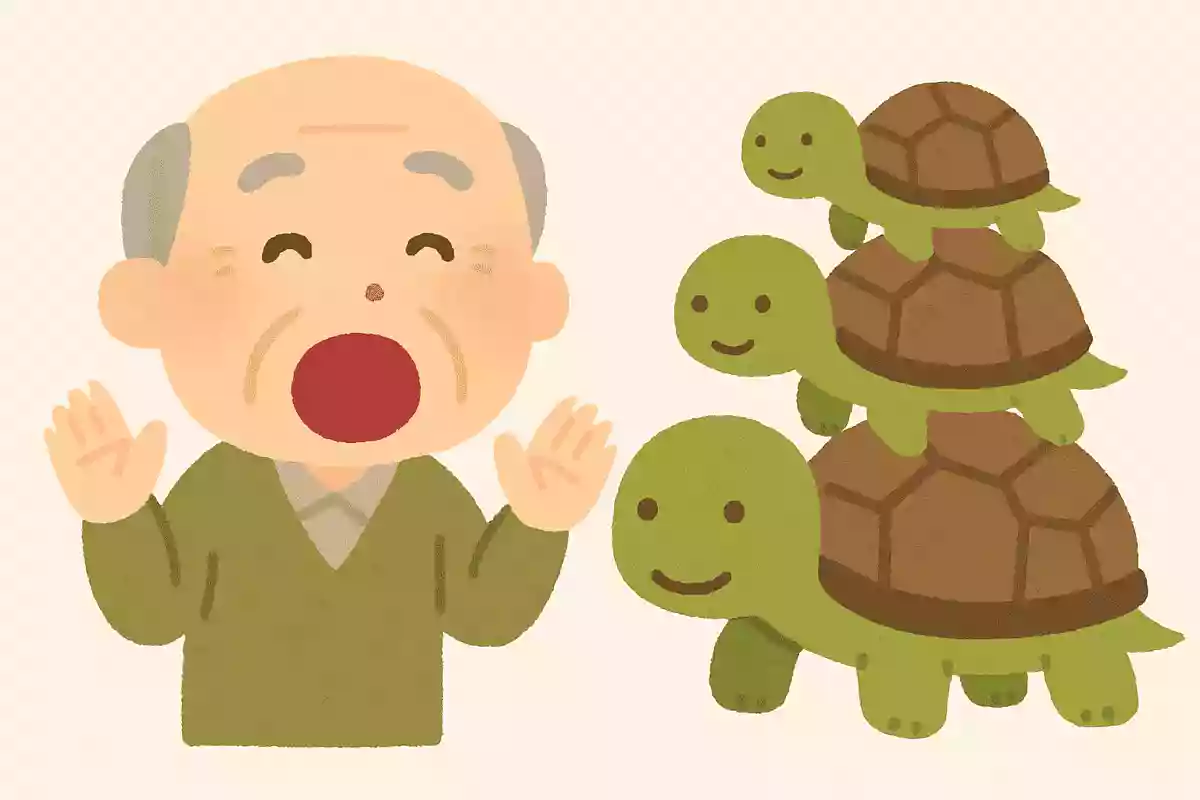
One of the classic tongue twisters that add “parent,” “child,” and “grandchild” to animals helps you consciously focus on differences in mouth shapes.
The phrase is relatively easy to pronounce, so be mindful of your mouth shape and movements as you gradually increase speed.
There’s also a version that adds “parent duck, duckling, grand-duck,” which draws attention to the difference in mouth shape between the sounds ‘me’ and ‘mo.’ Precisely because the phrase is simple, not only mouth movements but also the rhythm of pronunciation is important.

Red pajamas, blue pajamas, yellow pajamas.
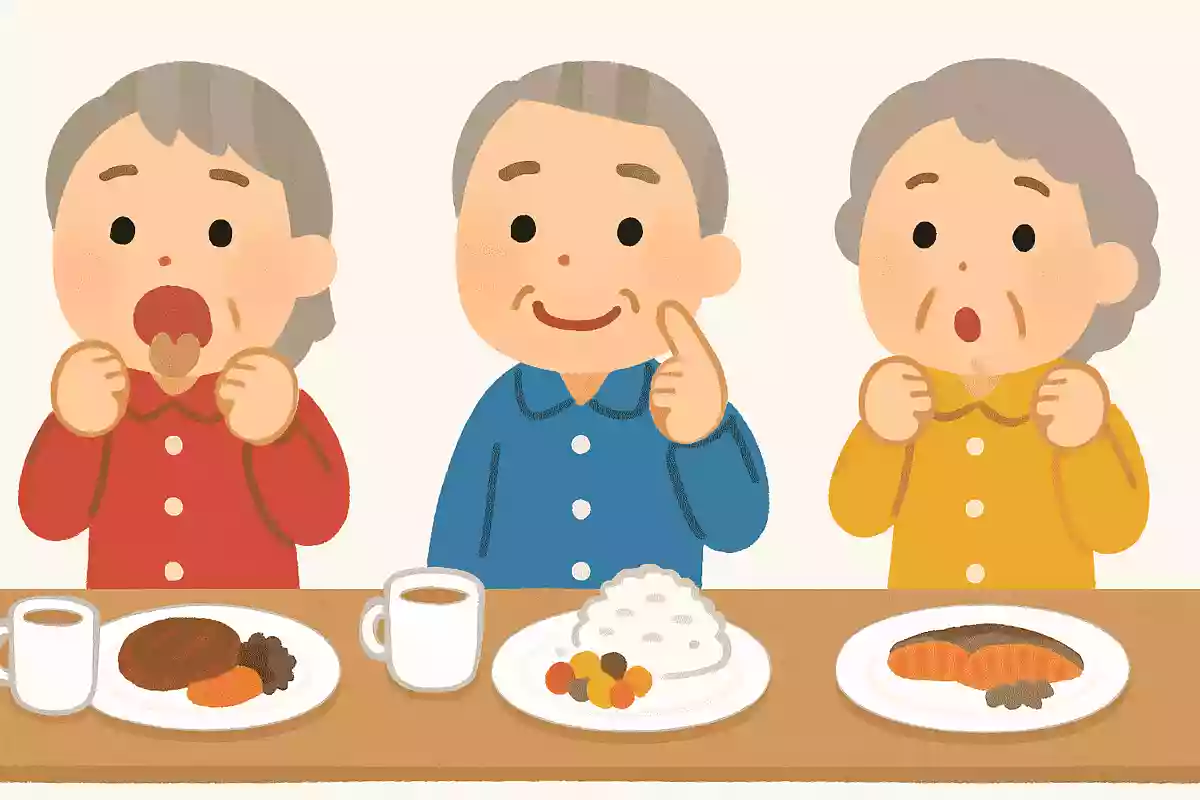
Arranging red, blue, and yellow at the start of words is also a classic pattern in tongue twisters.
“Aka” (red) and “ao” (blue) are sounds that require opening the mouth wide, so if you attach them to phrases with fine movements, the difficulty of the tongue twister increases.
Sounds like “pa” and “ma” are hard to pronounce without first closing the lips, so be mindful of that.
By carefully pronouncing each sound one by one at first, you’ll understand how to move your lips.
If you move your mouth deliberately and gradually increase your speed, your mouth movements will become smoother and you’ll likely strengthen those muscles as well.
red paper roll, blue paper roll, yellow paper roll
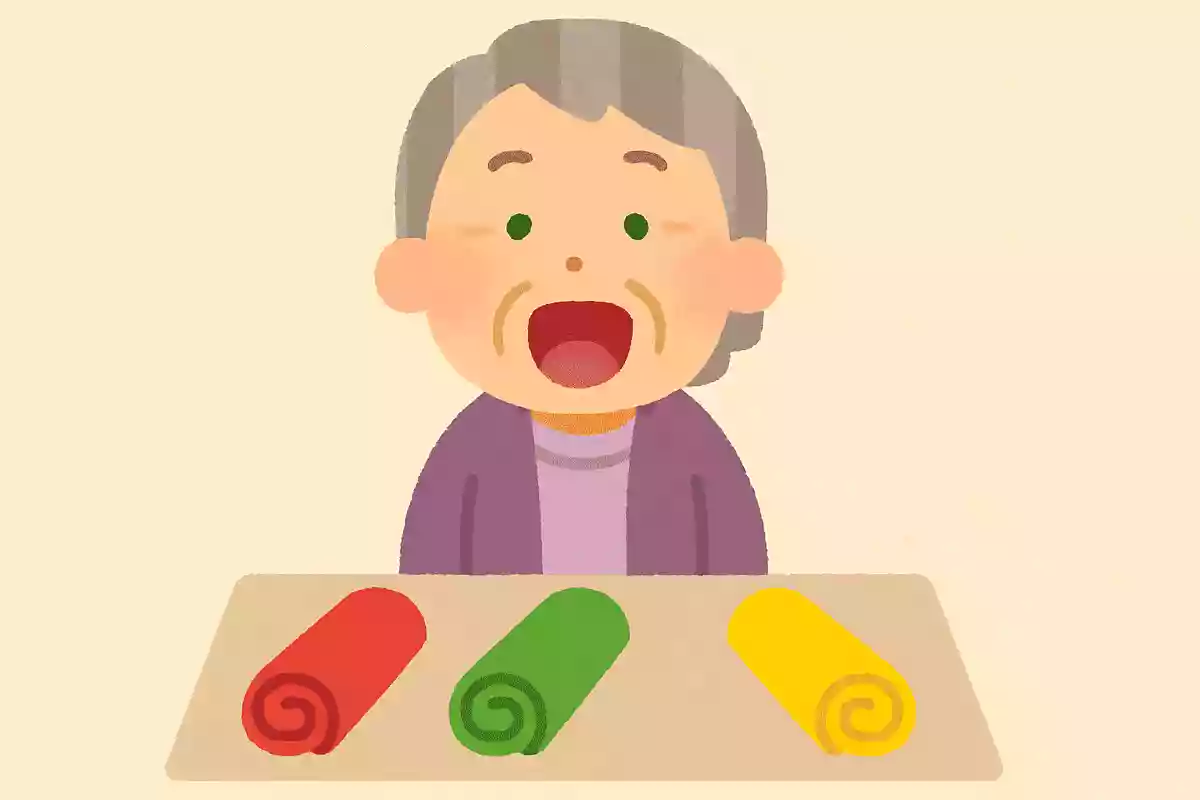
Tongue twisters often consist of strings of hard-to-pronounce words.
“Aka-makigami ao-makigami ki-makigami” (red scroll paper, blue scroll paper, yellow scroll paper) is also a sequence of tricky words.
By the way, makigami refers to paper made by joining together sheets of hansetsu paper (a tall, narrow paper) side by side to make a long roll.
It’s sold in scroll form.
This tongue twister lines up red, blue, and yellow scroll paper.
It looks easy at first glance, but when you try to say it repeatedly, it becomes hard to pronounce.
As a tip, if you pause slightly between the color names—like red or blue—and the word “makigami,” it should be a bit easier to say.
Try it together with older adults.

The customer next door is a customer who often eats persimmons.
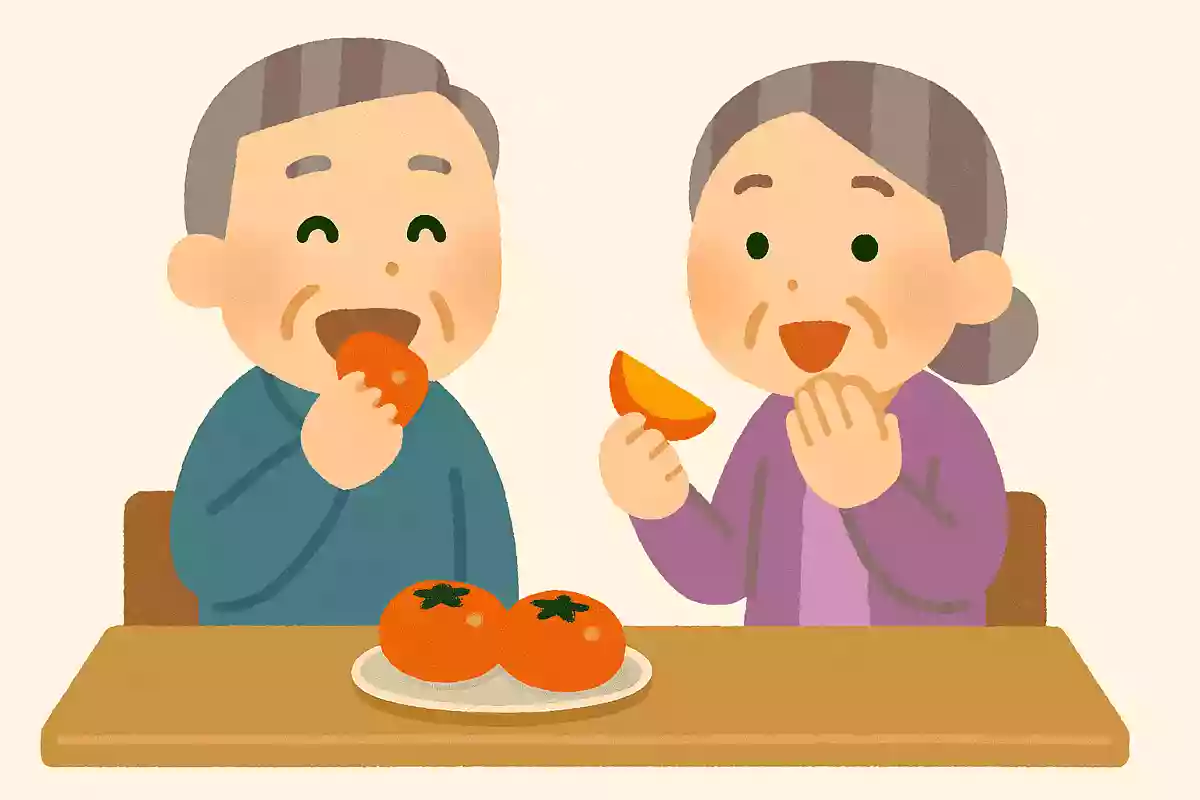
It’s one of the classic tongue twisters in Japan, and it evokes a rakugo-like world.
The key here is probably the pronunciation of “kyaku” and “kaki.” If you try pronouncing it syllable by syllable, you’ll realize that not only the movements of the lips and tongue matter, but the opening and closing of the teeth as well.
Another point to focus on is how you use your breath while moving your lips and teeth during pronunciation.
Overall, it’s a phrase that really engages the muscles around the mouth, making it a perfect tongue twister for training.
[For Seniors] Oral Exercises to Keep Eating Deliciously and Enjoyably Forever (61–70)
A-I-U-Be Exercise Twinkle, Twinkle, Little Star

Many care facilities have residents do oral exercises before meals.
The goals of these exercises include preventing aspiration, reducing food spillage, and improving eating and articulation.
This time, we’d like to introduce an oral exercise set to the melody of the children’s song “Twinkle, Twinkle, Little Star.” Using familiar songs—like children’s songs that many older adults know—makes it easier to participate.
By changing the lyrics to “aiuebe” and vocalizing them, you can expect to strengthen the tongue and the muscles around the mouth.
Since it also trains the facial expression muscles, conversations with richer expressions may become smoother.
It’s an exercise that also supports communication, so please give it a try.
A-I-U-Be Classic Exercise

Let’s add a touch of classical music to the “AIUEBE” mouth exercise used to help prevent colds and influenza.
You can use a slow, gentle melody like Gymnopédies, or a classical piece that older adults enjoy.
Doing the exercise to one’s favorite classical music makes it more enjoyable for seniors, too.
Move your mouth widely to the melody—“a, i, u, be”—and stick your tongue out and lower it.
This exercise is especially recommended in dry seasons like autumn and winter.
Give it a try!
Cognicise exercises and patakara exercises

It’s a program that trains the whole body while thinking, combining complex foot stomps and handclaps with the articulation of “pa-ta-ka-ra.” It starts with a simple flow of pronouncing “pa-ta-ka-ra” in time with the steps, then gradually becomes more complex by adding handclaps.
The key to adjusting difficulty is which letter of “pa-ta-ka-ra” you match the clap to.
Have participants try each letter in sequence so they can feel the increasing challenge.
It’s also important to ensure they don’t focus so much on the clap timing that they lose attention to the “pa-ta-ka-ra” articulation.