

[For Seniors] Oral Exercises to Keep Eating Deliciously and Enjoyably

Daily meals are important for staying healthy for years to come.
To help older adults enjoy their meals, try actively incorporating oral exercises into your daily routine.
As we age, it becomes harder to swallow food, and the risk of choking and aspiration increases.
To help prevent aspiration, simple oral exercises before eating are recommended.
In this article, we introduce easy pre-meal oral exercises recommended for older adults.
To improve swallowing, it’s important not only to exercise the mouth but also to loosen the muscles around the mouth, as well as the shoulders and neck.
Incorporate these oral exercises and enjoy your meals.
- [For Seniors] Let's try customizing the usual Pa-Ta-Ka-Ra exercises!
- [For Seniors] Spice Up Your Usual Oral Exercises! Patakara Exercises and Tongue Twisters
- [For Seniors] Boost Oral Function with Tongue Twisters! Recommended Picks to Try
- [For Seniors] Stay Healthy Through Your Mouth with the A-I-U-BE Exercises!
- For seniors: Enjoyable exercises done while seated, accessible for wheelchair users.
- Energetic and Lively! Sing-and-Exercise Program for Seniors
- [For Older Adults] Games to Enhance Oral Function: Enjoyable and Easy to Do
- Summary of exercises for seniors: introducing preventative care movements by body part.
- [October Health Topic] Introducing Recreational Activities for Seniors!
- [For Seniors] Today’s Recommended Activity: Fun and Engaging
- [Today's Recommendation] Gentle Health Exercises for Seniors
- [For Seniors] Recommended Muscle Training Gear. Simple and Easy
- [For Seniors] Hand and finger play roundup: Finger exercises that lead to brain training
[For Seniors] Oral Exercises to Keep Eating Deliciously and Enjoyably Forever (41–50)
Frogs hop hop, three hop hop; together hop hop, six hop hop.
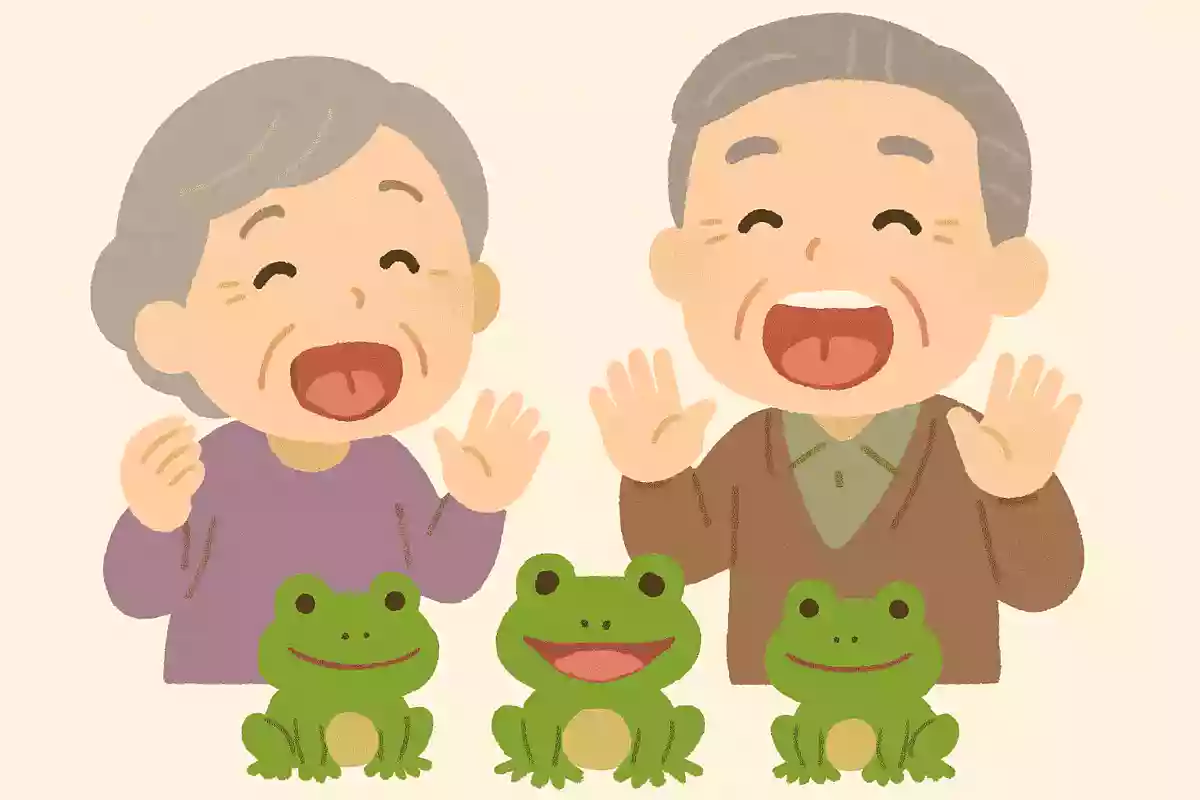
A classic tongue twister that depicts frogs gathering—such a cute-sounding phrase.
The key is the lip movement and breath control for “pyoko.” You close your lips once to pronounce “pyo,” then release breath to produce “ko.” Be mindful of the combination and articulate it clearly.
Think of using your breath consciously to train not only your mouth but also the muscles in your throat.
Also, placing a different mouth shape right before the lip-focused “pyo” makes it harder to say, which in turn helps you focus more deliberately on shaping your lips.

This sushi has a bit too much vinegar.
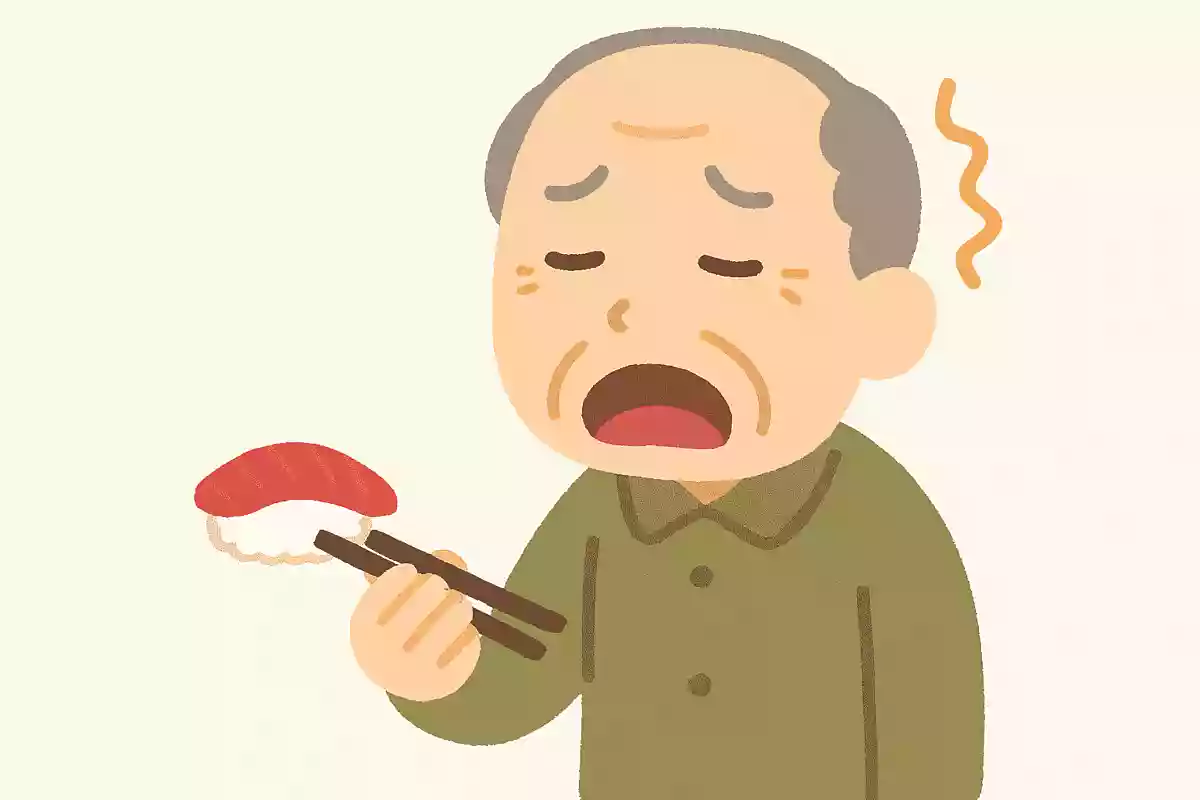
It’s a tongue twister that sounds like a simple comment about sushi, as if taken from everyday conversation.
The way you move your mouth for “su” and “shi” is important, and how you use your breath is also key for smooth pronunciation.
If you focus on rounding your lips for “su” and spreading your lips sideways while keeping your teeth closed for “shi,” you can engage your mouth muscles properly.
Using breath will also make the “s” sounds clearer, so that’s another point to watch.
It’s helpful to start by paying attention to your mouth shape and then gradually increase your speed.
Again, mama—eyelid, blink
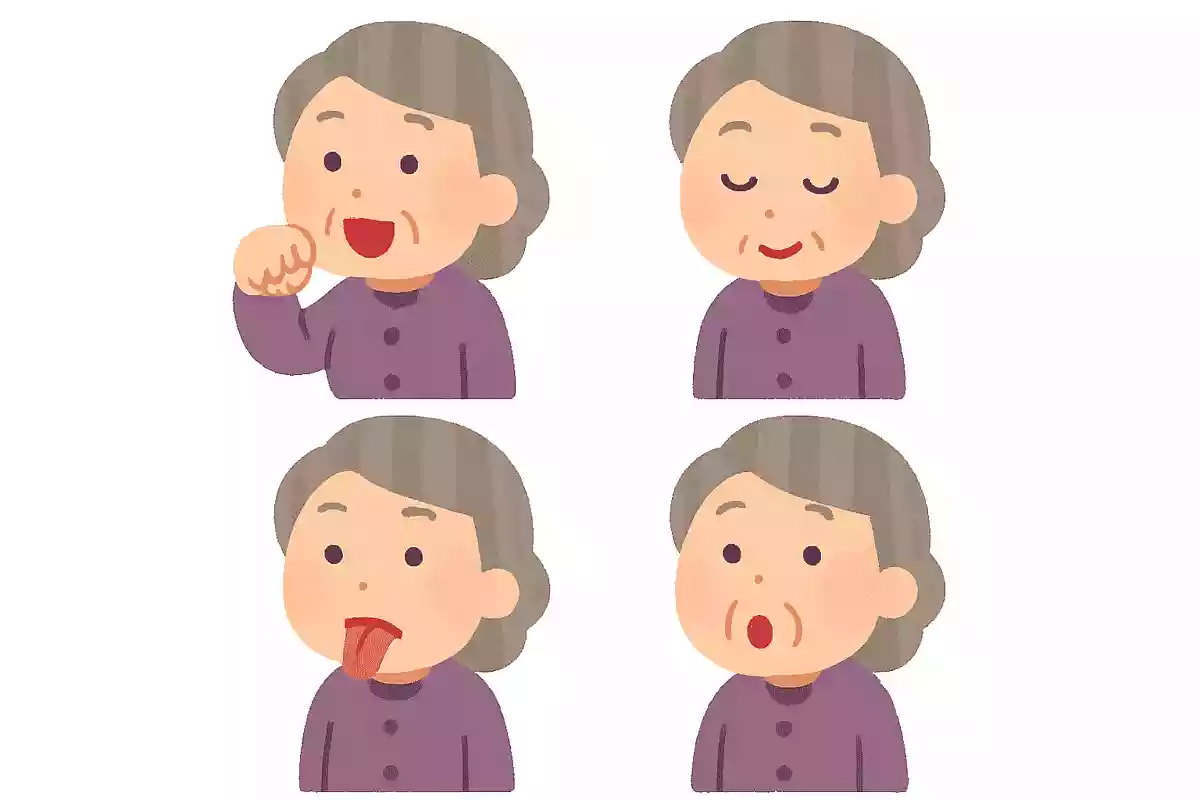
It’s a simple yet tricky tongue-twister that depicts an ordinary mom in her everyday life.
Since it contains many instances of the sound “ma,” which is pronounced after briefly closing the lips, it’s important to move your mouth clearly.
From there, gradually increasing your speed should be manageable.
Also, because different words using “ma” appear in succession and can be confusing, keep your focus on the upcoming words.
If you vividly imagine the scene described by the phrase, the flow of the words becomes easier to grasp, so that’s recommended as well.
Both the Japanese plum and the peach are kinds of peaches; the peach and the Japanese plum are both kinds of peaches.
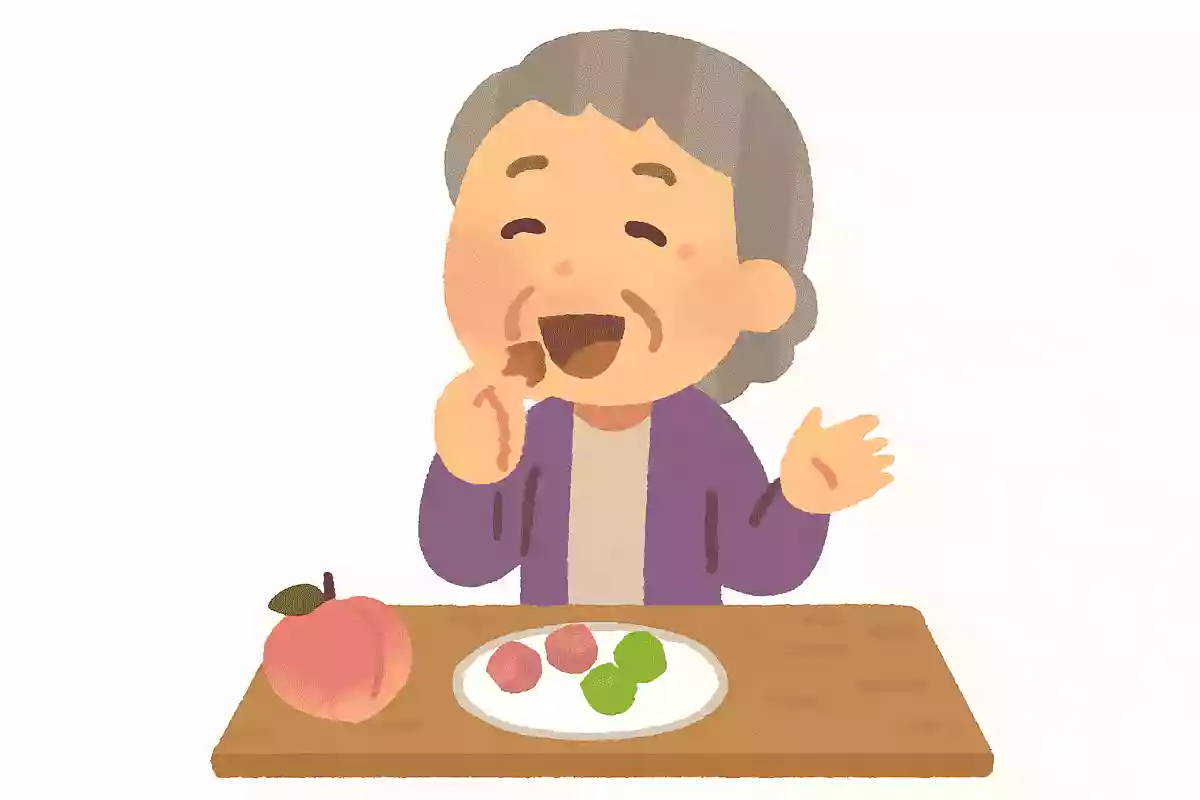
Plums come into season around mid-June.
Plums are a size smaller than peaches and are known for their sweet-and-tart flavor.
Although they’re said to be smaller than peaches, their shapes are similar, which is why there’s a tongue twister: “Sumomo mo momo mo momo no uchi; momo mo sumomo mo momo no uchi,” roughly meaning “Both plums and peaches are kinds of ‘momo.’” Because of this tongue twister, some older adults may have the impression that plums and peaches are the same variety.
However, plums belong to the genus Prunus in the rose family, while peaches belong to the genus Amygdalus (also within the rose family), so they are different.
Indeed, while their shapes are similar, plums have smooth skin, whereas peaches have a fine fuzz.
In fact, plums are said to be more closely related to apricots than to peaches.

Papa Panda, Mama Panda, Grandpa Panda, Grandma Panda

Tongue twisters with animal themes are a classic.
Through the words, you can picture a cute scene with animals lined up.
Sounds like “pa” and “ma” are hard to pronounce unless you close your lips first, so when they come in succession, the key is that your mouth really has to move.
Because you need to take the time to close your lips, being mindful of your mouth movements is important if you want to speak clearly while increasing speed.
Aim for clear pronunciation first, then gradually pick up the pace to train the muscles around your mouth.
Make vine, hang dayflower

One tongue twister used as a brain-training recreation.
You train your brain by reading awkward sentences that rarely appear in everyday life.
“Tsukuru tsurukusa tsurusu tsuyukusa” is also one of the tongue twisters for older adults.
Various images come to mind from the tongue twister.
You might imagine weaving baskets with climbing vines, and hanging spiderwort as decoration.
In hiragana, it’s “tsukuru,” “tsurukusa,” “tsurusu,” and “tsuyukusa.” They all start with “tsu.” In fact, it’s said that many people—not just older adults—find the ta-row sounds that include “tsu” difficult to pronounce.
A monk skillfully painted a picture of a monk on a folding screen.

It’s one of the classic tongue twisters in Japan, and the phrase evokes scenes like those from rakugo or old folktales.
Because words with similar sounds appear in sequence—like bōsu (monk), byōbu (folding screen), and jōzu (skilled)—be sure to pay close attention to the subtle differences in pronunciation and mouth movements.
If you find it hard to connect smoothly to the next word, it can help to understand the meaning of the tongue twister and visualize the scene.
Also, avoid letting the sounds blur together, like saying “boo-zu” or “byoo-bu”; that won’t train your articulation.
The key is to consciously pronounce the “u” sounds as well.