

[For Seniors] Oral Exercises to Keep Eating Deliciously and Enjoyably

Daily meals are important for staying healthy for years to come.
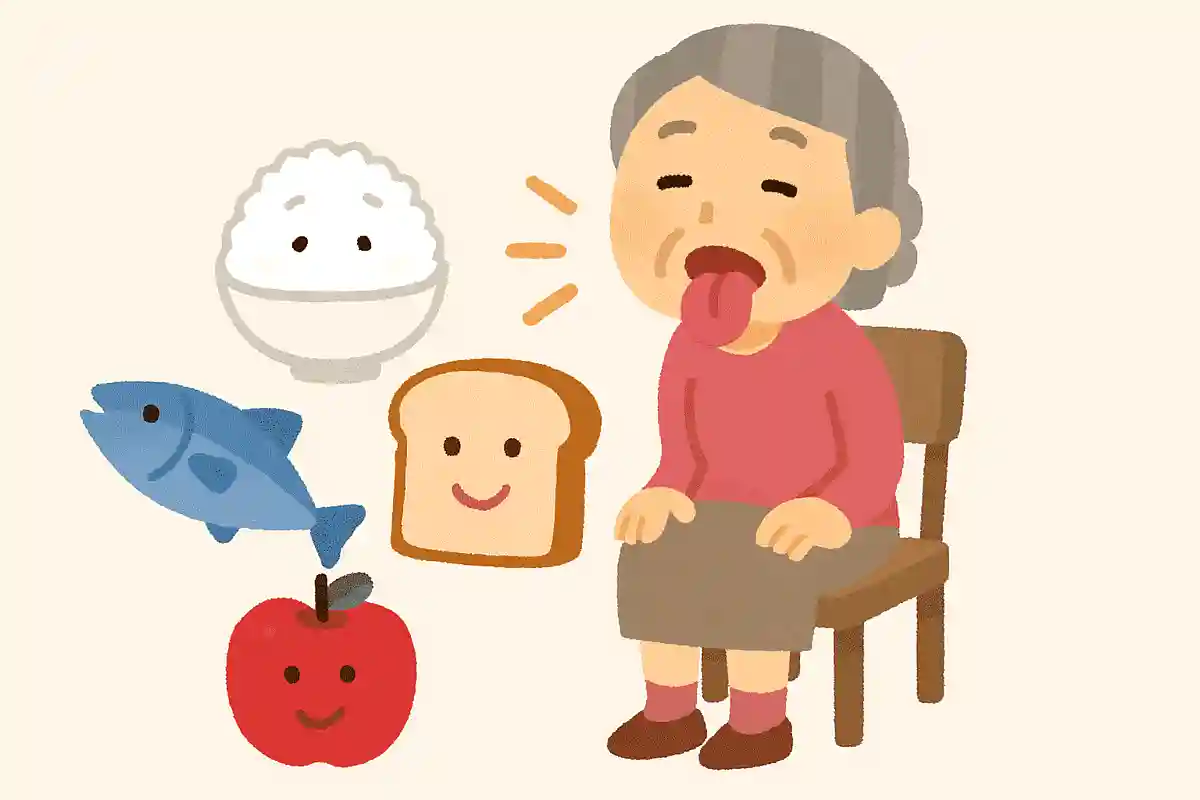
To help older adults enjoy their meals, try actively incorporating oral exercises into your daily routine.
As we age, it becomes harder to swallow food, and the risk of choking and aspiration increases.
To help prevent aspiration, simple oral exercises before eating are recommended.
In this article, we introduce easy pre-meal oral exercises recommended for older adults.
To improve swallowing, it’s important not only to exercise the mouth but also to loosen the muscles around the mouth, as well as the shoulders and neck.
Incorporate these oral exercises and enjoy your meals.
- [For Seniors] Let's try customizing the usual Pa-Ta-Ka-Ra exercises!
- [For Seniors] Spice Up Your Usual Oral Exercises! Patakara Exercises and Tongue Twisters
- [For Seniors] Boost Oral Function with Tongue Twisters! Recommended Picks to Try
- [For Seniors] Stay Healthy Through Your Mouth with the A-I-U-BE Exercises!
- For seniors: Enjoyable exercises done while seated, accessible for wheelchair users.
- Energetic and Lively! Sing-and-Exercise Program for Seniors
- [For Older Adults] Games to Enhance Oral Function: Enjoyable and Easy to Do
- Summary of exercises for seniors: introducing preventative care movements by body part.
- [October Health Topic] Introducing Recreational Activities for Seniors!
- [For Seniors] Today’s Recommended Activity: Fun and Engaging
- [Today's Recommendation] Gentle Health Exercises for Seniors
- [For Seniors] Recommended Muscle Training Gear. Simple and Easy
- [For Seniors] Hand and finger play roundup: Finger exercises that lead to brain training
[For Seniors] Oral exercises (21–30) for enjoying delicious meals for years to come
Patakara Oral Exercises – Blue Mountains

We’d like to introduce the Pataka-ra exercises performed to the familiar song “Blue Mountains,” well known among older adults.
Pataka-ra exercises are one of the standard training methods to prevent aspiration; by strengthening the mouth and tongue, they aim to maintain and improve oral functions such as eating and swallowing.
They’re easy to do—simply pronounce “pa,” “ta,” “ka,” and “ra” in time with the music.
Doing them before meals, in sync with the music, helps you enjoy your food and supports healthy living.
They’re also recommended as oral exercises in senior care facilities.

This kid had a hard time writing katakana, didn’t they? I wonder if they didn’t cry?
“Kono ko nakanaka katakana kakenakatta na, nakakanakatta kana?” is quite a long tongue twister.
Are they worried that the child who couldn’t write katakana didn’t end up crying? Words with similar sounds like nakanaka and katakana run together almost like a reverse reading.
Plus, the repeated ka sounds create a string of identical syllables, which adds to the difficulty of reading.
Tongue twisters can make you rush, but the key is to stay calm and read through without hurrying.

Pa-ta-ka-ra pistol exercise

The “Pa-Ta-Ka-Ra” exercises are said to be effective for maintaining and improving oral function, but even if they work, some people might feel bored after a while.
For those people, we recommend the “Pa-Ta-Ka-Ra Pistol Exercise.” Shape your hand like a gun and, as if shooting bullets, say “Pa! Ta! Ka! Ra!” loudly while adding the corresponding movements.
You can also try other variations, such as saying “Pa-Ta-Ka-Ra!” in a short burst like firing a bullet, or continuing with “Pa-pa-pa-pa-pa!” like a machine gun.
Whatever you do, it’s more effective when you enjoy it rather than doing it on autopilot, so this is a great option if you want to change things up from your usual routine.
Patakara Song: Spring Has Come

Why not try training your chewing and swallowing abilities to the familiar children’s song “Haru ga Kita” (Spring Has Come)? It’s simple: just replace the lyrics of the well-known song with the syllables pa-ta-ka-ra and sing them out loud.
You can do it anywhere, without worrying about the location.
In senior care facilities, it’s helpful for staff to demonstrate the method so no one is unsure how to do it.
Doing the exercise before meals can better prevent aspiration, so if you explain the purpose and benefits in advance, participants are likely to join more actively.
Upward Patakara Exercise

When your swallowing ability declines, you’re more likely to choke, and food or saliva can more easily enter the airway by mistake.
If this leads to pneumonia, it can have a major impact on your health.
To help prevent such aspiration, we’d like to introduce the “Upward Patakara Exercise,” which strengthens your swallowing ability.
It’s very simple: just pronounce “pa-ta-ka-ra” while looking up.
Doing only this can strengthen the muscles around the mouth and help maintain and improve your swallowing function.
Doing it before meals helps prepare your mouth, and continuing daily can make it even more effective.
Pa-Ta-Ka-Ra alternating counting exercise

Let me introduce a very simple exercise that also trains your brain: the alternating Pa-Ta-Ka counting exercise.
What you do is very simple! Say “pa” while raising the index finger of your left hand and keeping your right hand in a fist.
Next, say “ta,” raise two fingers on your right hand, and make a fist with your left hand.
Then, say “ka,” raise three fingers on your left hand, and make a fist with your right hand.
In this way, you alternate between your left and right hands while counting.
By having your brain process speaking and finger counting at the same time, multiple stimuli are sent to the brain, which is expected to help prevent cognitive decline.
Give it a try!
Patakara Exercises – Oyome Samba (Bride Samba)

Let us introduce you to the fun Patakara exercises performed to the tune of Hiromi Go’s classic hit “Oyome Samba.” Strengthening the mouth muscles improves your ability to swallow food and helps prevent aspiration.
First, sing the song normally to check the music and rhythm.
From the second verse, replace the lyrics with the syllables “pa-ta-ka-ra.” If you can manage it, move your hands in rock–paper–scissors (fist, scissors, open hand) at the same time; doing multiple actions simultaneously can also provide brain-training benefits.
Aim to do this at least once a day.
It’s especially recommended before meals.