

[For Seniors] Conversation starters that help you chat: engaging questions and topics to spark lively talks


Care workers who interact with older adults every day may often wonder what topics will get a good conversation going.
Sometimes, you might even find yourself at a loss for words.
However, casual conversations with seniors can be valuable opportunities to build communication, so it’s helpful to be able to talk smoothly.
In this article, we’ll introduce questions and topics that can spark lively conversations when talking with older adults.
If you’re struggling with communication with seniors, please use this as a reference.
- [For Seniors] Hilarious! A Collection of Funny Questions
- Fun, engaging topics for conversations with older adults!
- [For Seniors] Fun and Lively! Recommended Quiz Questions
- [For Seniors] Great for Brain Training! Question Card Ideas
- Conversations Made Easy! A Collection of Topics That Elderly People Enjoy
- [For seniors] Dice talk: engaging prompts
- Words useful for conversations with elderly people. Words that were used in the past.
- [For Seniors] Guaranteed to Liven Things Up! A Collection of Brain Training Activities That Will Spark Laughter
- [For Seniors] Perfect Brain Training! Fun Trivia
- [For Seniors] Today’s Recommended Activity: Fun and Engaging
- [For Seniors] Uplifting Words That Comfort the Heart
- Introducing words that will delight elderly people
- [For Seniors] Fun! Let’s Get Excited with Japan’s Number One Quiz
[For Seniors] Conversation starters that help keep the talk flowing: engaging questions and topics (21–30)
Favorite dishes and meals
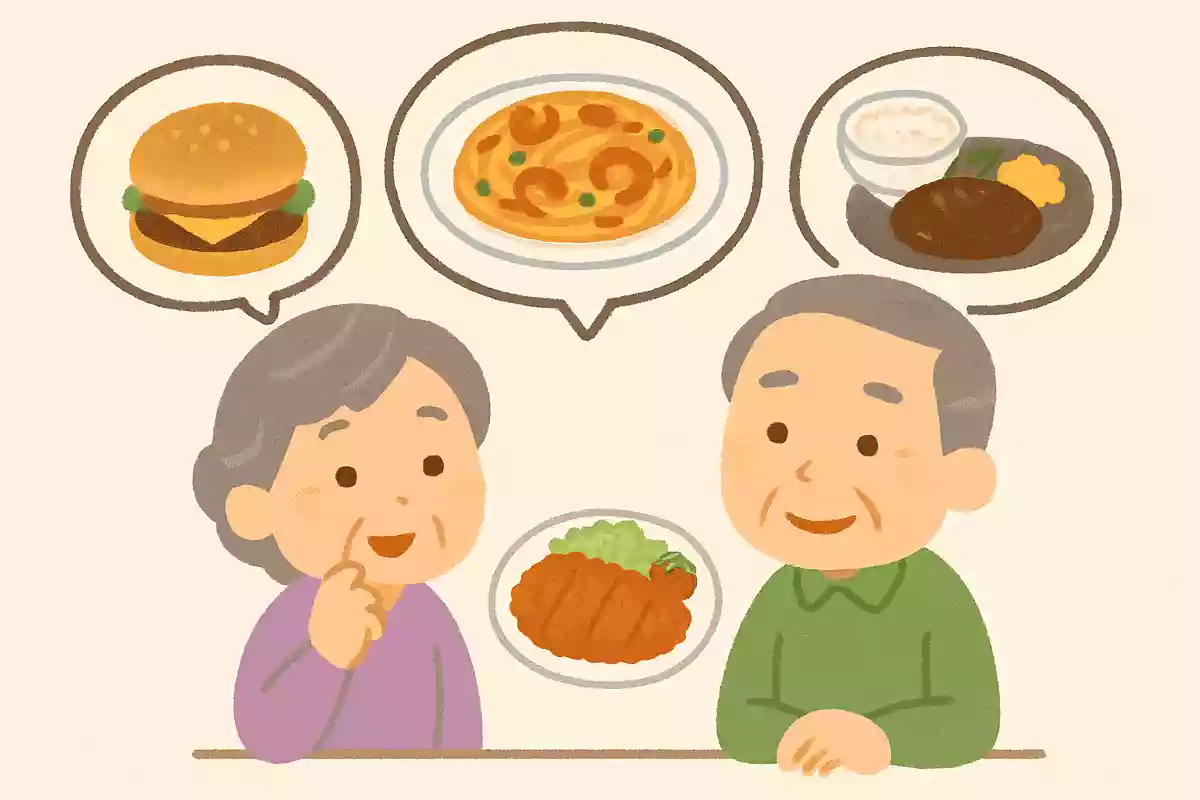
People can’t live without eating at all times.
Even in old age, many people continue to be interested in food.
Questions like “What was the most delicious thing you’ve eaten recently?”, “What’s your favorite food?”, or “Can you tell me how to make a dish you’re good at?” make conversation easier.
Both the person asking and the person being asked feel happier, and the discussion tends to be more lively.
If they’re a gourmet, it’s also good to ask about restaurants they enjoyed when they were younger.
That can prompt various memories and help stimulate the brain.

What I was passionate about in my youth
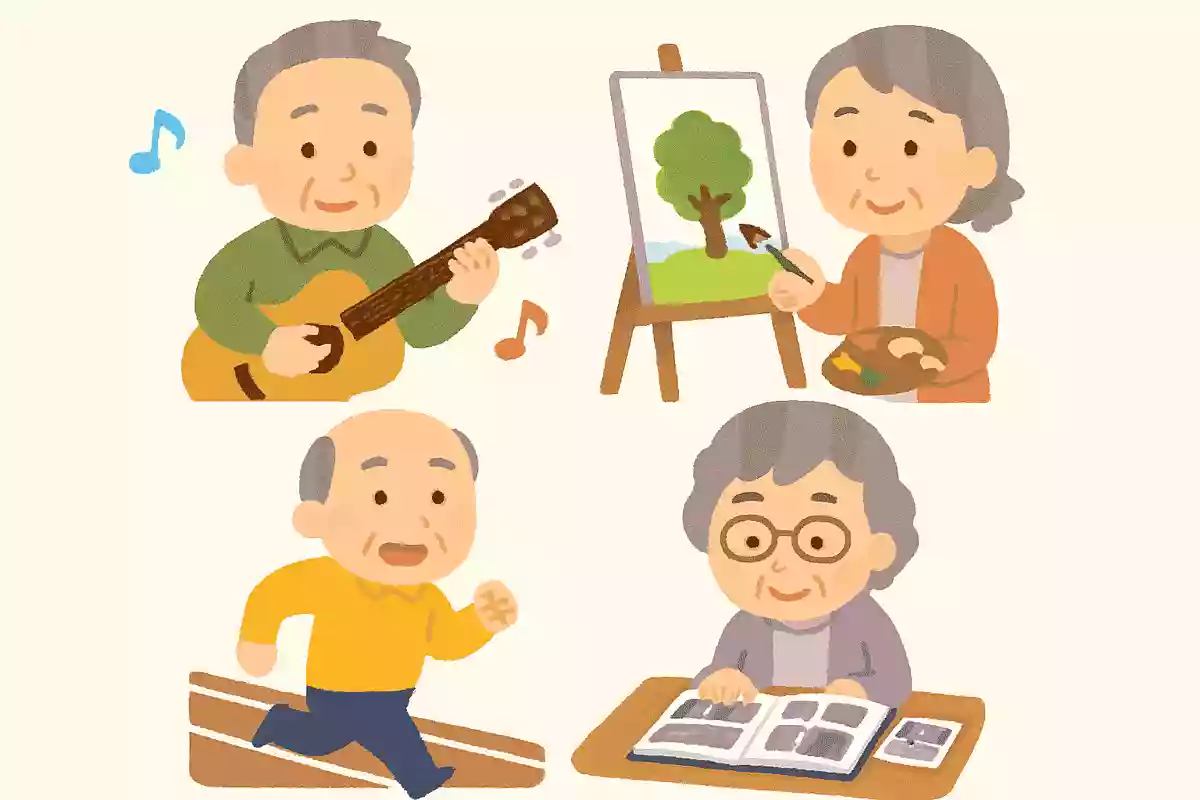
Your youth—the brightest time of your life.
Reminiscence therapy, which involves recalling what you were passionate about back then, is highly effective for preventing dementia.
Memories strongly tied to emotion—like the club activities you devoted yourself to, the hobbies and trends you were obsessed with, and the unforgettable times with friends—stimulate the brain and lead to smoother conversations.
Sharing common experiences also strengthens connections among participants.
Wrapped in fun and nostalgia, it’s a practical approach recommended for helping to slow the progression of dementia.

A story about nostalgic culture

One characteristic of dementia is that people tend not to forget their past memories.
With that in mind, why not incorporate items or aspects of culture that might feel nostalgic into your conversations with older adults? This approach is known as “reminiscence therapy” for people with dementia.
Looking at or touching old photos and familiar objects from the past can prompt self-reflection.
Reflecting on the past and sharing memories with others can also help facilitate communication.
By connecting the flow of time between the past and the present, individuals may gain confidence and hope, and it can also help stabilize their emotions.
Even just looking at nostalgic photos or videos can be beneficial, so please consider giving it a try.

Ask for a celebrity’s name

The “ask the celebrity’s name” game is great for conversations and recreational activities with older adults.
Give hints for the answer or show photos of famous people and have them guess.
The key is to choose people where they’ll recognize the face but struggle to recall the name.
It can be tricky, but if the topic is too obscure, it will be hard to get answers.
It may help to pick from well-known former prime ministers, athletes, or entertainers familiar to older adults.
The act of recalling stimulates the brain and can help prevent cognitive decline.
If the person featured is someone they like, the activity is sure to be lively.
What kind of child were you?
As we grow older, our childhood feels more distant, and we recall it less and less.
How about stirring your mind by reflecting on your younger self and remembering those days in more detail? By clearly recalling your childhood, you may also be able to look back more thoroughly on the life you’ve led so far.
It can be fun to focus on differences in personality and environment from each person’s childhood and enjoy the gaps as conversation topics, too.

Local regional cuisine and tourist attractions
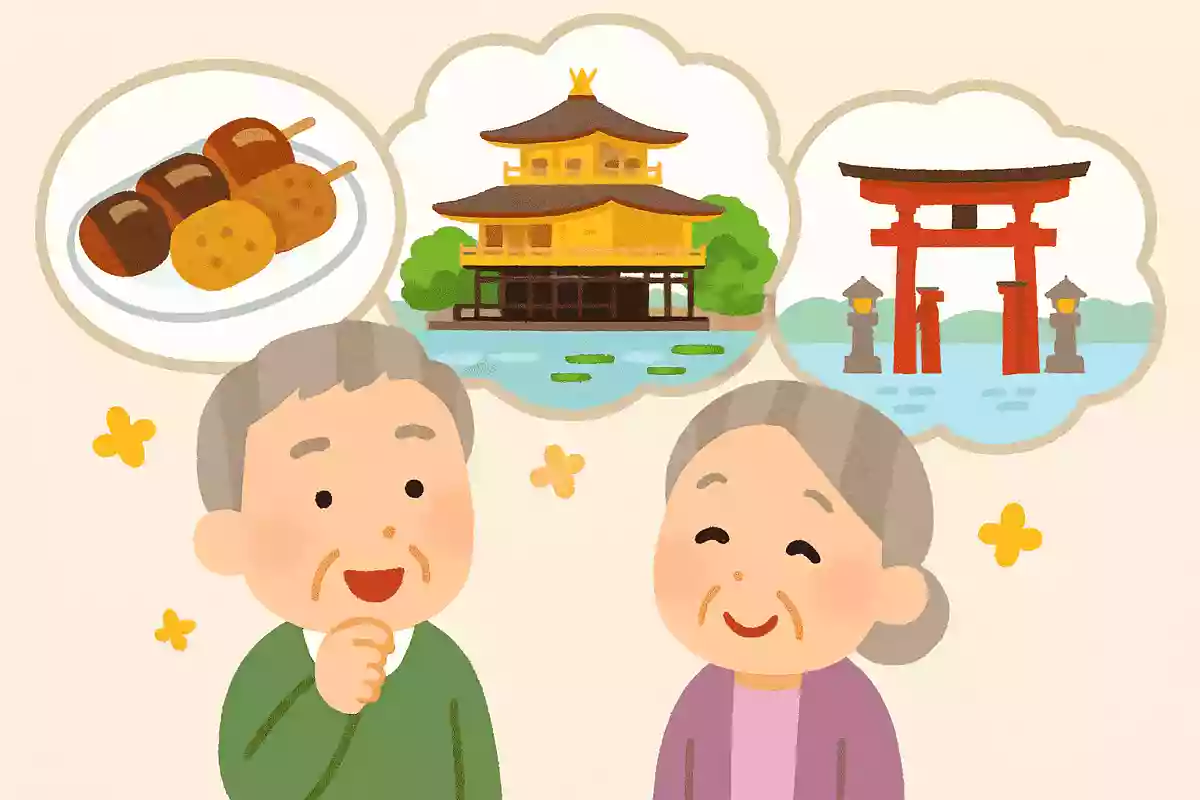
Did you know that memories like “places you used to visit” or “family meals around the table” can help prevent dementia? Among reminiscence techniques, topics such as “local traditional dishes” and “tourist attractions” are especially easy to put into practice and are expected to stimulate the brain.
Recalling nostalgic flavors and scenery sparks conversation and helps trigger the retrieval of memories.
In care settings, discussions about local landmarks and signature foods elicit good responses, and using photos or old maps makes them even more effective.
Because these are familiar topics, they’re easy to incorporate into daily life and are a recommended approach that can help slow the progression of dementia.
The home-cooked flavors I loved
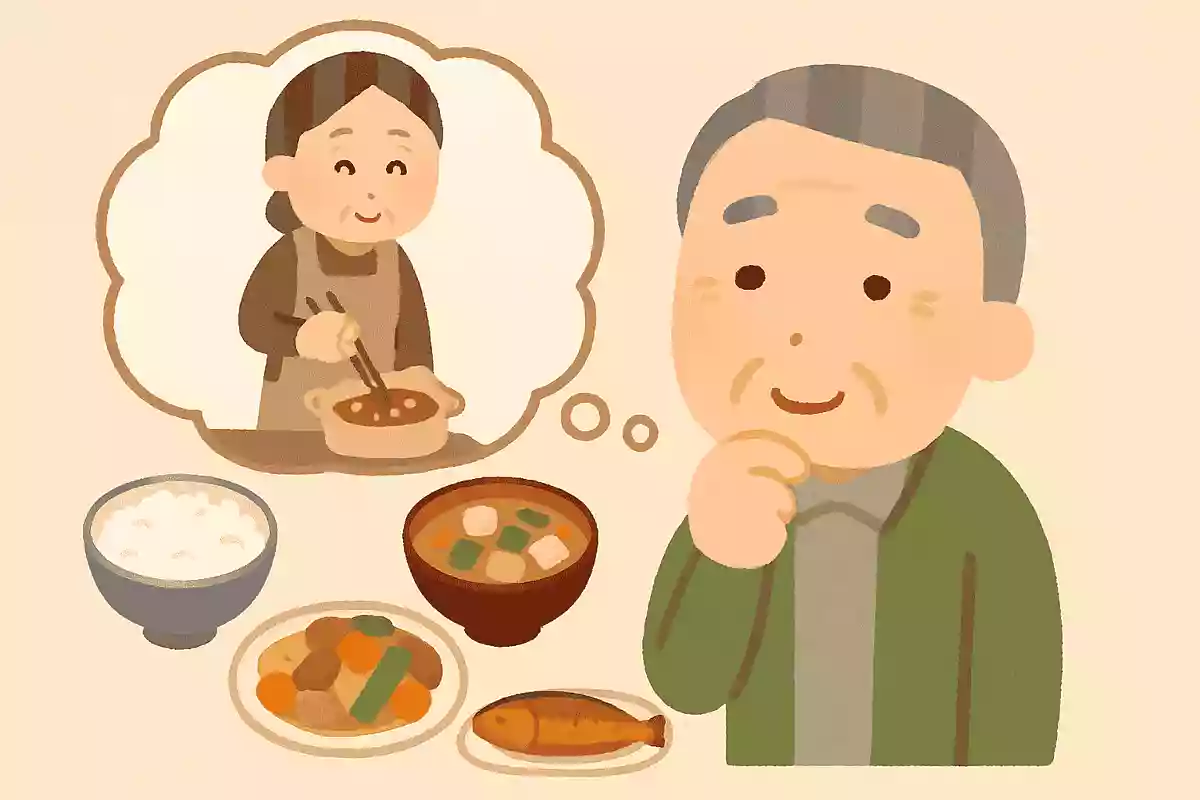
People’s favorite foods differ from person to person, and some may have seen their preferences change over the course of their lives.
How about looking back on the “taste of home” dishes you used to love—whether they’re things you still enjoy or ones you loved in the past? Some might be simple enough to make even now, while others could have had a unique seasoning that’s hard to recreate.
Let’s try to recall those details as precisely as possible.
It’s also important to think about how to describe those flavors—ones that exist only in your own memories—in words that others can understand.