

[For Seniors] Conversation starters that help you chat: engaging questions and topics to spark lively talks


Care workers who interact with older adults every day may often wonder what topics will get a good conversation going.
Sometimes, you might even find yourself at a loss for words.
However, casual conversations with seniors can be valuable opportunities to build communication, so it’s helpful to be able to talk smoothly.
In this article, we’ll introduce questions and topics that can spark lively conversations when talking with older adults.
If you’re struggling with communication with seniors, please use this as a reference.
- [For Seniors] Hilarious! A Collection of Funny Questions
- Fun, engaging topics for conversations with older adults!
- [For Seniors] Fun and Lively! Recommended Quiz Questions
- [For Seniors] Great for Brain Training! Question Card Ideas
- Conversations Made Easy! A Collection of Topics That Elderly People Enjoy
- [For seniors] Dice talk: engaging prompts
- Words useful for conversations with elderly people. Words that were used in the past.
- [For Seniors] Guaranteed to Liven Things Up! A Collection of Brain Training Activities That Will Spark Laughter
- [For Seniors] Perfect Brain Training! Fun Trivia
- [For Seniors] Today’s Recommended Activity: Fun and Engaging
- [For Seniors] Uplifting Words That Comfort the Heart
- Introducing words that will delight elderly people
- [For Seniors] Fun! Let’s Get Excited with Japan’s Number One Quiz
[For Seniors] Conversation starters that help you chat: Fun questions and topics to liven things up (41–50)
Stories about nostalgic items that were in the home

Let’s try using items from home to help recall the past and spark conversation.
Although treadle sewing machines and rotary dial telephones are rarely seen today, they were essential items in everyday life for many older adults.
Precisely because they were used so often, people may feel a deep attachment to them.
Remembering nostalgic objects and talking with those around you—or listening to their stories—helps stimulate the brain.
Enjoyable conversations that evoke fond memories can also promote emotional stability.
Please try conversations centered on “nostalgic items from the home” and enjoy a pleasant time together.

[For Seniors] Conversation starters that help keep the talk flowing: engaging questions and topics (51–60)
Nostalgic games talk

The toys that older adults played with when they were young may be filled with fun episodes and family memories.
Try weaving nostalgic games and playthings that remind them of those days into your conversations.
Talking about enjoyable times is likely to liven up the conversation.
Looking back and “remembering” the past can also be expected to help stimulate the brain.
Games and recreational activities that incorporate play reminiscent of those days—like ohajiki (marble-like flicking game) or kicking the can—are also recommended.
Please make good use of these ideas for nostalgic play.
Work talk

Over the course of a long life, how about asking what kinds of jobs each person has done and how they approached their work? Someone who has held a variety of jobs will likely have a wealth of accumulated experience, such as differences by role or workplace location.
And for those who have stayed in a single job for a long time, there may be insights they’ve gained through building up experience.
They could probably share stories from many angles—about jobs that were good, jobs that were bad, and everything in between.

child-rearing

How about asking them about their experiences facing the challenges of parenting and the various memories that come with it? If you hear stories about how they gathered and used parenting information, you can turn those insights into your own experience.
It could also be engaging to talk about differences in parenting across generations, sharing each other’s knowledge and experiences.
Let’s draw out parenting-related topics from various angles—memories that were tough, ones that were joyful, and everything in between.
A bittersweet event from my younger days
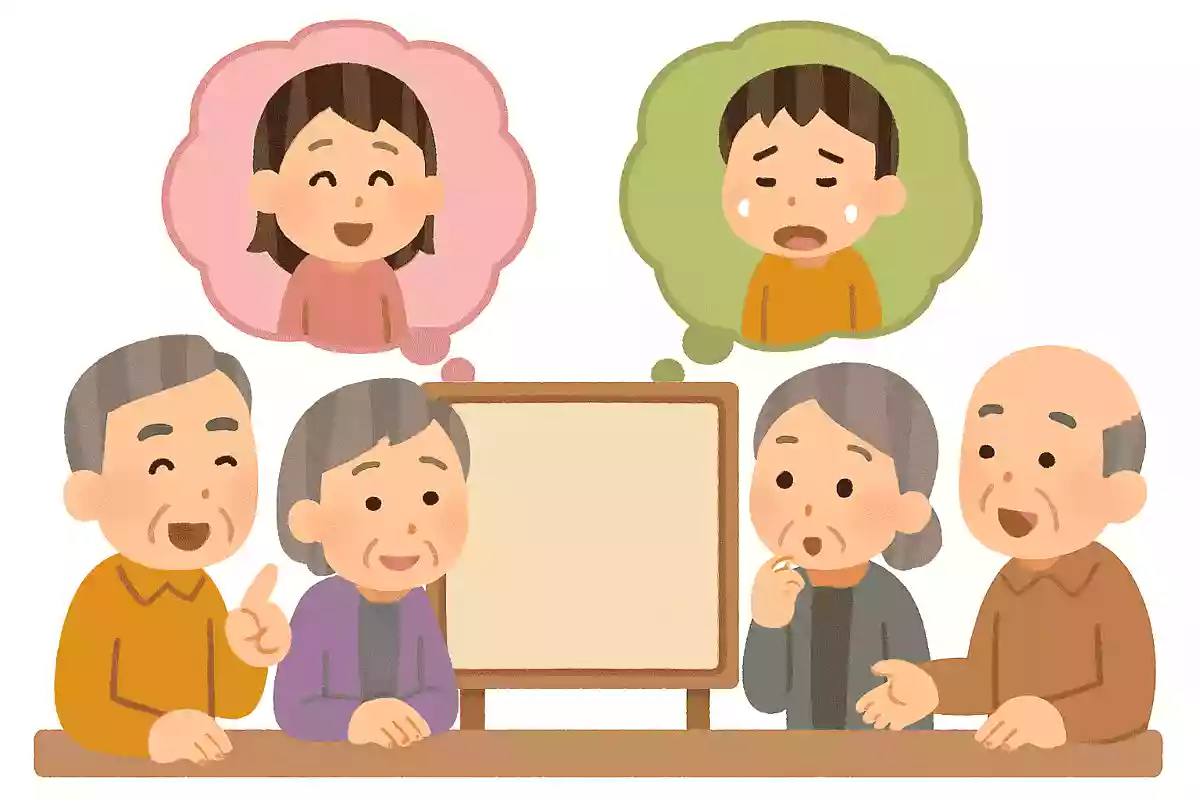
This is a talk theme about sharing youthful memories that stay with you no matter how many years pass.
When you recount those sweet and bittersweet moments from your younger days, a wave of nostalgia will wash over you and bring a smile to your face.
First-time experiences, heart-racing moments, and memories that stirred your emotions tend to come back vividly even after a long time.
By talking while recalling how you felt back then, you can rediscover who you were at the time and connect that self with who you are now.
It can also spark lively conversation, as people with similar experiences empathize and join in.
Those bittersweet memories are now a precious part of your life.
Looking back on them lets you spend time cherishing the person you were then.

Stories of Meals During and After the War

Some older adults may have experienced war.
If so, try asking them about what it was like at the time.
Food-related topics from during or after the war are recommended, as you can compare them with meals today and have engaging conversations.
You might also try turning meal menus into a quiz format.
Starting from food, the conversation may naturally expand to difficult times or stories of hardship.
Thanks to the older generations who have contributed to society for many years, Japan is what it is today.
It’s also important to show respect through your conversations.
Athletes and sports that were active

If the elderly person is interested in sports, try asking about the athletes who were active when they were young or about historically memorable matches.
If it’s baseball, recalling baseball memories may also bring back related recollections.
They might say things like, “I watched games with people from the neighborhood,” or “I actually went to the ballpark to see a game,” and one memory will trigger another, likely stimulating the brain.
Also, by remembering the stories you hear in this way, future communication is likely to go more smoothly.

In conclusion
Here are some recommended questions that tend to get seniors excited. Topics like their jobs during their working years, child-rearing, favorite celebrities, and hobbies are usually well received. However, people’s interests vary, so it’s important to choose topics that suit each individual. Also, you don’t need to force the conversation to be lively—listening attentively and staying close to their feelings is key. Please feel free to use this as a reference.