

[For Seniors] Think and Have Fun: Introducing Brain-Stimulating Logic Puzzles


This time, we’re introducing logic puzzles designed for older adults.
A logic puzzle is one where you think about why something happens or consider the methods and steps involved.
Making use of your own knowledge and finding hints or trick points in the problem statement are key to solving the puzzles.
Thoughtfully working through logic puzzles helps activate the brain and can also improve concentration and creativity.
Why not incorporate them into quiz activities at senior care facilities? We’ve prepared everything from shorter puzzles with fewer clues in the text to longer ones with more to read.
Try using paper or a whiteboard to make things clearer with drawings and diagrams, and offer hints as needed to make it engaging!
- [For Seniors] Fun Brain Training! A Collection of Tricky Quizzes You’ll Definitely Get Stumped By
- [For Seniors] Exercise Your Brain with Fun Logic Puzzles!
- [For Seniors] Have Fun with Wordplay Characters! A Collection of Funny Puzzles
- Take on the challenge like a puzzle! A collection of logic quizzes that also work as brain teasers.
- [For Seniors] Who Am I? Quiz: A Fun Set of Questions with Exciting Hints
- [For Seniors] Recommended for Brain Training! Ultra-Difficult Quizzes and Riddles
- [For Seniors] Laugh-Out-Loud, Crowd-Pleasing! Fun Quiz
- [For Seniors] Today’s recommended quiz. Daily brain-training quiz!
- [For Seniors] Liven Things Up with Trick Riddles You Answer!
- [For Seniors] Sports Trivia Quiz & Fun Facts. Easy and Entertaining
- [For Seniors] Fun! Let’s Get Excited with Japan’s Number One Quiz
- [For Seniors] Lateral Thinking Game! Brain Training
- [For Seniors] Find daily brain training. Today’s recommended brain workout.
[For Seniors] Think and Have Fun: Introducing Brain-Stimulating Logic Riddles (21–30)
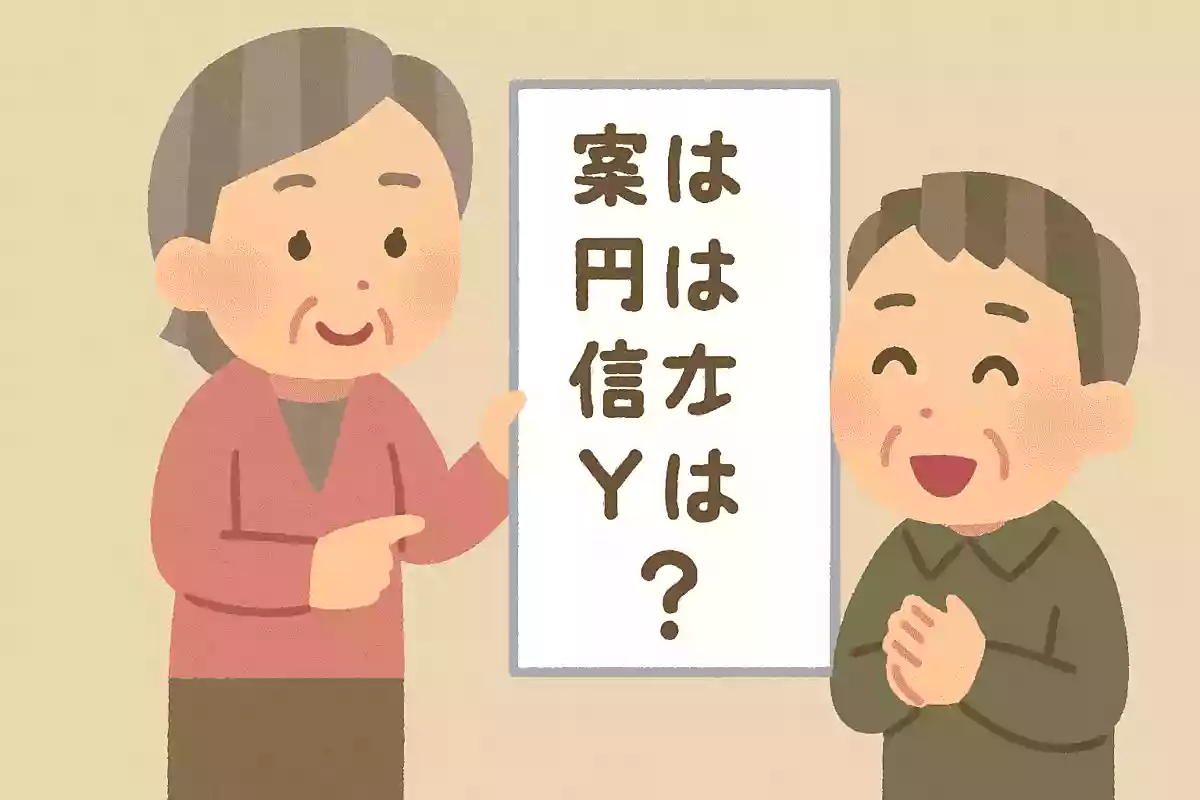
Satoko showed her friends a kanji-based puzzle she had made. It read: “Ann eats, En cries, Shin is quiet—so what is the letter Y?” Taro’s answer, “joy,” was correct. Why is that? (Because in Japanese, when you add the ‘heart’ radical to those kanji—案, 円, 信—you get new kanji whose meanings match ‘eat,’ ‘cry,’ and ‘quiet,’ and adding the ‘heart’ radical to Y corresponds to the kanji 喜 (yori/yorokobi), meaning ‘joy.’)
See the answer
Because Y is going “Yay!” and is happy
Let’s look at the way of thinking from the answer. If you read Satoko’s problem out loud, it might lead you to the answer. For example, “aan” is what you say to a baby when feeding them. Similarly, the kanji for circle (円, en) connects to “een,” like crying; the kanji for faith/trust (信, shin) connects to “shiin,” used to describe a quiet atmosphere. And Y is “waai,” which expresses joy.

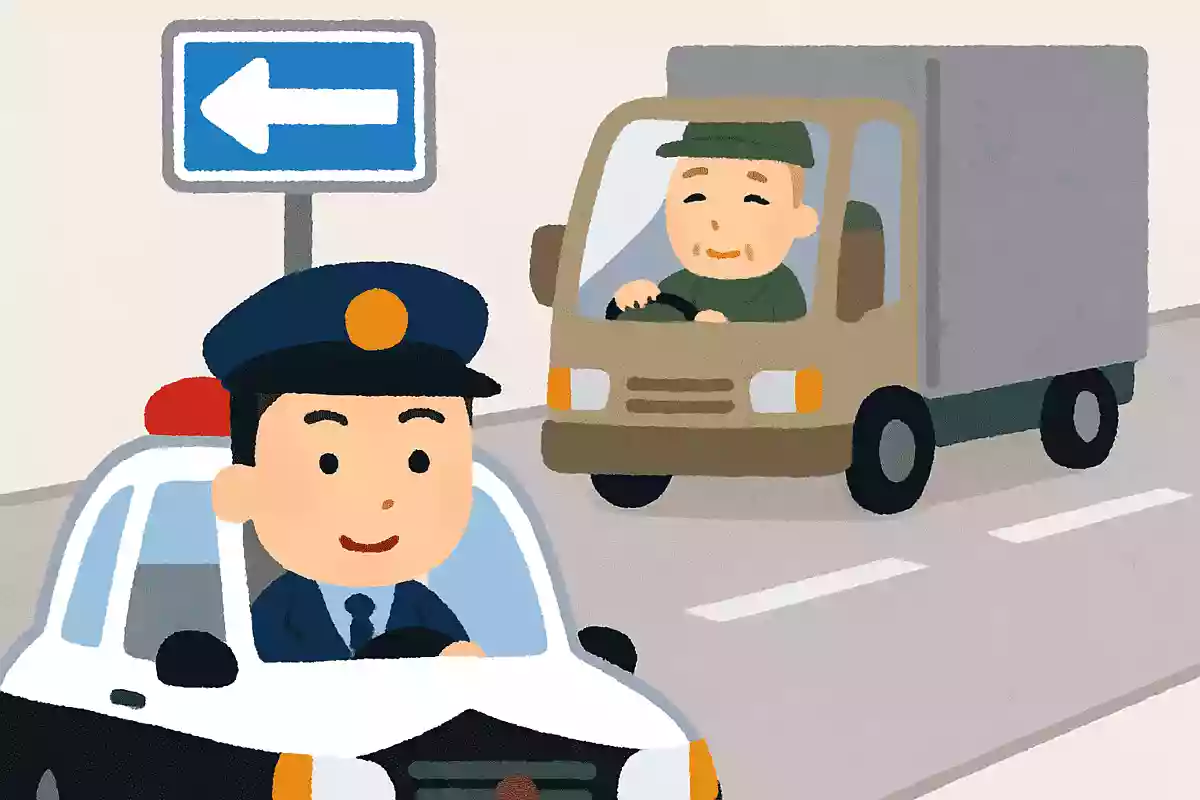
A truck driver was driving the wrong way down a one-way street right in front of a police officer in a patrol car. However, the officer didn’t seem to care at all or try to stop the driver. Why was that?
See the answer
Because the truck driver was walking against the flow (going the wrong way)
The truck driver wasn’t riding in the truck. If you assume the truck driver was walking, the answer becomes clear. Focusing too much on “the truck driver” leads to ideas like “a police officer who doesn’t stop a truck going the wrong way.” A one-way sign applies to vehicles, so there’s no problem if a pedestrian walks in the opposite direction.
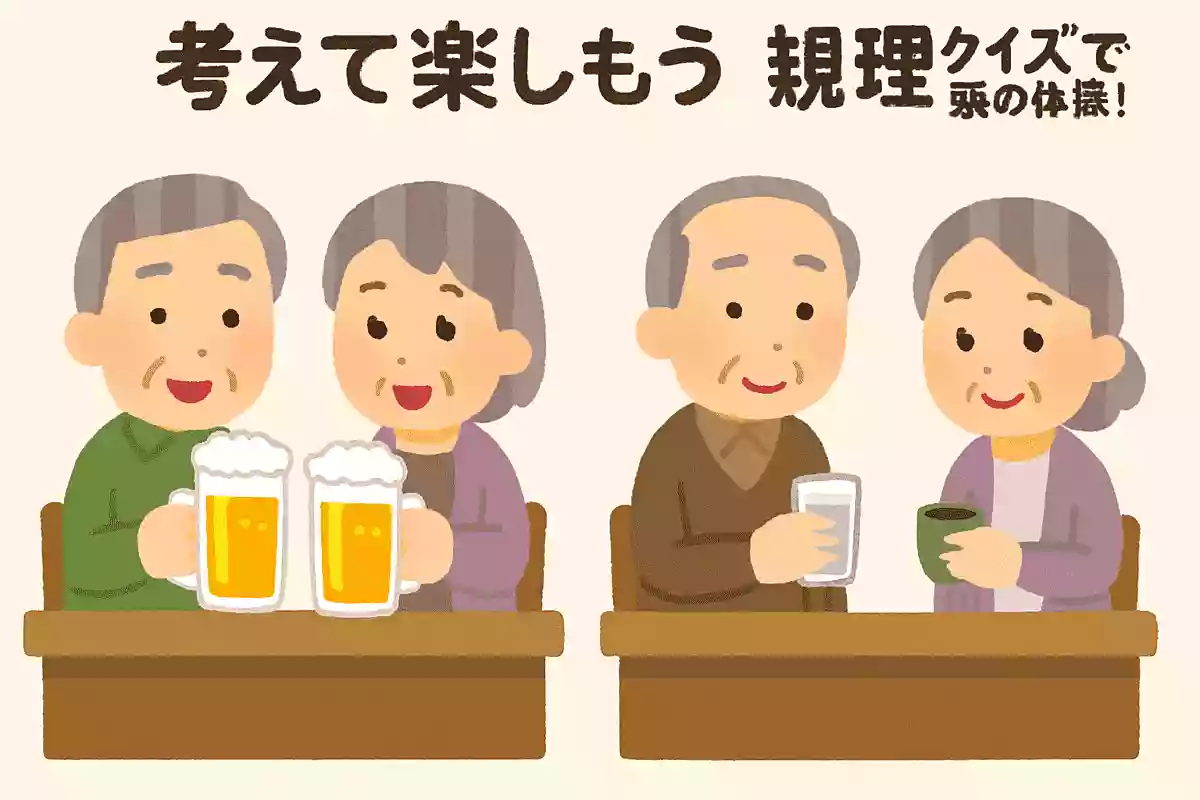
There was a couple who liked beer, and another couple who weren’t good with beer and drank tea or water instead. Which couple is more compatible?
See the answer
A married couple who like beer
Let’s think about the differences between beer and tea or water, aside from the alcohol content. Beer has its characteristic “foam,” right? If you pour tea or water into a glass, you don’t get foam. If you change “awanai” (no foam) to “awanai” (doesn’t match), the answer starts to appear. “Awanai” (doesn’t match) connects to the idea of a couple not being compatible, so it refers to couples who don’t like beer and drink tea or water instead. Summing it up, the correct answer is couples who like beer with foam.
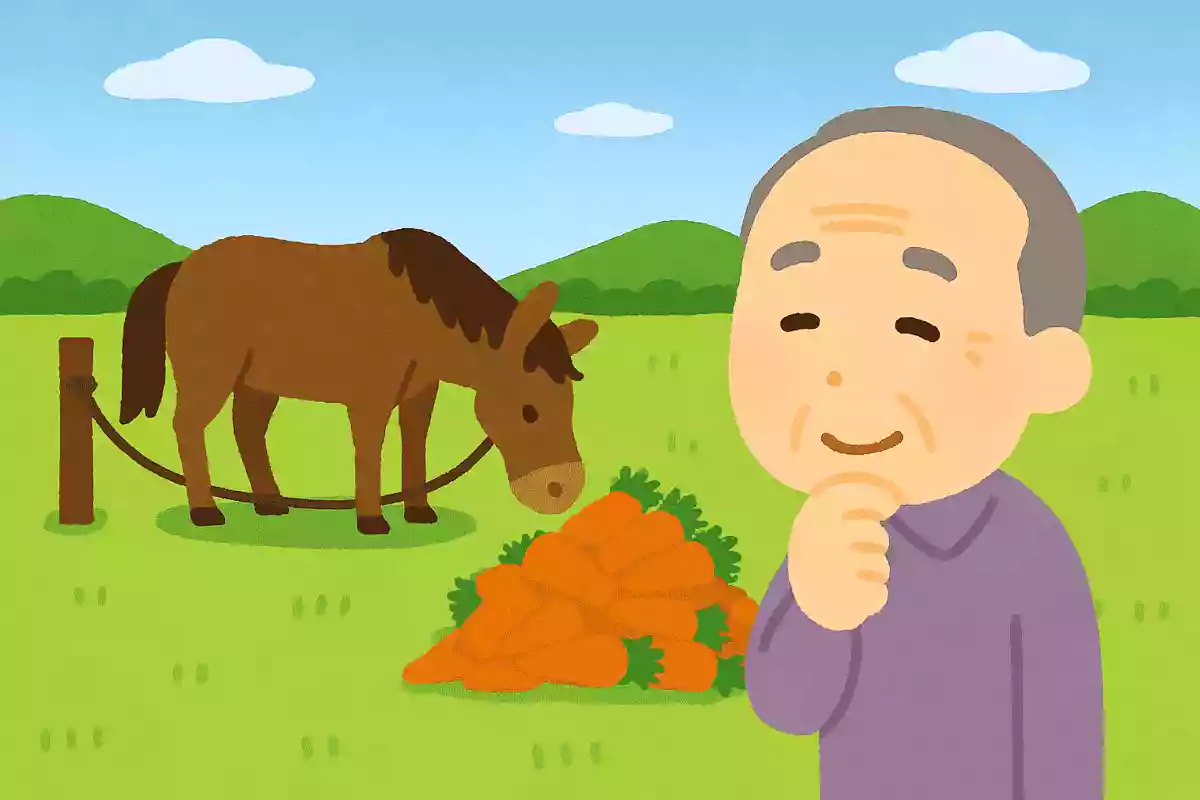
A hungry horse was tied with a 4-meter rope. About 15 meters away, there was a pile of carrots. The hungry horse tied with the rope ate the carrots. How was the horse able to get to the carrots?
See the answer
The rope tied to the horse wasn't secured, so...
If you focus only on the two elements—“a horse tied to a 4-meter rope” and “a carrot about 15 meters away”—you might be led away from the answer. The horse is tied to a rope, yes. But it doesn’t say the rope is fixed, does it? Since the rope wasn’t secured, the horse was free to move.
If three people eat three rice crackers, it takes three minutes. How many people are needed to eat 100 rice crackers? Note that the rice crackers cannot be broken and shared among multiple people.
See the answer
4 people
Let’s reason from the problem statement. If it takes three people three minutes to finish three rice crackers, then it takes one person three minutes to eat one cracker. When you divide 100 crackers equally among three people, you get 33 crackers each with 1 cracker left over. It’s incorrect to think, “Three people will eat the remaining one, so it’s still three people,” so let’s think more carefully. The time it takes three people to finish 33 crackers is 3 minutes × 33 crackers = 99 minutes. Since you can’t split the last cracker and have several people eat it, nor can one person finish it in the remaining one minute, you need one more person.