

[For Seniors] Haiku for September: Introducing Verses Perfect for Autumn

In September, after enduring the intense heat, we begin to feel the subtle signs of autumn.
When you think of September, what comes to mind? Many people might mention moon viewing or autumn wildflowers.
In the world of haiku, September is classified as “mid-autumn,” and there are many seasonal words associated with this month.
Here are some famous verses that use seasonal words unique to September.
Haiku that evoke the beautiful scenes of autumn can calm the hearts of older adults and help them enjoy a peaceful time.
It could also be nice to try composing a haiku using your favorite seasonal word.
- [For Seniors] A Collection of Famous Autumn Haiku: Introducing Beautiful Verses That Evoke Vivid Scenery
- [For Seniors] Evoking autumn scenes: Introducing beautiful haiku for October
- [For seniors] Classic autumn kigo: beautiful words that depict evocative scenesNEW!
- For Seniors: Famous Haiku of November — Introducing Verses Depicting Beautiful Autumn Scenery
- [For Seniors] September Song Special: Introducing Nostalgic Classics and Children’s Songs that Evoke Autumn
- [Elderly] Haiku with the theme of August: Introducing famous verses
- [For Seniors] Famous Haiku for December: Masterpieces Depicting Winter Scenes and Year-End Moments, Plus Tips on How to Compose Them
- [For Seniors] Enjoy September’s Autumn Fun! A Collection of Craft, Game, and Exercise Ideas
- [For Seniors] Enjoy Brain Training with September Trivia Quizzes & Fun Facts
- [For Seniors] Recommended September Origami to Feel the Autumn Season
- [For Seniors] Famous Haiku About January: Learn New Year Season Words and Tips for Composing
- [For Seniors] Summer kigo: A list of famous seasonal words to enjoy while savoring their elegance
- [For Seniors] June Haiku Showcase: Ideas to Feel Summer
[For Seniors] Haiku for September: Introducing Perfect Verses for Autumn (21–30)
When I bite into a persimmon, a bell resounds—Hōryū-jiMasaoka Shiki
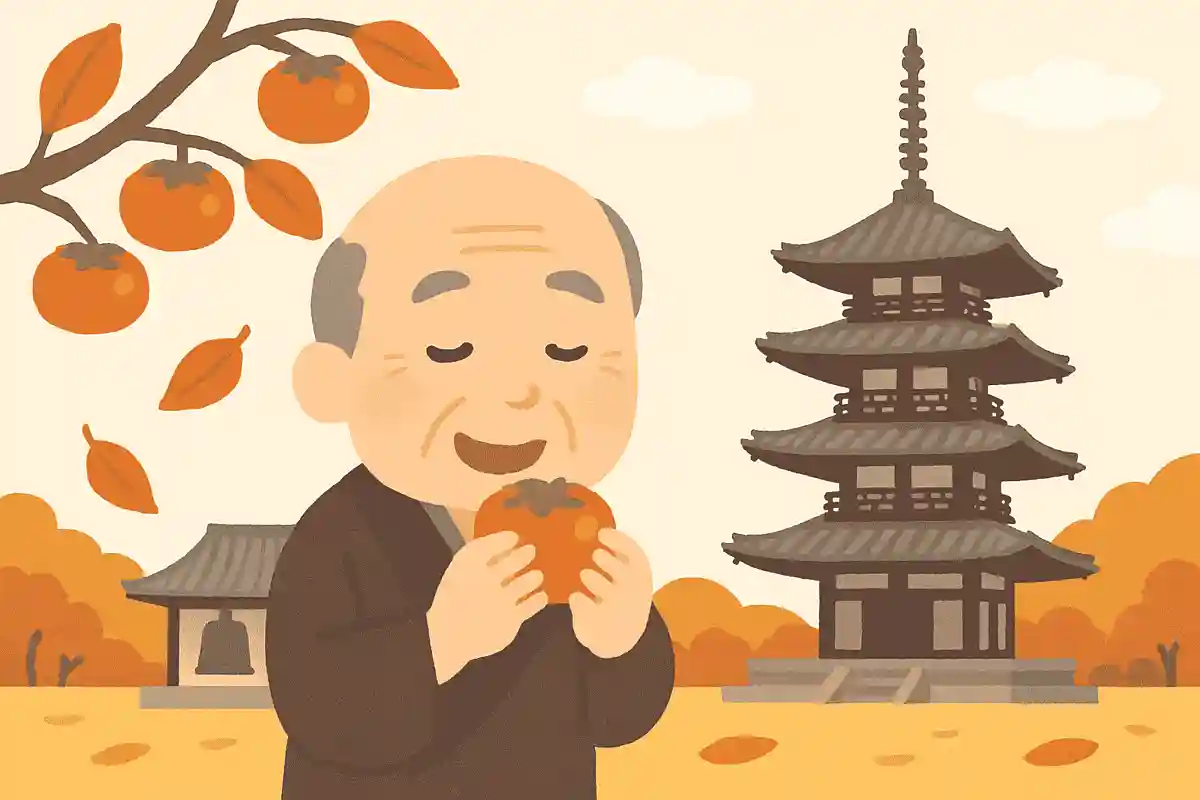
This is a famous haiku by Masaoka Shiki, a poet of the Meiji era.
It is said that he composed it at a teahouse where he stopped to rest during a visit to Horyu-ji in Nara.
You can almost picture him holding a ripe, sweet persimmon in one hand.
There’s also an evocative atmosphere in the tolling of the bell resonating with a deep “booon.” In the clear autumn air under a bright sky, you can feel time flowing gently.
How about trying to compose haiku that capture peaceful scenes from autumn days with older people? You might create something full of character.

Red dragonflies—over Tsukuba, not even a cloud in sight.Masaoka Shiki
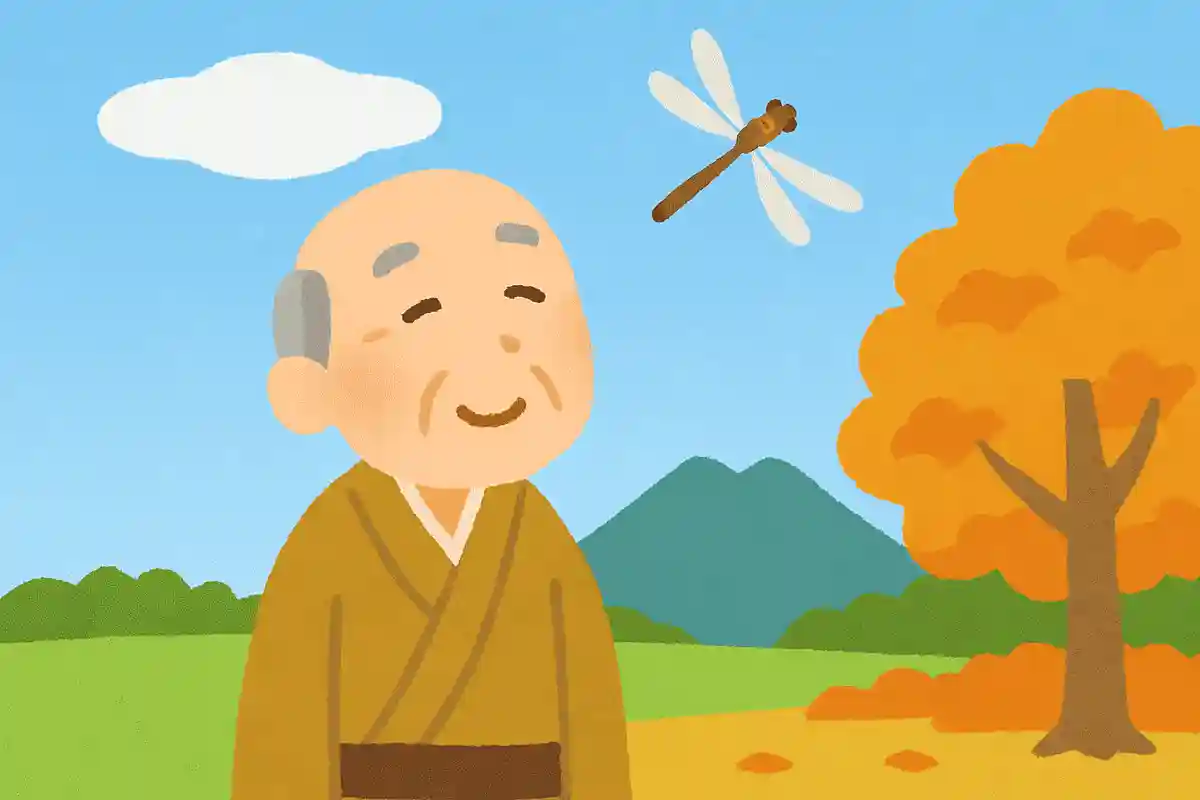
As autumn arrives, we tend to see more red dragonflies, don’t we? Spotting them in the orange glow of dusk really makes you feel that it’s autumn.
With Mount Tsukuba—one of Japan’s 100 Famous Mountains—as the backdrop, the haiku seems to capture a moment under a clear, expansive sky.
You can picture red dragonflies fluttering at the foot of Mount Tsukuba on a cloudless, brilliantly sunny day.
For older adults, a haiku that evokes autumn might also bring back memories of past autumns.
That could lead to an even livelier conversation.
Under the autumn sky, split in two—an immense chinquapin treeKyoshi Takahama
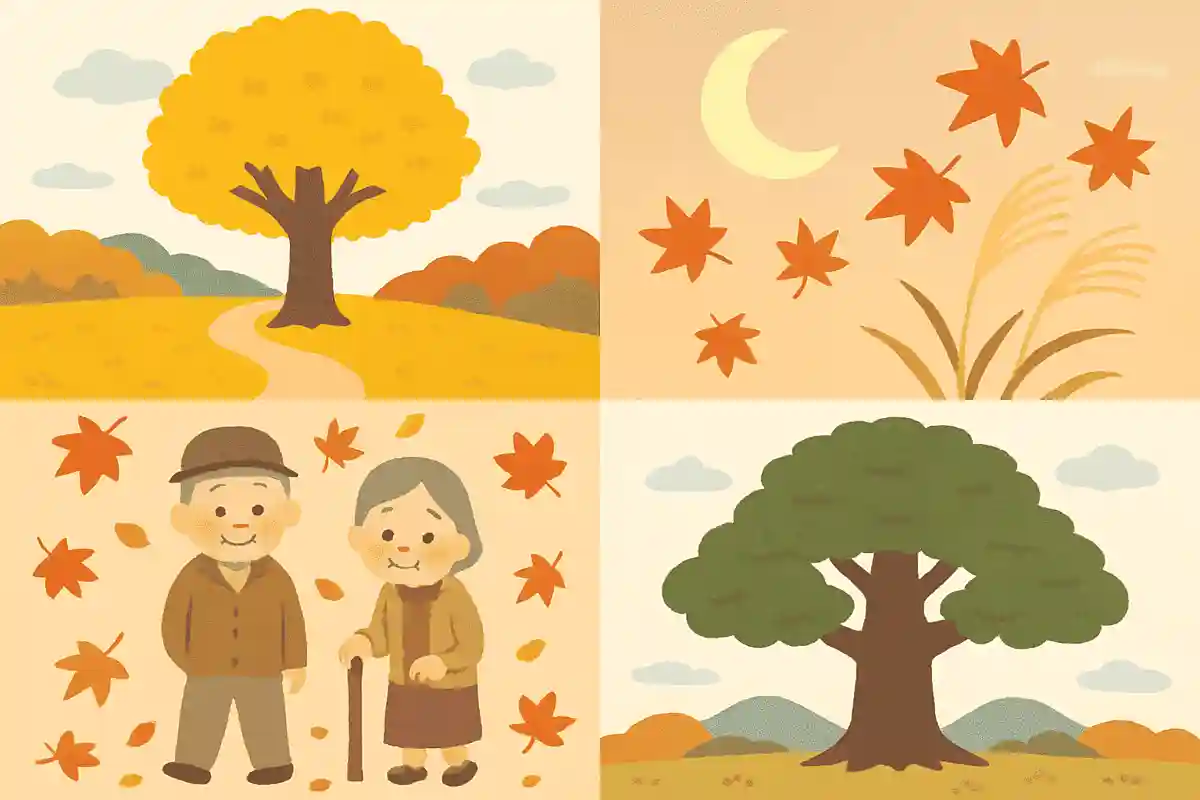
This is a haiku that depicts the strength of a towering chinquapin tree rising into the autumn sky.
Described as splitting the sky in two, the tree’s presence is overwhelming within the quiet autumn landscape, conveying the power of nature to the reader.
By savoring it while imagining the often-overlooked expressions of trees and sky in everyday life, one can feel both the deepening of the season and the grandeur of nature up close.
Though brief, this verse lets you sense not only the visible scene but also the force and vitality that expand in the heart, offering the pleasure of envisioning an autumnal setting.

In conclusion
We’ve introduced haiku with various seasonal words—did you find a favorite? The rule of haiku is to use a kigo that represents the season and compose a poem in seventeen sounds, arranged as 5-7-5. Try writing your own verses using any kigo you like. Imagining the feel of the season and shaping your poem to seventeen sounds stimulates the brain and can help prevent cognitive decline. You can also write the verses you come up with on tanzaku cards and display them on the facility’s walls for everyone to enjoy.