

JR’s CM song roundup, including SKISKI and more

When it comes to JR commercials, there are all kinds: ones that showcase beautiful footage of tourist spots around Japan, ones that capture trains in motion, and of course the classic “JR SKISKI” series that appears every winter!
These commercials use music that perfectly matches their imagery—gentle tracks that highlight the beauty of the visuals, or upbeat tunes that convey the exhilarating speed of a train.
Many of the songs featured in the “JR SKISKI” series go on to become beloved winter staples, so there are quite a few standout CM tracks.
In this article, we’ll introduce all the songs that have been used in JR commercials so far.
You’re sure to find those buzzworthy tracks or the ones you heard in a CM and couldn’t get out of your head.
- [From timeless classics to the latest hits] A roundup of catchy commercial songs
- JR East commercial. A compilation of commercials showcasing beautiful scenery.
- A roundup of JR Central commercials. The direction that conveys the allure of travel is captivating, and the music is also a highlight!
- JR commercial roundup. A comprehensive look at commercials where you can see the trains!
- A must-see for people in their 30s and 40s! A roundup of nostalgic 1990s commercial jingles
- Whose Song Is It? ANA’s Popular Commercial Track. A History of CM Songs [2026]
- Whose Song Is It? Popular JRA Commercial Track: Historic Horse Racing CM Songs [2026]
- 80s commercial songs. A roundup of Japanese songs from the 80s that have been used in commercials.
- Tatsuro Yamashita CM Songs and Popular Tracks Ranking [2026]
- A commercial song with memorable dancing. A commercial that makes you want to start dancing.
- JTB commercial. A collection of commercials that make you want to go on a trip.
- Nostalgic commercials from the 2000s: revisiting ads that left a lasting impression
- Catchy Commercial Jingles and Ad Songs Featured on YouTube Shorts
[Including SKISKI] Summary of JR Commercial Songs (11–20)
Hokuriku Romance ~Premium Duet Version~Tanimura Shinji/Nakama Yukie

Although it’s a 2015 song, its arrangement and melody sit squarely in the heart of classic Showa-era pop, and the lyrics evoke a sense of travel.
Hokuriku Roman is the 56th single by Shinji Tanimura, who rose to fame as a member of the music group Alice and has remained a beloved national singer-songwriter throughout his solo career.
It was written specifically as a theme song for a JR West commercial, and when it was released on CD, a “Premium Duet Version” was issued featuring a duet with Yukie Nakama, who actually appeared in the commercial.
Tanimura’s hallmark blend of mature allure, gravitas, and dandyism contrasts beautifully with Nakama’s clear, luminous vocals.
It’s not the easiest time to travel casually these days, but listening to this song will surely make you want to set off for Hokuriku.

Don’t Stop Me NowQueen
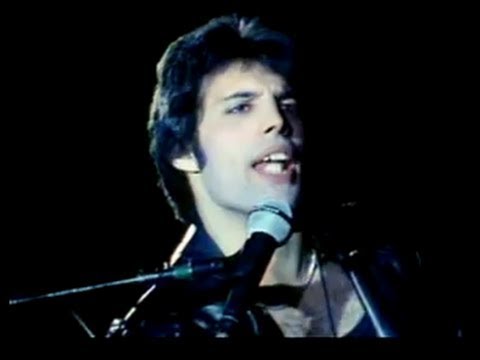
This is a superb masterpiece that bursts with the dazzling pop sensibility of Queen, the world-famous band born in the UK! Led by melodious yet rhythmic piano, the driving bass and drums create an exhilarating sense of speed, and the brief but memorable guitar solo is quintessential Queen.
It’s included on the classic 1978 album Jazz, and was released as a single the following year, in 1979, becoming one of the band’s signature songs.
The lyrics and music were written by Freddie Mercury, the frontman whose name is etched in music history.
Beyond the characteristically beautiful yet urgent melody that is so Freddie, the lyrics—shouting raw, instinctive desire straight out—are quite striking.
This track was also used in a TV commercial for the Tokaido Shinkansen N700S, which debuted as a fully redesigned model in July 2020, and the song’s structure—balancing stillness and motion—was skillfully employed in the ad.
My Favorite (My Favorite Things)Kotoringo

The TV commercials for the campaign “That’s right—let’s go to Kyoto,” which Central Japan Railway Company (JR Central) has been running since 1993, vividly showcase tourist spots in and around Kyoto City.
The series has been so influential that many people say it inspired them to take a trip to Kyoto.
In 2018, it also made headlines when Kyozo Nagatsuka, who had served as the narrator for 25 years since the campaign began, stepped down and Tasuku Emoto was announced as his successor.
The version introduced here was released in the spring of 2018 and features Kanshuji Temple, founded in the year 900.
The CM uses the jazz standard “My Favorite Things” as its theme music.
The arrangement, notable for its mysterious harmonies in the intro, was created by musician kotringo, known for her work on the soundtrack of the film “In This Corner of the World.” The arrangement was reportedly crafted in response to a request to evoke the feeling of a celestial maiden.
Winter, againGLAY

Even now, past the 2020s, the brilliance of the tagline “Snow for love, white for romance” never ceases to amaze.
JR East’s “JR SKISKI” ski-travel campaign, launched in 1991, featured many hit songs in its commercials, and the one introduced here is from 1998, set to GLAY’s massive hit “Winter, again.” It’s one of the quintessential winter songs of the 1990s and the band’s best-selling single.
A song that could only come from Hokkaido-born GLAY, it also showcases the distinctive lyrics of TAKURO, the band’s guitarist and primary songwriter.
Beyond TERU’s soulful vocals and TAKURO’s melodious lead guitar, HISASHI’s exquisite phrasing using the Talbo instrument manufactured by Tokai Gakki, JIRO’s bass lines that generate the track’s core groove, and the arrangement by famed producer Masahide Sakuma all coalesce into a flawless classic born from GLAY’s rock-solid band ensemble.
Sound of SnowGReeeeN

GReeeeN, which became a nationally beloved band with the theme song for NHK’s morning drama series “Yell,” released this song in 2012 as the CM song for JR East’s “JR SKISKI.” The multiple key changes throughout the track are striking, and the unexpected modulations make it a very fun listen.
The lyrics depict that bittersweet yet happy moment when you realize you’ve fallen for someone—a feeling everyone has experienced.
It’s a song that will make your heart flutter as you overlay it with your own memories.

DEPARTURESglobe

I’m the same way, but if you spent your youth in the 1990s, you probably remember how Tetsuya Komuro’s songs were like the soundtrack of everyday life, playing everywhere you went.
Back then, as part of the “Komuro Family,” many groups and artists kept delivering massive hits, and among them, globe—the group Komuro himself was in—became hugely popular, releasing one hit after another since their 1995 debut and leaving their mark on Japanese music history.
DEPARTURES, used as the theme song for JR East’s ski trip campaign “JR SKISKI,” was globe’s best-selling single, with an astonishing total of 2.288 million copies sold.
It’s a classic masterpiece where Komuro’s characteristically wistful piano tones blend perfectly with digital beats, and KEIKO’s clear, high-toned voice rings out beautifully over the track.
Many people were surely captivated by the commercial featuring Yutaka Takenouchi and Makiko Esumi as a couple.
[Including SKISKI] Summary of JR Commercial Songs (21–30)
I hope soNakamori Akina

The travel program “Tōku e Ikitai,” which has been on the air since 1970, is known as the longest-running travel show in Japan.
Interestingly, it is also the only program for which the JR Group provides commercial sponsorship.
The reason is that the show’s sponsor at the time it began airing was Japanese National Railways (JNR), and after JNR was split up and privatized, the JR Group inherited the role of sponsor.
The commercial song used in this context was “I hope so” by Akina Nakamori, one of Japan’s most celebrated divas.
It’s the title track from the album of the same name released in 2003, and it became a hot topic because Nakamori herself wrote the lyrics.
Musically, it has the feel of a simple, mid-tempo rock ballad, but Nakamori’s voice—tempered by a wealth of life experience—conveys a comforting, all-enveloping warmth, while the positive lyrics strike a chord with listeners.
As for the origin of the title, please do look it up for yourselves.