

Lesser-known facts about Mother’s Day that might surprise you—tidbits you’ll want to share with someone

When we think of Mother’s Day, we often picture a day to express gratitude to our mothers and give them carnations.
However, there may be surprisingly few people who know about its origins or how it’s celebrated around the world.
Trivia related to Mother’s Day is full of stories that will make you want to share them with someone the more you dig in! In this article, we’ll introduce a wide range of Mother’s Day trivia.
The more you learn, the more Mother’s Day may feel like an even more special day than it does now!
- Not taught in school! A roundup of historical trivia and fun facts
- Trivia & fun facts about June
- Mother’s Day gifts are best when handmade! A collection of heartfelt ideas
- Will you like May even more once you know? Fun May trivia elementary schoolers should know
- [For Elementary School Students] A Collection of Fun, Educational Quiz Ideas for Mother's Day
- Surprisingly, there’s a lot we don’t know? A quiz to learn trivia about May!
- A fun quiz you can use to kill time by yourself or with everyone
- Handmade gifts to give on Mother’s Day: a collection of heartfelt ideas
- A collection of handmade card ideas for Mother’s Day: heartfelt ideas that convey your feelings
- [Valentine's Day] Trivia and fun facts you'll want to share: A big reveal of secrets about Valentine's Day and chocolate
- Exciting! Trivia quizzes that you’ll want to tell others about. A collection of surprisingly little-known facts.
- Trivia about hydrangeas. A collection of fun facts related to ajisai (hydrangeas).
- [For General Audience] Little-Known Trivia and Fun Facts About Hay Fever
Lesser-known trivia about Mother’s Day: fun facts you’ll want to share (1–10)
In Thailand, Queen Sirikit’s birthday is considered Mother’s Day.
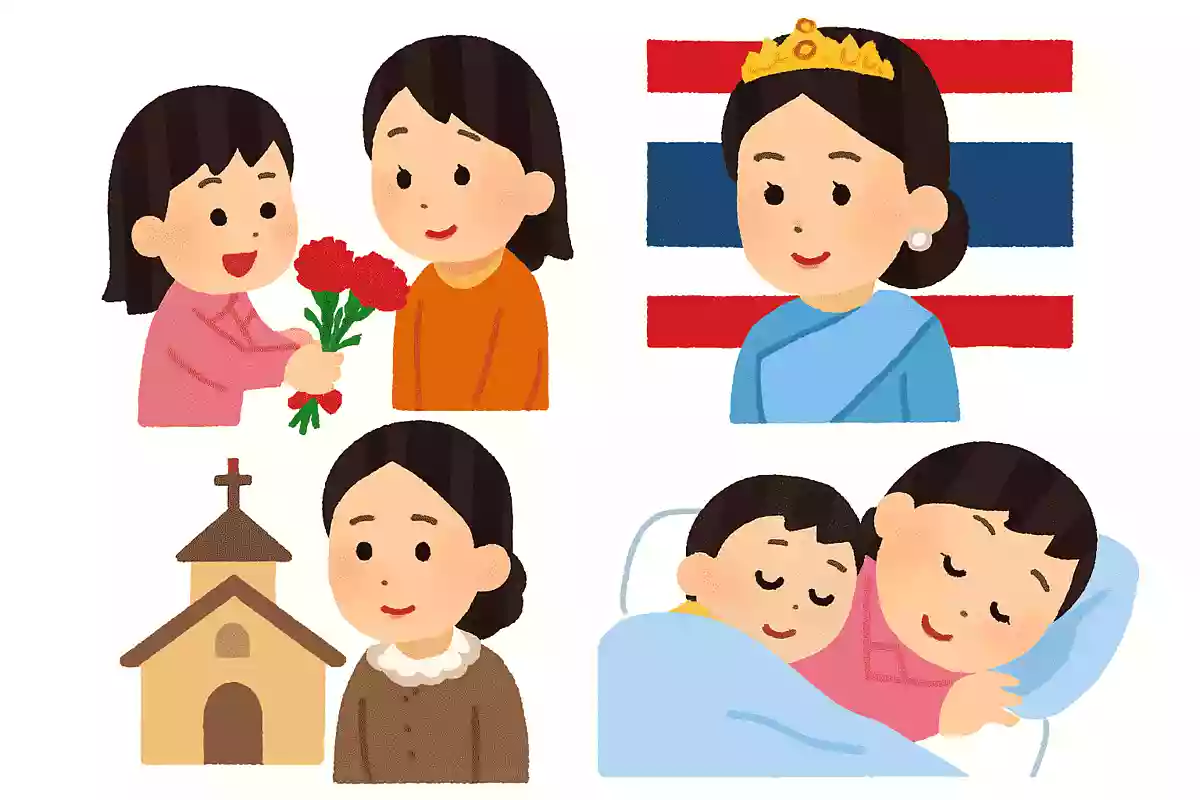
In Japan, Mother’s Day is on the second Sunday of May, but in Thailand it is fixed on August 12.
The reason is that this date is Queen Sirikit’s birthday.
It seems to be based on the idea that the queen is the mother of all citizens.
Also, while giving carnations is standard in Japan, in Thailand it’s said that children wash their mother’s feet.
They wash her feet in a basin of water and express their daily gratitude.
By the way, based on the same idea, Father’s Day in Thailand is the king’s birthday.

In Japan, Mother’s Day used to be set in March.
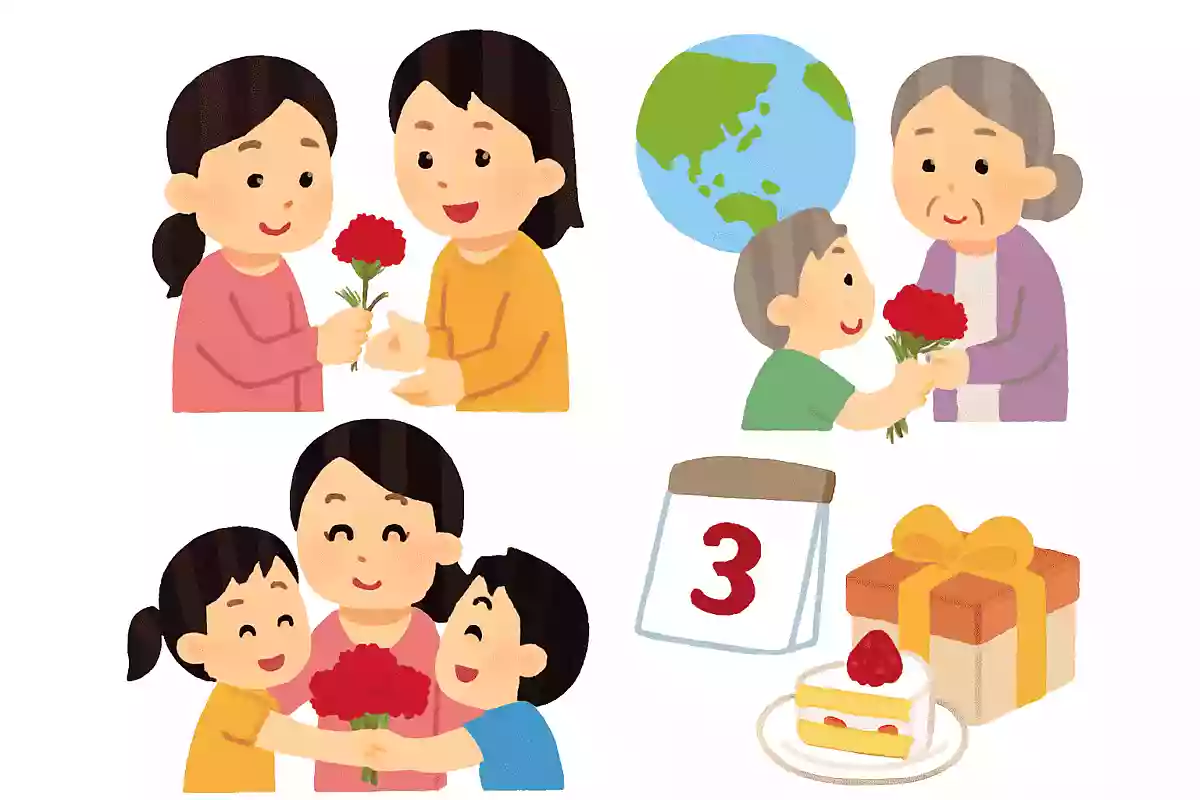
Speaking of Mother’s Day, it’s on the second Sunday of May, right? But in the past, a different date was officially designated as Mother’s Day.
In fact, Mother’s Day was first established in Japan in 1931.
At that time, it was decided that March 6—the birthday of the Empress, consort of Emperor Showa—would be Mother’s Day, but it apparently didn’t catch on widely among the public.
Later, an event hosted by a confectionery company in 1937 became the catalyst, and the current date took root as Mother’s Day.
Quite a winding path, wasn’t it?

There are countries that don’t have Mother’s Day and instead celebrate it as Parents’ Day.
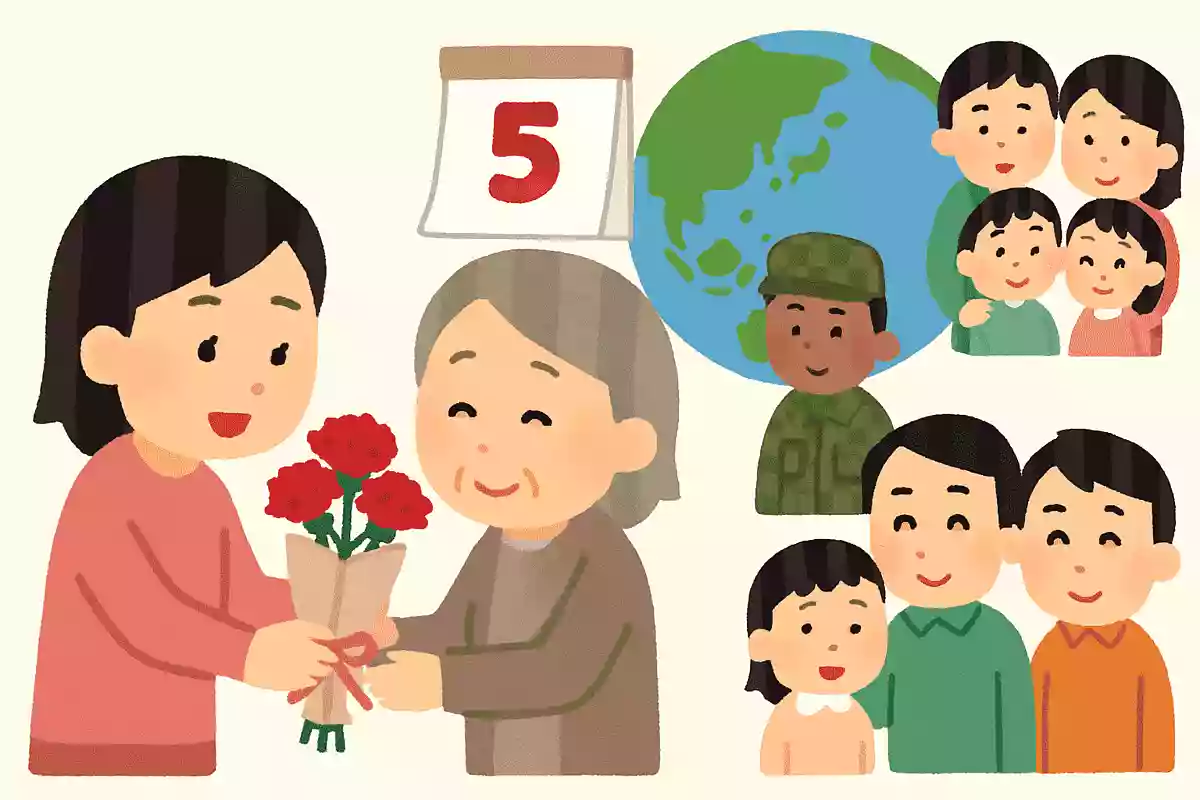
In South Korea and Albania, May 8 is Parents’ Day.
In South Korea, it was originally called Mother’s Day, but people questioned why it honored only mothers, and in 1973 the name was changed to Parents’ Day.
On the day, it’s customary to have a meal with one’s parents or give them gifts.
Incidentally, as in Japan, there is also a culture of giving carnations.
I had thought that giving carnations was only for Mother’s Day, but it seems that’s the same even for Parents’ Day.
Little-known trivia about Mother's Day. Fun facts you'll want to share with someone (11–20)
Overseas, there is a custom of having breakfast in bed on Mother’s Day.

On Mother’s Day, many of us have probably thought, “I want to show appreciation to Mom for getting up early every day to make breakfast.” In Western countries, there’s a tradition called “breakfast in bed,” where breakfast is brought to the mother while she’s still in bed.
A sandwich and coffee are placed on a tray and served right on the bed.
Mom can wake up and enjoy a leisurely, elegant breakfast just like that.
On overseas recipe websites, you’ll even see special “breakfast in bed” recipe features around that time of year.

Red and white carnations each have their own meanings.
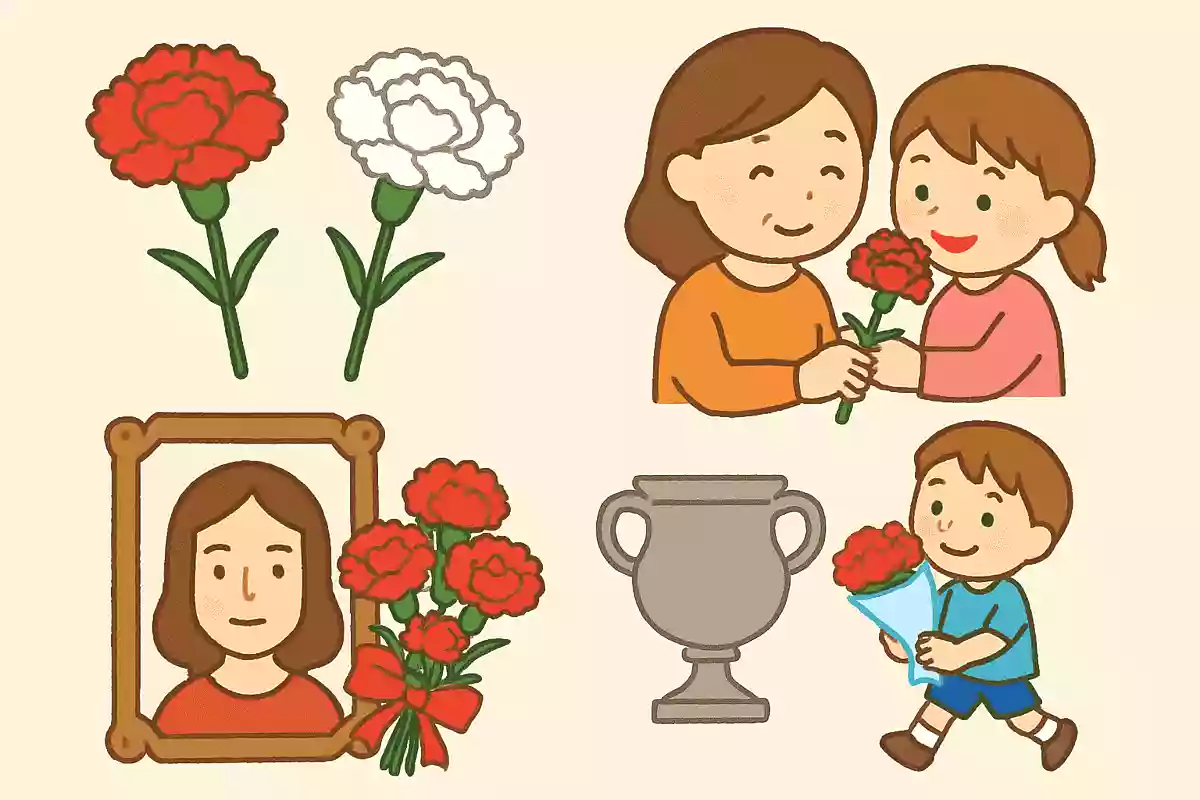
It’s widely known that carnations are given on Mother’s Day.
However, it’s less known that the meaning varies depending on the color.
Traditionally, there are two colors for carnations: red if the mother is alive, and white if she has passed away.
Incidentally, the flowers offered by Anna Jarvis, who started Mother’s Day, were white because they were in memory of her late mother.
That said, this custom isn’t strongly observed today, so there’s no need to worry about it too much.
Yellow carnations are not suitable as gifts.

It’s customary to give carnations on Mother’s Day, but carnations come in many colors, and each color has a different meaning.
Red carnations mean “a mother’s love,” white means “pure love,” pink means “a woman’s love,” and blue means “eternal happiness.” As for yellow carnations, despite their bright appearance, their meanings are negative, such as “jealousy” and “contempt.” Even if your mother likes yellow, remember that it’s not suitable for expressing gratitude.
The literal translation of the scientific name of the carnation is “flower of the gods.”
The scientific name of the carnation is said to literally mean “flower of the gods.” It comes from Greek words related to walnut and leaf, named because the carnation’s scent is said to resemble that of walnuts.
The carnation’s general floral meaning is “pure and deep love.” Different colors also carry their own meanings.
The most popular red carnation signifies “a mother’s love” and “deep love.” There are also pink, white, and yellow varieties, so adding the corresponding flower meanings when giving them as a gift is sure to be appreciated!
