

Lesser-known facts about Mother’s Day that might surprise you—tidbits you’ll want to share with someone

When we think of Mother’s Day, we often picture a day to express gratitude to our mothers and give them carnations.
However, there may be surprisingly few people who know about its origins or how it’s celebrated around the world.
Trivia related to Mother’s Day is full of stories that will make you want to share them with someone the more you dig in! In this article, we’ll introduce a wide range of Mother’s Day trivia.
The more you learn, the more Mother’s Day may feel like an even more special day than it does now!
- Not taught in school! A roundup of historical trivia and fun facts
- Trivia & fun facts about June
- Mother’s Day gifts are best when handmade! A collection of heartfelt ideas
- Will you like May even more once you know? Fun May trivia elementary schoolers should know
- [For Elementary School Students] A Collection of Fun, Educational Quiz Ideas for Mother's Day
- Surprisingly, there’s a lot we don’t know? A quiz to learn trivia about May!
- A fun quiz you can use to kill time by yourself or with everyone
- Handmade gifts to give on Mother’s Day: a collection of heartfelt ideas
- A collection of handmade card ideas for Mother’s Day: heartfelt ideas that convey your feelings
- [Valentine's Day] Trivia and fun facts you'll want to share: A big reveal of secrets about Valentine's Day and chocolate
- Exciting! Trivia quizzes that you’ll want to tell others about. A collection of surprisingly little-known facts.
- Trivia about hydrangeas. A collection of fun facts related to ajisai (hydrangeas).
- [For General Audience] Little-Known Trivia and Fun Facts About Hay Fever
Little-known trivia about Mother's Day. Fun facts you'll want to share with someone (11–20)
Nagano Prefecture has the highest carnation production in Japan.
Nagano Prefecture produces the most carnations in Japan.
In 2050, the shipment volume is 44 million stems, accounting for over 20% of the market share.
Carnation cultivation began in Nagano in the early Showa era, and today it is known as one of the prefecture’s specialty products.
By the way, Aichi Prefecture ranks second in carnation share, boasting over 36.4 million stems shipped.
Third place is Hokkaido, fourth is Hyogo, and fifth is Chiba.
Which prefecture are the carnations you’re giving from?

The meaning of carnations changes depending on the number of stems.
When it comes to Mother’s Day, many people probably think of carnations.
The meaning of carnations changes depending on how many you give.
It’s said that 8 and 12 stems are recommended for Mother’s Day.
Eight stems mean “Thank you for your thoughtfulness,” making them perfect for expressing gratitude.
Twelve stems mean “I love you.” This is called a “dozen flowers,” with each of the 12 stems symbolizing feelings such as love, respect, and gratitude.
Wishing you a wonderful Mother’s Day!

There is a legend that carnations were born where the tears of the Virgin Mary fell.
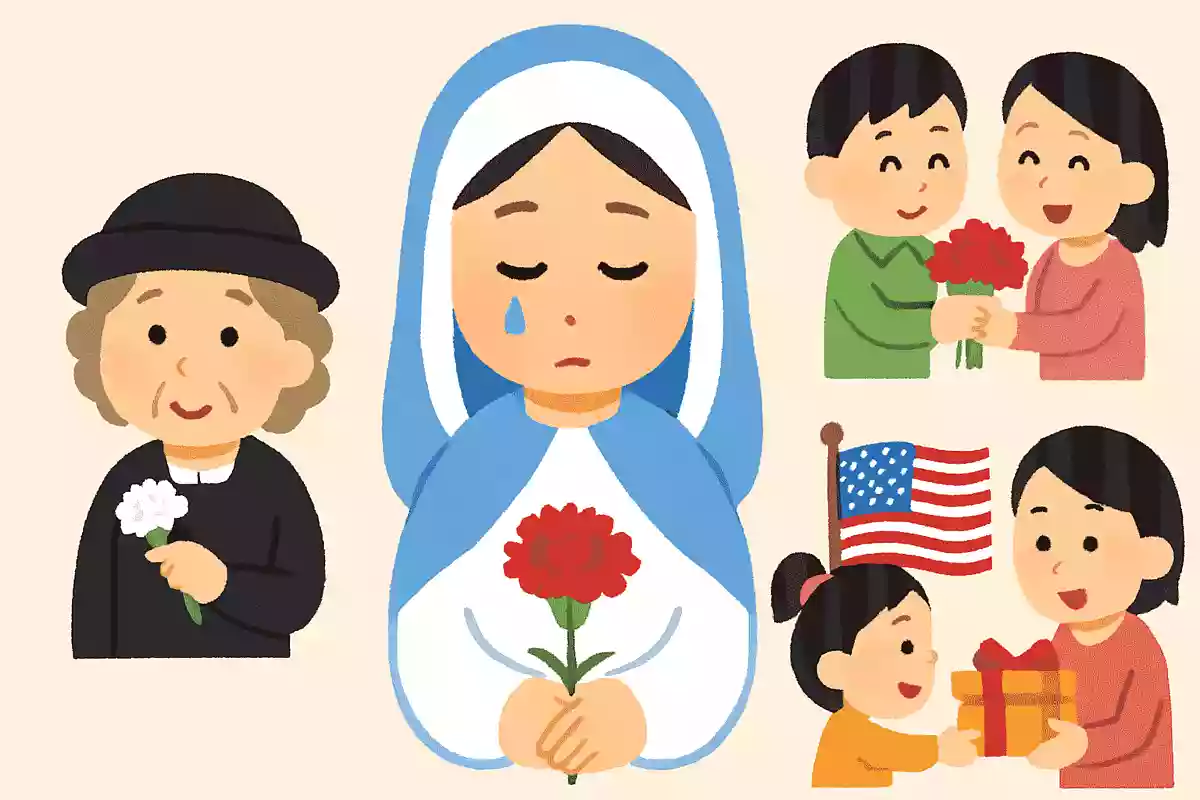
There is a legend that carnations were born from the places where the Virgin Mary’s tears fell.
Carnations are considered a symbol of a mother’s love, and it is said that when Jesus Christ was crucified, the tears shed by the Virgin Mary fell to the ground and carnations bloomed there.
Red carnations are associated with “a mother’s love” and “deep love,” and they have become a customary Mother’s Day gift as flowers that express the Virgin Mary’s love and gratitude to mothers.
When giving carnations, expressing your appreciation to your mother as you present them may make her especially happy.
In Nepal, it’s not Mother’s Day but ‘the day to see your mother’s face.’
Mother’s Day is a time to express our gratitude to our mothers, but the way we show that gratitude varies from country to country.
How about exploring how it differs from Japan’s Mother’s Day by looking at how it’s celebrated in Nepal? In Nepal, one day between late April and early May is celebrated as “the day to see one’s mother’s face,” when people give gifts directly to their mothers to express their thanks.
The key point is the “direct” part—because it’s a face-to-face celebration, it gives the impression that the feeling of gratitude is conveyed all the more clearly.

Mother’s Day was introduced to Japan around the end of the Meiji era.
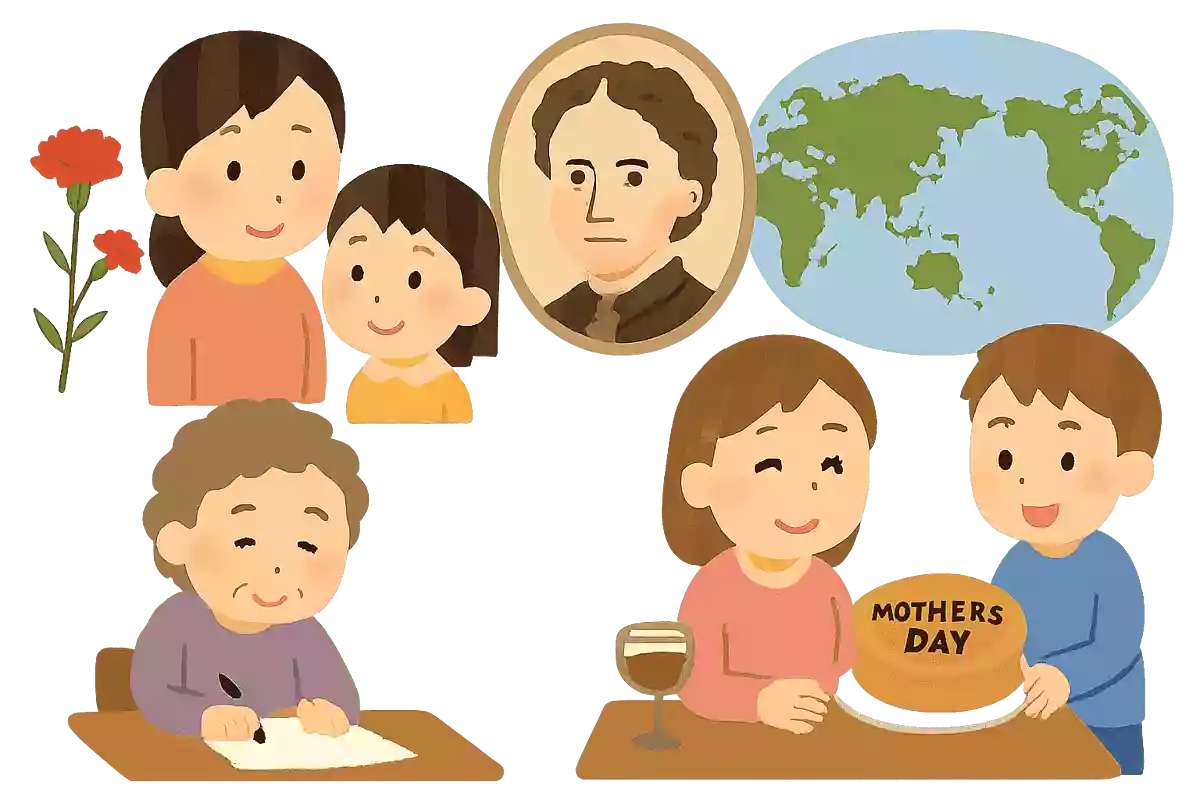
Mother’s Day is often thought of as part of Japanese culture, but it actually originated in America.
It is said to have begun when Anna Jarvis presented carnations in remembrance of her late mother, Ann Jarvis.
Mother’s Day was introduced to Japan around the end of the Meiji era.
At first, it was not in May but in March, on the Empress Dowager’s birthday.
Then, in 1937, a confectionery company held a Mother’s Day event, which became one of the catalysts for the holiday to gain wide recognition in Japan.

Rainbow-colored carnations were developed as a gift for Mother’s Day.
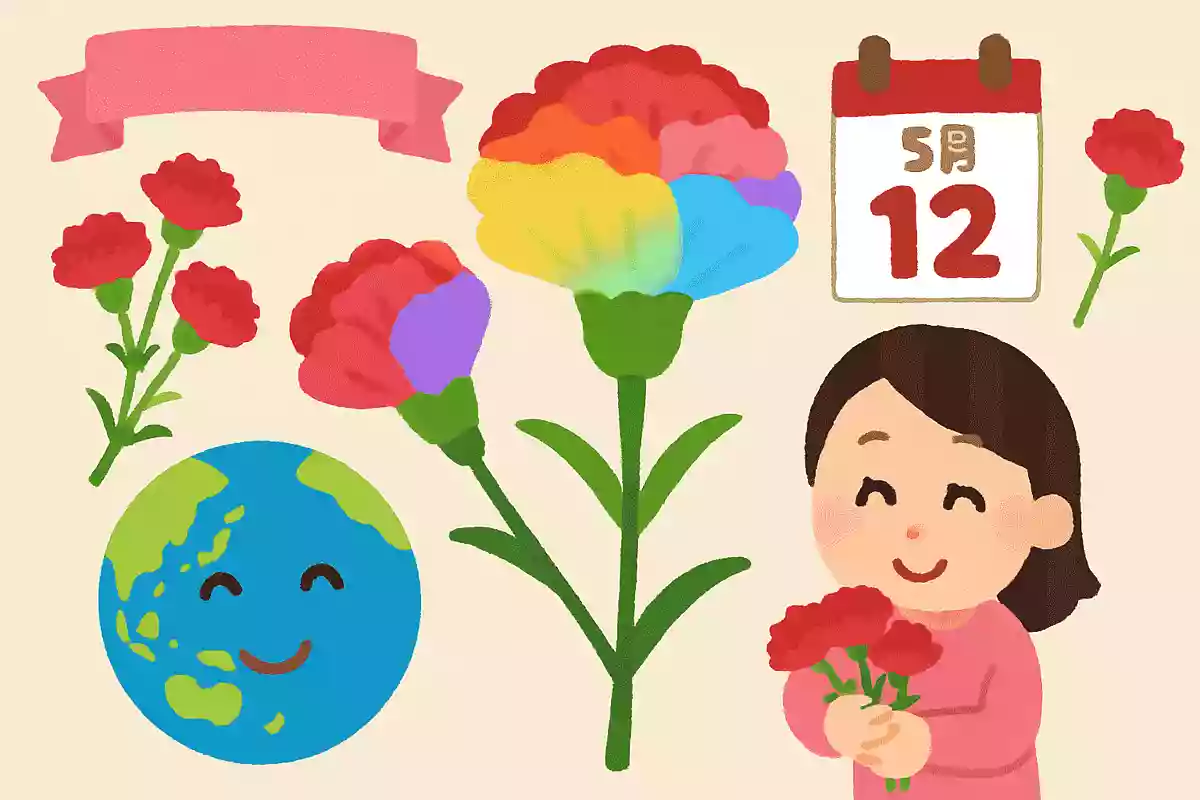
In recent years, rainbow carnations have been gaining attention as Mother’s Day gifts.
There are several types, but here we’ll introduce the rainbow pastel carnations crafted by Mr.
Tsuyoshi Hamazuka.
These carnations are dyed using a special technique, producing soft, delicate hues that can’t be achieved elsewhere.
By the way, the flower language (meaning) of rainbow-colored carnations is said to be “gratitude.” Give them as a present, and your appreciation will come across—and you’ll surely delight and surprise the recipient.
Lesser-Known Trivia About Mother’s Day: Fun Facts You’ll Want to Share (21–30)
There is a carnation named “Strawberry Whip.”
When you hear “Strawberry Whip,” most people probably think of a dessert.
It sounds delicious, and since both strawberries and whip are foods, you wouldn’t expect it to be a carnation, right? Many might wonder, “Does such a carnation even exist?” but I’m sure you’ve seen it at least once.
It’s a showy variety with red petals edged in white—the red evokes strawberries, and the white rim suggests whipped cream.
Its flower language meaning is “pure and profound love.”