

Lesser-known facts about Mother’s Day that might surprise you—tidbits you’ll want to share with someone

When we think of Mother’s Day, we often picture a day to express gratitude to our mothers and give them carnations.
However, there may be surprisingly few people who know about its origins or how it’s celebrated around the world.
Trivia related to Mother’s Day is full of stories that will make you want to share them with someone the more you dig in! In this article, we’ll introduce a wide range of Mother’s Day trivia.
The more you learn, the more Mother’s Day may feel like an even more special day than it does now!
- Not taught in school! A roundup of historical trivia and fun facts
- Trivia & fun facts about June
- Mother’s Day gifts are best when handmade! A collection of heartfelt ideas
- Will you like May even more once you know? Fun May trivia elementary schoolers should know
- [For Elementary School Students] A Collection of Fun, Educational Quiz Ideas for Mother's Day
- Surprisingly, there’s a lot we don’t know? A quiz to learn trivia about May!
- A fun quiz you can use to kill time by yourself or with everyone
- Handmade gifts to give on Mother’s Day: a collection of heartfelt ideas
- A collection of handmade card ideas for Mother’s Day: heartfelt ideas that convey your feelings
- [Valentine's Day] Trivia and fun facts you'll want to share: A big reveal of secrets about Valentine's Day and chocolate
- Exciting! Trivia quizzes that you’ll want to tell others about. A collection of surprisingly little-known facts.
- Trivia about hydrangeas. A collection of fun facts related to ajisai (hydrangeas).
- [For General Audience] Little-Known Trivia and Fun Facts About Hay Fever
Lesser-Known Trivia About Mother’s Day: Fun Facts You’ll Want to Share (21–30)
In Turkey, people give white bouquets on Mother’s Day.
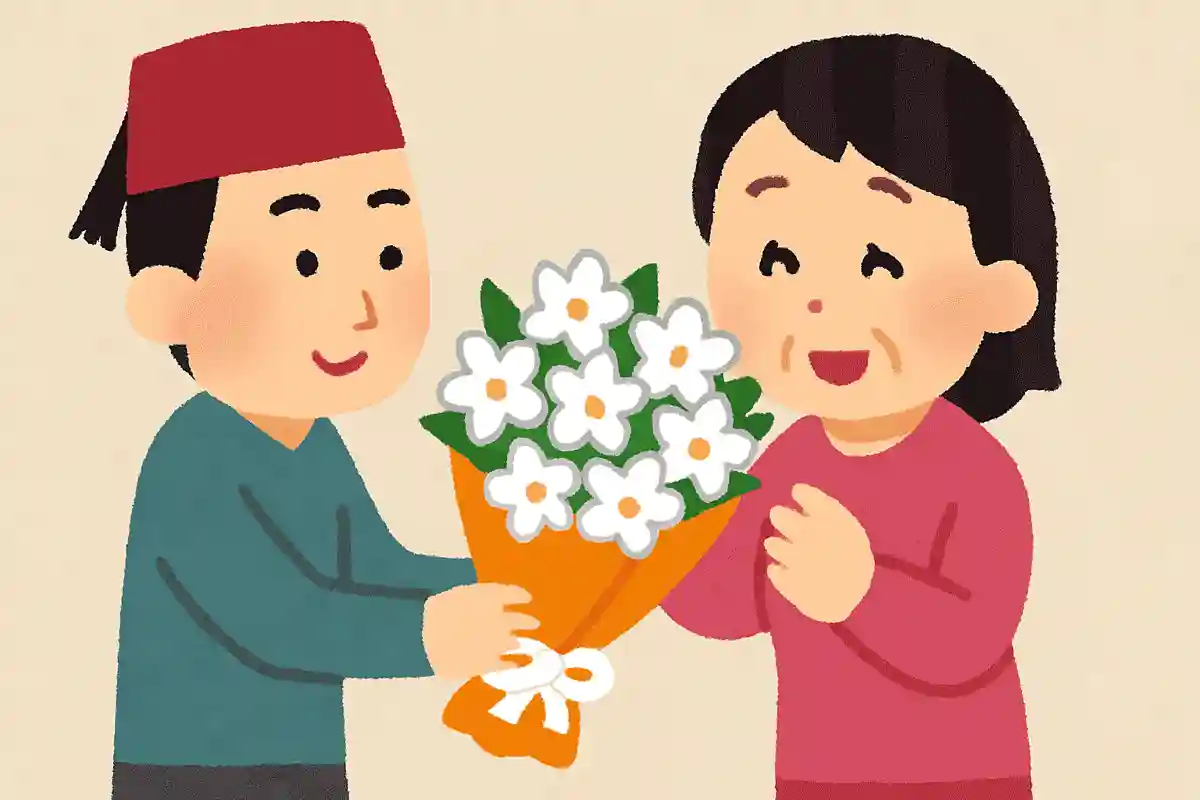
Mother’s Day is celebrated around the world, but customs differ from country to country.
In Japan, it’s observed on the second Sunday of May as a day to show appreciation for mothers’ everyday efforts.
Giving carnations or gifts is the standard.
In Turkey, Mother’s Day is also on the second Sunday of May, but it apparently carries a slightly different meaning from Japan, where people express thanks to their own mothers.
In Turkey, there is a custom of saying “congratulations” and giving a bouquet of white flowers to all women who have children.
People even exchange greetings in the streets—it’s an event that celebrates all mothers.

The Finnish Mother’s Day greeting is “Hyvää äitienpäivää.”
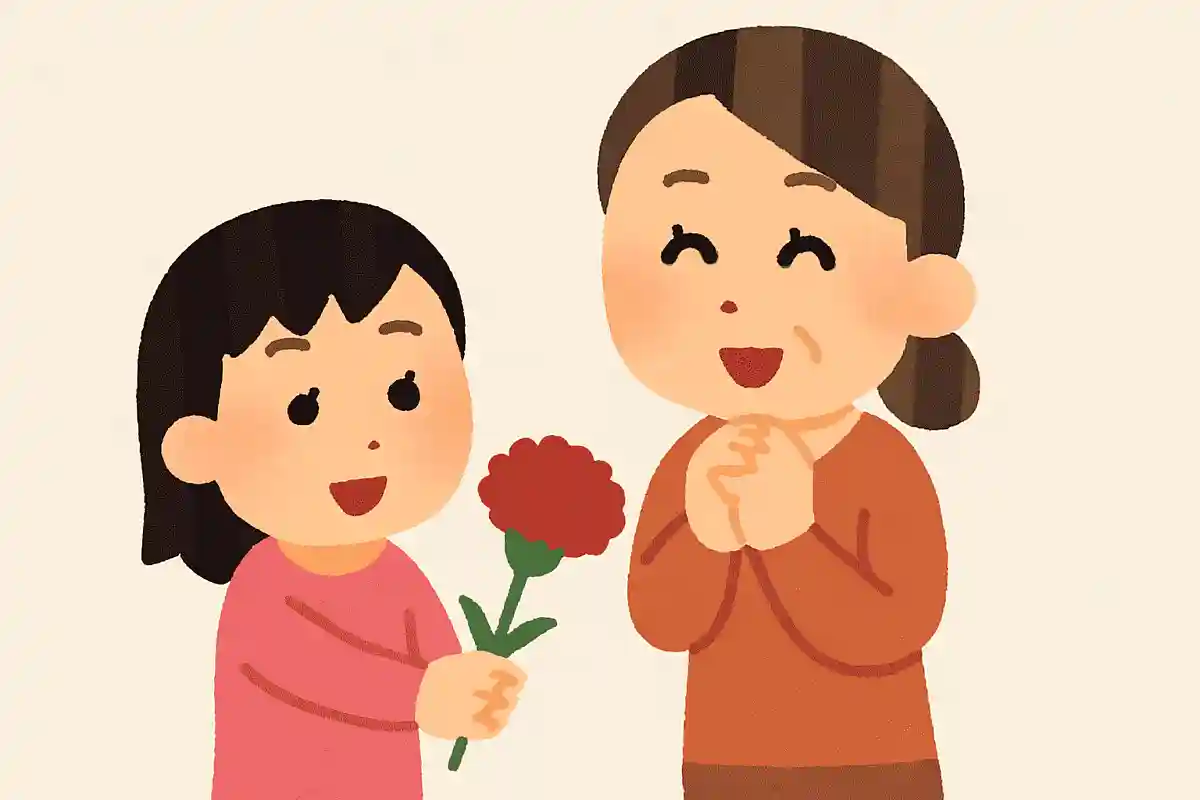
The second Sunday of May is celebrated as Mother’s Day in Finland as well.
In Japan, it’s customary to give carnations, but in Finland, it’s traditional to give wood anemones, called “valkovuokko,” picked in the morning.
On Finnish Mother’s Day, the standard greeting is “Hyvää äitienpäivää,” which in Finnish means “Have a good Mother’s Day” or “Happy Mother’s Day.” In Finland, Mother’s Day is also a public holiday and is regarded as an important day to celebrate with family.
Unexpectedly little-known Mother's Day trivia: fun facts you'll want to share with someone (31–40)
On Mother’s Day in France, people give mothers their favorite flowers.
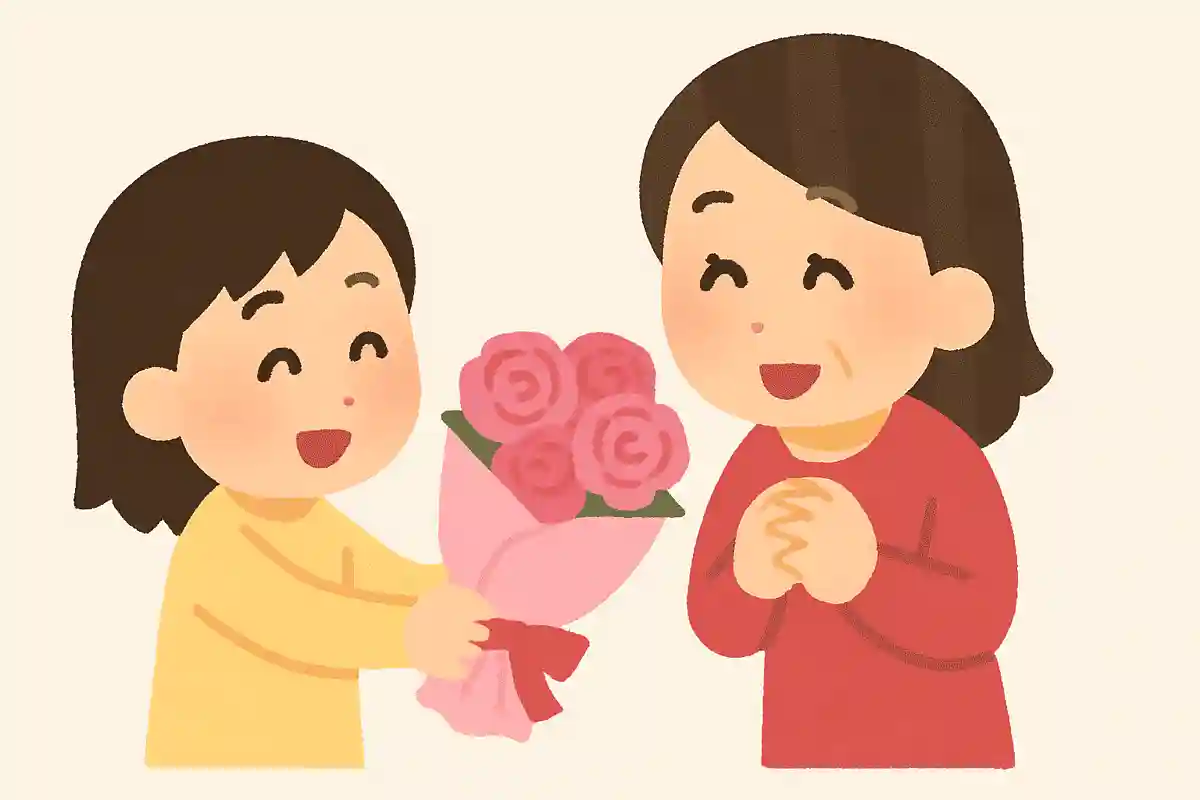
As Mother’s Day approaches, Japanese florists line their shops with carnations, so the flower is strongly associated with the holiday.
However, that doesn’t mean carnations are given for Mother’s Day all around the world.
In France, there isn’t a set standard; people give their mothers whatever flowers they like.
Since carnations carry the meaning “a mother’s love,” they’re of course a delightful gift, but choosing flowers that match your mother’s personal taste and will make her happy is wonderful too!

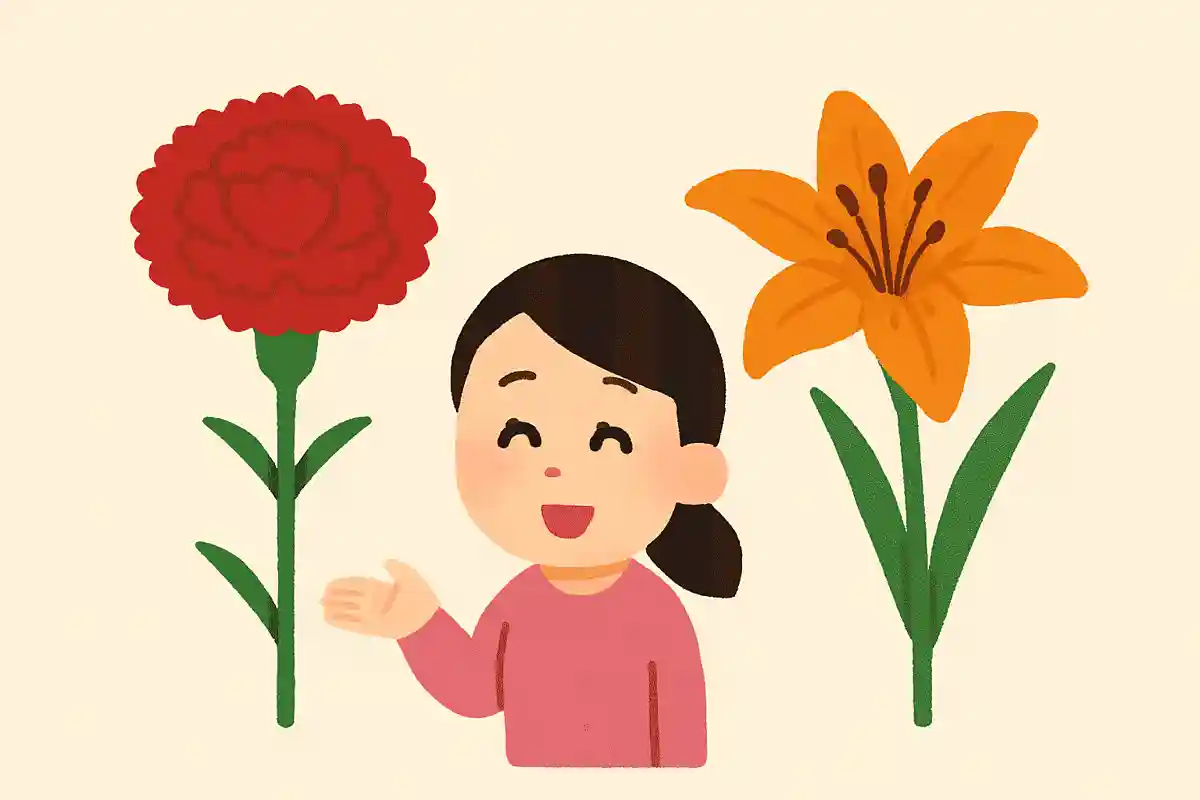
In China, in addition to carnations, people also give a flower called “daylily.”
In China, Mother’s Day is also the second Sunday of May, just like in Japan.
It’s a day to express gratitude and offer blessings to mothers.
In China, as in Japan, there is a custom of giving carnations.
Another gift that is just as popular as carnations is the daylily.
With its vivid orange blossoms, the daylily is affectionately known as the “mother’s flower.” It may not be very well known in Japan, but its vibrant colors are sure to captivate many people.
If you usually give carnations every year and want to choose a different flower this time, why not give daylilies for Mother’s Day?
There is a song called “A Song Praising Mothers” composed by Yuji Koseki.

Yuji Koseki was a Japanese composer.
Self-taught in music, he wrote morale-boosting songs such as “Roei no Uta” (“Song of the Encampment”) and postwar reconstruction pieces like “Nagasaki no Kane” (“The Bells of Nagasaki”) and “Eikou wa Kimi ni Kagayaku” (“Glory Shines on You”).
He is also known as the composer of beloved songs cherished across generations, including “Kogen Ressha wa Iku” (“The Highland Train Goes”) and “Rokko Oroshi.” Did you know that Koseki also composed a song perfect for Mother’s Day? Mother’s Day originated in the United States.
In Japan, the famous confectionery company Morinaga & Co.
sought to adopt Mother’s Day and spread this heartwarming event nationwide.
Morinaga held a contest for lyrics honoring mothers, and it was Koseki who set the winning lyrics to music.
There are also edible carnations.
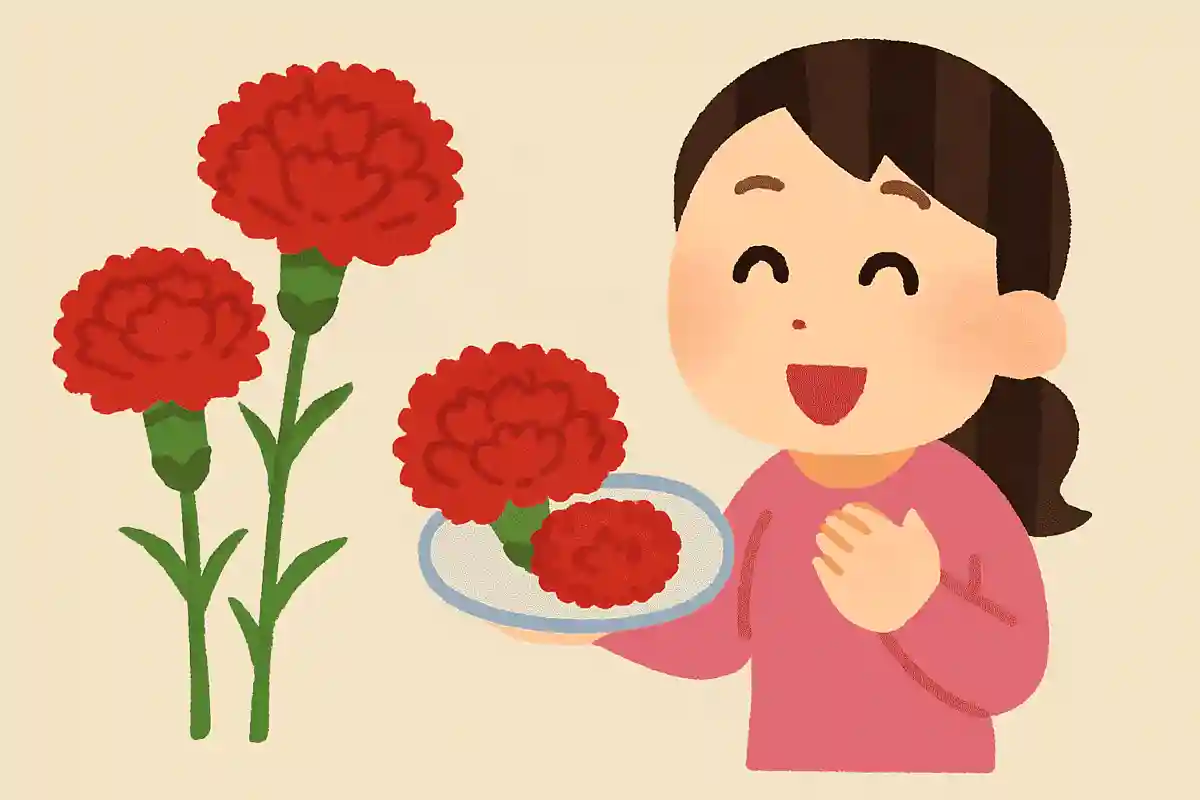
Carnations are a classic Mother’s Day gift.
In addition to red and pink, their yellow and orange hues are also lovely, aren’t they? In fact, some carnations are edible.
Have you ever seen edible flowers served with cakes, sweets, or dishes? Unlike ornamental varieties, flowers grown specifically to be eaten are called edible flowers.
They’re cultivated with careful attention to pesticides, so you can enjoy them with peace of mind.
Adding them to dishes enhances their brilliance and beauty, and they’re said to be highly nutritious as well.
Carnations, too, are used as edible flowers.
Indonesia is the last country in the world to celebrate Mother’s Day.
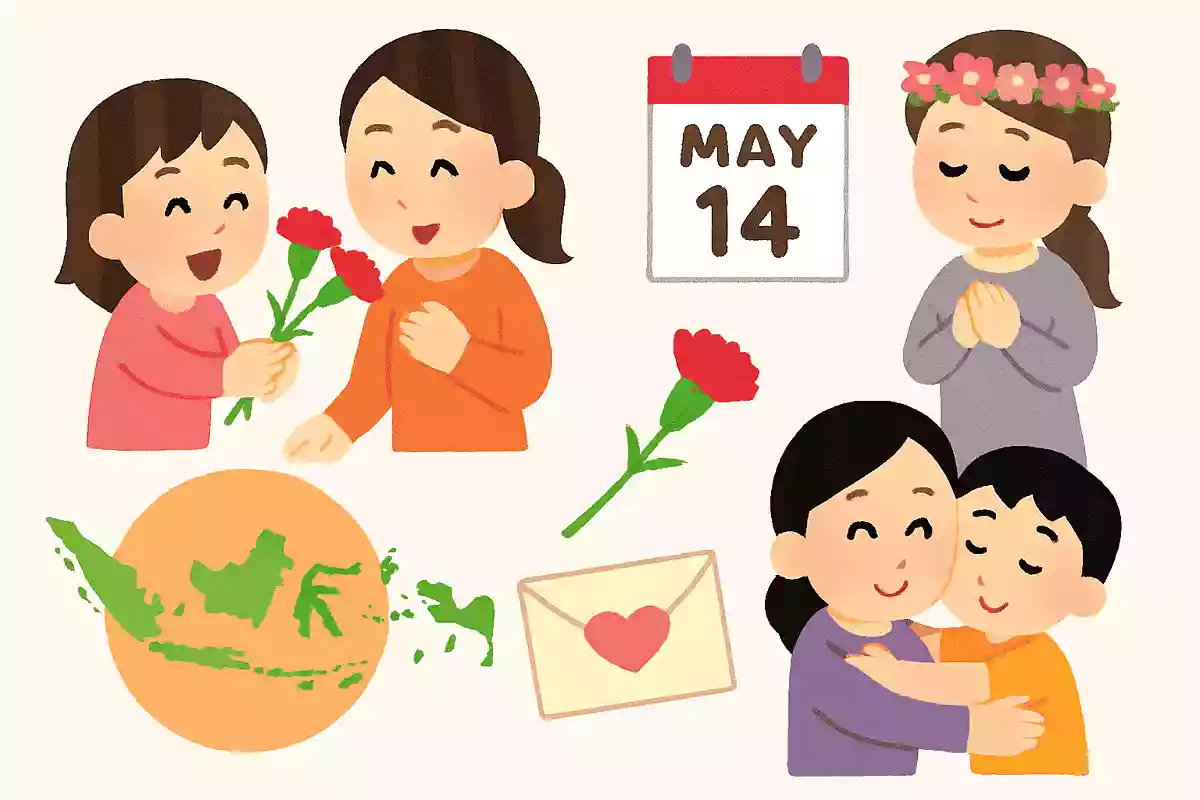
The timing of Mother’s Day varies by country—some observe it earlier than Japan, while others celebrate it later.
How about learning how it’s celebrated in Indonesia, said to have the latest Mother’s Day in the world? The date of interest is December 22, just before Christmas, and it’s said to have originated from the convening of the Indonesian Women’s Congress in 1928.
Rather than giving gifts, it’s common to express gratitude in words, and precisely because there’s no emphasis on material things, the feelings may be conveyed more directly.
