

Mozart: An Introduction to His Signature and Popular Works

Wolfgang Amadeus Mozart, who had a profound impact on classical music.
He began composing at the age of five, displayed his talents from an early age by performing before European royalty, and left behind more than 800 works during his 35-year life.
He also produced masterpieces in every musical genre of his time and excelled not only as a composer but also as a conductor, pianist, organist, and violinist, earning him the title of a musical genius.
In this article, we introduce some of Mozart’s signature and most popular pieces.
Please enjoy his music—melodies that are catchy and familiar, yet of high quality and imbued with a charm that defies simple description.
- Pick up Beethoven’s famous and representative works!
- [Masterpiece Classics] A special showcase of gem-like masterpieces so beautiful they’ll move you to tears
- Classical masterpieces. Recommended classical music.
- [Tchaikovsky] Pick up famous and representative pieces!
- Classical piano masterpieces: legendary performances from around the world you should hear at least once
- J.S. Bach | Introducing Famous and Representative Works
- Timelessly beautiful classical masterpieces. Recommended classical music.
- Brahms's masterpieces. Popular classical music.
- Cool classical masterpieces. Recommended classical music.
- Today's Classics: Recommended classical music and great performances to listen to today
- Jacques Ibert Popular Song Ranking [2026]
- Famous pieces recommended for opera beginners. Recommended opera songs.
- Masterpieces of Ballet Music: Introducing Classic Favorites
[Mozart] Introducing Representative and Popular Pieces (111–120)
Piano Sonata No. 16 in C major, K. 545, First MovementWolfgang Amadeus Mozart

Among Wolfgang Amadeus Mozart’s sonatas, the Piano Sonata No.
16 in C major, K.
545, is one of the most well-known works.
It is included in collections such as Sonata Albums and Sonatina Albums that many piano students use as study texts.
The first movement is especially popular and is frequently performed at piano recitals.
To bring out the full charm of this bright and lively piece, aim for even tone production and maintain precise rhythmic control throughout your performance.

[Mozart] Introducing Representative and Popular Pieces (121–130)
“O God of Love, Behold” from the opera The Marriage of FigaroWolfgang Amadeus Mozart
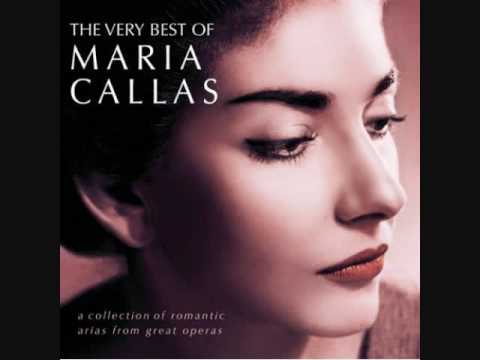
The aria “Porgi amor” from Mozart’s opera The Marriage of Figaro is a piece enveloped in elegance and noble grace, sung here by Maria Callas, the greatest opera singer of the 20th century whose name is etched in history.
Based on a play written in 1784 by the French playwright Beaumarchais, Mozart composed the work in 1786.
I am one of those who will go on doing till all doings are at an end.Wolfgang Amadeus Mozart

He was an Austrian musician.
This quote means, “I am someone who sees everything through to the end.” It conveys the determination not to give up on one’s goals.
I think it’s a unique perspective that only Mozart, with his many achievements, could express.
The shortcut to accomplishing many things is to do only one thing at a time.Wolfgang Amadeus Mozart
It’s a famous quote by Mozart, the 18th-century Austrian composer.
Isn’t it eye-opening? We often picture capable people juggling multiple tasks at once.
But to do many things reliably and carefully, each individual task matters.
Even with lofty intellect or imagination—or both—it does not culminate in the making of a genius. Love, love, love. That is the very essence of genius.Wolfgang Amadeus Mozart
Surprisingly, the young genius Mozart—who turned out to be quite the playboy—left behind some memorable quotes.
His letters to his lovers are very entertaining and could almost stand alone as light reading.
So free-spirited was his life that he seems to have been exceptionally passionate in matters of love as well.
He may have been the type to depend on someone.
Mozart MedleyWolfgang Amadeus Mozart

This is a medley packed with works created by the Australian musician Mozart.
Known as a representative of Classical music, his lively, beautiful, and brilliant musicality has etched his name into the memories of many and continues to be loved to this day.
Sonata in D major for Two Pianos, K. 448 (K6. 375a), First MovementWolfgang Amadeus Mozart

Wolfgang Amadeus Mozart, a leading composer of the Classical era, was a genius who, despite his short life, left behind more than 800 works.
The Sonata for Two Pianos in D major, K.448 (K6.375a), is a masterpiece composed for a pianist with whom he was acquainted in Vienna.
It is renowned as a work that embeds intricate structure and pure joy within a galant style.
The piece consists of three movements, each unfolding its own musical development.
In particular, the first movement—where the two pianos pass the melody back and forth—has become widely familiar after being featured in the television drama Nodame Cantabile, adapted from the manga.