

For elementary school students! A recommended collection of famous haiku using spring kigo

Spring is a beautiful season when nature buds and creatures begin to stir.Haiku that express these spring scenes in the rhythm of 5-7-5 are a perfect opportunity for elementary school students to experience the joy of words.If you choose familiar spring themes such as cherry blossoms, tulips, entrance ceremonies, or cherry-blossom viewing, children will find it approachable and engaging.In this article, we will introduce plenty of spring haiku suitable for elementary school students.We will also share how to use seasonal words and tips for composing, so why not enjoy spring haiku together with your child?
- [For Elementary School Students] Spring Kigo for Haiku Writing! A Collection of Fun, Easy-to-Memorize Ideas
- [For Middle School Students] Also Helpful for Haiku Writing! A Collection of Famous Haiku Using Spring Seasonal Words
- [Winter Haiku] A collection of poems written by elementary school students. Excellent works that skillfully use seasonal words.
- Picture books perfect for spring that are recommended for elementary school children. Picture books that make them look forward to going to elementary school.
- Brain training with spring kigo! A collection of ideas for common words you can use in haiku and conversation
- [For Elementary School Students] Turn Summer Memories into Haiku! A Collection of Fun Summer Haiku Ideas
- [For Elementary School Students] Trivia About April
- [Spring Quotes] Glamorous words perfect for adding color to a new beginning
- Recommended for elementary school students! Ideas for composing summer haiku
- Let's enjoy learning winter seasonal words! A collection of easy-to-use word ideas for elementary school students
- [Winter Haiku] A collection of poems composed by junior high school students: a beautiful and amusing anthology that vividly evokes scenes
- [For Elementary Students] A Collection of Beautiful Four-Character Idioms to Know
- [Elementary School Senryu] A Collection of Hilarious Masterpieces about Summer Vacation, Friends, and School Life. Tips and Explanations Learned from Outstanding Works
For Elementary School Students! A Recommended Collection of Famous Haiku Using Spring Seasonal Words (21–30)
Hinamatsuri (Doll Festival or Girls’ Day)

Hinamatsuri is one of the quintessential events of spring, isn’t it? Because it’s a long-cherished tradition, it makes for an easy seasonal word to include when you want to compose verses about spring.
Many haiku poets, such as Yosa Buson and Kobayashi Issa, have written haiku using Hinamatsuri as a kigo.
You can compose a verse about the festival itself, or about memories of it—there seem to be many ways to craft a poem! Since Hinamatsuri represents the wedding customs of the past, it might also be interesting to write while imagining the future.

Frog
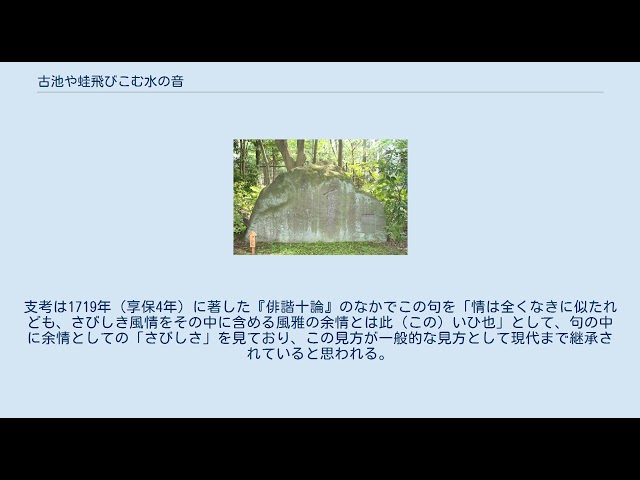
When people think of frogs, many may picture the rainy tsuyu monsoon season, but in fact, “frog” is a spring season word.
Frogs hibernate through the winter and begin croaking in spring, which is why they are used as a spring kigo.
Frogs also appear in a haiku by Matsuo Basho, where the word is read not as “kaeru” but as “kawazu.” Kawazu is said to refer to the kajika-gaeru, a type of frog.
As spring invites thoughts of frogs awakening from hibernation and beginning to call energetically, why not try composing a verse that features frogs?
Tulip

Tulips, which burst into bloom in a variety of colors when spring arrives, are used as a season word for late spring.
These days, many people compose haiku using the name “tulip” as is, but they are also sometimes written with the Japanese name “鬱金香.” Its readings in Japanese are “ukonkō” and “ukkonkō.” If you want to compose a verse with a slightly stylish, evocative flair, this name is recommended.
As you picture the vivid scenes of spring and your spring memories, try composing a haiku with tulips.
plum

Because plum blossoms begin blooming earlier than other flowers in the earliest spring, they are also called “harutsugegusa,” the harbinger of spring.
In the world of haiku, ume (plum blossoms) are known as a spring season word, but note that “hayau-me” (early plum) and “kanbai” (cold-weather plum) are late-winter, winter season words, so care is needed not to mix them up.
And when one simply writes “ume,” it is said to refer specifically to the plum blossom.
The plum, a symbol of spring in Japan, is one of the flowers closest to our hearts.
Using ume, why not compose a verse that lets you feel the arrival of spring? How about capturing a beautiful scene in a haiku—your impressions from visiting a famous plum-viewing spot, the plum tree blooming in your garden, or a richly evocative image combining it with a bush warbler?

Grass Sprout

“Sprouts of grass” refers to the young shoots of various plants that peek out of the ground in the warm spring, and it is used as a seasonal word for spring in haiku.
It is not limited to named plants like horsetails, Persian speedwell, or dandelions, but is a spring kigo that encompasses all sprouts, including weeds.
Many people may feel like going for a walk when spring arrives.
In the mild weather, seeing small green new leaves can make you feel the arrival of spring and the breath of the earth.
Why not turn the small moments of spring you notice in everyday life into a haiku? It will be a lovely time to notice new discoveries and encounters.
wisteria

Wisteria flowers reach their peak from mid-April to early May.
Some elementary schools may even have wisteria trellises installed.
Seasonally, wisteria is treated as a late-spring kigo in haiku, symbolizing the end of spring.
Thanks to the hugely popular anime Demon Slayer among elementary schoolers, where wisteria plays an important role, many children may already know about it.
It sounds fun to write essays or haiku that weave together familiar themes like these with wisteria.
Works that draw on the elegance conveyed by the clusters of small, pale purple blossoms are also lovely.
Because wisteria has a refined feel, including it can give essays or haiku a touch of taste and sophistication.

excursion

For children, nothing is more delightful than the spring field trip.
I can vividly recall running hand in hand with friends, a backpack stuffed with a boxed lunch on my back.
Just hearing the word “ensoku” (field trip) somehow makes you feel happy—did you know it’s actually a seasonal word for spring? It perfectly evokes the image of cheerful children on a warm spring day.
When retracing nostalgic memories, when preparing lunches for children excited about their trip, or when you spot a line of toddlers chattering excitedly at the station… let’s try composing a cheerful haiku with the theme of a field trip.