

For elementary school students! A recommended collection of famous haiku using spring kigo

Spring is a beautiful season when nature buds and creatures begin to stir.Haiku that express these spring scenes in the rhythm of 5-7-5 are a perfect opportunity for elementary school students to experience the joy of words.If you choose familiar spring themes such as cherry blossoms, tulips, entrance ceremonies, or cherry-blossom viewing, children will find it approachable and engaging.In this article, we will introduce plenty of spring haiku suitable for elementary school students.We will also share how to use seasonal words and tips for composing, so why not enjoy spring haiku together with your child?
- [For Elementary School Students] Spring Kigo for Haiku Writing! A Collection of Fun, Easy-to-Memorize Ideas
- [For Middle School Students] Also Helpful for Haiku Writing! A Collection of Famous Haiku Using Spring Seasonal Words
- [Winter Haiku] A collection of poems written by elementary school students. Excellent works that skillfully use seasonal words.
- Picture books perfect for spring that are recommended for elementary school children. Picture books that make them look forward to going to elementary school.
- Brain training with spring kigo! A collection of ideas for common words you can use in haiku and conversation
- [For Elementary School Students] Turn Summer Memories into Haiku! A Collection of Fun Summer Haiku Ideas
- [For Elementary School Students] Trivia About April
- [Spring Quotes] Glamorous words perfect for adding color to a new beginning
- Recommended for elementary school students! Ideas for composing summer haiku
- Let's enjoy learning winter seasonal words! A collection of easy-to-use word ideas for elementary school students
- [Winter Haiku] A collection of poems composed by junior high school students: a beautiful and amusing anthology that vividly evokes scenes
- [For Elementary Students] A Collection of Beautiful Four-Character Idioms to Know
- [Elementary School Senryu] A Collection of Hilarious Masterpieces about Summer Vacation, Friends, and School Life. Tips and Explanations Learned from Outstanding Works
For Elementary Students! Recommended Collection of Famous Haiku Using Spring Kigo (31–40)
Spring Mud
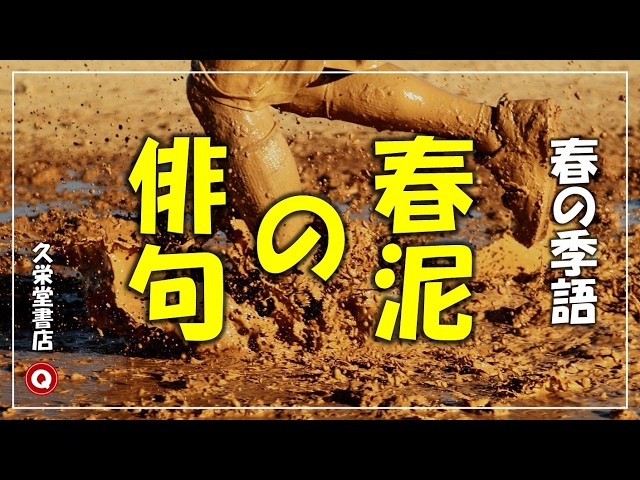
It refers to mud that has become waterlogged and soggy as the ground absorbs meltwater and spring rain.
Soil that was frozen hard through winter softens, and with melted snow and rainwater mixed in, roads and fields turn pliant.
When you walk, mud may stick to your shoes, and it can feel a bit harder to get around, yet that very scene conveys that winter has ended and the season is shifting into spring.
In haiku, it is often used to depict the landscapes around the time of snowmelt and the beginnings of spring in people’s everyday lives.

Spring Snow

The soft snow that falls after spring has begun is called “spring snow.” Unlike the harsh snows of winter, it falls quietly, like a lingering trace of the season.
It often melts right away, evoking a sense of transience and the changing of the seasons.
In haiku, it’s also used to depict the gentle scenes on the way from winter to spring, or to express a slightly wistful feeling.
Just saying, “It’s spring snow today,” in conversation brings a tender sense of the season.
As you watch the snow dance, why not try putting that fleeting beauty into words and using the phrase casually?
Beginning of Spring

It is a term that denotes the day when spring begins on the calendar.
Although the chill still lingers, this day is seen as the turning point toward spring.
Its charm lies in sensing the signs of the season in the subtlest changes—gentler winds, brighter sunlight.
In haiku, it is often used to express the start of a new season or the anticipation of the spring to come.
If you use it while imagining the faint presence of spring still nestled within winter’s crisp air, a natural sense of the season will unfold.
Butterfly

It depicts butterflies fluttering lightly in the warmth of spring.
Nature, which spent the winter in quiet, awakens and lets us feel that spring has truly arrived.
Their buoyant flight conveys a sense of calm and brightness, and they are often used in haiku to portray gentle, springlike scenes.
Even just adding a line like “The butterflies are flying” into a conversation can evoke the gentle air of spring.
It’s easy to use if you simply put that springlike scene into words while picturing them dancing around flowers.
spring midday

“Shunchū” (spring noon) refers to a gentle time in early spring days when winter’s chill softens and tender, warm sunlight pours down.
The air carries spring’s uniquely mild brightness; grasses and flowers along the roadside begin to sprout here and there, and stepping outside lets you feel the breath of nature in this seasonal moment.
In haiku, it is often used to depict the gentle spring light, the midday quiet, and the shifts in people’s lives and in nature.
If you use it while envisioning sunlit plants and flowers and a faintly warm breeze, a calm, tender scene of a spring day naturally unfolds.
For Elementary School Kids! Recommended Collection of Famous Haiku Using Spring Seasonal Words (41–50)
Spring Dawn

A word that evokes the dawn of spring—especially the gentle light and air of a morning when winter’s chill has softened.
In still towns and open fields, the faint sounds of birdsong and the wind echo softly, conveying the calm of the moment when a new day begins slowly.
In haiku, it is often used to depict the arrival of spring, the awakening of nature, and the fresh yet quiet scenes of morning.
Even in everyday conversation, adding it can convey the season’s tenderness and tranquil presence.
Use it while imagining the morning light streaming through a window and the sounds of nature waking, and feel the gentle time of a spring morning.
Flower rain

It is a word that describes the gentle rain that falls as if scattering spring blossoms like cherry and plum.
The characteristically light spring drizzle washes away winter’s dry air and brings life-giving moisture to flowers and greenery.
The sight of petals struck by that rain fluttering down feels both fleeting and beautiful, evoking a momentary scene of spring.
In haiku, it is often used to express the shifting spring landscape, as well as ephemerality and tenderness.
When you use it while imagining the sound of rain on petals and the softly moistened scenery, a quiet, gentle spring scene naturally unfolds.
In conclusion
Spring haiku are delightful because they let you capture nearby nature and everyday discoveries in the rhythm of 5-7-5. Using seasonal words suited for elementary school students might bring out creations that shine with a child’s unique sensibility. Spending time with older adults, choosing words together while seeking out spring scenery, can become a warm moment of intergenerational connection. Do try savoring the arrival of spring through haiku.