

[Four-Character Idioms] Impressive and Cool Sound! A Collection of Famous Quotes Worth Knowing as General Knowledge

“Lion-like valor,” “a match for a thousand,” “battle-hardened”…
There’s an undeniable coolness to four-character idioms, isn’t there? If you can use them well, your everyday conversations and writing will feel much tighter, and your intellectual appeal will rise.
What’s more, the world of these idioms is incredibly deep—from phrases everyone knows to rare ones that make you go ‘Wow!’ In this article, we’ll introduce stylish four-character idioms you can use in daily life.
It’s packed with expressions that shine not only in business settings but also on social media and in messages.
- Amusing four-character idioms you’ll want to use right away! A collection of expressions to remember as general knowledge.
- Enrich your heart with beautiful four-character idioms! A collection of expressions you'll want to use in everyday life.
- General: Four-character idioms that encourage determination—powerful, heart-stirring words
- Become positive with four-character idioms that resonate with the heart! Common yet deeply meaningful words.
- Learn the meanings too! Cool four-character idioms that elementary school students will want to remember
- Four-character idioms that help you achieve goals! Phrases you can use in everyday situations
- [For Elementary Students] A Collection of Beautiful Four-Character Idioms to Know
- Interesting four-character idioms for elementary schoolers! Words you'll want to use once you understand their meanings
- Four-character idioms for New Year’s resolutions! A collection of motivational phrase ideas
- Intellectual beauty that shines! Stylish four-character idioms you can use in everyday situations
- Popular even among elementary school students! Stylish and easy-to-remember four-character idioms
- [Kakizome] Four-character idioms fit for the New Year: Introducing words that resonate with the heart and their meanings
- Boost your vocabulary with four-character idioms that include numbers! A collection of four-character idioms for elementary school students to learn.
[Yojijukugo] Impressive sayings with a cool ring! A collection of famous quotes you should know as general knowledge (1–10)
monsters and spirits; malevolent specters (chimimōryō)
https://www.tiktok.com/@kurukoba/video/7421785772870634759A four-character idiom that serves as a collective term for various monsters and yokai, used to express something terrifying.
“Chimi” refers to monsters born from the vital energy of mountains and forests that harm people, while “moryo” are said to arise from the vital energy of rivers, mountains, trees, and stones; together they evoke beings beyond human understanding.
Because of its association with monstrous creatures, the term is also used to describe people who scheme for selfish gain or those who are as inscrutable as monsters.
Even the number of strokes in the characters conveys a sense of dread alongside a certain power.

Actions speak louder than words.
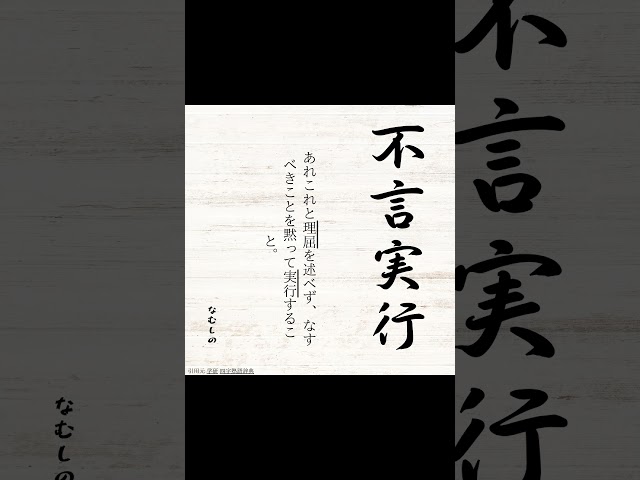
This four-character idiom expresses an attitude of quietly and steadfastly doing what needs to be done without resorting to words or theories.
Instead of speaking at length, it emphasizes demonstrating value and results through action, conveying a taciturn impression.
It suggests that words are unnecessary to achieve outcomes; one simply forges ahead with stubborn determination.
It’s a powerful phrase that embodies a spirit of facing challenges head-on and is said to have inspired the idea behind “say and do” (yūgen jikkō), the principle of fulfilling what one declares.
battle-hardened; seasoned (literally: experienced in a hundred battles)
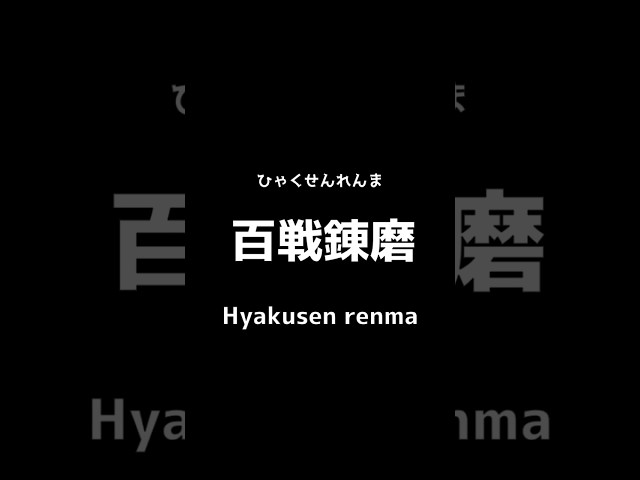
This four-character idiom describes a state where one’s martial skills, technical abilities, and mind and body have been thoroughly honed through many battles and experiences.
The key point is that it’s used precisely because of repeated, real-world practice, and it evokes the image of someone with gravitas.
For example, a soldier or warrior might be called “a seasoned veteran,” while in business one might say “a battle-hardened/seasoned executive,” pairing the idiom with the specific field of experience.
It’s a term that conveys respect for strength—the strength to fight in one’s respective arena by leveraging hard-won experience.
Yojijukugo: Strikingly Cool Expressions! A Collection of Quotations Worth Knowing as General Knowledge (11–20)
cutting straight through with a single stroke
@hakatacraftcola0701 Today's theme is 'cutting through with a single stroke.'ImagetranslationTranslation#shortvideo#AI
♬ Original Song – Hakata Craft Cola – Hakata Craft Cola
It’s a four-character idiom that depicts slicing something cleanly in two with a single stroke; by extension, it expresses handling or deciding matters swiftly and without hesitation.
It conveys speed in decision-making and a resolute attitude, emphasizing that such thinking is important for moving things forward.
The idea of resolving something in a single stroke also communicates a sense of offensive power, which contributes to the word’s strength.
It also offers a lesson that indecisiveness prevents progress.
peerless; unmatched; second to none
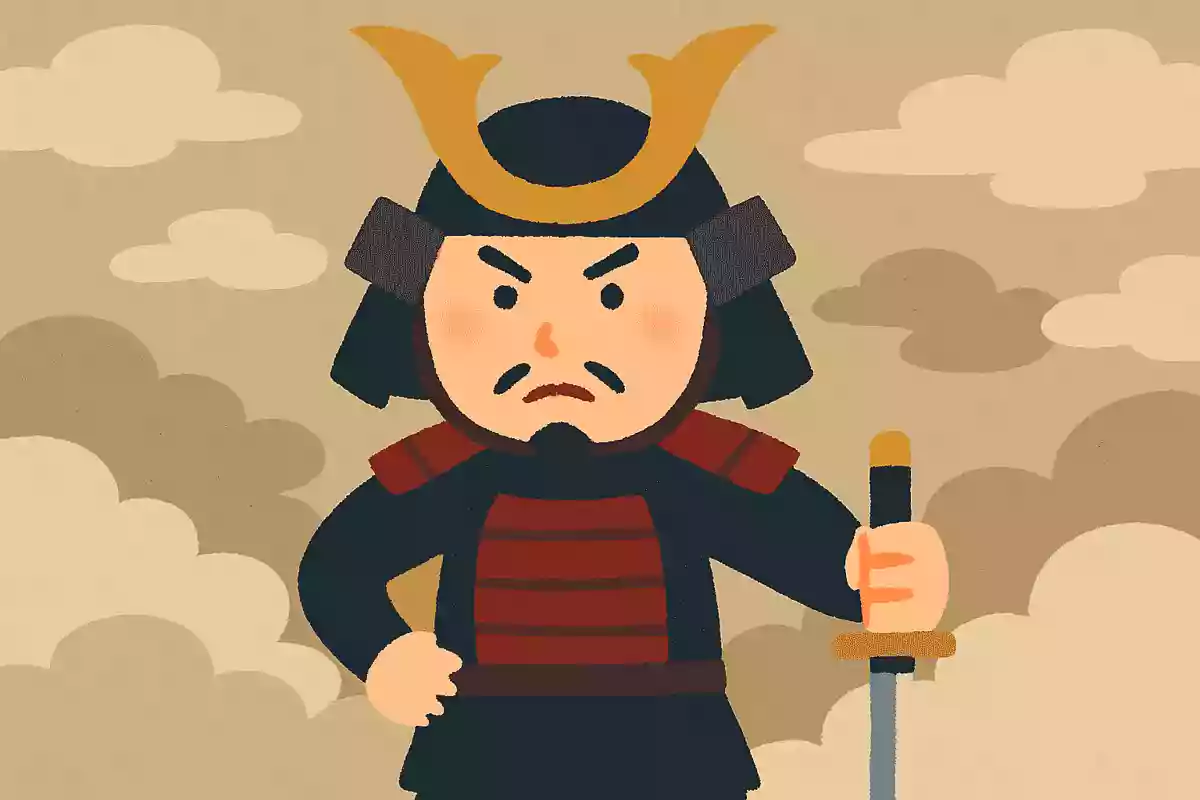
This four-character idiom is used to acknowledge someone’s outstanding ability—so exceptional that there is no equal under heaven.
The term appears in the Chinese historical text Records of the Grand Historian (Shiji) and conveys the image of someone earning recognition amid battles and pressing forward relentlessly.
Because it refers to unparalleled ability, it’s used not only for martial prowess but to recognize a wide range of talents.
It doesn’t mean belittling oneself; rather, it expresses a refreshing attitude of straightforwardly recognizing another’s abilities.
Extinguish the mind’s delusions
@hiroaki946 Shintō Mekkyaku Shorts short video mini video idiom four-character idiom proverb Japanese meaning of words wordplay learning education trivia Japanese culture killing time study knowledge trivia everyday life the power of words VOICEVOX: Shikoku Metan A four-character idiom that makes you want to press your hands together in respect: “Shintō Mekkyaku” Example sentence Brave firefighter Mr. Tanaka was on duty at a fire scene. The blaze was intense, and as the scorching flames engulfed the surroundings, Mr. Tanaka calmed his mind and told himself, “If the mind is annihilated, even fire feels cool.” He engraved those words in his heart, acted calmly and swiftly, and rescued many people. Mr. Tanaka’s courage and mental fortitude deeply moved his colleagues and those he saved. Meaning “Shintō Mekkyaku” (shintō mekkyaku) means to erase distracting thoughts and doubts from one’s mind and unify the spirit. The phrase teaches that no matter how harsh the situation or difficulty you face, if you can keep your mind undisturbed and tranquil, you can overcome it. It originally comes from Zen teachings and underscores the importance of keeping the mind pure. That is all.
Original song – hiroaki946 – hiroaki946
This four-character idiom expresses a mindset in which one steadies the heart and dispels worldly desires to overcome suffering.
It comes from the Buddhist phrase, “If you extinguish all thoughts at the head of your mind, even fire feels cool,” and is said to have spread in Japan through an anecdote about Kaizen Shōki, a Zen priest of the Myōshin-ji branch of the Rinzai school.
The story includes how, during Oda Nobunaga’s temple-burning attack, he addressed his disciples and leapt into the raging flames—conveying a powerful sense of resolve.
It’s a saying that makes us reflect on what kind of mindset we should adopt when facing hardship.
gallant and dashing figure
@otoko_zyku A true man: “valiant and gallant in bearing.”Quotes of lifeMotivation#ManlinessBushidoQuotes that resonate with the heart
♬ Original Track – otoko_zyku – otoko_zyku
This is a four-character idiom that expresses a dignified, imposing appearance and a brave, brisk demeanor.
“Eishi” (英姿) means having an impressive appearance, while “sassō” (颯爽) describes a neat, refreshing manner or movements; combining them underscores a sense of distinction.
It comes from a line in “Danshō-in” (丹青引), a poem by Du Fu, a poet of China’s Tang dynasty, and is used as a phrase to praise someone’s job performance.
It conveys respect, expressing that the person’s way of working is admirable.