

[For Seniors] Proverb Quiz with Animal Names

Proverbs that often come up even in everyday casual conversations.
Among them, various kinds of animals make an appearance.
So this time, we’ll present a proverbs quiz featuring animals—perfect for brain training for seniors.
The quiz is a fill-in-the-blank format where the animal names are left blank.
Seniors with a wealth of knowledge might even get a perfect score! You may find proverbs you’ve known since childhood or ones you use frequently.
Let’s give your brain a solid workout through this animal-themed proverbs quiz.
- [For Seniors] Weather Proverb Quiz
- [For Seniors] Enjoyable Brain Training! Proverb Quiz Collection
- [For Seniors] Lively Wordplay Game: Fun Recreation for Elderly Care
- [For Seniors] Fun 3-Choice Animal Quiz! Introducing Questions Full of Surprises and Discoveries
- [For Seniors] Multiple-Choice Quiz Collection About Living Creatures
- [For Seniors] Fun and Lively! Recommended Quiz Questions
- [For Seniors] Brain Training! Recall Quiz Collection!
- [For Seniors] Laugh-Out-Loud, Crowd-Pleasing! Fun Quiz
- [For Seniors] Fun Recreational Activities Without Equipment
- [For Seniors] Fun Riddles That Stimulate the Brain
- [For Seniors] Today’s recommended quiz. Daily brain-training quiz!
- [For Seniors] Brain-training quizzes for January: Let’s have fun with New Year and winter trivia
- How much do you know? Trivia quiz for seniors that’s full of surprisingly unknown facts
[For Seniors] Proverb Quiz with Animal Names (21–30)
A dip in 〇〇〇
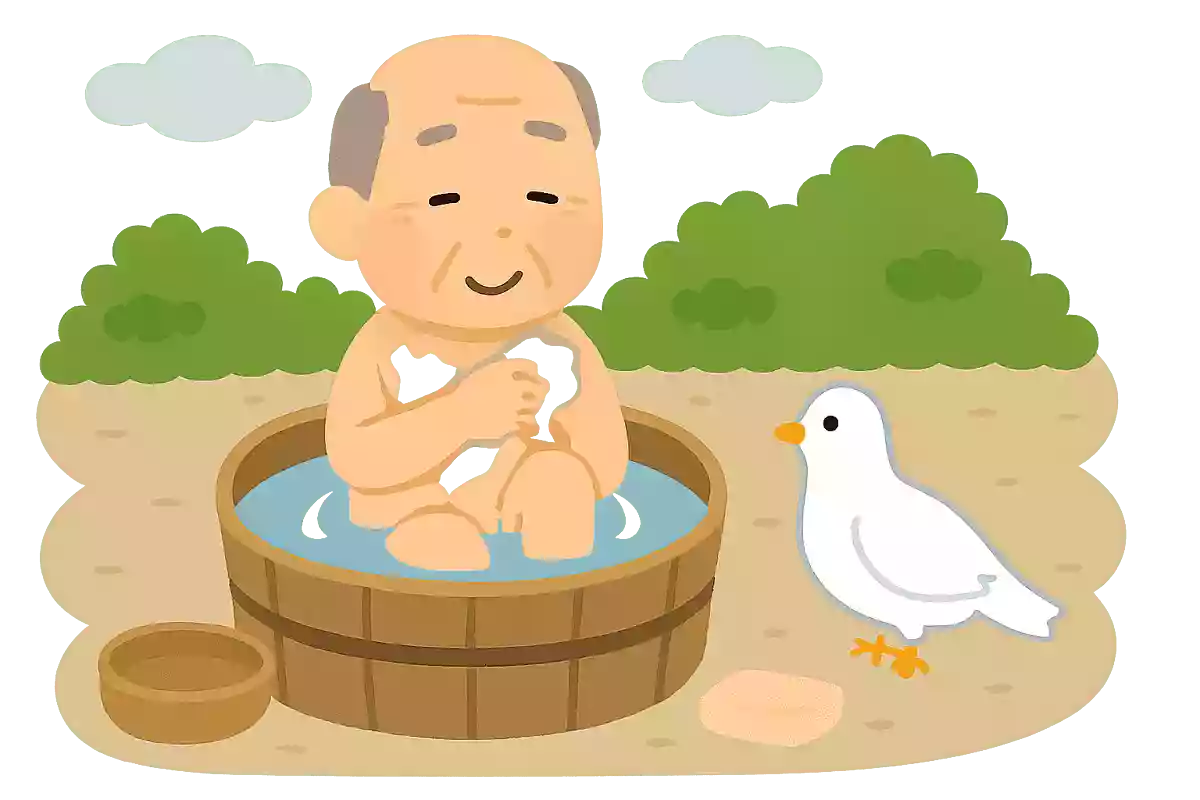
It’s a phrase often used with a touch of irony to describe taking very short baths.
It refers to a creature that doesn’t spend much time bathing, but if you haven’t seen it yourself, it might not come to mind.
Hints: it’s an animal with a strong “dirty” image and a bird that lives close to us.
The answer is “crow.” Interestingly, crows are actually quite fastidious and bathe in water multiple times a day—a point worth remembering.
It’s not that their bathing is sloppy; rather, they repeatedly take quick dips, which is pretty amusing.

step on the tail of 〇〇
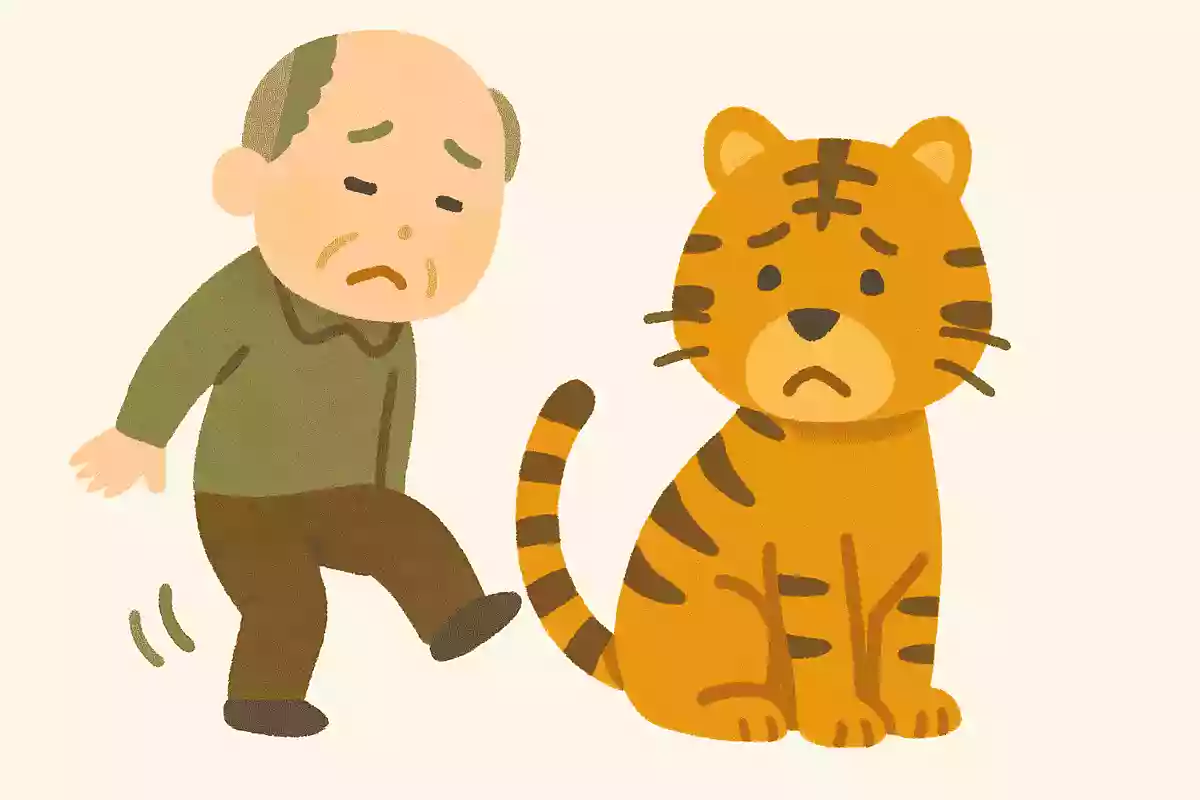
This is a proverb used as a metaphor for doing something extremely dangerous.
Stepping on a tail might evoke a sense of pity, but the hint may be that the crisis is so serious it makes you forget that feeling.
If you imagine a dangerous animal and substitute it in, you can arrive at the answer.
The answer is “tiger,” and sayings like “to put your hand in a tiger’s mouth” or “to touch someone’s sore spot” (literally, “to touch the imperial wrath”) are similar proverbs.
It could also be fun to ask, with anecdotes, which animals each person considers dangerous and why.
This lasts a thousand years, and that lasts ten thousand years.
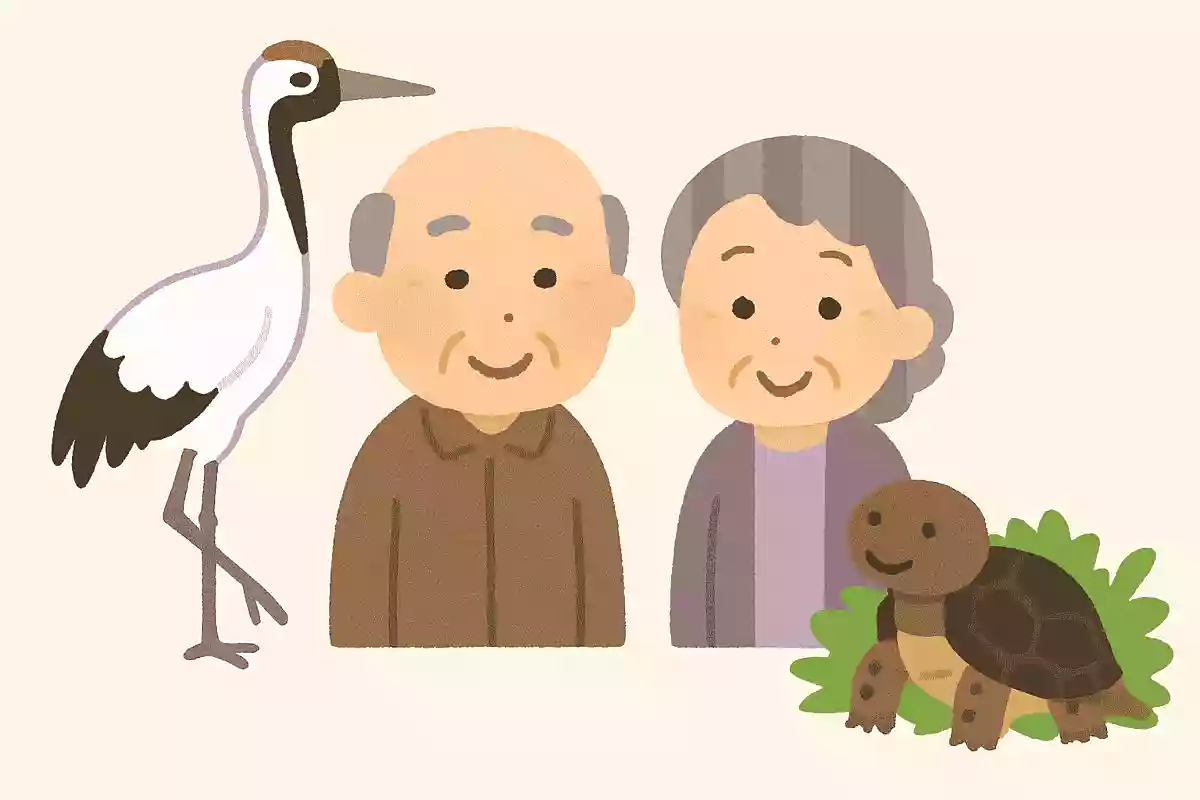
These words are used as examples of longevity and good fortune, and if you picture the classic motifs that symbolize long life, you’ll likely arrive at the answer quickly.
It’s also interesting to consider not only motifs of longevity but also creatures known for long lifespans.
If you go looking for beings that live 1,000 or 10,000 years, you won’t find them, so it’s important to note that such lifespans are described in mythology.
The answer is “cranes” and “turtles,” animals used in many contexts as symbols of longevity and auspicious motifs.
If you do not enter the tiger’s den, you will not catch its cubs.
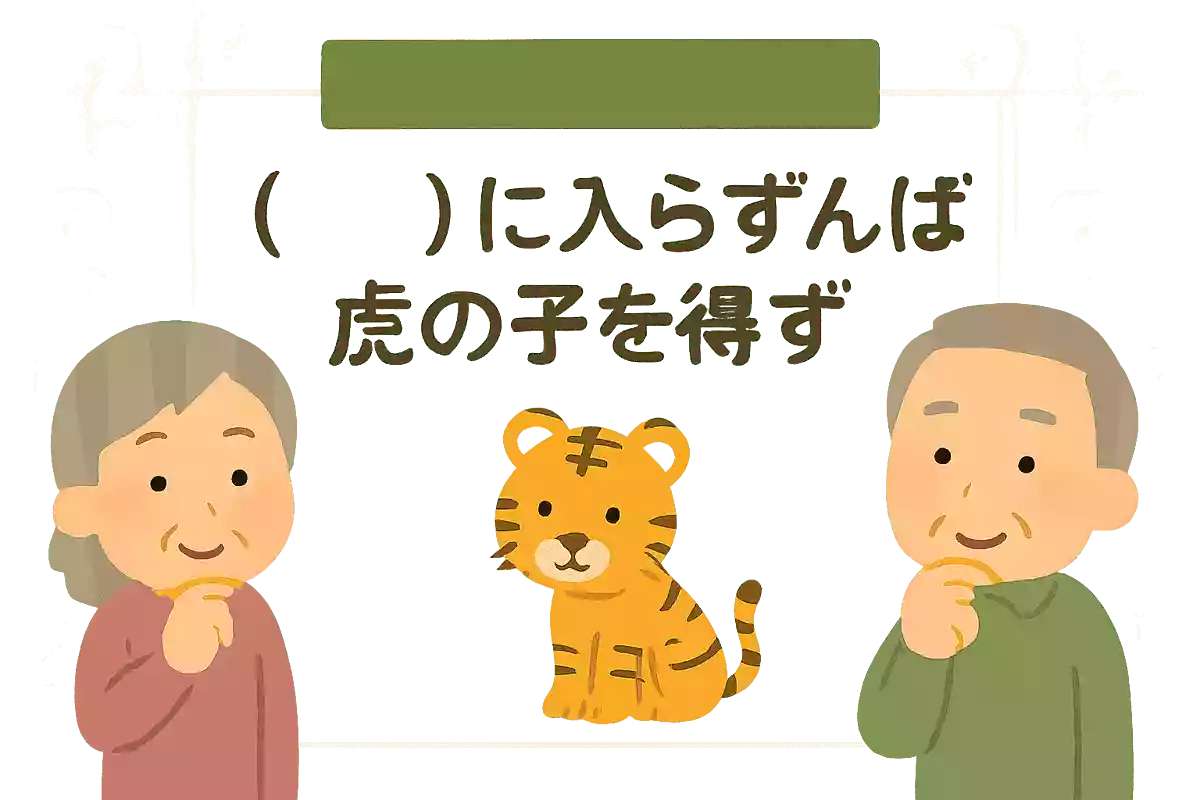
It’s a proverb that conveys the idea that you can’t achieve success without taking risks.
Because it originates from a Chinese historical text, the wording can feel unfamiliar and tricky.
If you think about where you would have to go to capture a tiger’s cub, you’ll get closer to the answer.
The proverb is “If you do not enter the tiger’s den, you cannot catch its cub,” meaning that unless you accept the risk of stepping into the tiger’s lair, you can’t catch the cub.
It may remind you, through the proverb, of times in your own experience when you braced yourself for risk and took the plunge.
Even a small 〇〇 has a spirit of its own (literally: Even in an inch of 〇〇, there is a half-inch soul).
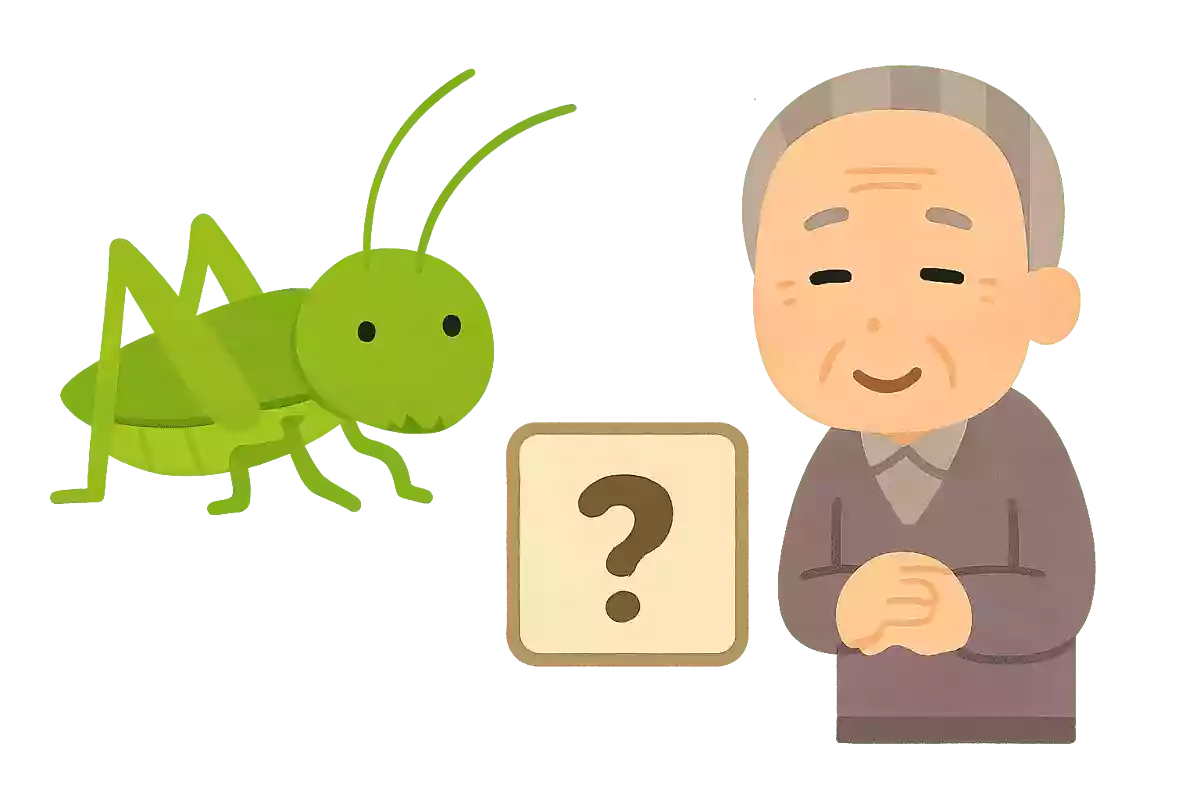
This is a phrase used as an example to show that no matter how weak something may be, it has its own pride and way of thinking, and shouldn’t be underestimated.
If you think about small things that we don’t usually pay much attention to in daily life, you might get closer to the answer.
One sun is about three centimeters, but that’s a figurative expression of smallness rather than an actual size—another hint.
The answer is “insect.” It’s a phrase that carries the lesson that even the smallest living creature has a life of its own and should not be treated carelessly.