

![[For Seniors] Recommended Brain Training! A Fun Collection of Math Quizzes](https://media.ragnet.co.jp/img/1200__png__https://www.studiorag.com/files/2025/04/6dc2e3b4a5d43707b072e399b52a4ebc.webp)
[For Seniors] Recommended Brain Training! A Fun Collection of Math Quizzes

In senior and welfare facilities, various brain-training activities are practiced.
The “math quiz” we’re introducing this time is one of those brain-training activities.
Working with numbers is expected to help activate the brain.
We’ve prepared a variety of problems, including the four basic operations like addition and division, as well as puzzles where the operation symbols in the equations are hidden!
There are also word-based math quizzes, so why not take your time and try solving them?
You can write them on a whiteboard or on paper and enjoy working through them with a few seniors.
Of course, you can also focus and solve them on your own.
Let’s have fun training our brains with this “math quiz”!
[For Seniors] Recommended Brain Training! Fun Math Quiz Collection (1–10)
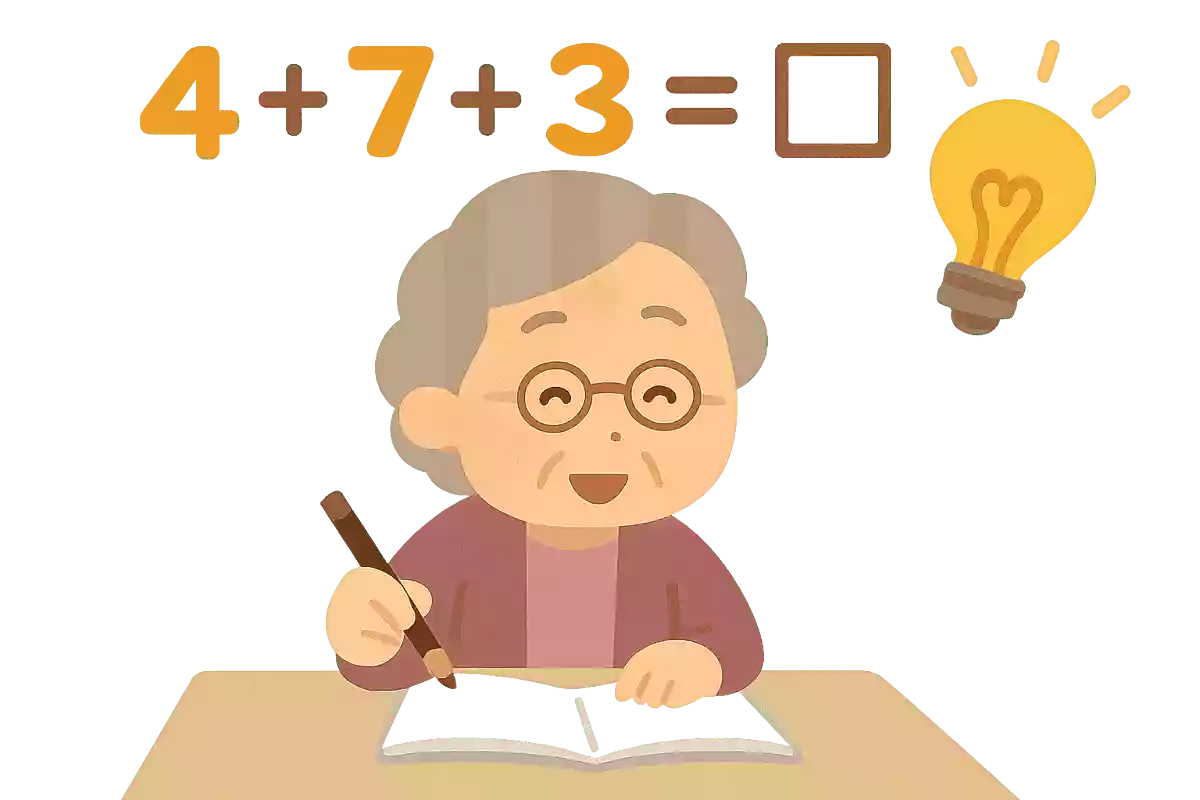
4+7+3=
See the answer
14
It’s just an addition problem, isn’t it? I’ve heard that our calculation ability declines as we get older. Even simple arithmetic problems can help stimulate the brain. Solving problems that are easy to answer in a short time is said to lead to overall brain activation.

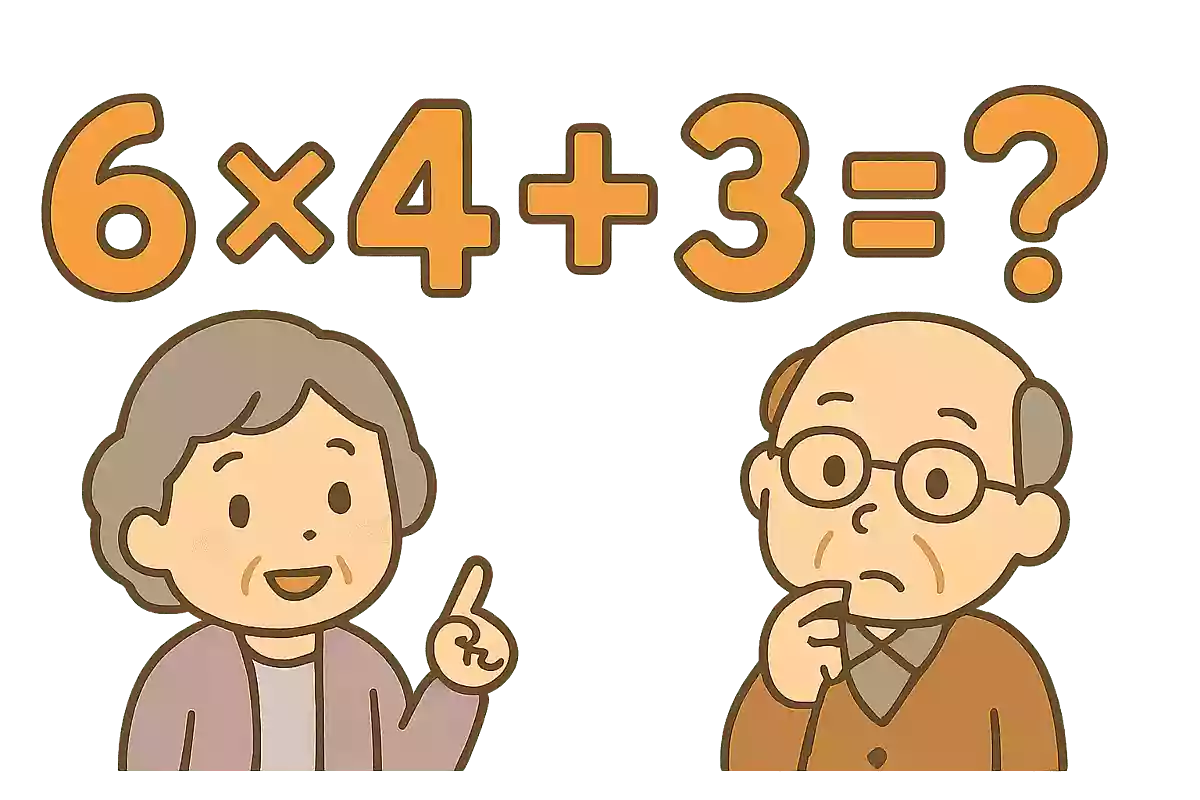
6×4+3=
See the answer
27
This is a calculation that combines multiplication and addition. The correct answer is 27, but be careful about the order of operations! If you start by calculating 4 + 3, you’ll end up with 42. According to the rules, multiplication and division must be done before addition and subtraction.
We’re going to plant trees along a 200-meter road at 5-meter intervals. How many trees are needed in total?
See the answer
41 pieces
It’s a problem that makes you want to answer “40 trees,” isn’t it? You might think of a formula like “200 meters of road ÷ 5-meter intervals.” With that, you’d get “40 trees,” but you also plant one tree at the starting point, 0 meters. So the correct answer is “41 trees.”
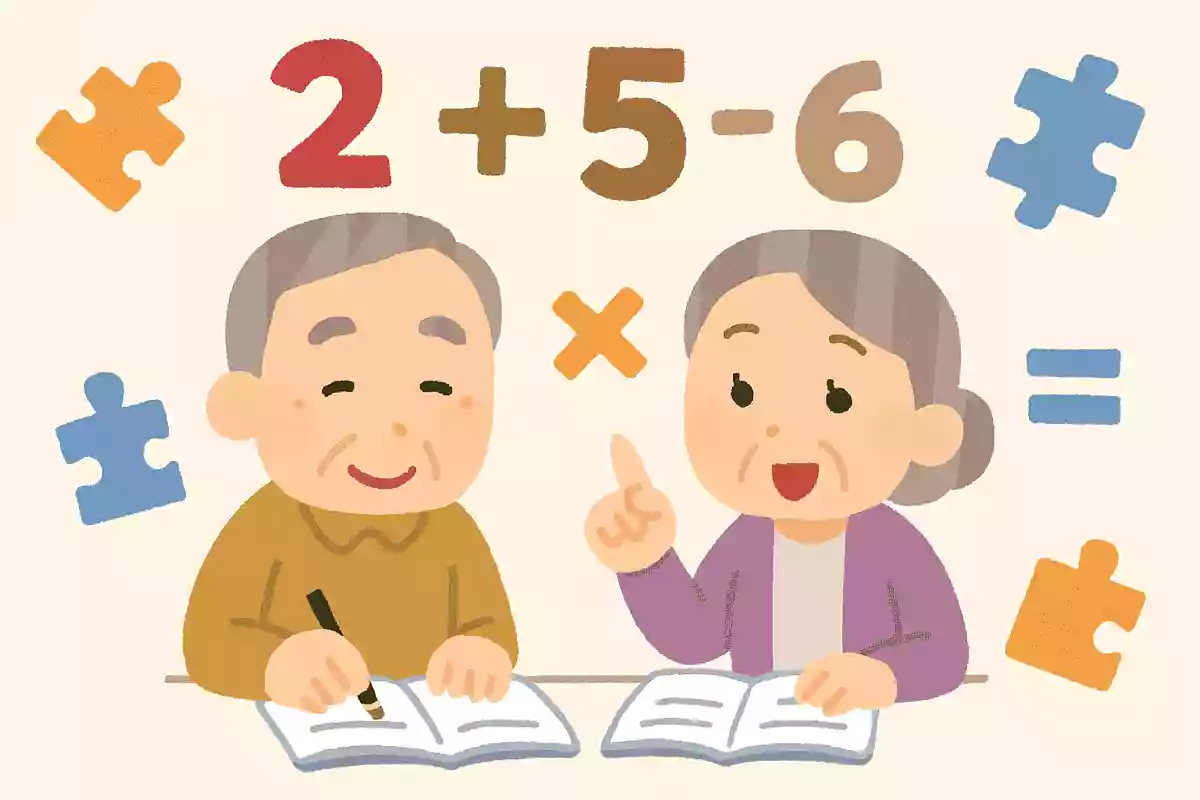
2+5-6
See the answer
1
This is a calculation that includes subtraction within addition. When different operation symbols appear in an expression, it can seem a bit difficult. Problems that combine addition and subtraction can be solved by calculating in order. In everyday life, such as when paying while shopping, there are many situations where we use addition and subtraction. It might be good to get used to them through quizzes.
8÷4-2=
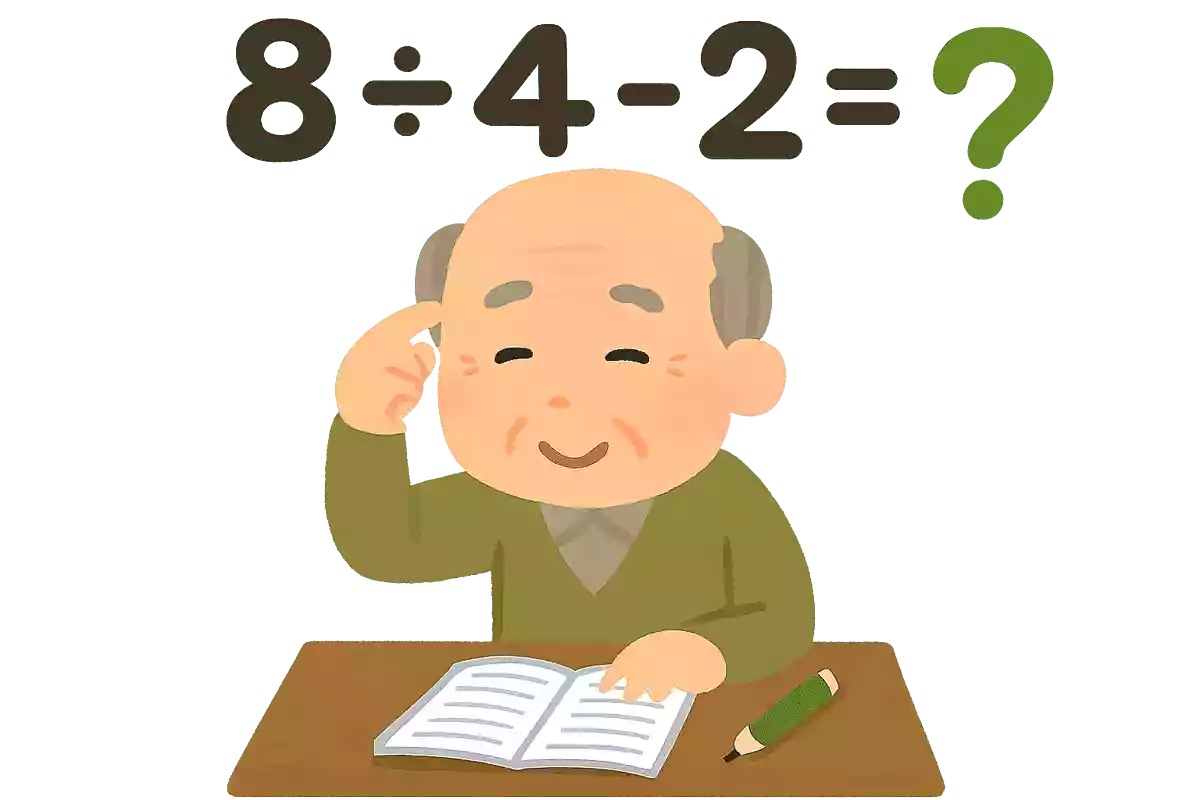
The answer is 0. This is a calculation that combines division and subtraction. According to the rules of arithmetic, you should perform division before subtraction and addition. If you do the subtraction first, you’ll end up with 4, so be careful.
There was a 1,000-yen bill in my wallet. I bought eggs for 200 yen, a cucumber for 180 yen, and chicken for 450 yen at the supermarket. How much change will I get?

See the answer
170 yen
This is a problem about calculating change. It’s the kind of calculation that seems useful in everyday life when paying while shopping. You can get the answer from “eggs 200 yen + cucumber 180 yen + chicken 450 yen =”. Since shopping is a familiar situation even for older adults, it might be easier for them to work on this type of problem.
11+〇=18
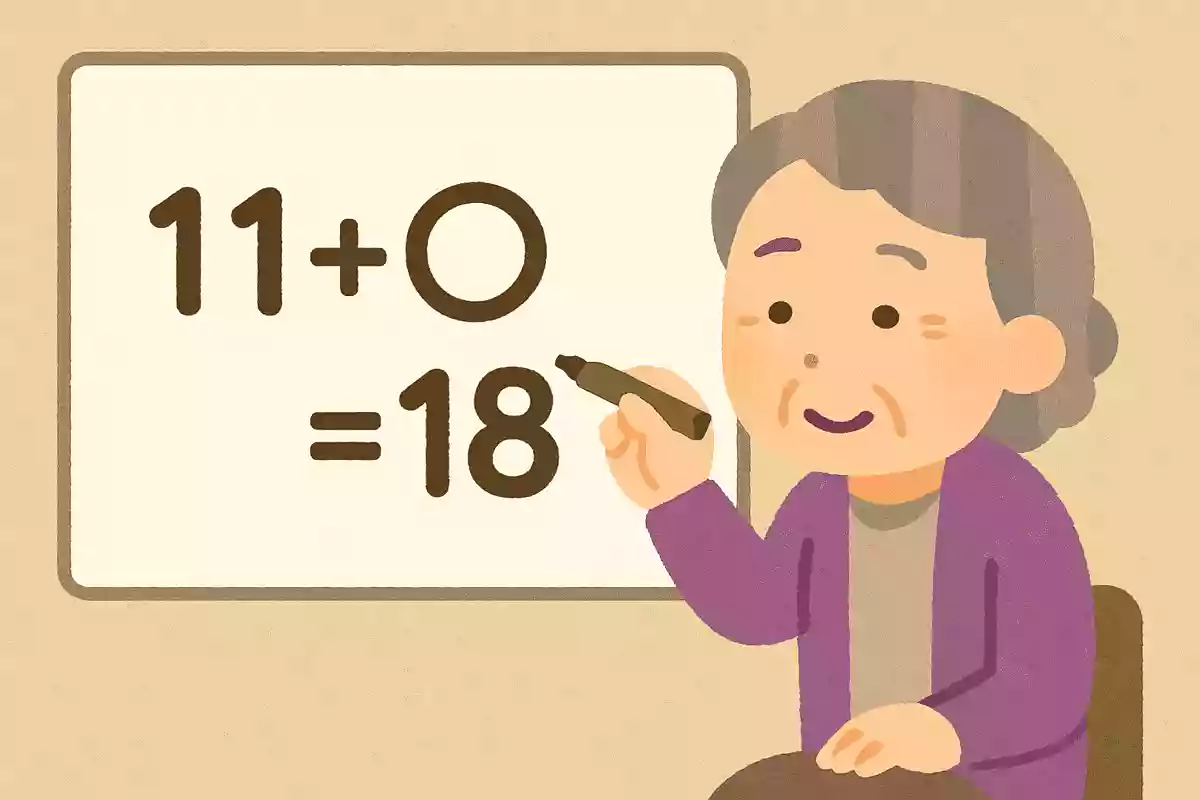
See the answer
7
It’s a problem where you put a number in the circle. Since we know the answer to the equation, the number that goes in the circle is the answer minus 11. Once you hear the solution, it’s very simple, but some older adults might still find it difficult. Try incorporating ideas that guide them to the solution, such as offering hints on the calculation method.