

[For Seniors] Enjoyable Brain Training! Finger Exercises That Help Prevent Dementia

Moving the fingers helps activate the brain, so it’s recommended as a recreational activity for older adults.
Finger exercises can be done while seated, making them safe and easy to start.
There are many ideas—such as doing different movements with each hand or coordinating with songs—so they can be enjoyed according to each person’s physical and mental condition.
Also, by adding ideas like speaking aloud while moving the fingers, you can make the exercises even more enjoyable.
Since these exercises can be done anywhere, they’re also great for filling small pockets of free time.
- [For Seniors] Hand and finger play roundup: Finger exercises that lead to brain training
- Hand games that liven things up for seniors—also great brain training
- [For Seniors] Extremely Effective Brain Training! A Fun Collection of Hand Games
- [For Seniors] Brain Training Recommended for Dementia Prevention
- [Brain Training for Seniors] Recommended Hand-Play Recreation for Dementia Prevention
- [For Seniors] Fun Brain Training! Lively Mind Exercises
- [For Seniors] Popular Hand-Play Songs: Fun Brain-Training Ideas
- [For Seniors] Recommended Rhythm Play and Exercises
- [For Seniors] DIY Hand Rehabilitation Tools to Strengthen Fingertips: A Collection of Handmade Ideas
- [For Seniors] Liven Things Up With Different Left-Right Movements! Game and Exercise Ideas
- [Today's Recommendation] Gentle Health Exercises for Seniors
- For Seniors: Fun and Lively Exercise Recreation
- [For Seniors] Core Training: Recommended Simple Rehabilitation
[For Seniors] Fun Brain Training! Introducing Finger Exercises That Help Prevent Dementia (21–30)
Earthworm Exercises
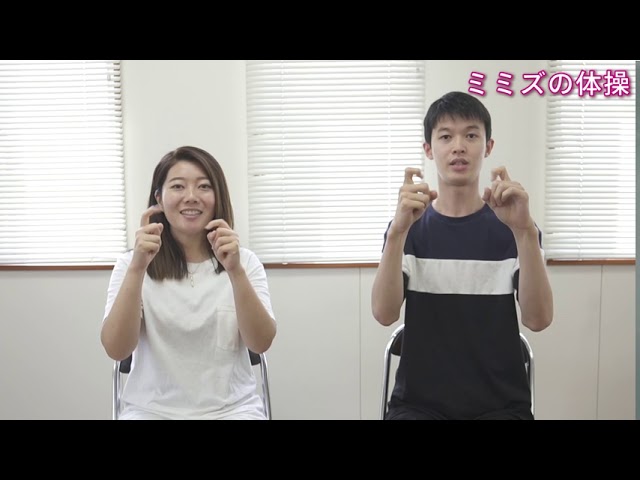
This is an exercise where you move your raised fingers in various directions to mimic the motion of an earthworm with your hands.
By consciously bending and extending your index finger, you can develop smoother fingertip movements and improve concentration.
You alternately extend your finger upward and to the side, but by not only moving in the same direction and instead shifting the direction and rhythm, you can focus on more complex movements, which may also provide brain-training benefits.
To make it easier to keep the rhythm, doing the exercise to music may help you approach the training with a more enjoyable mindset.

What shall we make with rock, scissors, paper?

The “Goo-Choki-Paa de Nani Tsukurou” exercise is a song that many older adults are familiar with.
Those with children may remember singing it to them often.
This hand-play song involves moving your body while singing, which provides good stimulation for the brain.
What’s more, just by combining rock, scissors, and paper in different ways, you can create many variations.
It’s a hand-play song enjoyed by a wide range of ages, from children to seniors, so it might be nice to try it together with your grandchildren.

[For Seniors] Fun Brain Training! Finger Exercises That Help Prevent Dementia (31–40)
Pa-Ta-Ka-Ra finger exercises

When eating, not only mouth movements but also finger movements—like holding chopsticks or bringing food to your mouth—are important.
This is an adaptation that adds finger movements to the Patakara exercise to coordinate the mouth and fingers.
The content is simple: as you pronounce each syllable, fold a finger to count at the same time.
Once you get used to the motions, try changing the finger movements and gradually making them more complex to expect brain-training benefits.
While it’s important to focus on finger movements, it’s also crucial to be mindful that your mouth movements don’t become small.
Moshikame Goo-Paa Hand Play

Let’s do the open-and-close hand exercise along with the children’s song “The Hare and the Tortoise.” When you make a fist, move your thumbs either outside or tucked inside.
Doing it while singing is expected to further stimulate brain activity.
Match the movements to the lyrics: have both thumbs move the same way, or have each thumb move differently.
As you might guess, making them move differently is more challenging.
Once you get used to the thumb movements, give it a try.
It’s said that tasks that feel a bit harder than your usual movements are more effective at activating the brain.

2525 calisthenics

Let me introduce a finger exercise that also helps with brain training and fall prevention.
While saying “Niko niko nī,” you raise two fingers and five fingers.
You can add hand claps between raising the fingers, and make 2 and 5 with the fingers on each hand separately.
Mixing different movements increases the difficulty, right? Thinking about multiple things activates the brain.
Moreover, doing two or three things at the same time is said to help prevent falls.
As we get older, we tend to laugh less, but it seems this exercise can also help bring out richer facial expressions.
Goo Choki Paa-ty (Rock-Paper-Scissors Party)

Shall we all try dancing the “Goo-Choki-Paa” exercise together—just watching it might lift your spirits! This routine is done standing, but it can also be done seated, so it can be adapted to the physical and mental condition of older adults.
Various animals and creatures appear throughout, and their movements are expressed with the hands and feet.
For example, a fist (goo) can represent a gorilla, and scissors (choki) can represent a crab—there are so many ways to communicate using just your hands.
Don’t forget to take a deep breath at the end to refresh your body and mind.
Rock-Paper-Scissors Exercise

This “Rock-Paper-Scissors” exercise is done while speaking out loud.
Using your voice provides beneficial stimulation to the brain, so it’s recommended.
Even a small voice is fine—the key is to perform the rock-paper-scissors movements while speaking.
Exercises that change the movement on each side are also effective for activating the brain.
These can be easy to get wrong, so it may be difficult to do them correctly right away.
However, making mistakes is also important and can be a good opportunity to communicate with others.
Staff should actively speak to participants while they are exercising.