

[For Seniors] Enjoyable Brain Training! Finger Exercises That Help Prevent Dementia

Moving the fingers helps activate the brain, so it’s recommended as a recreational activity for older adults.
Finger exercises can be done while seated, making them safe and easy to start.
There are many ideas—such as doing different movements with each hand or coordinating with songs—so they can be enjoyed according to each person’s physical and mental condition.
Also, by adding ideas like speaking aloud while moving the fingers, you can make the exercises even more enjoyable.
Since these exercises can be done anywhere, they’re also great for filling small pockets of free time.
- [For Seniors] Hand and finger play roundup: Finger exercises that lead to brain training
- Hand games that liven things up for seniors—also great brain training
- [For Seniors] Extremely Effective Brain Training! A Fun Collection of Hand Games
- [For Seniors] Brain Training Recommended for Dementia Prevention
- [Brain Training for Seniors] Recommended Hand-Play Recreation for Dementia Prevention
- [For Seniors] Fun Brain Training! Lively Mind Exercises
- [For Seniors] Popular Hand-Play Songs: Fun Brain-Training Ideas
- [For Seniors] Recommended Rhythm Play and Exercises
- [For Seniors] DIY Hand Rehabilitation Tools to Strengthen Fingertips: A Collection of Handmade Ideas
- [For Seniors] Liven Things Up With Different Left-Right Movements! Game and Exercise Ideas
- [Today's Recommendation] Gentle Health Exercises for Seniors
- For Seniors: Fun and Lively Exercise Recreation
- [For Seniors] Core Training: Recommended Simple Rehabilitation
[For Seniors] Fun Brain Training! Finger Exercises That Help Prevent Dementia (31–40)
If, if, Mr. Turtle
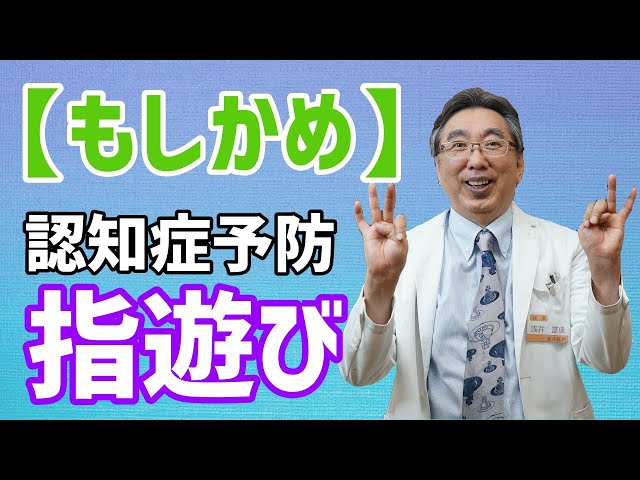
Let’s try some brain training with hand and finger games.
It’s an exercise where you fold down your fingers to the tune of the children’s song “Moshimoshi Kameyo.” There are different ways to fold the fingers, and the difficulty increases.
It’s easy to fold the same fingers on both hands—thumb, index, and middle—at the same time.
But having one hand lag by a beat and folding different fingers on each side—like “index and thumb,” then “middle and index”—is quite tricky even for young people.
You might call it the brain-training world’s version of a round, like “By the Quiet Lakeside.”
Brain-training hand game with the Frog Song

I think you’ve heard the song “Kaeru no Uta” (The Frog Song).
Using that tune, why not try a fun brain-training exercise? The movement itself is simple: you make a snail by combining a fist and a V-sign.
But whenever the word “kaeru” (frog) appears in the lyrics, you flip your hands upside down.
When you try it, you’ll probably find it surprisingly engaging for your brain.
And if you get tired of the snail, try other movements like a helicopter.
That way, you can avoid getting stuck in a rut.

Good Exercises

I’d like to introduce the “Good Exercise,” a routine that makes you want to imitate it as soon as you see it.
With one hand, make an OK sign facing downward, and with the other hand, make a thumbs-up sign.
Then place the thumbs-up on top of the OK sign, and repeat this motion.
When you switch the thumbs-up from one hand to the other smoothly, it feels surprisingly satisfying.
Try aiming for a pace of about once per second.
Of course, it’s fine to go faster or slow down as you like.
Rock, paper, scissors with pumpkin

Goo-Choki-Pa Pumpkin is a recommended exercise for Halloween.
Dressing up in Halloween costumes while you dance will lift your spirits and make it even more fun.
Since the Goo-Choki-Pa movements are incorporated into various parts, it should help activate the brain.
You can do it standing or sitting, so please adjust it to your physical and mental condition.
The song used here is an upbeat track that I believe will also benefit the minds and bodies of older adults.
Let’s enjoy the Goo-Choki-Pa exercise along with the up-tempo music.

Let’s make Pokémon with rock-paper-scissors

Pokémon are popular characters among children, aren’t they? Some older adults might also like Pokémon because of their grandchildren’s influence.
It seems there are as many as 809 Pokémon characters.
Let’s make those characters while singing the “Rock-Paper-Scissors, What Shall We Make?” song.
It might be a bit difficult to express popular Pokémon characters using only your hands, but let’s try to do it well.
Each Pokémon has its own unique features, so explaining those traits would likely make things more exciting too.
[For Seniors] Fun Brain Training! Finger Exercises That Help Prevent Dementia (41–50)
Goo Choki Paa Laugh-Out-Loud Exercise

Simply doing rock-paper-scissors in the usual way doesn’t really make people laugh, does it? What we’re introducing here is a rock-paper-scissors exercise that’s essential for recreation and guaranteed to spark laughter.
There are methods like doing rock-paper-scissors quickly, or changing the order—such as scissors-paper-rock.
By adding variations, you can give your brain good stimulation and make the exercise more fun.
Another recommendation for older adults is a rock-paper-scissors exercise where you form animals with your fingers as you go.
More important than doing it perfectly is communicating and having fun together.
Finger exercise with rock-paper-scissors (gu-choki-pa)

The rock-paper-scissors hand exercise is highly recommended for preventing dementia in older adults.
It’s a finger exercise we often do without thinking, but many people may not realize that the fingers are directly connected to the brain.
By moving your fingertips a lot, you can activate the brain as well.
The rock-paper-scissors routine we’re introducing this time includes plenty of fun variations, so it’s likely to spark some laughter.
Exercising while having fun is great for building a healthy body.
Let’s laugh from the belly and aim to relieve stress.