

[For Seniors] Recommended! Seasonal Recreational Activities

The recreational activities offered at facilities have various benefits, including invigorating the mind, body, and brain, and improving quality of life.
Because they often involve interacting with others, they also naturally encourage communication.
By incorporating a sense of the seasons into recreation, older adults can lead even more fulfilling daily lives.
So this time, we’re introducing seasonal-themed recreational activities.
For older adults who may find it difficult to sense the passage of time, seasonal recreation can help them become more aware of time.
It also allows those who have trouble going out to feel the seasons, providing positive stimulation to break up the monotony of spending most days indoors.
We hope this helps make each day more enjoyable.
- [For Seniors] Fun Winter Activities: Recreation and Games
- [For Seniors] Fun Autumn Activities: Recreation Games
- [For Seniors] Fun Recreational Activities Without Equipment
- [For Seniors] Simple Recreational Activities You Can Enjoy While Seated
- [For Seniors] Simple Tabletop Games: Fun and Engaging Recreational Activities
- [Elderly Day Service] Let’s all have fun! Games and recreational activities
- Hand games that liven things up for seniors—also great brain training
- [For Seniors] Recreations to Experience in August
- [For Seniors] Liven Up Cherry-Blossom Viewing! Fun Games and Recreational Activities
- [For Seniors] Fun! Games and Ideas to Boost Memory
- Recommended recreational activities to help seniors enjoy their time in care facilities
- For Seniors: Games and Recreational Activities to Enjoy in April
- Recommended fun performances that will appeal to elderly people
Winter Recreation (1–10)
early winterNEW!

A season word that describes the time just before autumn ends and true winter begins.
It evokes scenes when the air feels crisp in the mornings and evenings, the leaves begin to fall, and the colors of the landscape gradually shift toward winter.
Though the cold is not yet severe, a quiet, calm atmosphere lingers—another hallmark of this period.
By depicting a morning path growing chilly, a garden with hints of frost, or distant sounds carried through clear air, one can express the turn of the seasons.
It is a season word that captures the transition while sensing the approach of winter.

blizzardNEW!

It is a seasonal word that describes a winter natural phenomenon in which snow swirls violently with strong winds.
As the snow falling from the sky is whipped up by the wind until visibility turns a hazy white, one keenly feels the severity of winter.
When you picture trees swaying in a blizzard, snow beating against house windows, and a town fallen silent, a powerful winter scene unfolds.
The dynamic landscape woven by snow and wind lends a strong impression to haiku.
Composing while sensing the great force of nature and the harshness of winter makes this a compelling seasonal word that can produce a striking verse.
coughNEW!

It is a word that describes changes in the body that occur in dry air and cold.
In winter, the air turns cold and people are more likely to fall ill, so one can sense the season from the familiar occurrence of coughing.
By depicting the sound of a cough echoing in a quiet room or heard in the stillness of a cold night, you can express the atmosphere of winter air and daily life.
Combined with images like the winter night’s quiet or the warmth inside a room, it can turn an everyday moment into a memorable verse.
It is a season word that, grounded in familiar bodily sensations, conveys the season while closely reflecting scenes from daily life.
The mountain sleepsNEW!
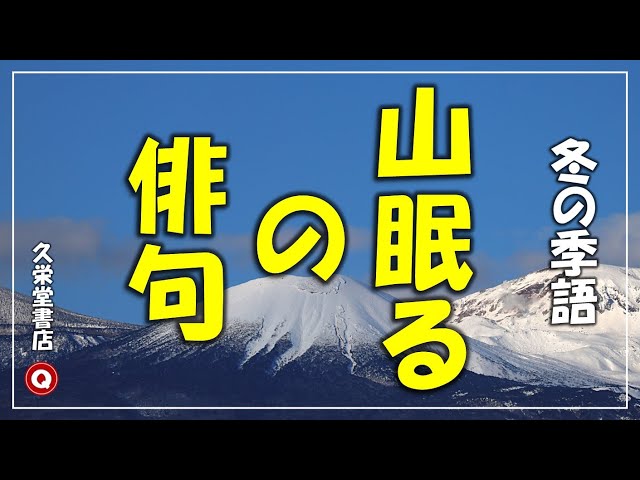
I feel the depth of Japanese thought in describing the mountains, whose trees have withered and fallen silent in winter, as “sleeping.” By calling it sleep, the winter mountain scenery can differ from person to person, and it seems to broaden the range of each person’s interpretation of the mountains.
It invites us to imagine our own winter mountains—places buried deep in snow or paths covered with dead leaves.
I hope older adults, too, will engage with the seasonal word while feeling the scenery and atmosphere of winter mountains from their memories.
It seems likely to spark reminiscences and open up conversations with older adults.

year’s endNEW!

What is your year’s end like? Or what was it like? Did you wrap up work around December 29 and leisurely prepare for the New Year, enjoying a calm close to the year? Or perhaps some of you spent the year-end still working through the holidays, hardly able to feel the New Year mood.
There’s a famous haiku by Masaoka Shiki: “Tarachine no areba zo kanashi toshi no kure.” It expresses the particular loneliness of year’s end that arises precisely because one has parents.
Whether busy, excited, or relaxed—why not try composing a haiku that reflects your own feelings?