

[For Seniors] Interesting spring haiku: introducing verses with striking kigo and unique expressions

When you sense the arrival of spring, don’t you feel like putting the scenes that catch your eye into words? Haiku is a uniquely Japanese art that expresses seasonal landscapes and feelings in the five-seven-five rhythm.
Among them, spring haiku are full of humorous works and seasonal words that make you chuckle.
For older adults especially, there’s a special joy in capturing the little “funny moments” and everyday “relatable things” from daily life in a verse.
In this article, we’ll introduce plenty of amusing haiku with a spring theme.
You can enjoy reading them—or try composing a verse of your own.
Please feel free to savor the world of haiku.
- [For Seniors] Haiku for March: Enjoying a Spring Moment with Famous Verses
- [For Seniors] Spring Haiku. Spring Activity
- [For seniors] Classic spring kigo: beautiful words that evoke the season
- [For seniors] April haiku. Exciting
- [For Seniors] Spring-themed quizzes: Fun trivia questions that help prevent dementia while you solve them
- [For Seniors] Haiku Introductions for May: A Fun Recreation Activity
- [For Seniors] Haiku for February: A Collection of Famous Verses Depicting the Transition from Winter to Spring
- [For Seniors] Spring Songs You'll Want to Hum: Feel the Season with Nostalgic Classics
- [For Seniors] Chuckle-Worthy Silver Senryu: Tips for Writing Them Humorously and Example Verses
- [For Seniors] Fun Spring Recreational Activities: A Collection of Games and Play Ideas
- [For Seniors] A Collection of Famous Autumn Haiku: Introducing Beautiful Verses That Evoke Vivid Scenery
- [For Seniors] Famous Haiku About January: Learn New Year Season Words and Tips for Composing
- [For Seniors] Winter Haiku: Introducing Beautiful Masterpieces by Famous Haiku Poets
[For Seniors] Funny Spring Haiku: Introducing verses with striking unique expressions and seasonal words (1–10)
Bush warbler—behind the willows, before the thicketMatsuo Bashō
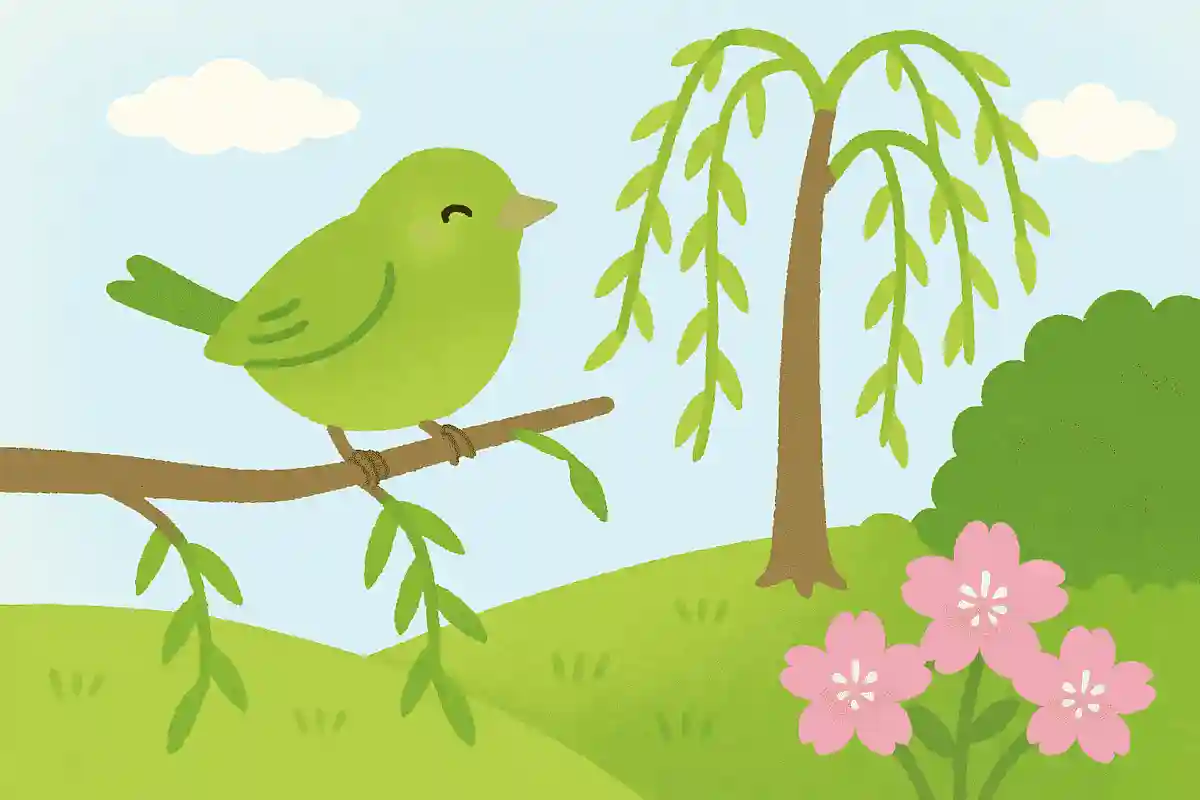
The bush warbler is a small bird that sings “hoo-hokekyo” when spring arrives, heralding the season’s coming.
Matsuo Basho watched as the bird, chirping all the while, flitted busily from behind a willow to the edge of a thicket.
The particle “ya” is a light sound that feels like a call to the bird’s voice.
Basho pauses his steps and, as if chasing the warbler, traces its movements with his eyes.
In a spring field surrounded by the green of willows and the trees of the thicket, one can picture the tiny bird darting here and there—busy yet brimming with life.
Readers, too, can savor a tranquil moment within the spring scene, accompanied by the warbler’s song.

Hometown—whichever way I look, the mountains smile.Masaoka Shiki
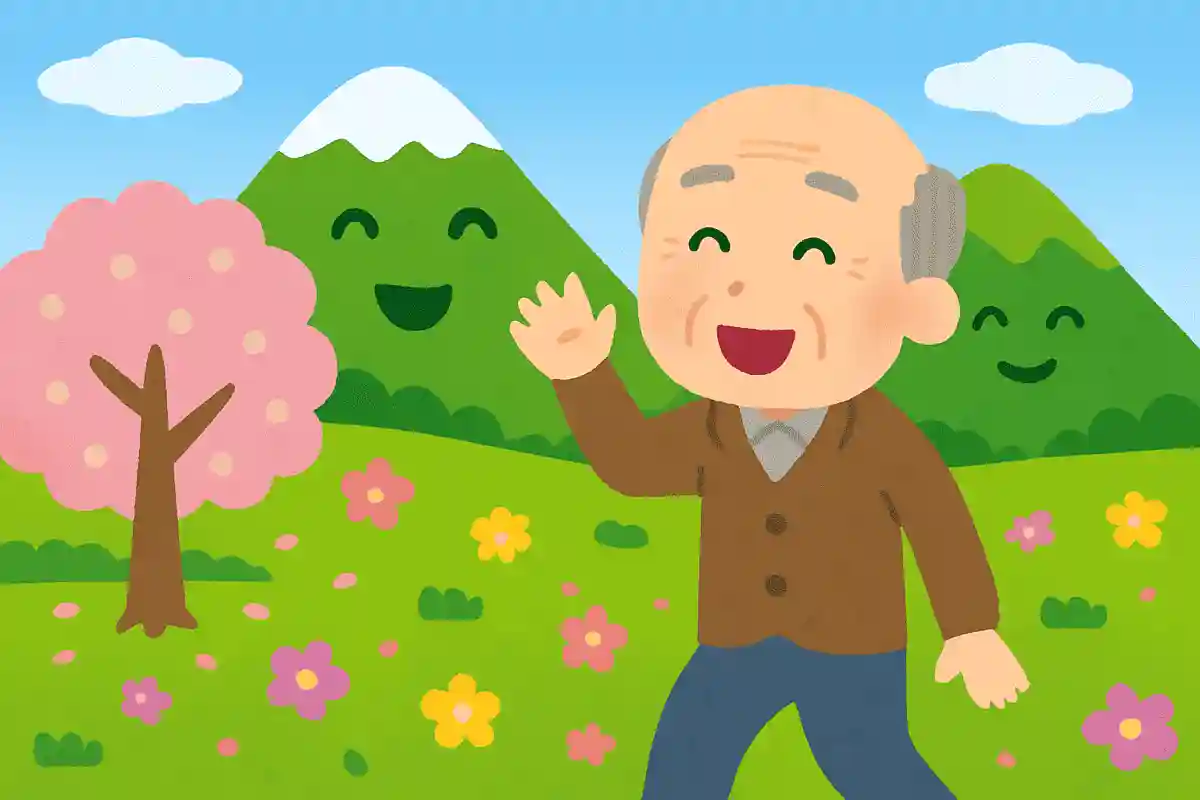
Let me introduce a work that evokes a bright spring scene.
This haiku is said to have been composed by Masaoka Shiki as he thought of spring in his hometown.
The seasonal word is “yamawarau” (“the mountains smile”), which conjures a warm landscape brimming with life, as if the grasses and flowers on the spring mountains are sprouting all at once.
The phrase “whichever way you look” tells us that you can feel the signs of spring no matter where you look.
Spring is a season that makes everyone’s heart dance; Masaoka Shiki, who composed this poem, surely felt the same.
It is a piece that makes you recall your hometown’s spring and gently close your eyes.

Bamboo shoots—are there beauties in Meguro or not?Masaoka Shiki
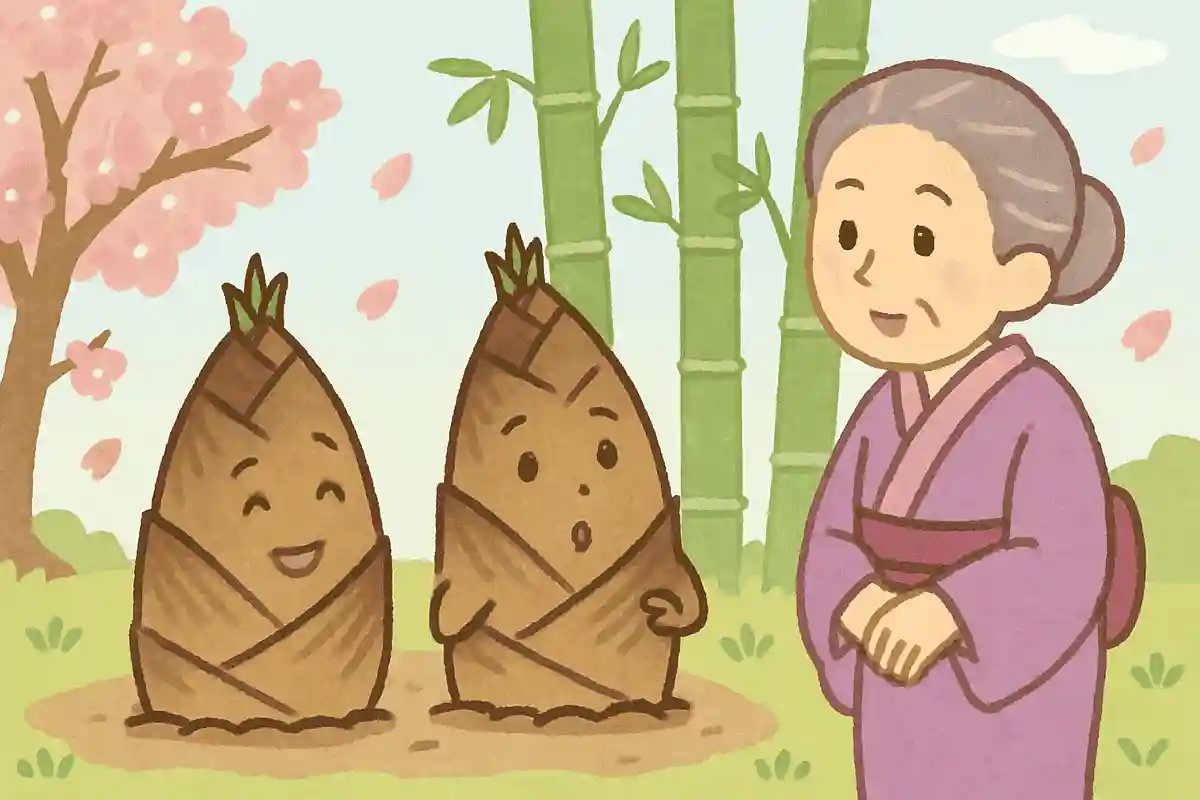
This is a haiku by Masaoka Shiki that captures the pleasures of spring.
The seasonal word is “bamboo shoot.” Bamboo shoots are the young buds of bamboo that poke up from the earth in spring, long enjoyed in Japan as a taste of the season.
The “Meguro” that appears in the verse is now part of Tokyo; at the time, it was famed for bamboo shoots.
Restaurants serving bamboo-shoot rice lined the area, and it’s said that the young women standing there were also part of the spring scenery.
Seeing these lively spring sights, Shiki let his heart play lightly: “There are bamboo shoots—and might there be beauties in Meguro, too?” The phrase “ari ya nashi” sounds like a gentle, friendly question—“Are they there or not?”—as if speaking to a companion.
It feels like a lighthearted spring journey that brings a quiet chuckle.
[For Seniors] Funny Spring Haiku: Introducing verses with strikingly unique expressions and seasonal words (11–20)
Spring sea— all day long, gently swaying, softly swaying.Yosa Buson
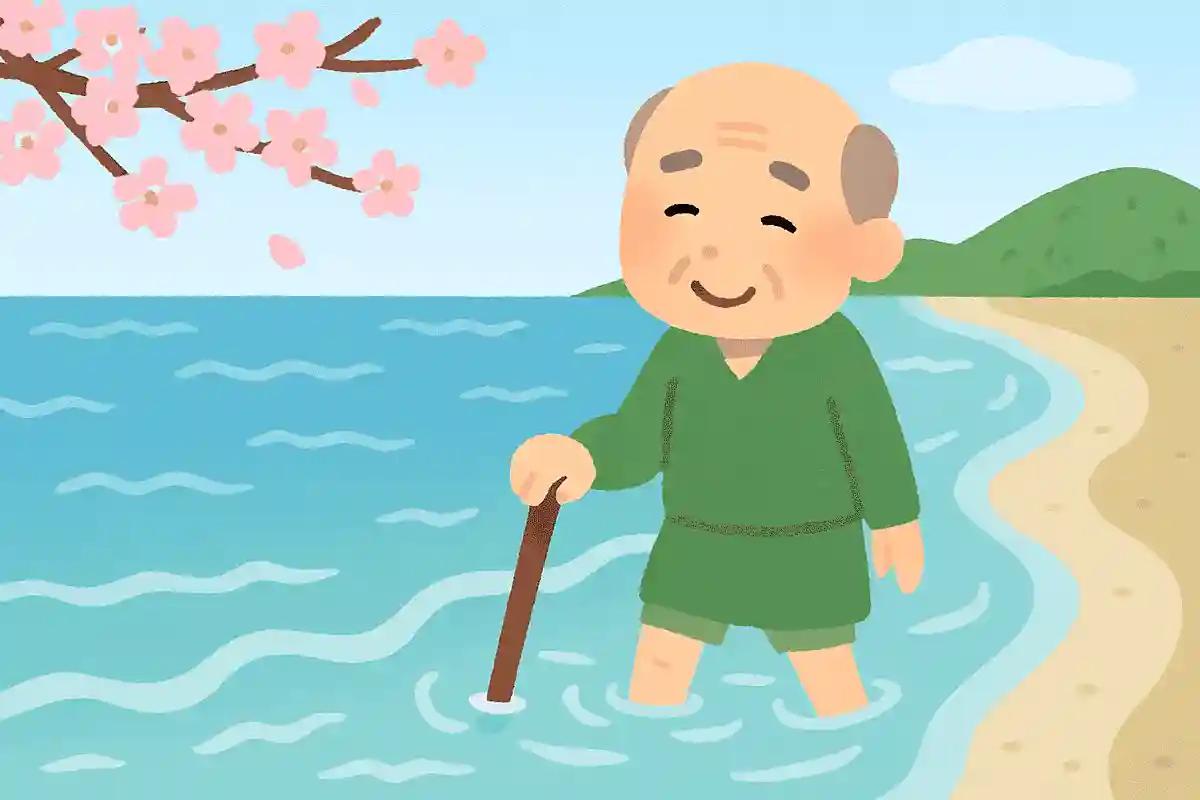
This is a haiku by Yosa Buson, a poet of the Edo period.
The opening words “spring sea” are a seasonal phrase that evokes the image of the calm sea in spring, conveying the season’s warmth and gentle light.
“Hinemosu” means all day long.
And the expression “notari notari” gently describes the slow, peaceful motion of waves lapping in and out.
When you read this verse, a scene comes to mind of the sea’s waves swaying leisurely all day on a balmy spring day.
Seeing this natural motion, Buson must have felt a serenity in which time flows slowly.
He put that feeling directly into words, creating a very gentle, tranquil poem.
Muttering gripes—the great pond snail’s discontent.Soseki Natsume
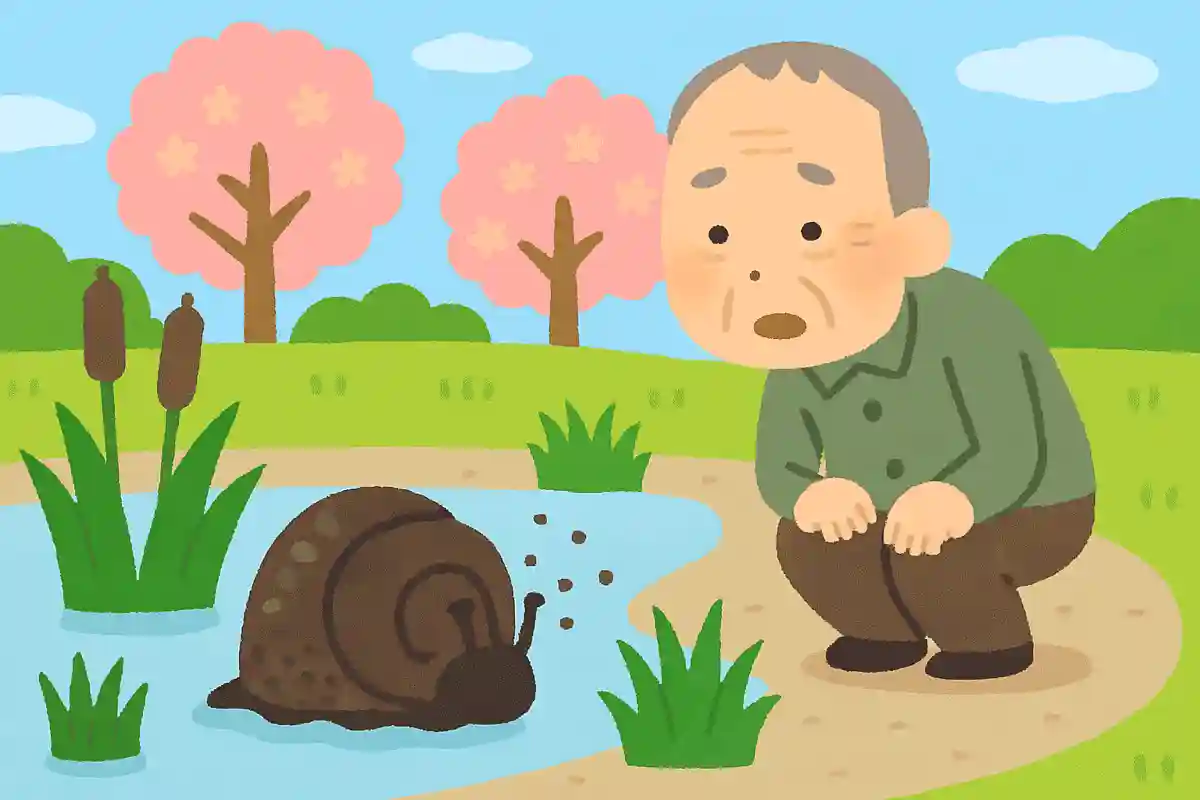
Here’s a verse by Natsume Soseki, a famous author of the Meiji era.
The spring season word in the poem is tanishi, a round freshwater snail found in rice paddies and ponds.
Watching the snail bubbling underwater, Soseki felt it was as if it were grumbling to itself.
Butsubutsu to describes the profusion of those little bubbles.
And fuhei kana conveys a gentle thought of “I wonder if it has something to complain about?” It’s a humorous, tender verse that delights in imagining human feelings from a small movement in nature.
Swaying, spring passes by—grasses of the field.Kobayashi Issa

This haiku uses the spring season word “yuku-haru” (departing spring) to capture the sense of spring gradually slipping away.
Kobayashi Issa watches the meadow grasses swaying softly in the wind and feels, “Perhaps spring is about to leave.” The phrase “yusa-yusa to” gently conveys the light, lulling motion of the grasses.
“Haru ga iku zo yo” sounds as if someone is saying that spring is quietly passing through the grassy field.
As you read it, you can picture the spring breeze across the meadow and the gentle waves of swaying grass.
This verse tenderly conveys the lingering traces of spring and the feeling of reluctance to let it go, leaving a soft, lasting impression.
In both hands, peach and cherry, and kusa-mochiMatsuo Bashō
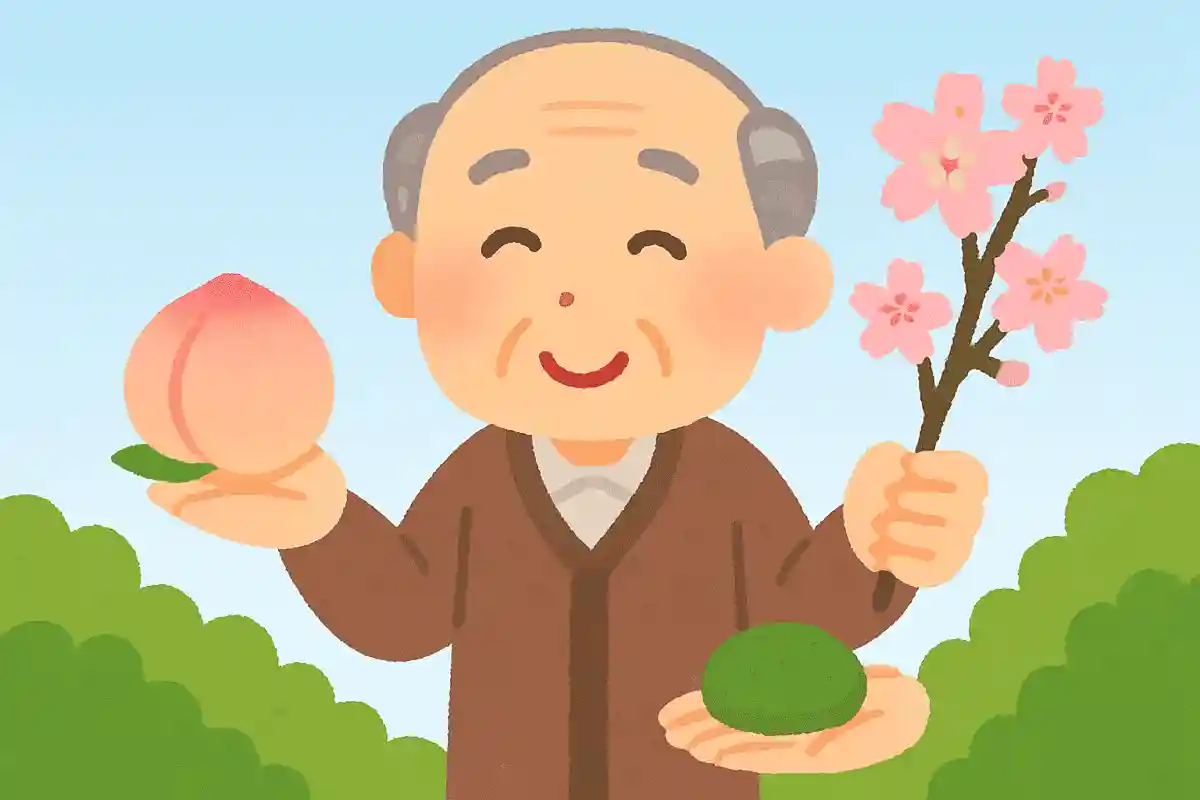
A verse in which Matsuo Bashō feels the delights of spring just as they are.
In spring, as he takes in the beauty of peach and cherry blossoms in full bloom, Bashō feels as if he is cradling spring’s fragrance and colors in both hands.
The kusa no mochi that appears here is a spring wagashi made with mugwort, embodying the very essence of spring in both scent and taste.
Kusa-mochi has long been eaten during spring festivals and seasonal observances and is a familiar seasonal word.
Reading this verse, you can sense spring’s joy gathering in your palms, as if savoring at once the blossoms’ hues and aromas and the gentle flavor of kusa-mochi—an uplifting, buoyant feeling.
Bashō gently wrapped the blessings of spring he saw and felt in simple, tender words.