

[For Seniors] Recommended for Brain Training! Nostalgic Showa-Era Quiz


From essential home appliances to warm family gatherings around the dinner table—and even everyday scenes that now feel nostalgic—the Showa era holds many memories that linger in our hearts.
Quizzes that awaken the memories of seniors who lived through that time not only stimulate the brain but also spark lively conversations with those around them, making for an enjoyable time.
In this article, we present memorable quizzes related to Showa-era culture, trends, and daily life.
Why not revisit Showa memories together with the seniors in your life?
- [For Seniors] Nostalgic quizzes that bring back memories! Showa-era entertainment and sports questions
- [For Seniors] Nostalgic! Showa-Era Quizzes Recommended for Reminiscence Therapy
- [For Seniors] Laugh-Out-Loud, Crowd-Pleasing! Fun Quiz
- [For Seniors] Brain Training! Recall Quiz Collection!
- [For Seniors] Trivia Multiple-Choice Quiz
- [For Seniors] Who Am I? Quiz: A Fun Set of Questions with Exciting Hints
- [For Seniors] Fun and Informative! Health Trivia Quiz
- [For Seniors] Lively two-choice trivia quiz. Handy to know and tidbits you'll want to share with others
- [For Seniors] Today’s recommended quiz. Daily brain-training quiz!
- [Brain Training] Lively Word Quiz for Seniors
- [For Seniors] Fun and Lively! Recommended Quiz Questions
- [For Seniors] Fun! Let’s Get Excited with Japan’s Number One Quiz
- [For Seniors] Fun Brain Training! A Collection of Tricky Quizzes You’ll Definitely Get Stumped By
[For Seniors] Recommended for Brain Training! Nostalgic Showa-Era Quiz (1–10)
In what year of the Showa era was the Tokyo Olympics, the first held in Asia, held?
The Tokyo Olympics, held in 1964 (Showa 39), saw Japanese athletes achieve great success.
It was also the first Olympics ever held in Asia.
Yoshinori Sakai, who was a track and field athlete at the time, served as the final torchbearer.
Although Sakai had been considered a candidate for Japan’s Olympic team, he was ultimately not selected.
He was chosen as the final torchbearer because he was born on August 6, 1945, the day the atomic bomb was dropped on Hiroshima.
His role embodied a tribute to the victims of the atomic bombing and a wish for world peace.

What were the shacks called where people who lost their homes in air raids lived temporarily after the war?
Japan is now a peaceful country, but it once experienced a major war.
After the war, some people who lost their homes in air raids lived in shacks known as barracks.
Without electricity, gas, or running water, they endured very inconvenient living conditions.
The original meaning of “barracks” is accommodations for stationed troops.
From there, the term came to refer to makeshift huts or simple, temporary buildings.
Around Osaka Station, barrack-lined streets remained until about 22 years after the war.
The first Winter Olympics held in Asia took place in 1972. Which city in Hokkaido hosted it?
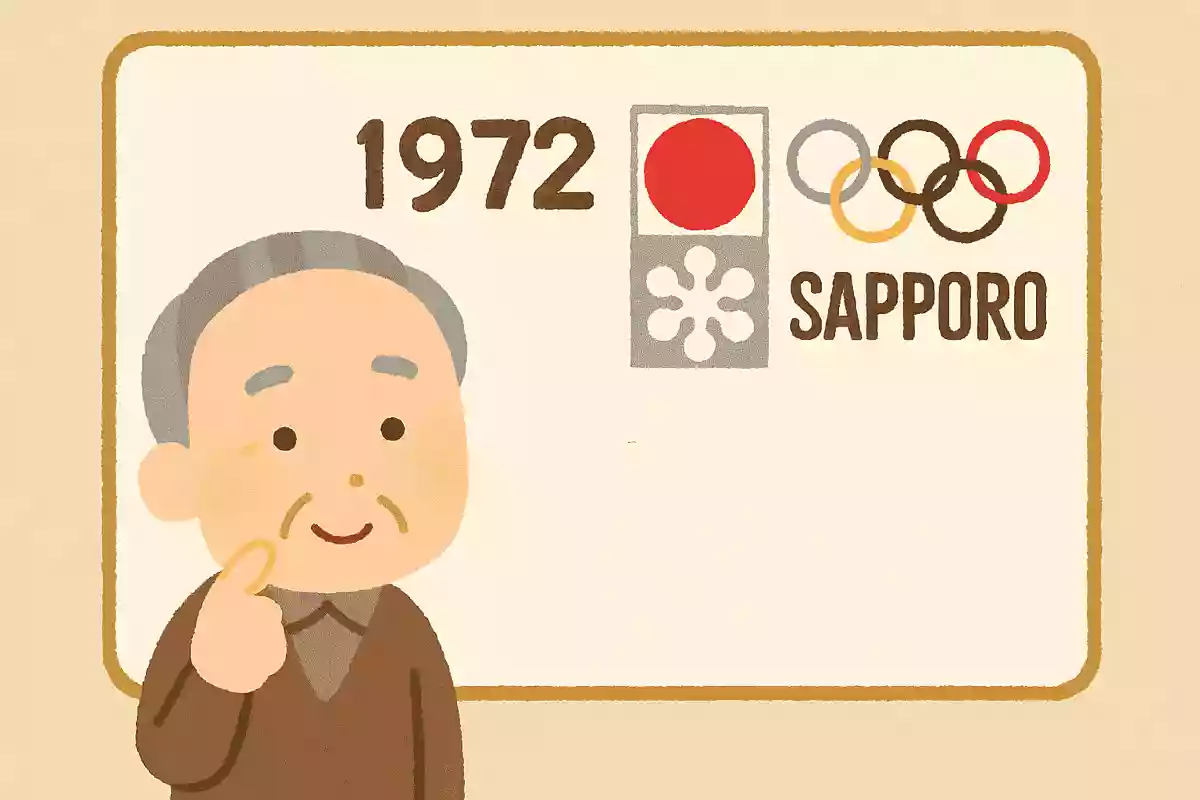
Speaking of Sapporo, there are many famous things like the Clock Tower, the Snow Festival, and ramen.
Among destinations in Hokkaido, it likely attracts a relatively large number of tourists.
Moreover, Sapporo hosted Asia’s first Winter Olympics in 1972.
It’s said that this was made possible because, from the Meiji through the Showa eras, skiing and skating had taken root among citizens as winter sports.
In fact, the Winter Olympics were supposed to be held even earlier than 1972.
Sapporo had been selected to host the 5th Winter Olympics in 1940, but the government returned the hosting rights due to the intensification of the Second Sino-Japanese War.
The “Order for the Collection of 〇〇 Items” issued in August 1941 (Showa 16). What was collected?

Japan once had a history of fighting major wars.
Wars require weapons, of course, and through repeated conflicts Japan began to run short of them.
As a result, on August 30, 1941 (Showa 16), the Metal Collection Ordinance was promulgated.
Metals owned by both the government and the public—such as iron, copper, and their alloys—were gathered.
It’s said that bronze statues in parks and school gates were also contributed.
The statue of Hachiko was included as well and was turned in in 1944 (Showa 19).
However, as public calls to rebuild Hachiko grew, the statue was reconstructed in 1948.
What is the term for the 57-month-long economic boom during Japan’s period of rapid economic growth, spanning from November 1965 to July 1970?
The Izanagi Boom is the popular name for the period of strong economic growth that lasted from November 1965 to July 1970 during Japan’s era of rapid economic expansion.
There were changes in citizens’ lives, such as rising income levels.
At the same time, major environmental pollution issues also became topics of concern.
With industrialization advancing, problems arose such as air and water pollution from factory emissions and effluents, as well as noise.
Excessive pumping of groundwater for industrial use caused pollution-related damage like land subsidence, which grew into a social issue.
Incidentally, the name “Izanagi Boom” comes from Izanagi-no-Mikoto, the deity of creation appearing in Japanese mythology.
What is the name of the structure that became the symbol of the Japan World Exposition held in Osaka in 1970?
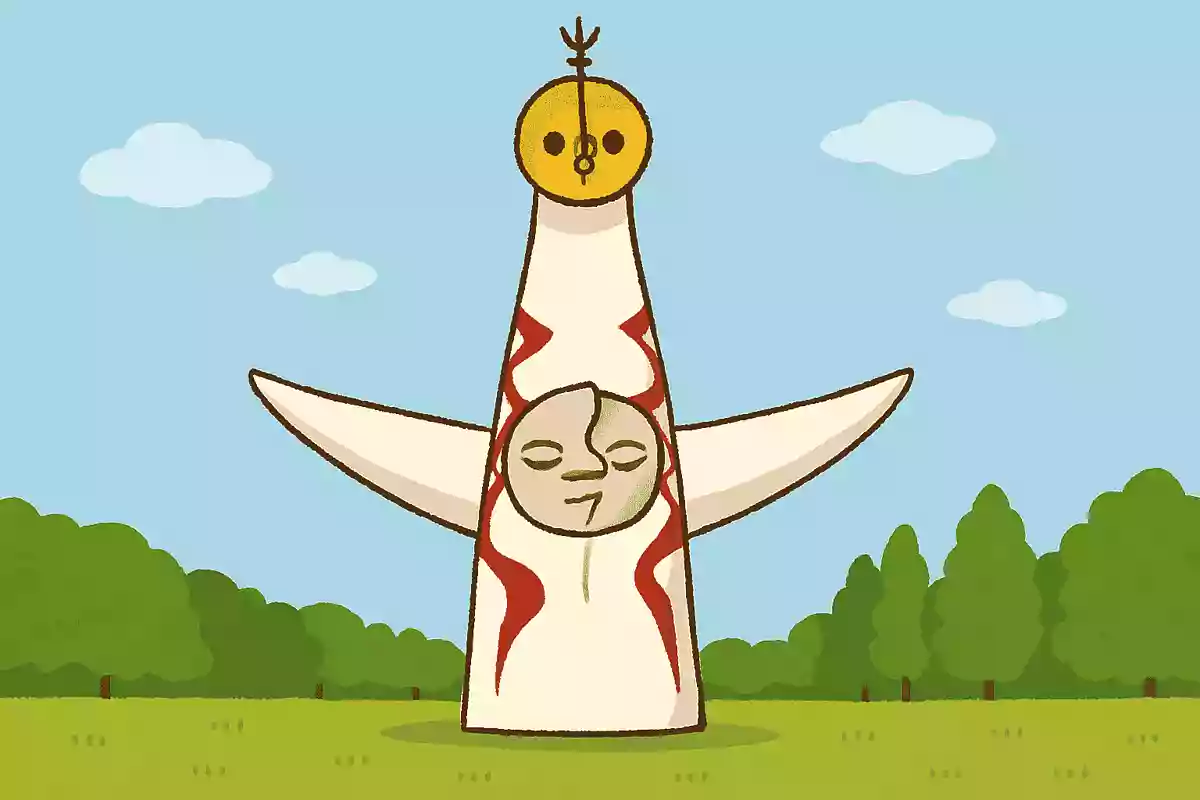
The Tower of the Sun, designed by artist Taro Okamoto, became the symbol of the Japan World Exposition held in 1970.
It’s a distinctive tower with a large white body and three faces—two on the front and one on the back.
The face at the top is called the Golden Face, the one on the front is the Sun Face, and the one on the back is the Black Sun.
Many older people may have seen the Tower of the Sun.
Its impactful design captivated many at the time.
Although it was originally scheduled to be dismantled after the Osaka Expo closed, a large number of requests for its preservation led to the decision in 1975 to preserve it permanently.
Showa Era Entertainment, Sports, and History Quiz (1–10)
Intro quiz for seniorsNEW!

Let’s enjoy an intro quiz with Showa-era hit songs! This version is for beginners, and about 15 seconds of the intro will play.
If you know the answer, please say the song title.
There are 30 questions, so you can enjoy it as a recreational activity.
Thinking about which song it is makes for good brain training, and the nostalgic intros make it a perfect game for seniors.
It’s also a chance to test your knowledge and memory, so give it a try!
