

[For Seniors] Trivia Quiz & Fun Facts for Everyday Life

Quizzes that are not only useful in everyday life but also enriching for general knowledge.
They’re easy to play, making them perfect for killing time.
This time, we’re introducing light, fun trivia quizzes for seniors.
If you know the answers to these quizzes, you can share them as knowledge with those around you.
Of course, they also help develop thinking and concentration skills, making them great brain training.
Get excited with quizzes,
show off fun facts, and naturally pick up knowledge as you play—this value-packed quiz collection has it all!
Give it a try!
- How much do you know? Trivia quiz for seniors that’s full of surprisingly unknown facts
- [For Seniors] Fun and Informative Trivia Quiz Collection
- [For Seniors] Fun and Informative! Health Trivia Quiz
- [For Seniors] Recommended Trivia Quizzes & Fun Facts for November
- [For Seniors] Fun and Informative! Trivia and Quizzes Introduced
- [For Seniors] Lively two-choice trivia quiz. Handy to know and tidbits you'll want to share with others
- [For Seniors] Sports Trivia Quiz & Fun Facts. Easy and Entertaining
- [For Seniors] Surprisingly Unknown! General Knowledge Quiz
- [For Seniors] Fun Riddles That Stimulate the Brain
- [For Seniors] Fun! Let’s Get Excited with Japan’s Number One Quiz
- [For Seniors] Trivia Multiple-Choice Quiz
- [For Seniors] Perfect Brain Training! Fun Trivia
- [For Seniors] Introducing Trivia Quizzes and Fun Facts About December
[For Seniors] Trivia Quiz & Useful Tidbits for Everyday Life (51–60)
Japan’s three most famous teas are Uji tea, Sayama tea, and what is the third tea?
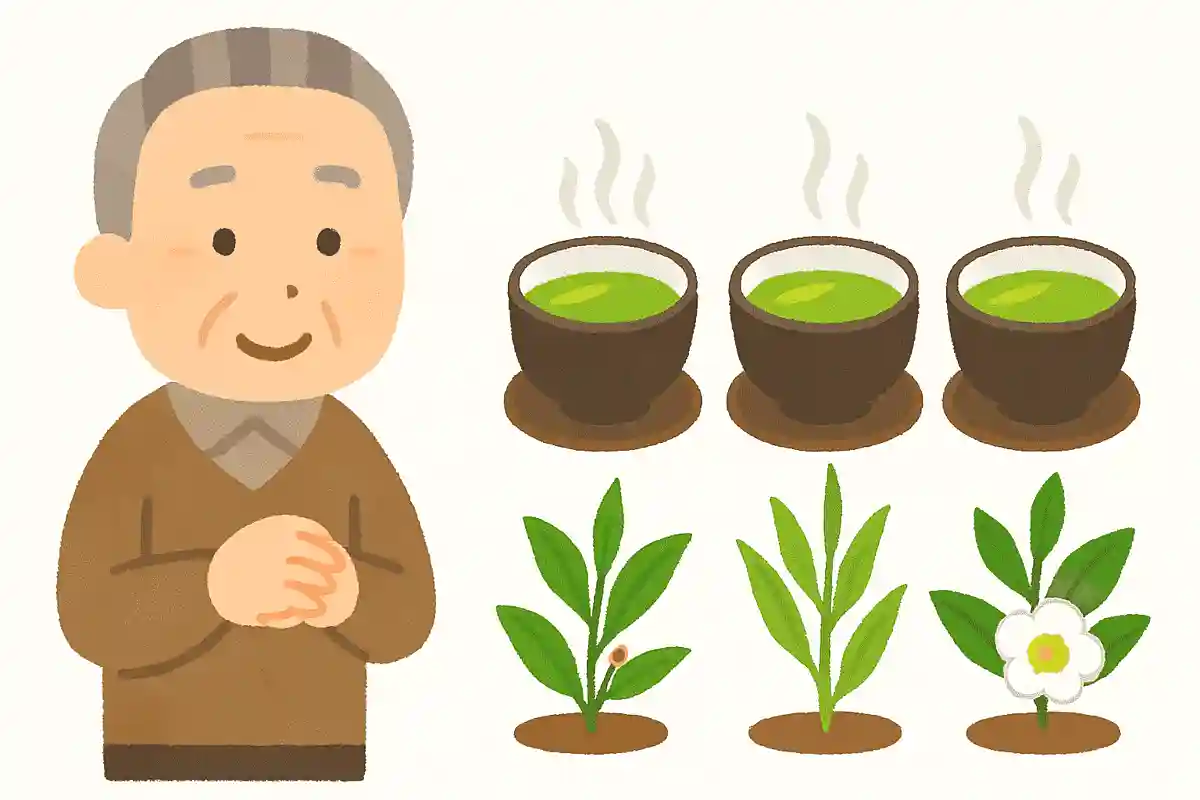
Tea is cherished throughout Japan, and there are regions renowned as production areas.
Among teas produced in these famed regions, the three most celebrated are known as the “Three Great Teas”: Uji tea, Sayama tea, and—what is the third one? Since these are teas from the three major production regions, you might figure it out just by thinking of a place strongly associated with tea.
The answer is Shizuoka tea from Shizuoka Prefecture.
As the tea-plucking song passes down: “In color, Shizuoka; in aroma, Uji; and in taste, Sayama.” It’s a historic tea, also known for being a favorite of Tokugawa Ieyasu.

The old lunar month name for May, “Satsuki,” originates from rice planting.
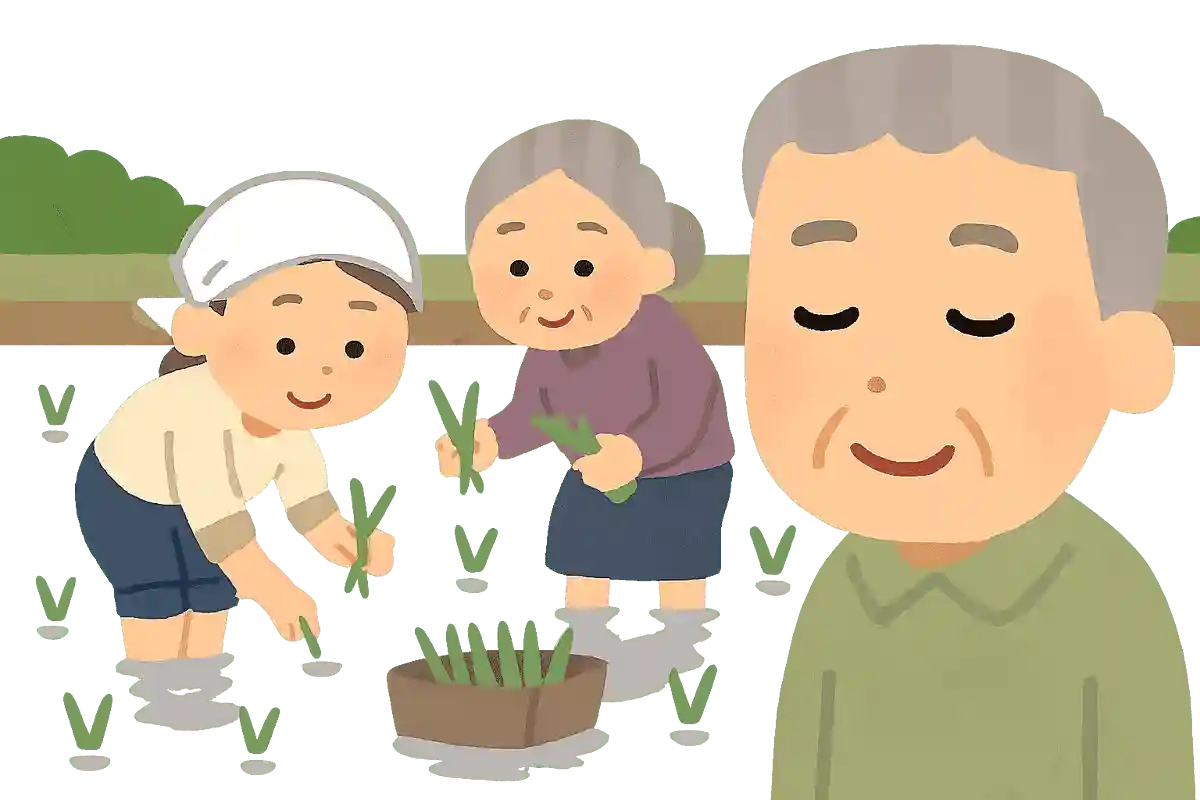
In the old lunar calendar, May is called Satsuki, right? There are various theories about the origin, but it’s said that the “sa” in Satsuki refers either to the rice field deity or to the rice offered to that deity.
There’s also a theory that it comes from “Sanaezuki,” the month of planting young rice seedlings (sanae), which was shortened to Satsuki.
It seems Satsuki is indeed related to rice planting.
Other names for May include Samidarezuki (Month of Early Summer Rains), Tsukimizukizuki (Month When the Moon Is Not Seen), and Umeno Irozuki (Month of Plum Colors), among others.
It could be fun to look up the various names for May together with older adults.

The meaning of rose flowers changes depending on their color and the number you give.
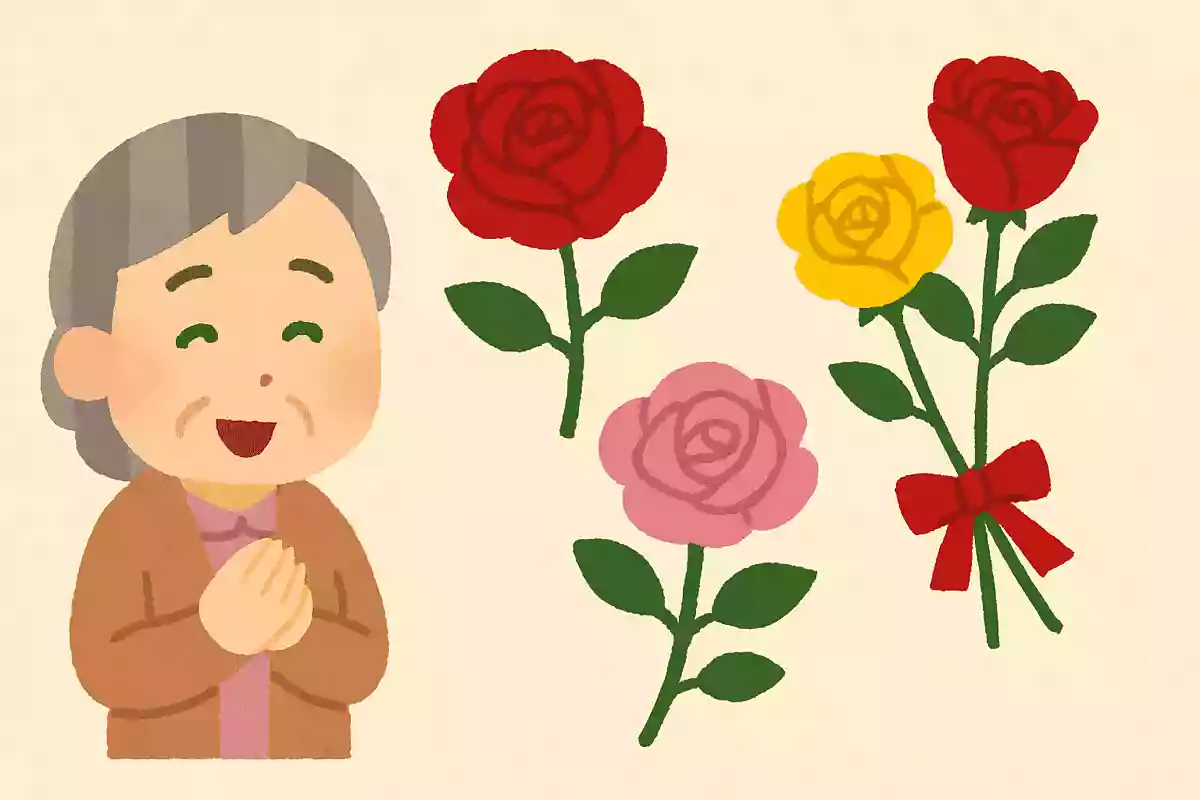
It seems that some roses are at their best from May to June.
Among older adults who enjoy gardening, some may even have rose bushes in their gardens.
Roses come in vivid colors like red, yellow, and white.
Interestingly, the meaning of roses in the language of flowers changes depending on their color and the number you give.
People often give roses on special occasions such as birthdays, anniversaries, or proposals.
When you give them, be sure to check both the color and the number.
By the way, 108 roses are said to be suitable for a proposal, conveying a message of an eternal vow to your beloved.
Because it is said that taking a shobu (iris) bath on the Boys’ Festival (Tango no Sekku) wards off evil spirits.
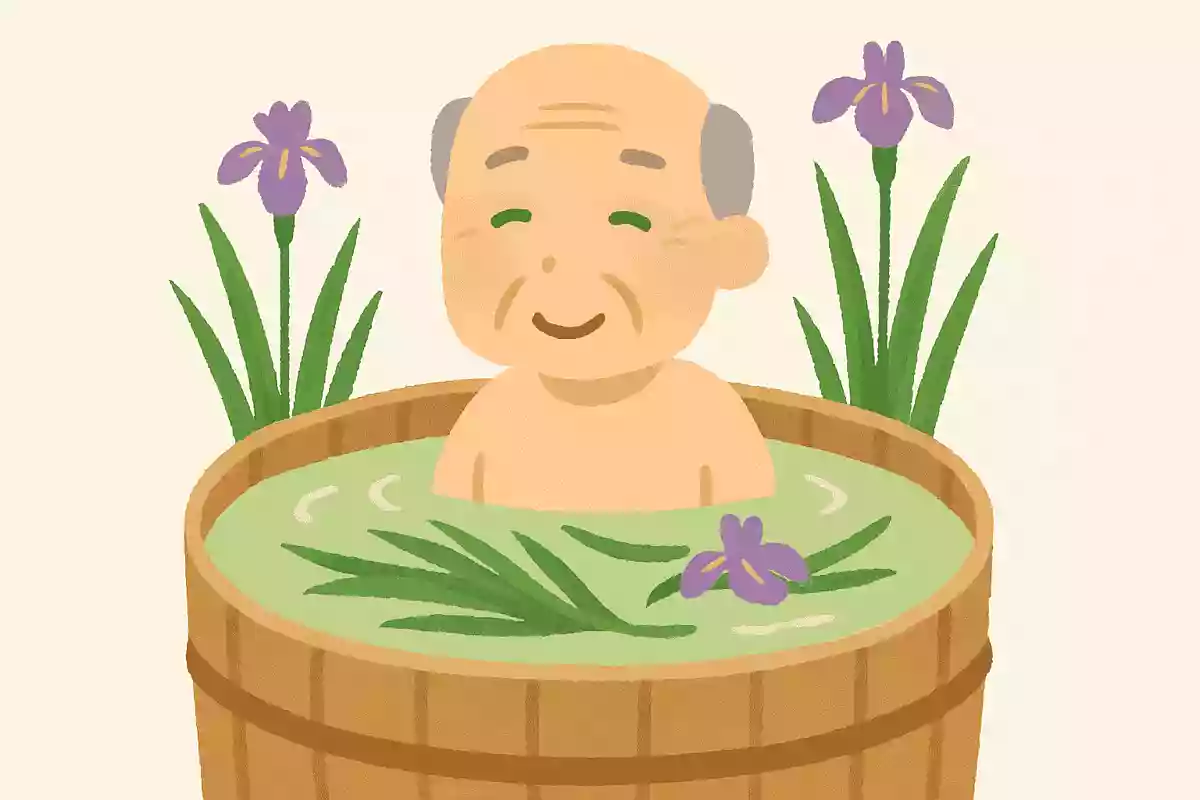
Did you know there is a tradition of taking a shobu-yu (iris bath) on Children’s Day? Some elder care facilities may also practice shobu-yu.
This custom originated in China, where May 5—the date of Children’s Day—fell around the beginning of the rainy season.
To ward off misfortune and epidemics that were believed to spread more easily during the rainy season, people held Dragon Boat Festival rituals.
It is said that the custom of the shobu-yu bath also began then, placing bundles of the leaves and roots of shobu, whose strong fragrance was believed to repel evil spirits, into the bath.
About 20% of elementary school students wear uniforms.
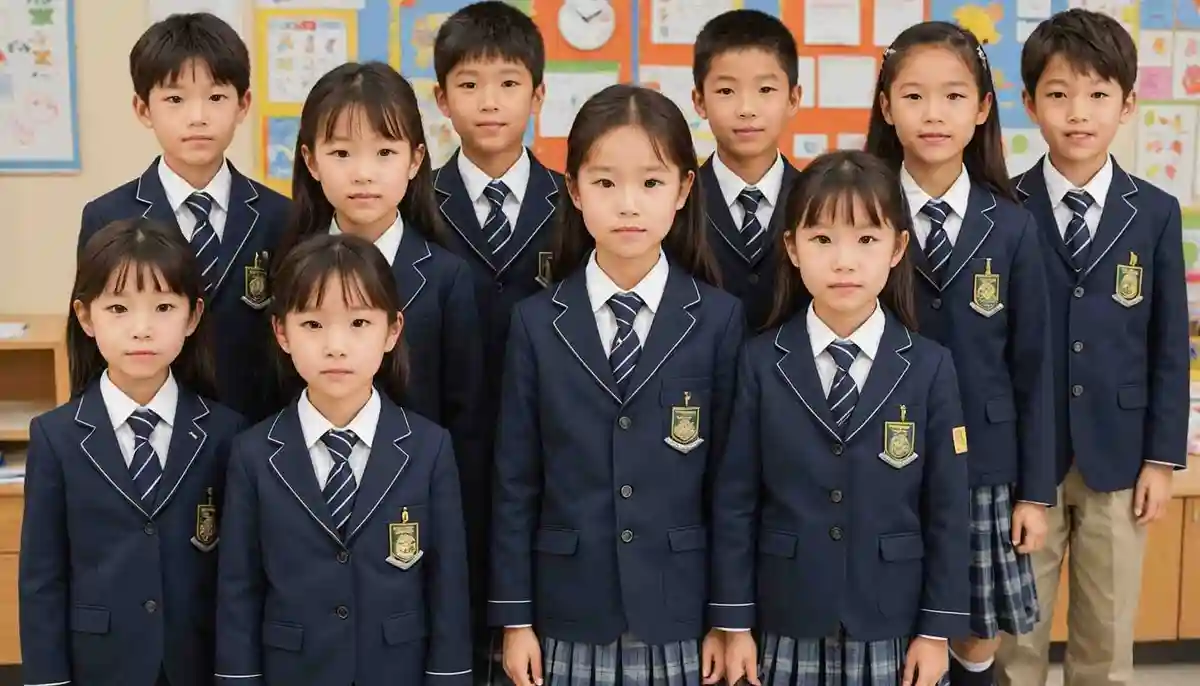
It’s said that about 20% of elementary school students wear uniforms.
The wearing rate varies by region, with higher rates in western Japan, Shikoku, and the Chugoku region.
Some parents point out benefits of having uniforms, such as not having to worry about what to wear and avoiding differences caused by casual clothes.
However, since elementary school children are in a period of rapid growth, uniforms can quickly become too small.
Replacing them can also be costly.
Incidentally, uniforms were introduced in elementary schools during the Meiji era.
The topic of uniforms also seems likely to lead into discussions with older adults about what they wore in their own elementary school days.