

[For General Audience] Little-Known Trivia and Fun Facts About Hay Fever


Every year when pollen season arrives, many people struggle with sneezing, a runny nose, and itchy eyes.
Hay fever, which afflicts many Japanese people, is no longer someone else’s problem.
Surprisingly, this very familiar condition hides plenty of little-known trivia and fun facts that may make you say, “Really?” In this article, we’ve gathered a wide range of general-interest trivia and tidbits about hay fever.
Many of them are useful for everyday prevention just by knowing them, so whether you suffer from hay fever or not, be sure to check them out!
- [For General Audience] Little-Known Trivia and Fun Facts About Hay Fever
- Useful right away in daily life! Surprising trivia and handy tips
- Surprisingly unknown? A fun health trivia quiz that will make you want to try it
- Recommended in March! A collection of surprising, little-known trivia that elementary school students will want to share
- Trivia about cherry blossoms: a roundup of fun facts to make springtime hanami even more enjoyable
- How many can you solve? Test your spring knowledge with a trivia quiz about March!
- Trivia about hydrangeas. A collection of fun facts related to ajisai (hydrangeas).
- [Great for speeches] Trivia and fun-fact quizzes recommended for morning assemblies
- Rainy season trivia roundup: fun facts you'll want to share with someone
- A roundup of insect trivia: fun facts you'll want to share
- Lesser-known facts about Mother’s Day that might surprise you—tidbits you’ll want to share with someone
- Will you like May even more once you know? Fun May trivia elementary schoolers should know
- Fireworks Trivia & Fun Facts Summary
[For General Audiences] Lesser-Known Trivia & Fun Facts About Hay Fever (21–30)
There are records indicating symptoms believed to be hay fever in the 1800s BCE.
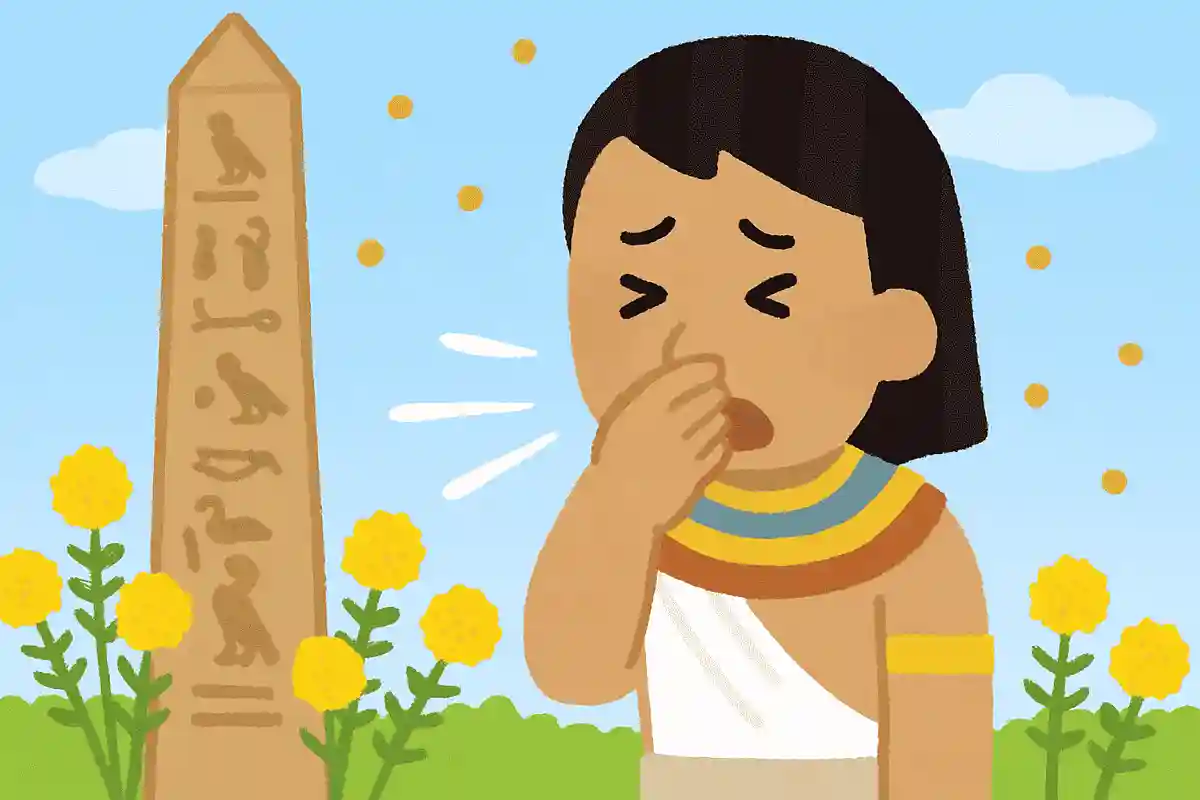
Today, cedar and cypress are known causes, but it’s believed that people have suffered from symptoms like sneezing, a runny nose, and itchy eyes since ancient times.
Babylonian records from the 1800s BCE contain descriptions of seasonal symptoms resembling hay fever, showing that pollen allergies are not just a modern problem.
Thinking that people in ancient times also struggled with changes in their health while living in harmony with nature really brings the history of hay fever to life, doesn’t it?

Research on “cedar pollen rice” is progressing to alleviate hay fever.
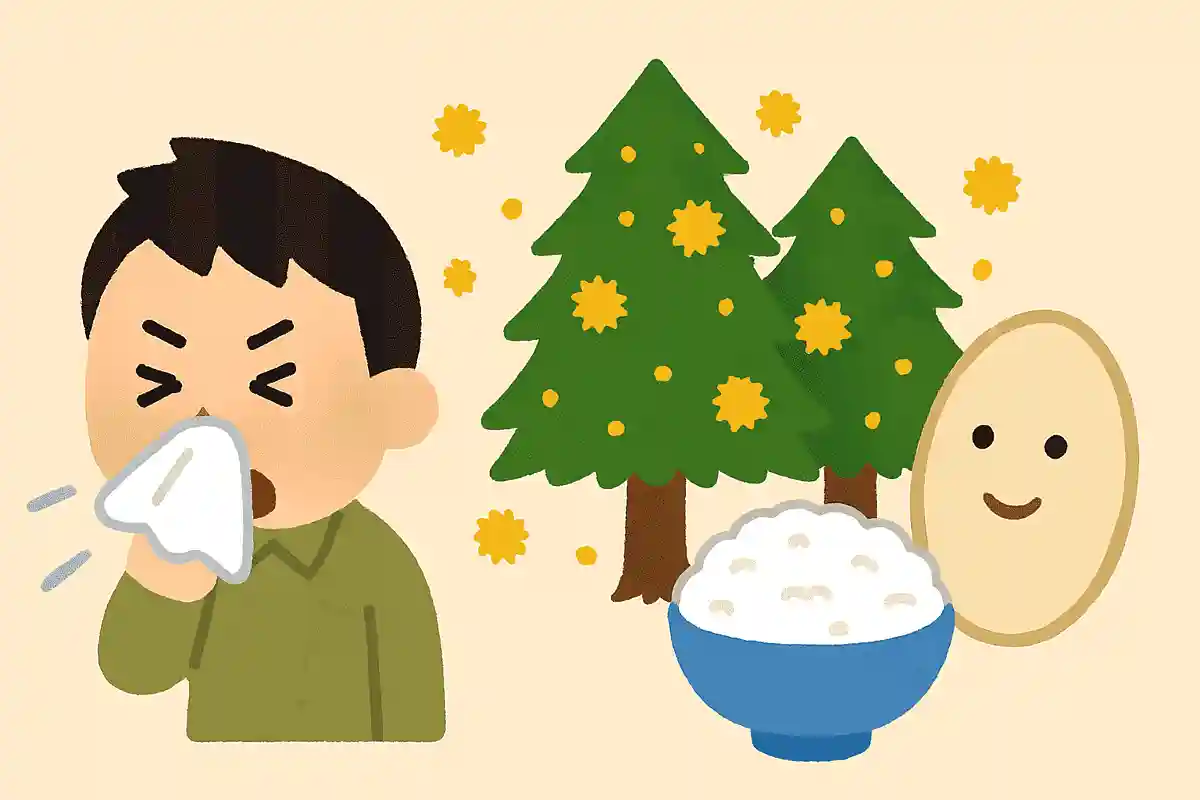
Development is underway on a pharmaceutical using “cedar pollen rice” to alleviate hay fever, which is sometimes called a national disease.
Cedar pollen rice is genetically modified to contain part of the substances that cause hay fever.
The idea is that by continuing to consume small amounts, people can build tolerance to pollen and become less likely to have allergic reactions.
Research actually began in fiscal 2000, but due to issues with cost and shelf life, the original plan to popularize it as packaged cooked rice was abandoned, and practical application as a pharmaceutical is now being pursued.

Hay fever can get worse due to stress.
It is said that stress can disrupt the autonomic nervous system and potentially worsen hay fever.
In addition to stress, overwork, lack of sleep, and the consumption of alcohol and tobacco are also considered causes.
The pollen season inevitably overlaps with a busy time of year.
Changes in living environments and relationships that come with a new lifestyle can easily put stress on both mind and body.
While it’s important to visit a clinic if you feel your hay fever is getting worse, try to consciously rest and refresh yourself as well.
Hay fever in English is “hay fever.”
There are various ways to express it in English, such as “pollen allergy” for an allergy to pollen, “seasonal allergy” for allergies that occur seasonally, and “pollinosis” as the medical term for hay fever.
The expression most commonly used is “hay fever,” as in “I have hay fever.” Hay means “dried grass,” and the name is said to have originated from allergy symptoms caused by hay.
There must have been quite a few people with hay allergies.
The term hay fever is also used for the cedar pollen allergies that are well known in Japan.
The mechanism by which hay fever develops is the “seesaw theory.”
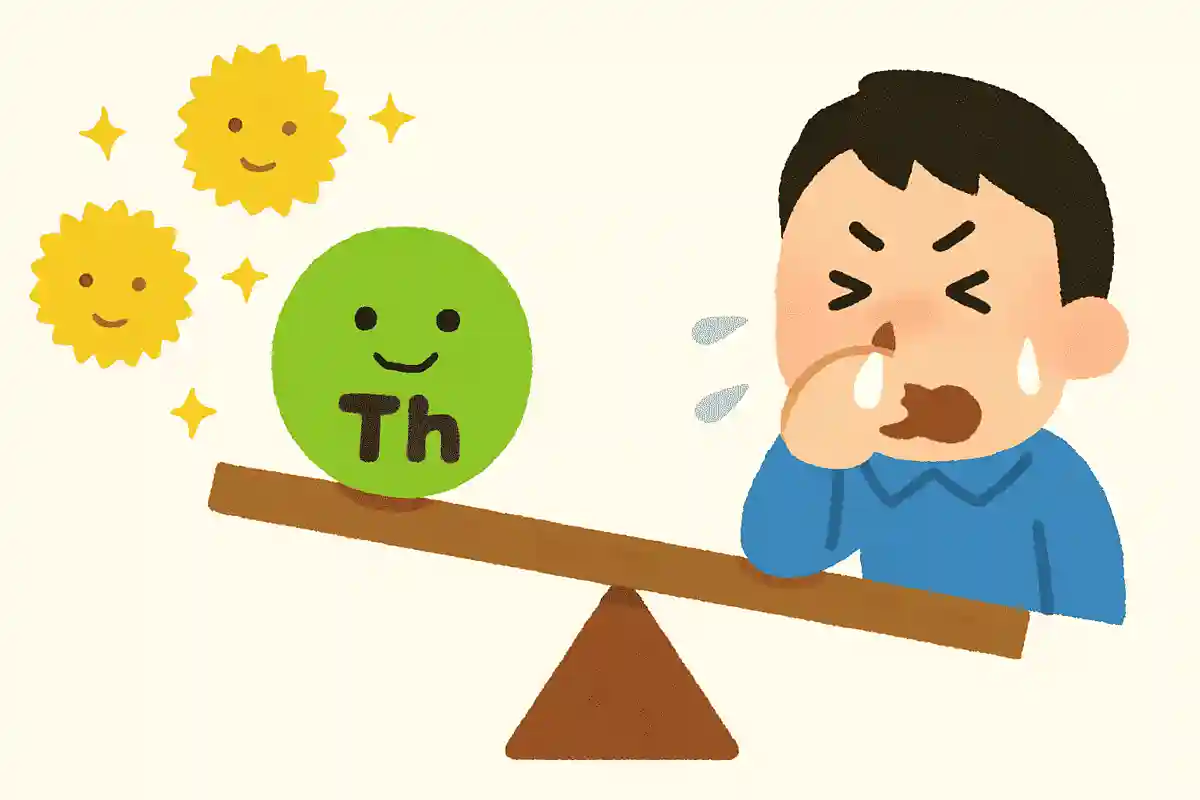
There’s a well-known “cup theory” that says accumulated pollen taken into the body builds up until it overflows and triggers hay fever.
However, if that were true, we wouldn’t be able to explain the treatment approach of ingesting small amounts of pollen to alleviate symptoms.
That’s why the currently mainstream idea is the “seesaw theory.” The seesaw theory holds that when immune strength declines, more pollen enters the body, and that increased load triggers hay fever.
In other words, balancing the immune system becomes a strategy for addressing hay fever.
Cold infections tend to worsen hay fever symptoms.
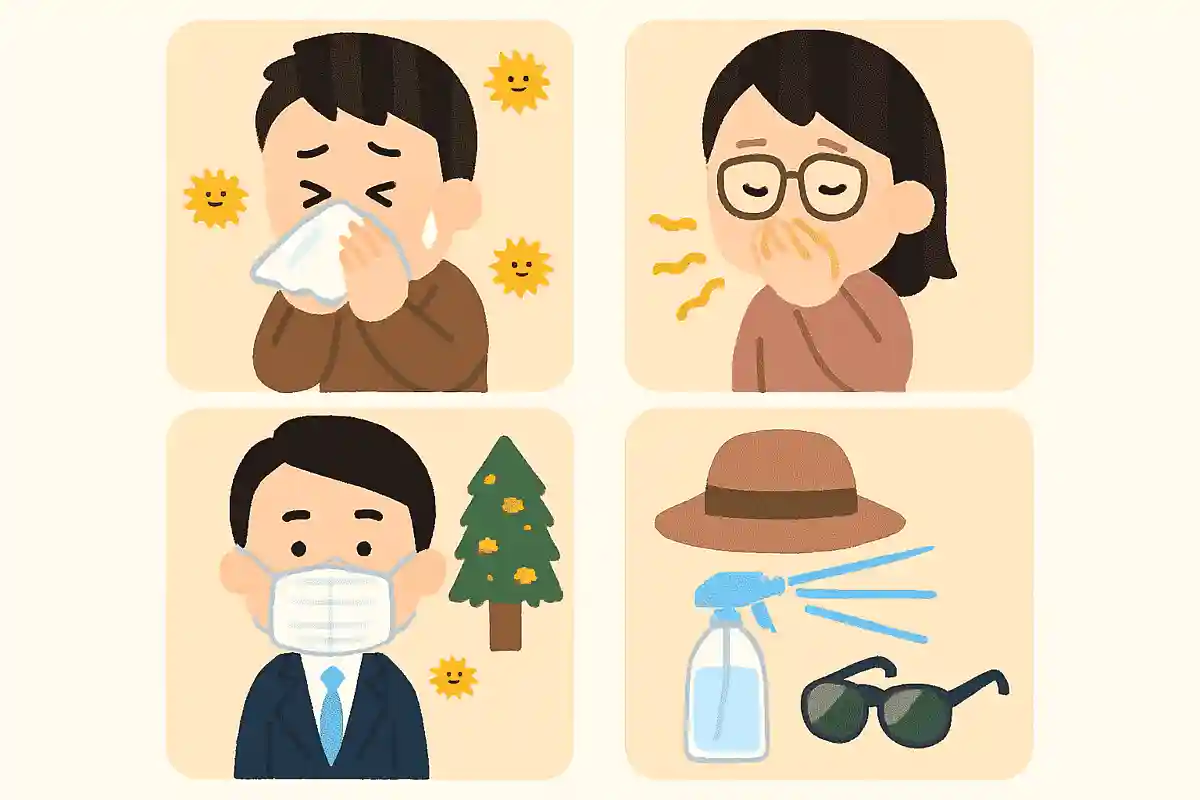
It’s said that catching a cold can make hay fever symptoms worse.
The reason is that when you catch a cold, the mucous membranes in your throat become sore and more sensitive.
Conversely, when hay fever has already irritated your mucous membranes, you’re also more likely to develop cold symptoms.
So if you have hay fever, take care of your health on a daily basis to avoid catching a cold.
In the worst case, it can progress to cough-variant asthma.
As preventive measures, wearing a mask to avoid inhaling pollen and boosting your immunity with remedies such as Kampo (traditional Japanese herbal medicine) are effective.

There is hay fever caused by grape pollen.
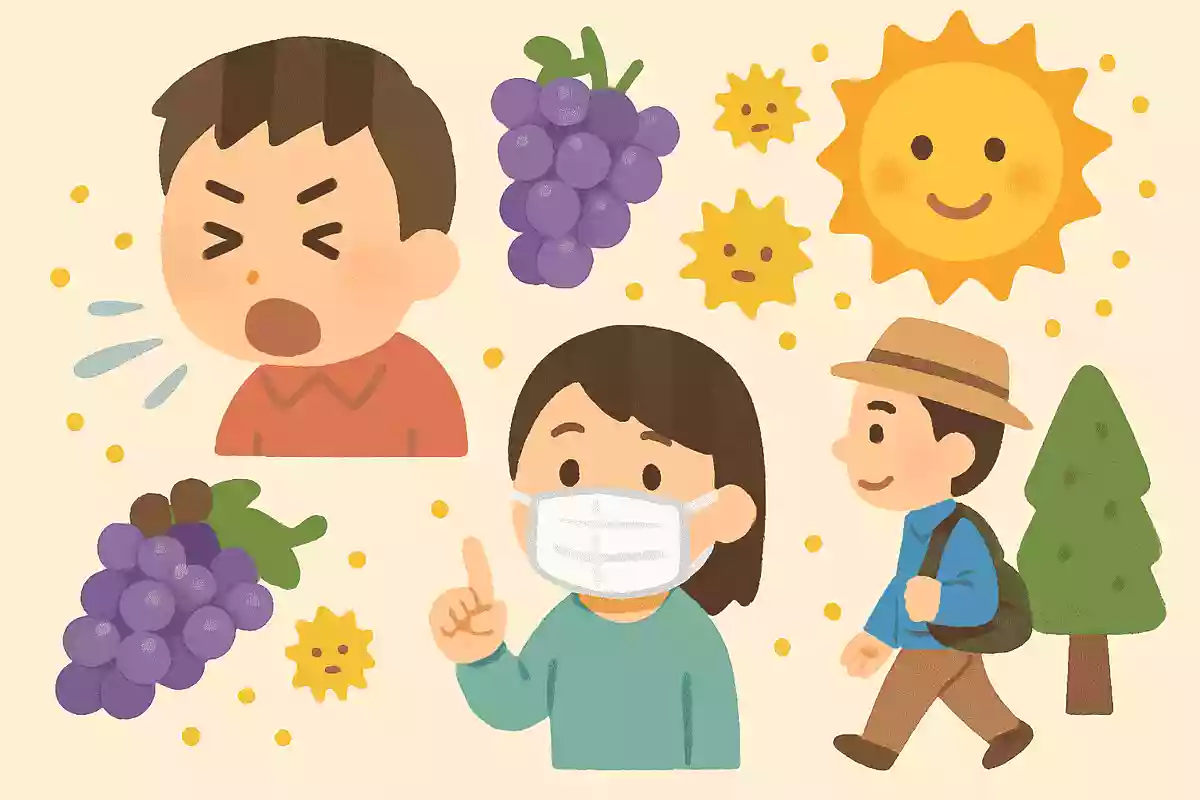
Hay fever is often associated with pollen from trees used for lumber, such as cedar and cypress, but fruits and other plants also release pollen as they grow, so pollen allergies caused by them exist as well.
When you hear about someone who grew grapes developing hay fever symptoms, it makes you cautious about plants in general, doesn’t it? That’s why it’s recommended to learn not only about the plants commonly known to cause hay fever but also about related factors.
Hay fever is also linked to oral allergy syndrome, so getting tested could help keep you safe.
