

[For Elementary School Kids] A New Year’s Quiz Everyone Can Enjoy! Learn surprising fun facts with multiple-choice questions


When it comes to New Year’s in Japan, there’s so much to enjoy—osechi cuisine, New Year’s money (otoshidama), and the first shrine visit of the year (hatsumode).
But why is there a mandarin orange placed on top of kagami mochi? And what should you do after drawing an omikuji fortune? Have you ever been stumped when your child asked you about these unexpected New Year’s tidbits? Here, we’ve gathered a collection of New Year-themed quizzes that both kids and adults can enjoy together.
From the New Year deity (Toshigami-sama) to the proper timing of the first dream (hatsuyume) and the origins of ozoni soup, this is full of Japanese traditions you might think you know—but don’t.
Challenge yourselves as a family over the New Year holidays and savor Japanese culture more deeply!
- Let's get excited with a New Year quiz! General questions about the Japanese New Year
- [For Kids] January Trivia Quiz & Fun Facts: Learn About the New Year in a Fun Way
- Fun facts you’ll want to share! January trivia and tidbits special
- Fun quizzes for elementary school kids: a collection of questions everyone can enjoy together
- Easy Riddles for Elementary School Students
- [For Kids] December Trivia Quiz & Fun Facts! Learn about seasonal events and traditions!
- [Simple and Fun] New Year’s Quizzes Recommended for Seniors
- [For Elementary School Students] Exciting Christmas Quiz! Fun and Educational Questions
- [For Kids] Today’s Quiz Roundup. Let’s play quizzes about today! [May 2026]
- [Trick Quiz] Quiz Questions That Excite Everyone from Kids to Adults
- So interesting you’ll want to tell someone! December Trivia & Fun Facts Special
- [For Seniors] Brain-training quizzes for January: Let’s have fun with New Year and winter trivia
- [Fun!] Quizzes to Liven Up a Christmas Party
[For Elementary School Students] A New Year Quiz Everyone Can Enjoy! Learn Fun Little-Known Facts with Multiple-Choice Questions (21–30)
What is the New Year’s game played with a shuttlecock and a battledore called?

- Battledore and shuttlecock
- Feather Toss
- Hanetsuki
See the answer
Hanetsuki
Hanetsuki is a traditional New Year’s game in which players hit a shuttlecock, made by attaching feathers to the seed of the soapberry tree (mukuroji), with wooden paddles (hagoita). Originally, it was a game meant to ward off evil—“to brush away misfortune”—and by using mukuroji, which carries the meaning “children do not fall ill,” people prayed for a year of good health and protection from malevolent spirits. There are two types of hanetsuki: oibane, where two players face each other and rally the shuttlecock, and agebane, where a single player hits it upward, often competing for the number of hits. Give it a try!

When is a dream called the first dream of the year (hatsuyume)?
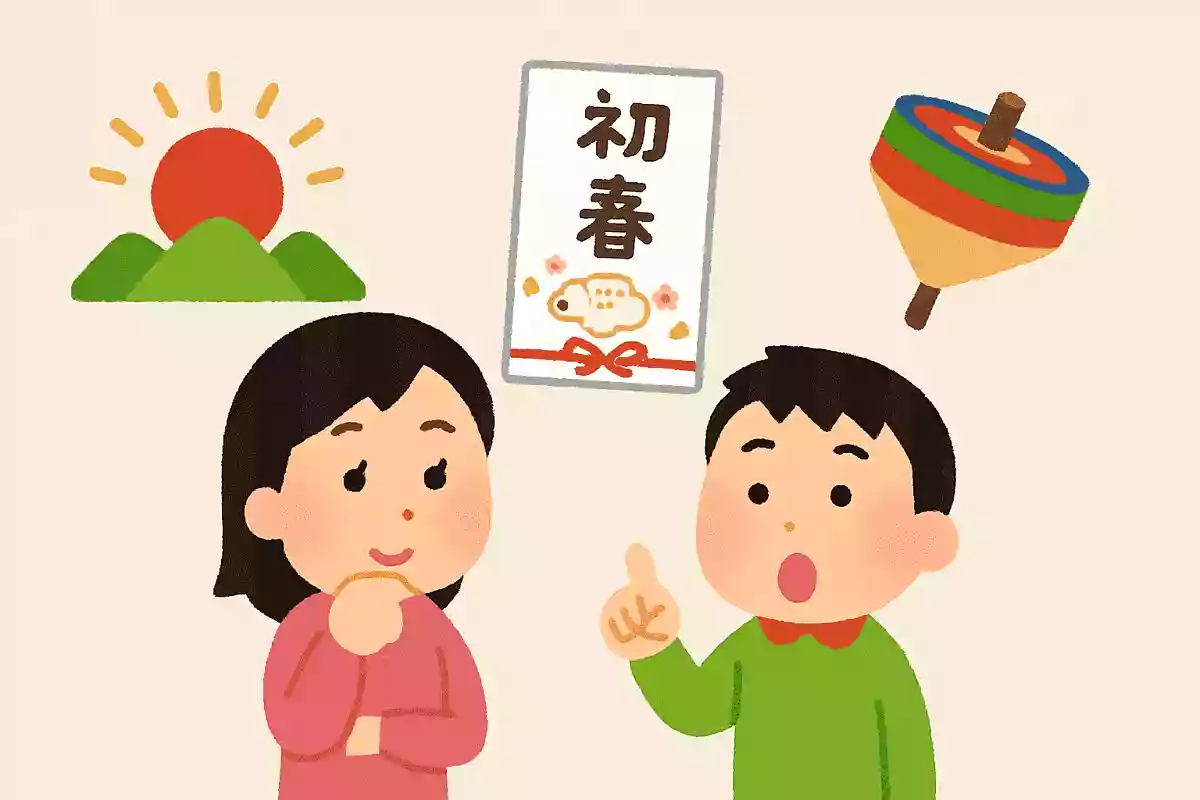
- December 31 to January 1
- January 1 to January 2
- January 2 to January 3
See the answer
January 1 to January 2
When people talk about the first dream of the year, you might think it means the dream you have when you wake up on New Year’s Day, but generally the “first dream” refers to the dream you have on the night of January 1st to 2nd. This is said to be because there’s a custom of staying up all night from New Year’s Eve to New Year’s Day. There’s a saying that certain dreams bring good luck—“first, Mount Fuji; second, a hawk; third, an eggplant”—but snakes and toilets are also considered auspicious. So when you wake up, try to remember what appeared in your dream.
[For Elementary School Students] A New Year’s Quiz Everyone Can Enjoy! Learn Fun and Surprising Trivia with Multiple Choice (31–40)
Among the dishes in osechi ryori, which food is packed with the wish that one will not have money troubles?
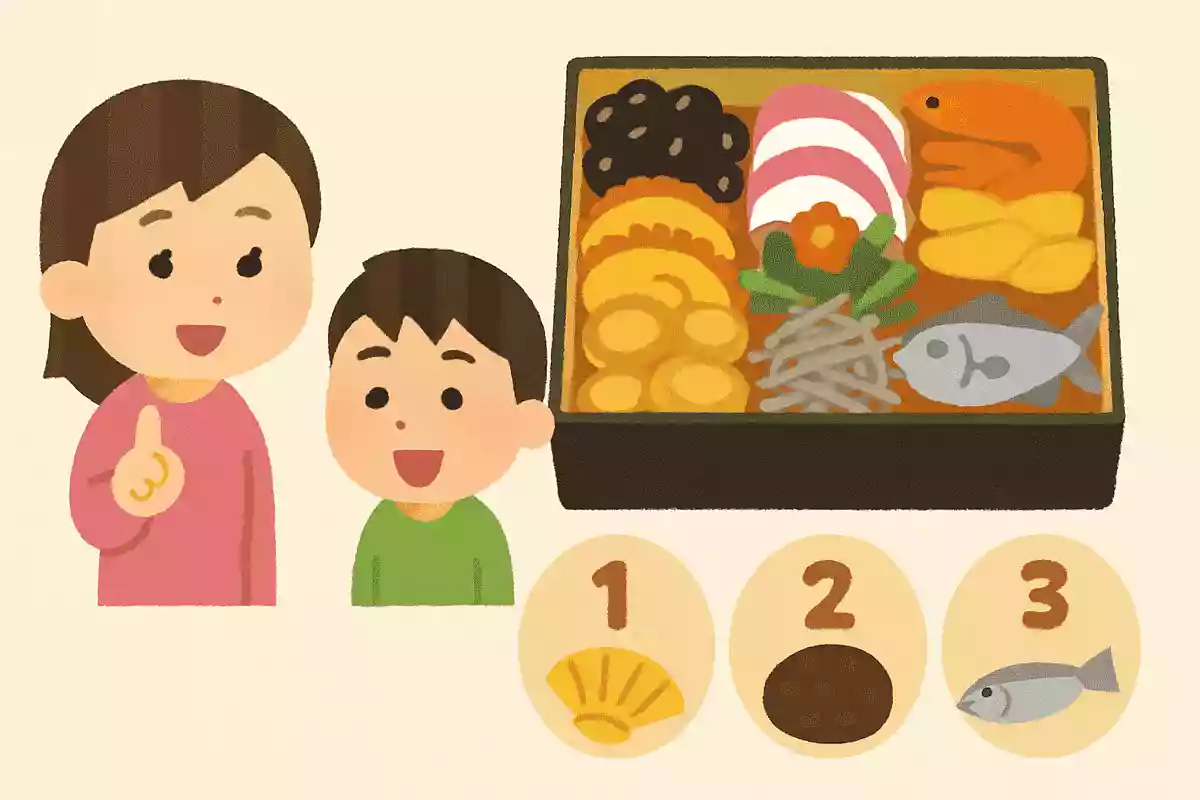
- black soybeans
- sweet chestnut paste (Kurikinton)
- Kombu roll
See the answer
sweet chestnut paste (Kurikinton)
I’m sure there are many children who love kuri-kinton, but did you know that its golden, coin-like appearance—often likened to a shining koban and even called “golden dumplings”—is also known as an auspicious food imbued with wishes for good fortune, such as increased wealth?

What is the name of the god who is said to come at New Year?
- Longevity God
- Toshigami-sama (New Year deity)
- Good-luck deity
See the answer
Toshigami-sama (New Year deity)
Toshigami is a deity believed to visit during the Japanese New Year, bringing us happiness and good health for the coming year. The New Year decorations and the custom of eating ozoni (rice cake soup) also reflect the wish to welcome Toshigami and spend the year in peace.
What fish are considered lucky to eat during the New Year?
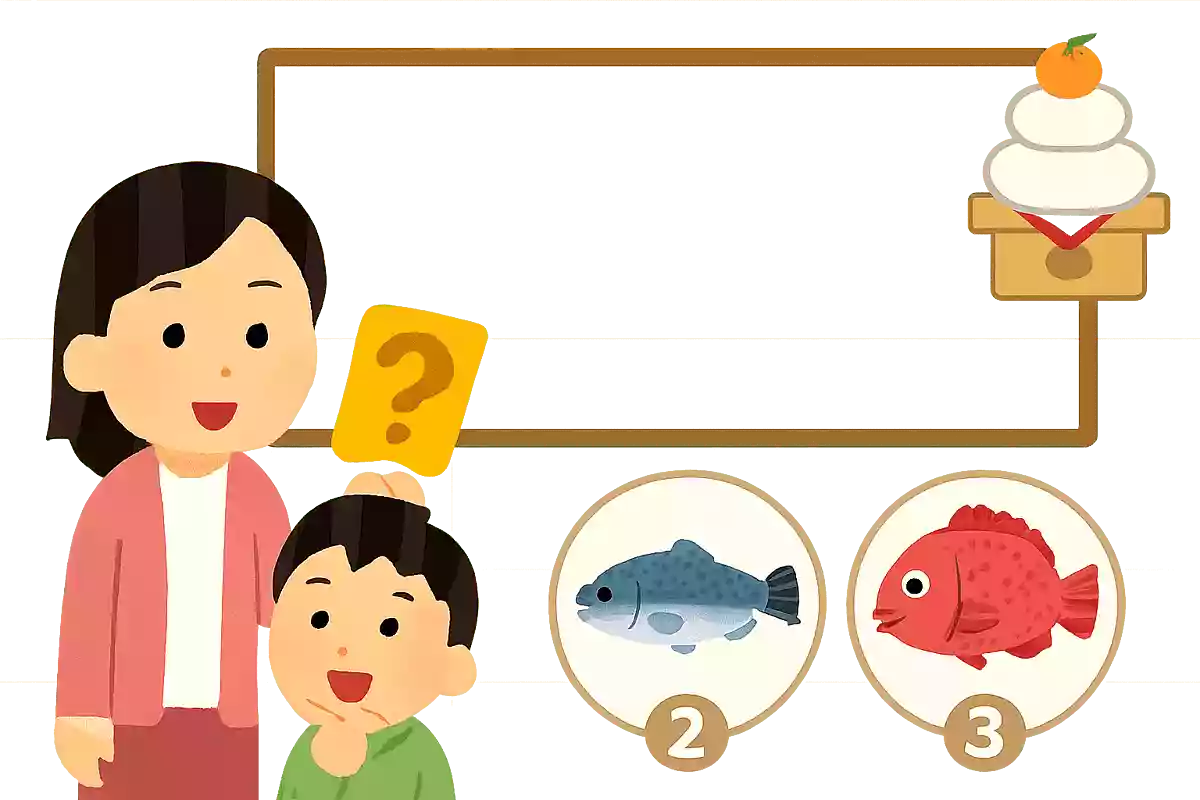
- Thailand
- salmon
- tuna
See the answer
Thailand
The answer is “sea bream.” In Japanese, it’s associated with the phrase “medetai” (auspicious), so it has long been eaten at New Year’s as a lucky food. It’s a fish that often appears at celebrations and on special occasions. With its red skin and beautiful appearance, it’s perfect for festive gatherings.
What creature served as the motif for wings with feathers?
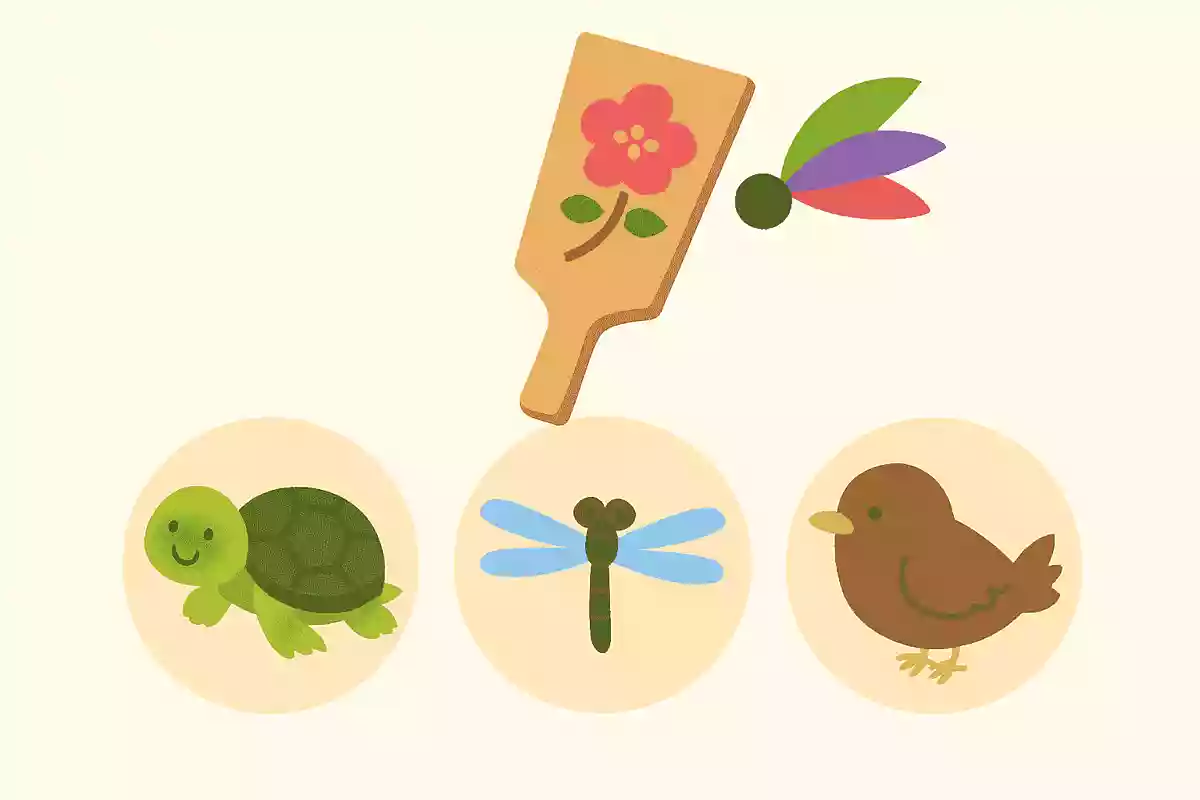
- sparrow
- dragonfly
- Japanese bush warbler
See the answer
dragonfly
The winged feather is inspired by dragonflies. The protruding parts of the feather evoke dragonfly wings, and since dragonflies have long been believed to ward off many misfortunes and bad luck, they were incorporated as a good-luck charm.
Which of the following is considered good to eat on the morning of January 7?
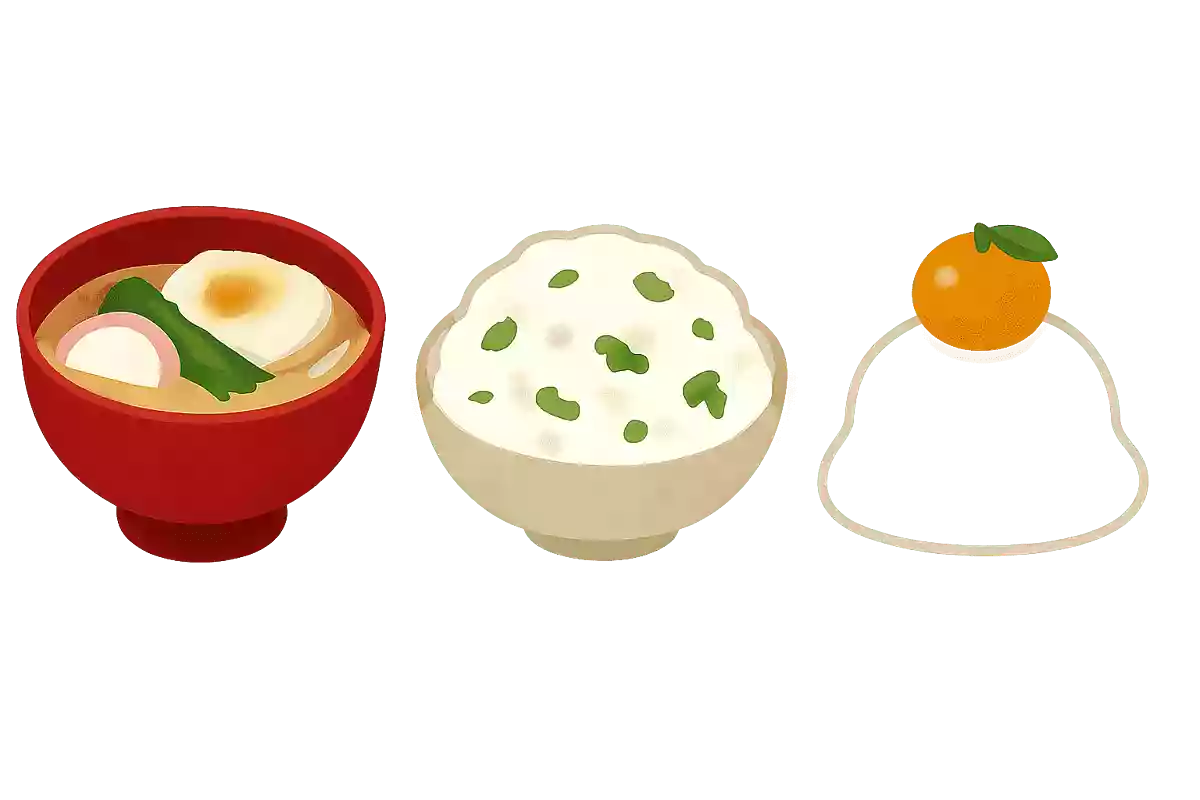
- ozoni (traditional Japanese New Year soup)
- Seven-herb rice porridge
- Osechi ryori (traditional Japanese New Year’s dishes)
See the answer
Seven-herb rice porridge
The correct answer is “nanakusa-gayu” (seven-herb rice porridge). January 7 is called “Jinjitsu no Sekku,” the first of the five seasonal festivals of the year, and it’s said that eating nanakusa-gayu is a way to pray for good health. Of course, it’s fine to eat it at lunch or dinner instead of breakfast, but since it’s a special tradition, do try having it in the morning with your child!