

[For Elementary School Kids] A New Year’s Quiz Everyone Can Enjoy! Learn surprising fun facts with multiple-choice questions


When it comes to New Year’s in Japan, there’s so much to enjoy—osechi cuisine, New Year’s money (otoshidama), and the first shrine visit of the year (hatsumode).
But why is there a mandarin orange placed on top of kagami mochi? And what should you do after drawing an omikuji fortune? Have you ever been stumped when your child asked you about these unexpected New Year’s tidbits? Here, we’ve gathered a collection of New Year-themed quizzes that both kids and adults can enjoy together.
From the New Year deity (Toshigami-sama) to the proper timing of the first dream (hatsuyume) and the origins of ozoni soup, this is full of Japanese traditions you might think you know—but don’t.
Challenge yourselves as a family over the New Year holidays and savor Japanese culture more deeply!
- Let's get excited with a New Year quiz! General questions about the Japanese New Year
- [For Kids] January Trivia Quiz & Fun Facts: Learn About the New Year in a Fun Way
- Fun facts you’ll want to share! January trivia and tidbits special
- Fun quizzes for elementary school kids: a collection of questions everyone can enjoy together
- Easy Riddles for Elementary School Students
- [For Kids] December Trivia Quiz & Fun Facts! Learn about seasonal events and traditions!
- [Simple and Fun] New Year’s Quizzes Recommended for Seniors
- [For Elementary School Students] Exciting Christmas Quiz! Fun and Educational Questions
- [For Kids] Today’s Quiz Roundup. Let’s play quizzes about today! [April 2026]
- [Trick Quiz] Quiz Questions That Excite Everyone from Kids to Adults
- So interesting you’ll want to tell someone! December Trivia & Fun Facts Special
- [For Seniors] Brain-training quizzes for January: Let’s have fun with New Year and winter trivia
- [Fun!] Quizzes to Liven Up a Christmas Party
[For Elementary School Students] A New Year’s Quiz Everyone Can Enjoy! Learn fun and surprising trivia with multiple-choice questions (41–50)
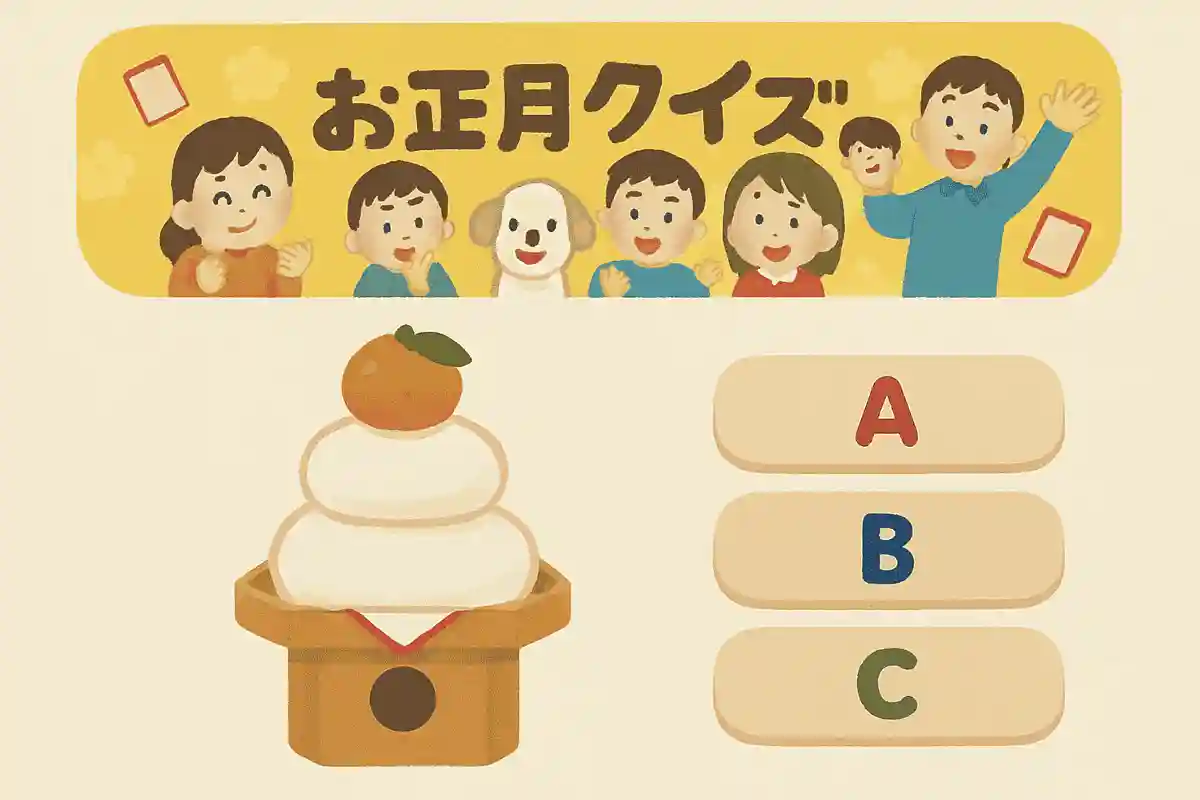
What does the round shape of kagami mochi symbolize?
- Sun
- mirror
- Earth
See the answer
Sun
It’s said that the round shape of kagamimochi represents the sun, which has long been believed to be where the gods descend from. It also embodies wishes for harmony and family bonds. Far from being a mere decoration, it is a symbolic New Year’s item that has held sacred meaning since ancient times.

[For Elementary School Students] A New Year Quiz Everyone Can Enjoy! Learn surprising fun facts with multiple-choice questions (51–60)
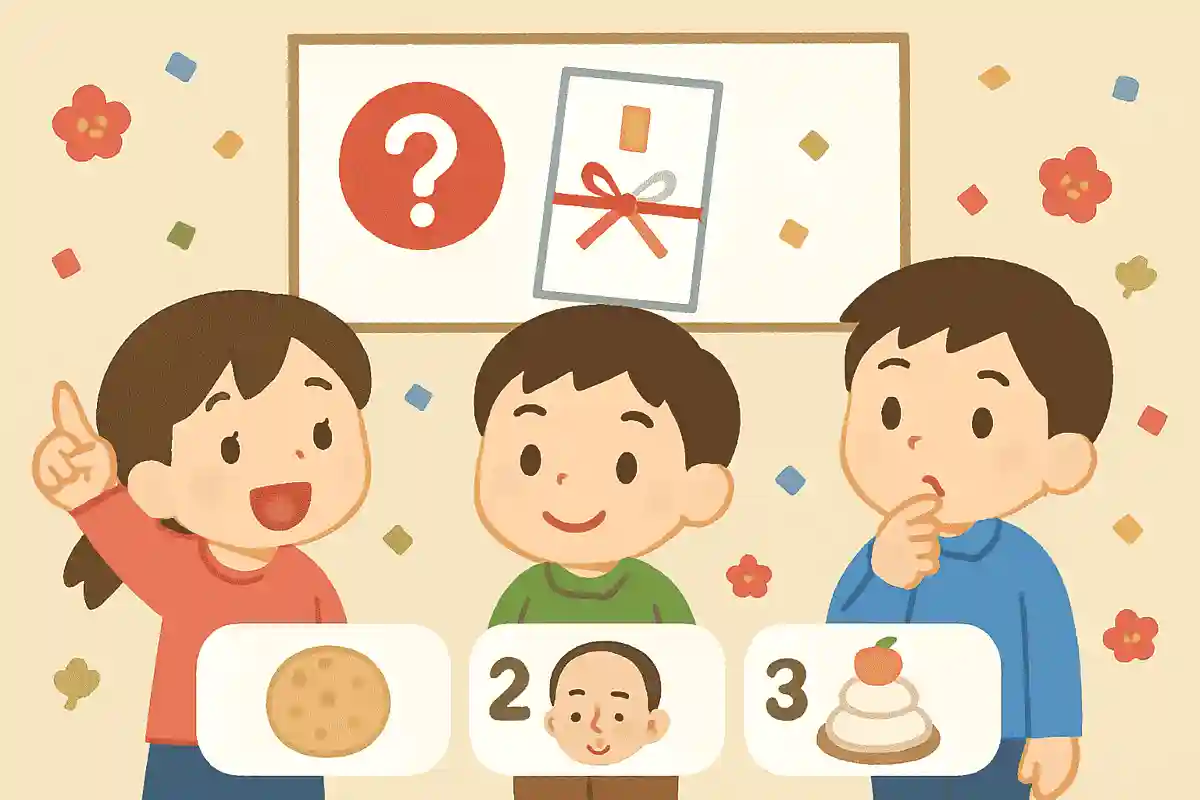
What is the original meaning of “otoshidama”?
- The magical stone that boosts financial luck in the new year
- Rice cakes that were offerings to the New Year deity
- New Year’s letters written by the whole family
See the answer
Rice cakes that were offerings to the New Year deity
Originally, otoshidama referred to the rice cakes offered to the Toshigami, the New Year deity who visits homes. It is said to have begun with families sharing those rice cakes to pray for happiness and health in the coming year. Over time, the custom shifted from rice cakes to practical items or money, the idea of rewarding children grew stronger, and it eventually settled into its present form.
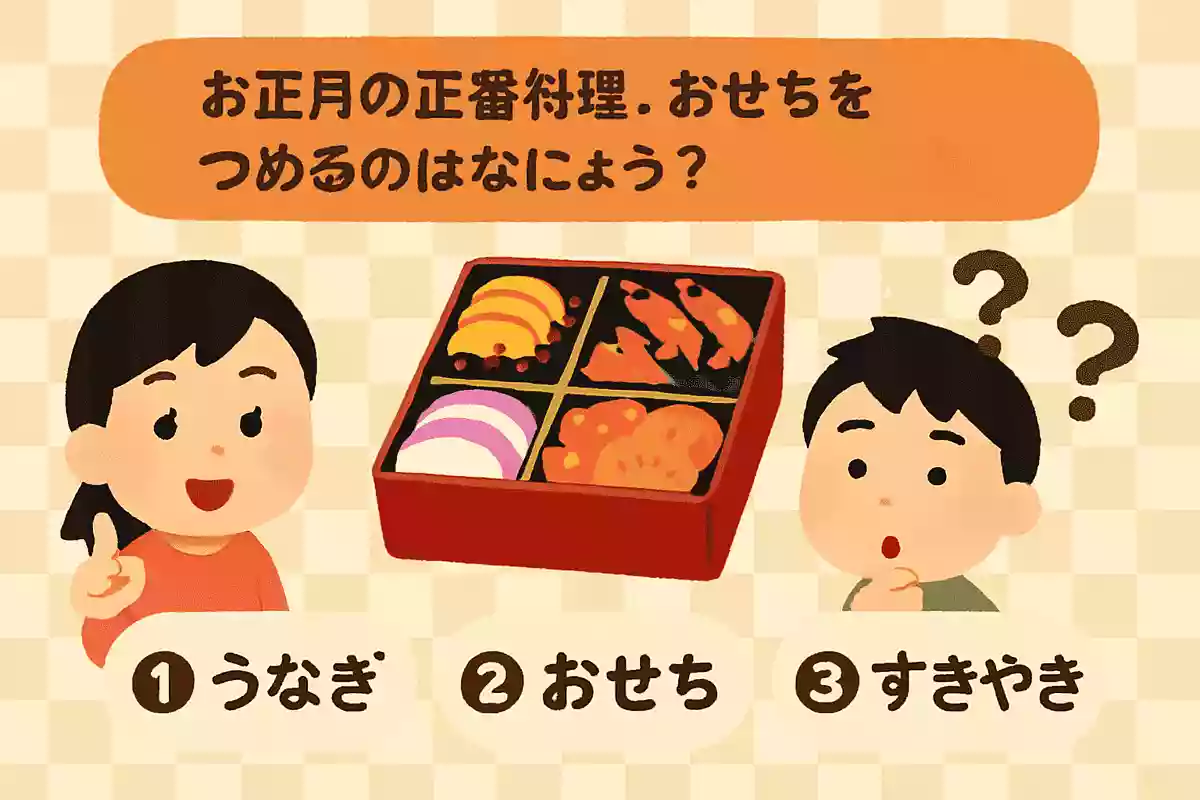
What is it that we pack into tiered lacquered boxes for the classic New Year’s dish, osechi?
- To prevent it from getting messy
- To put a lot of food in
- To express the wish for blessings to multiply
See the answer
To express the wish for blessings to multiply
It’s said that packing osechi into layered lacquered boxes is done for good luck, playing on the word “jū” (to stack) in jūbako and the idea of celebration. By layering the boxes, it conveys a wish for good fortune to be layered on as well.

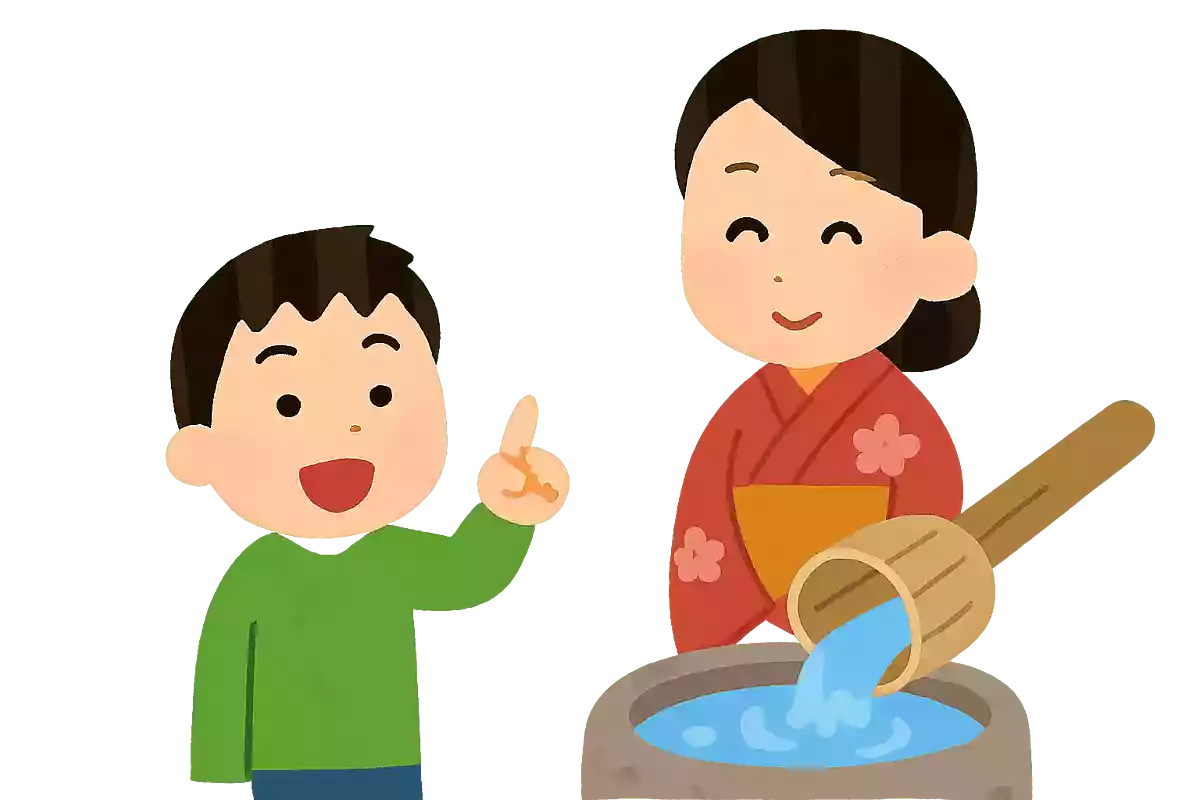
What is the name of the first water drawn on New Year’s Day morning?
- first water drawn on New Year’s Day
- Shimizu
- drop of water
See the answer
first water drawn on New Year’s Day
“Wakimizu” refers to the first water drawn early on New Year’s Day, which has long been used to celebrate the start of the new year. By offering this water at the household Shinto altar or using it to make ozoni (New Year’s soup), people pray for health and good fortune throughout the year. It is part of Japan’s traditional New Year customs.
Which of the following birds is said to bring good luck if seen in the first dream of the year?
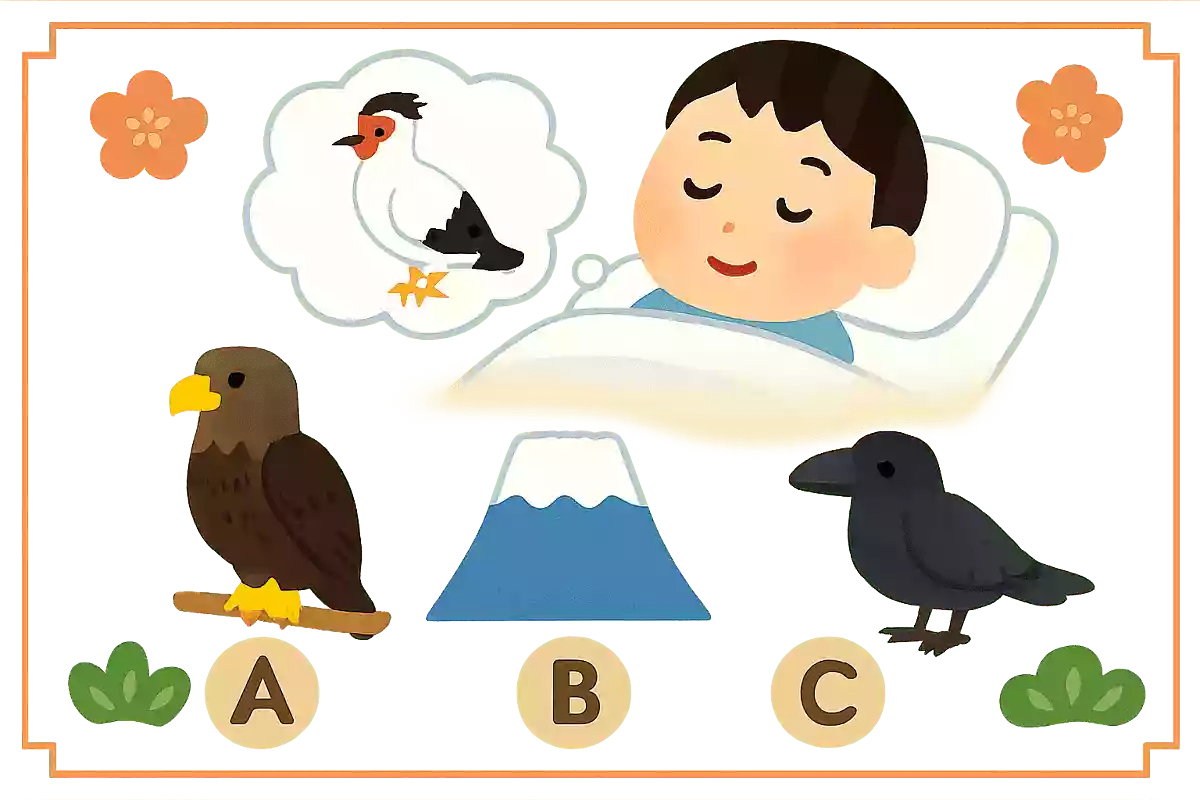
- crow
- swallow
- Hawk
See the answer
Hawk
“First Mount Fuji, second a hawk, third an eggplant” is known in Japan as a symbol of an auspicious first dream of the year. In this saying, the hawk is a powerful bird that soars high in the sky and is thought to signify high status and success. Additionally, because its pronunciation is the same as the word for “high” (taka), it symbolizes elevation and improvement, and is believed to bring good fortune and luck.
Do you know which part of the shrine approach is best to walk on for the first shrine visit of the year?
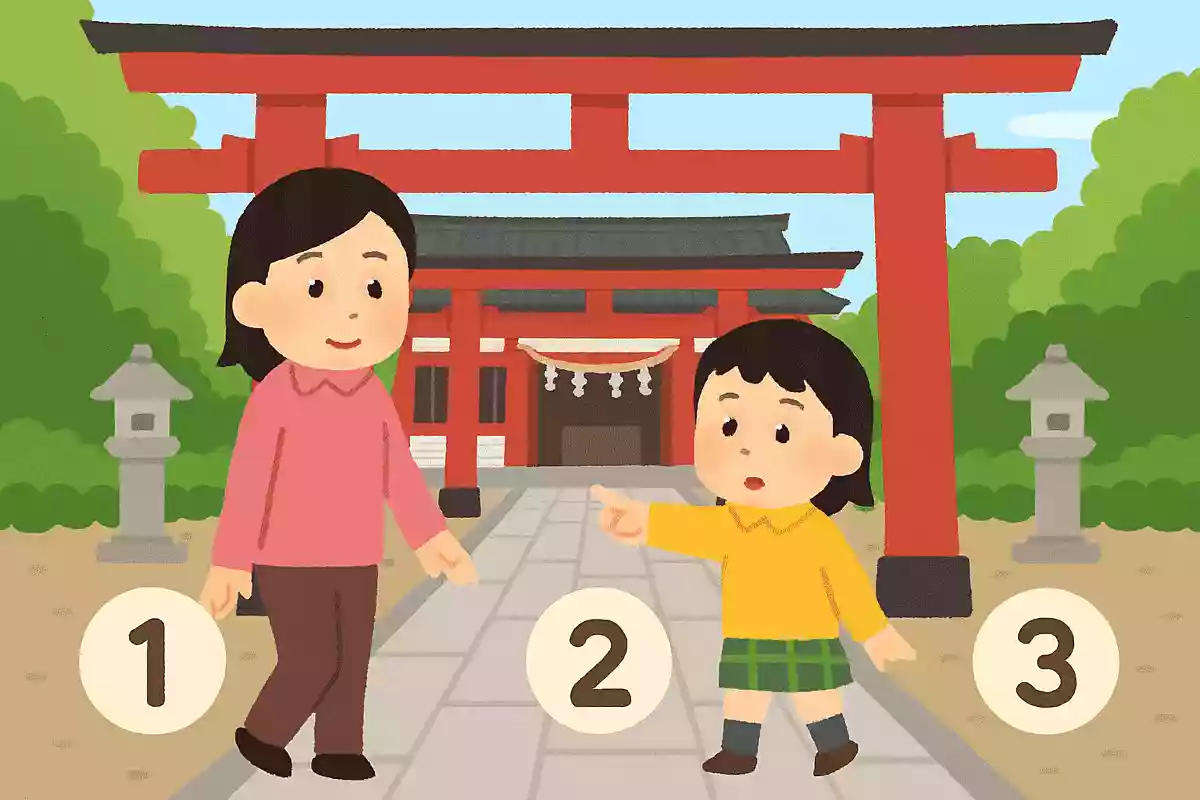
- middle
- edge
- There are no rules.
See the answer
edge
The center of a Shinto shrine’s approach path is considered the route for the deities, so it is polite for people to walk along the edges. Worshippers often walk on the right side, but when it’s crowded, it’s also important to avoid inconveniencing others. By visiting with this custom in mind, you might even receive greater blessings.
What do you call writing New Year’s resolutions with ink and a brush?
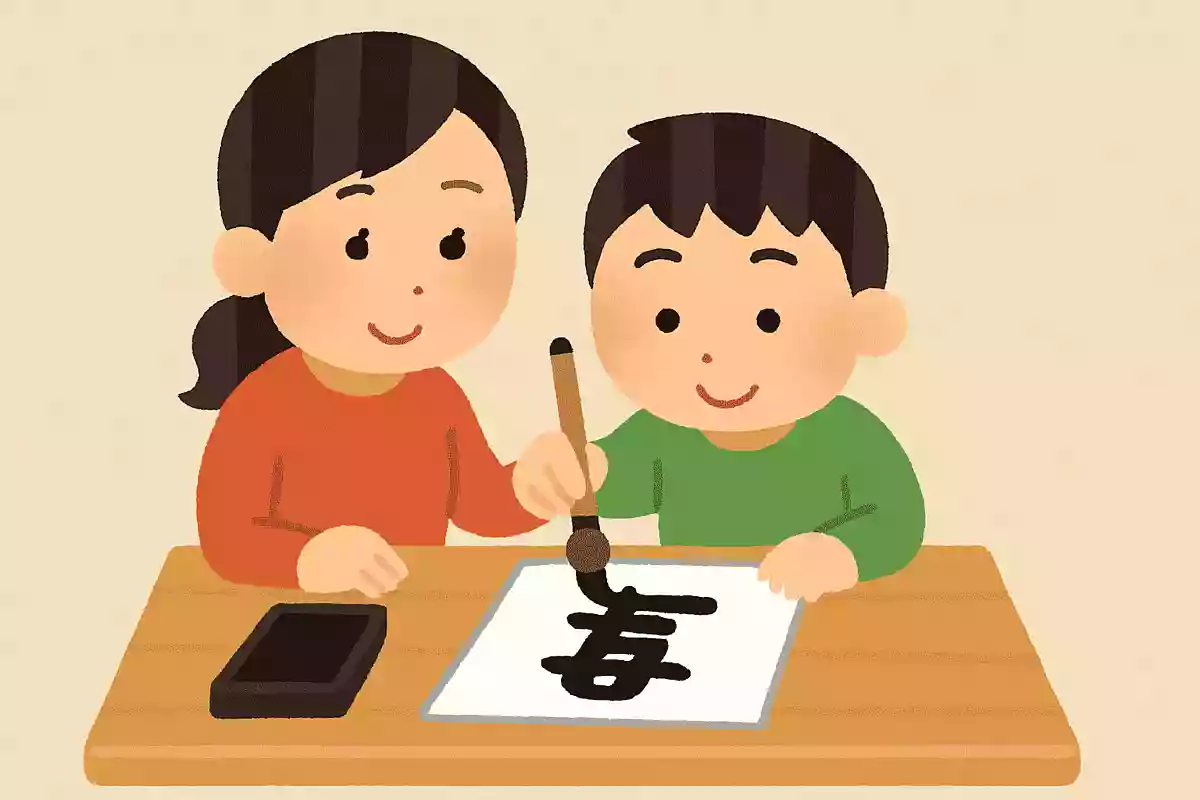
- first calligraphy of the year
- haiku
- New Year’s card
See the answer
first calligraphy of the year
Kakizome is a New Year’s tradition of writing calligraphy or drawing with a brush for the first time in the year, usually held on January 2. By writing your resolutions or goals for the year, you express your determination for the year ahead. How about trying kakizome together as a parent and child?