

For Seniors: Enjoy Every Day! A Collection of Senior Recreation Ideas

Wishing that older adults can spend each day in good health!
In this article, we’ll introduce senior activities that we truly hope you’ll try—ones that can energize you from the bottom of your heart.
We’ve gathered a wide range of options, from brain-training types to activities that get you moving.
There are ideas you can quietly work on alone, as well as recreational activities everyone can do together.
Read through to the end, think it over carefully, and choose the ones that are perfect for the seniors who will be participating!
- [For Seniors] Simple Recreational Activities You Can Enjoy While Seated
- [For Seniors] Enjoyable Indoor Activities! Recreations and Games That Engage the Mind and Body
- [For Seniors] Today’s Recommended Activity: Fun and Engaging
- [For Seniors] Have Fun! A Collection of Group Game Recreation Ideas
- [For Seniors] Have Fun with Recreation! Origami Ideas
- For Seniors: Effective Recreation for Preventing Care Needs—Have Fun While Staying Healthy
- Liven up the Respect-for-the-Aged gathering: A roundup of recreational activities everyone can enjoy.
- [For Seniors] Fun and Engaging Brain-Training Recreation
- [November Health Topic] Indoor Recreation Ideas for Older Adults
- [For Seniors] Recommended Handmade Activities! Simple Ideas
- [For Seniors] What's in the Box? A Collection of Exciting Content Ideas
- Hand games that liven things up for seniors—also great brain training
- [For Seniors] Brain-training puzzle game you can enjoy solo! Perfect pastime for killing time
[For Seniors] Enjoy Every Day! A Roundup of Senior Recreation Ideas (1–10)
Intro quiz for seniorsNEW!

Let’s enjoy an intro quiz with Showa-era hit songs! This version is for beginners, and about 15 seconds of the intro will play.
If you know the answer, please say the song title.
There are 30 questions, so you can enjoy it as a recreational activity.
Thinking about which song it is makes for good brain training, and the nostalgic intros make it a perfect game for seniors.
It’s also a chance to test your knowledge and memory, so give it a try!

Lunch outing recreationNEW!

On special days, you naturally want to enjoy special food.
How about going out to eat together? Even just having lunch outside counts as a nice outing.
For older adults who can’t easily go out freely, it can become an exciting and wonderful time.
Sharing dishes prepared with a spirit of hospitality while chatting can lift the mood and encourage a more positive outlook on daily activities.
It’s those small moments of joy that give people the strength to keep going.
Cafe Rec Homemade Ice CreamNEW!

Beat the heat with a perfect-for-summer café-style activity! We’ll serve homemade ice cream, just like in a coffee shop.
By making it ourselves, we can keep an eye on sugar and fat, making it enjoyable for older adults as well.
You can enjoy it in a cool indoor space, or purposely savor it outside where a hint of heat still lingers.
It’s also a great idea to keep the ice cream flavor simple and add variety with toppings! Being able to customize the flavor yourself—like with shaved ice—lifts your spirits and makes it a memorable experience.
[For Seniors] Enjoy Every Day! A Collection of Senior Recreation Ideas (11–20)
Cafe outing recreationNEW!

When you’re unsure where to go for an outing, how about visiting a café where you can take it slow? Renting out a café and enjoying sweets and drinks in a cozy, homey atmosphere while chatting will surely become a special memory.
Just being somewhere different gives a sense of the extraordinary, and you may find topics of conversation that only come up in a calm, nostalgically charming café.
This outing might be the catalyst that brings participants even closer than before.
Aquarium outing recreationNEW!

Aquariums are places where you can watch a variety of creatures going about their lives, and part of their charm is that some make you feel as if you’ve dived into the ocean.
Since the basic activity is to look at the tanks one by one, I think it’s a place you can enjoy casually.
Let’s let our thoughts wander to places we don’t usually see—what the world under the sea is like and what kinds of creatures live there.
It’s also great to carefully observe the different creatures and try to find a favorite.
Picking out a souvenir themed after your favorite animal might make things even more exciting.

Autumn foliage viewing outing recreationNEW!
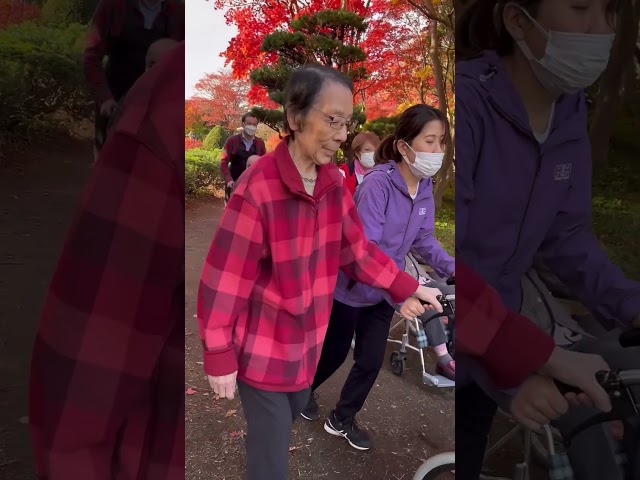
If you’re going out in autumn, I recommend going to see the fall foliage! As temperatures drop toward winter, autumn is still a great time to be out and about.
Plus, many people want to catch a glimpse of the beautiful autumn leaves.
If famous foliage spots are too crowded to visit, just heading to a nearby park or plaza will still let you soak up the autumn atmosphere.
If you bring home some beautiful red and yellow leaves and display them in a frame, you’ll be able to recall those happy moments anytime.
Shopping outing recreationNEW!

In today’s world, where logistics are well developed, unless you live in a very remote area, the things you want arrive at your doorstep within a few days.
I think that’s a wonderful service for older adults as well, but aren’t there times when you want to see and choose things with your own eyes? In that case, how about going on a shopping outing together as a recreational activity? When you go with everyone, just looking around is fun, and choosing items together creates memories that make you want to treasure what you buy more than if you chose it alone.