

[For Seniors] Fun Riddles That Stimulate the Brain


Riddles have a mysterious charm, don’t they? That exciting feeling that makes you want to keep thinking until you find the answer—why not enjoy it together with older adults? This time, we’ll introduce simple, humorous riddles based on familiar words from everyday life.
Thinking together naturally gets the conversation going and fills the time with smiles.
When you figure out the answer, be sure to share that delightful “I get it!” moment with everyone.
- [For Seniors] Fun and Lively! Recommended Quiz Questions
- [For Seniors] Laugh-Out-Loud, Crowd-Pleasing! Fun Quiz
- [Brain Training] Lively Word Quiz for Seniors
- [For Seniors] Guaranteed to Liven Things Up! A Collection of Brain Training Activities That Will Spark Laughter
- [For Seniors] Fun and Educational True-or-False Quiz
- [For Seniors] Fun and Informative! Health Trivia Quiz
- [For Seniors] Lively Wordplay Game: Fun Recreation for Elderly Care
- [For Seniors] Fun Brain Training! Lively Mind Exercises
- [For Seniors] Fun! Let’s Get Excited with Japan’s Number One Quiz
- [For Seniors] Fun Brain Training! Prefecture Quiz
- [For Seniors] Have Fun with Wordplay Characters! A Collection of Funny Puzzles
- [For Seniors] Find daily brain training. Today’s recommended brain workout.
- [For Seniors] Brain Training with a Whiteboard! Fill-in-the-Blank Exercises & Quizzes
Simple riddle questions (1–10)
A dog that speaks Kansai dialect?

It’s a simple puzzle where you think about the word that the two hints have in common.
For example, with hints like “a type of Kansai dialect” and “a breed of dog,” you look for something that matches both, which can also serve as brain training by considering two directions at once.
Even just pronouncing Kansai dialect phrases you remember might help you notice the answer.
The Kansai dialect word “chau,” which means “different” or “not ___,” is often pronounced repetitively, so the answer becomes “Chow Chow.”

A submarine is carrying a certain fruit. What fruit is it?

Let’s try a riddle where the answer is hidden in the question! A submarine is carrying a certain fruit.
What fruit is it? The key is “submarine” (in Japanese: sensuikan).
If you say it slowly out loud, you might figure it out.
The answer is “watermelon” (suika).
The word “suika” is contained within “sensuikan”! Many people have an aha moment when they say it out loud or write it down, so if you’re stuck on a riddle, give that a try!
When my grandchild does a handstand, they transform into a certain food. What food is it?

Let’s try a riddle that plays with words.
When a grandchild stands on their head, they transform into a certain food.
What is it? Many of you may be picturing a cute grandchild doing a handstand.
Here’s a hint: it’s a small food often used as a topping.
The key is the word “mago” (grandchild)! The answer is “goma” (sesame).
If you read “mago” backwards, it becomes “goma.” It’s a humorous riddle that expresses reading a word backwards as doing a handstand.
Simple riddle questions (11–20)
A mosquito falls into a pond and transforms into a certain vegetable. What vegetable is it?
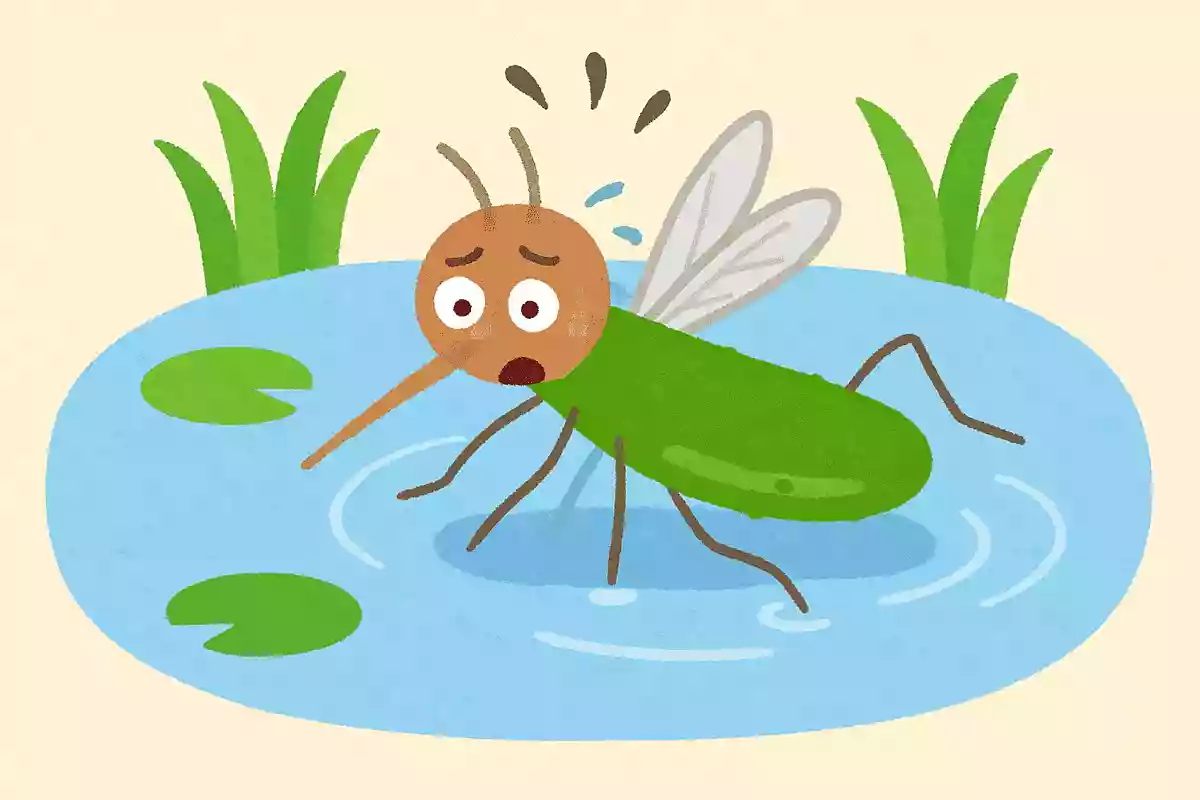
Here’s a riddle about mosquitoes that show up when it gets warm.
A mosquito falls into a pond and turns into a certain vegetable.
What vegetable is it? Of course, in reality a mosquito wouldn’t instantly turn into a vegetable just by falling into a pond, but since it’s a riddle, let’s think flexibly to find the answer! The hint is the sound it makes when it falls into the pond.
The correct answer is “pumpkin.” It’s a playful riddle based on the Japanese wordplay: a mosquito (ka) goes “bocha” (splash) into the pond—ka + bocha = kabocha (pumpkin).
Did you arrive at the answer cleanly?
What is a fried bread that you can’t eat?
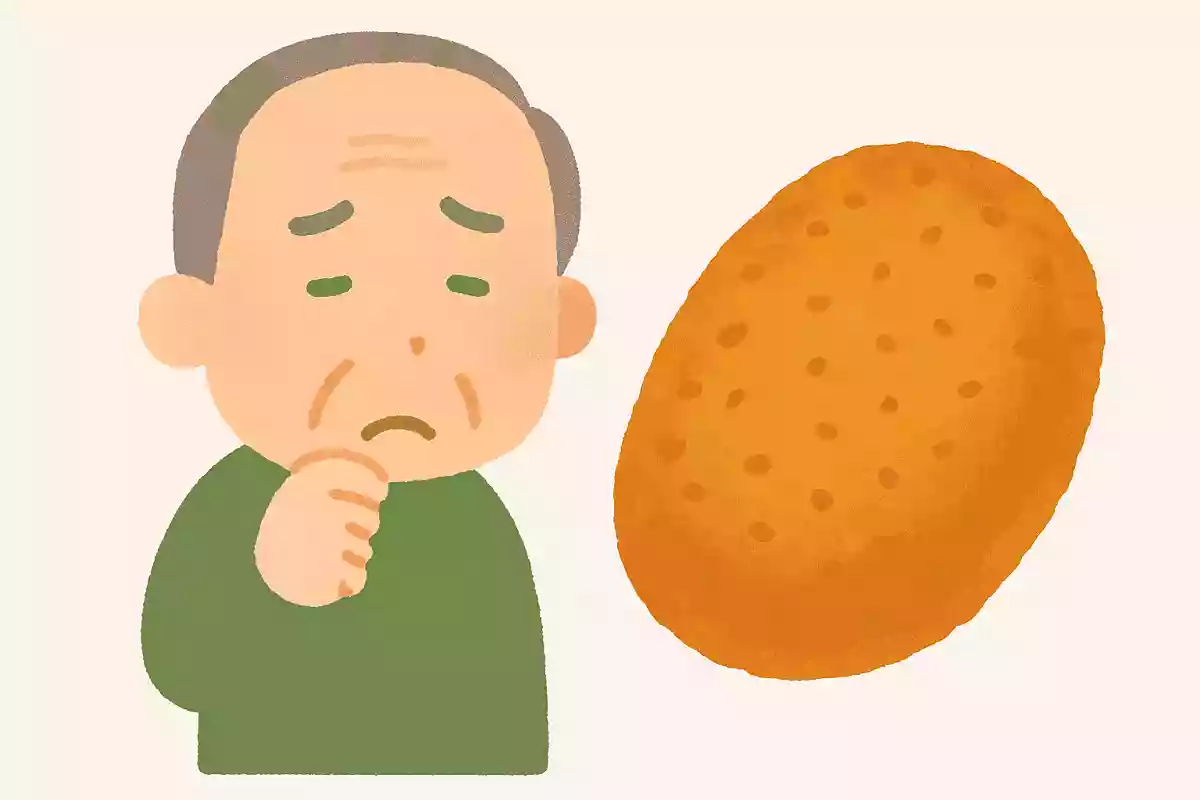
This is a puzzle where you think of words that fit the conditions by cleverly rephrasing them.
Since there are many edible fried breads in the world, it’s easy to get distracted by food—that’s a tricky point.
The key is to recognize that it’s a riddle and focus on the words themselves.
Separate “fried” (ageru) and “bread” (pan), and consider their meanings and rephrasings.
By rephrasing “to fry” and thinking of bread that’s been fried, the answer is “frying pan” (furai-pan).
A turtle swimming in miso soup—what kind of turtle is it?
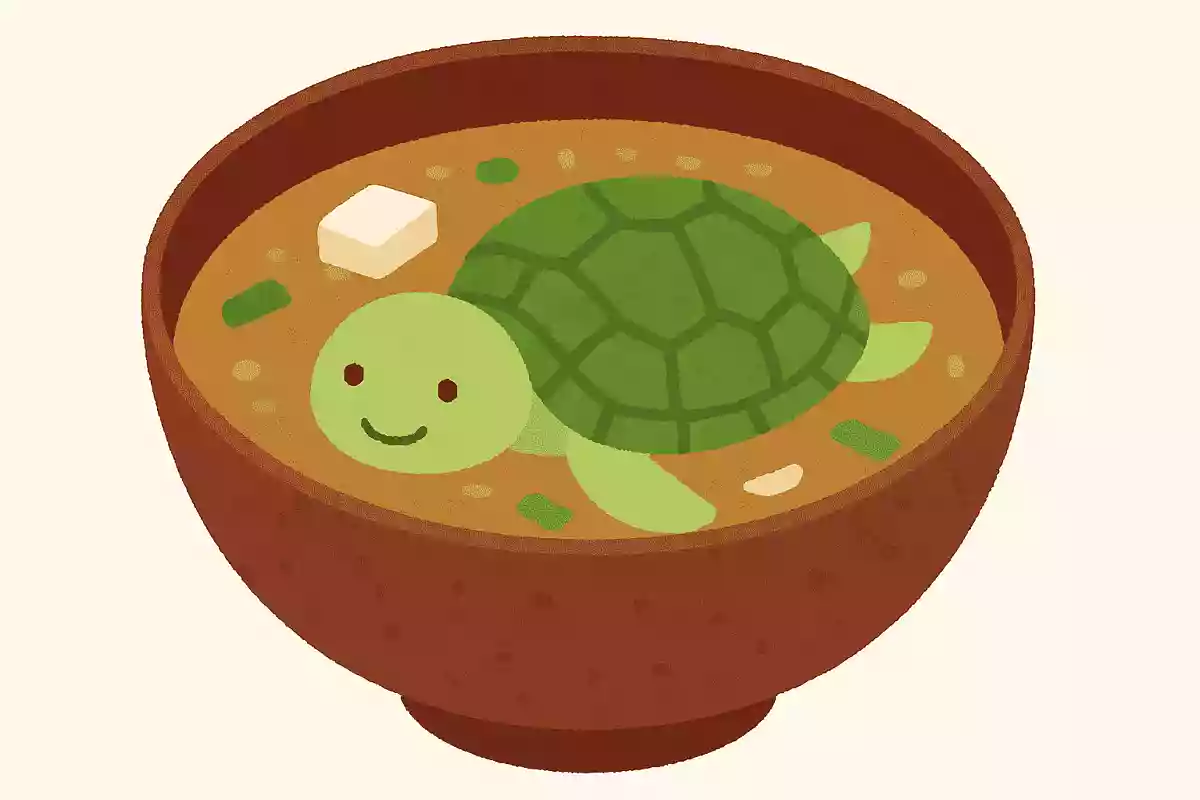
Here’s a riddle about food that will make you crave miso soup.
A turtle swimming in miso soup—what kind of turtle is it? When you think of ingredients for miso soup, what comes to mind? Maybe this is the very first ingredient many people think of.
Of course, it’s not a reptile turtle! The answer is wakame (seaweed).
The word “wakame” contains “kame” (turtle in Japanese), so some of you may have figured it out right away.
Wakame is rich in minerals and dietary fiber, making it a food you’ll want to include in your diet.
What is the “comb” that pokes its head out of the soil sprout by sprout when spring comes?

Alright, let’s take on a riddle that feels satisfying once you know the answer.
What is the “comb” that sprouts up from the soil in the spring? You can see many kinds of plants in spring, but the key here is the word “comb.” The onomatopoeia “nyoki-nyoki” (meaning something sprouting or popping up one after another) is also a clue.
The answer is tsukushi (field horsetail).
Tsukushi is a type of plant seen in spring and is the young shoot of horsetail (sugina).
It’s a classic sign of spring, so many of you may have guessed it right away.