

[For Seniors] Uplifting Words That Comfort the Heart

It seems many older adults carry worries, such as finding it harder to move their bodies than before or becoming more prone to illness.
Some also feel lonely, perhaps due to circumstances that have distanced them from their families.
In such times, we all want to support older adults, stay close to their feelings, and help them feel energized.
With that in mind, this time we’re introducing “uplifting words for older adults.” When interacting with older adults, you may sometimes wonder, “What kind of words of encouragement should I use?” Please take advice from those who are good at offering supportive words, and use the “uplifting words” we introduce here as a reference to spend wonderful time with the older adults in your life.
- Introducing words that will delight elderly people
- For seniors: Words of gratitude and uplifting magic phrases. Tips for saying things that resonate with the heart.
- [For Seniors] Tips for Birthday Messages They’ll Love
- Conversations Made Easy! A Collection of Topics That Elderly People Enjoy
- Words useful for conversations with elderly people. Words that were used in the past.
- [For Seniors] Laugh-Out-Loud, Crowd-Pleasing! Fun Quiz
- [Brain Training] Lively Word Quiz for Seniors
- Introducing old-fashioned words that are useful for conversations with elderly people!
- [For seniors] Turn negatives into positives: Ways to interact that inspire motivation
- [For Seniors] Boost Oral Function with Tongue Twisters! Recommended Picks to Try
- [For Seniors] Guaranteed to Liven Things Up! A Collection of Brain Training Activities That Will Spark Laughter
- [For Seniors] Fun and Informative! Health Trivia Quiz
- [For Seniors] Let’s Have Fun Together! Introducing Uplifting, Energizing Songs
[For Seniors] Uplifting Words That Support Your Feelings (31–40)
I feel your radiance growing with each passing year.
There are surely elderly people who always treat others kindly with a smile and brighten the atmosphere around them.
Seeing such seniors can make us admire them and think, “I want to be like that too.” Why not tell them how gracefully and attractively they’ve aged? They may be consciously mindful of their behavior and mindset in order to age beautifully.
Recognizing those everyday efforts might make them happy as well.
It could also be nice to ask them what they pay attention to in their daily lives.

Thank you for always guiding us with the wisdom and kindness you have cultivated over many years.
When you talk with elderly people, there are times when they offer you advice, aren’t there? You may find yourself thinking, “So that’s how I should do it,” and some of what they say really hits the mark.
Among older adults, there are many whose wisdom and experience, cultivated over many years, far exceed our own.
When you have such opportunities, try expressing your gratitude to them with a sincere heart.
Words of heartfelt thanks will surely reach them.
If you keep complaining, you’ll end up alone. If you keep expressing gratitude, you’ll be surrounded by friends.
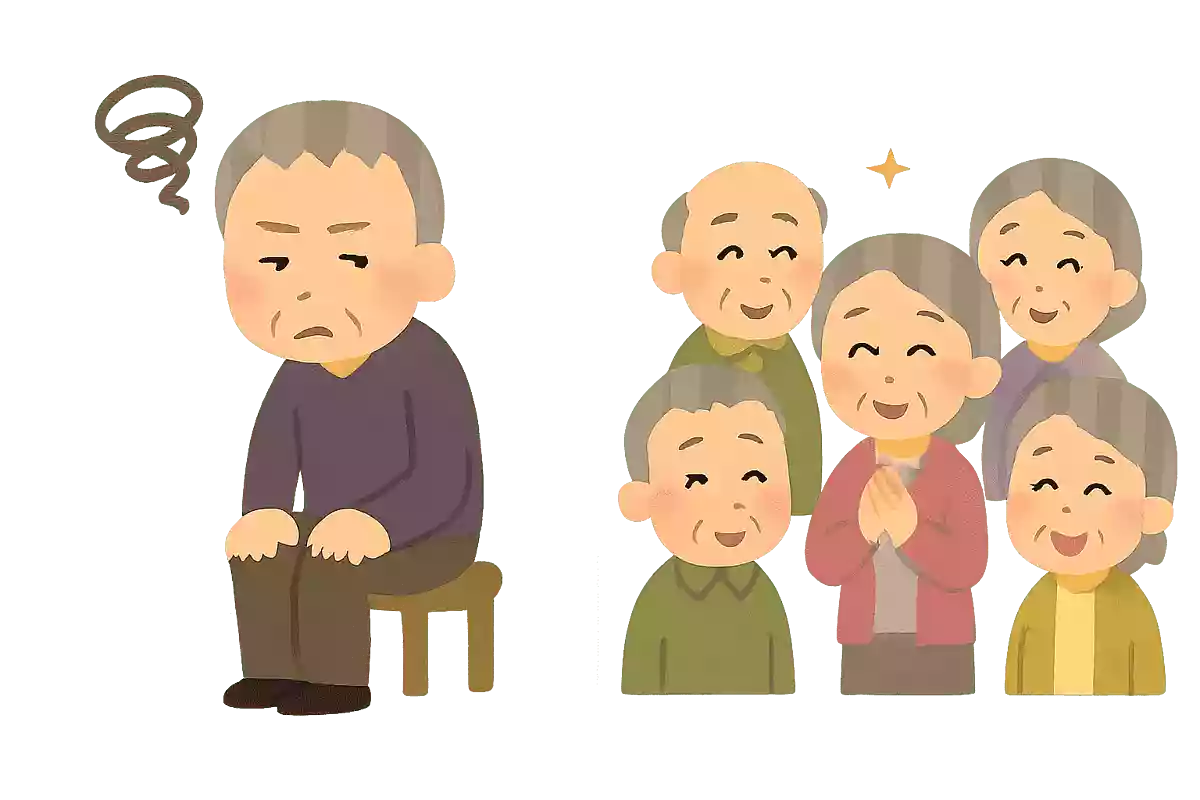
If you only voice dissatisfaction, people will drift away without you even noticing.
But around those who say thank you often, warm connections naturally take root.
These words gently remind us of something simple yet easily forgotten.
The older we get, the greater the power of a single word of gratitude.
Just putting into words that someone is supporting you opens your heart and brings you closer to others.
Gratitude attracts people and nurtures connections.
It’s a phrase worth tucking quietly into the hearts of those entering a stage of life with more time spent alone.

If you mind the words you speak rather than the words of others, your life will turn out well.
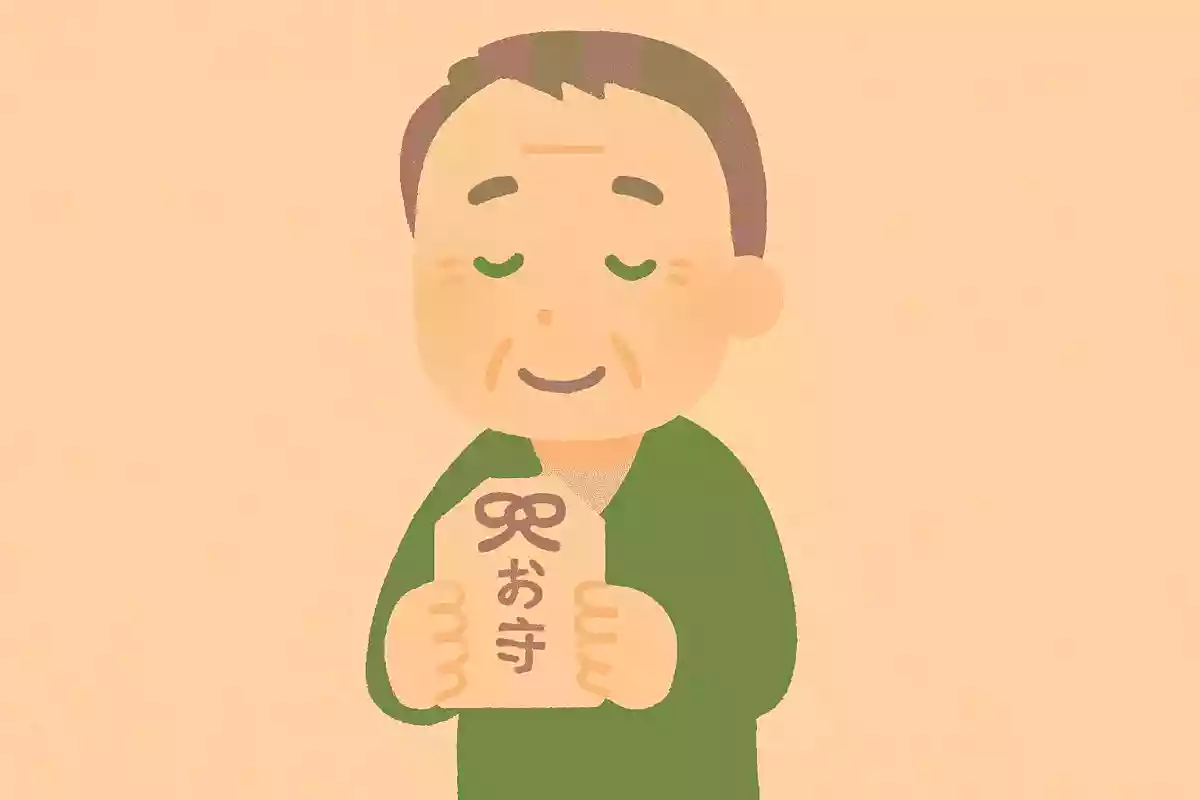
Isn’t it surprisingly common to worry about what others think of you? Sometimes, because we care too much, even ordinary words in a simple conversation can get stuck in our minds—and we end up trapped in that kind of paranoid thinking.
So here are some words to keep as a charm for times like that: No matter how much you analyze someone else’s words, you’ll never truly know their real intentions.
That’s why the best thing is not to dwell on them.
Instead, take responsibility for your own words.
If you speak kindly and with consideration, people who admire you will naturally gather around you.

For the ignorant, old age is winter. For those who have learned much, old age is the season of harvest.
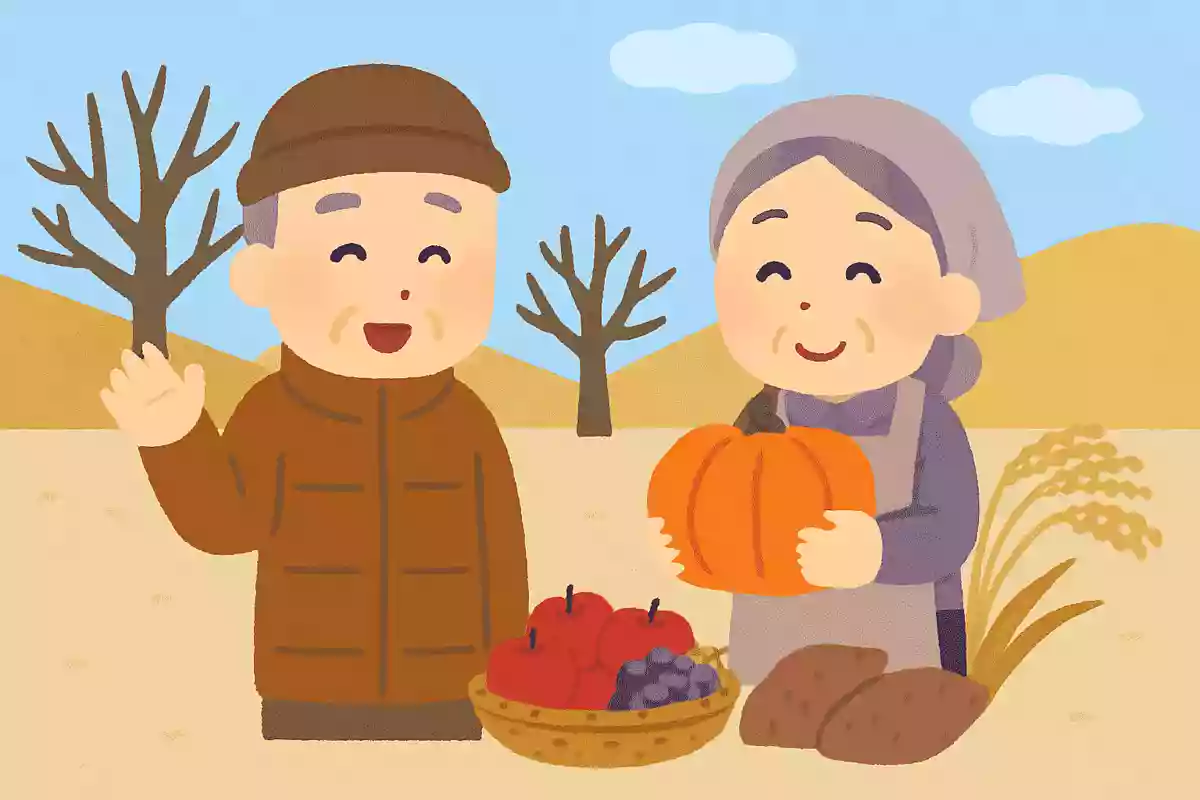
These words make you think about how to live in the present, reminiscent of the fable ‘The Ant and the Grasshopper.’ We live in an era where you need tens of millions of yen to maintain a certain standard of living in old age.
It’s surely true that if you go through life without learning or thinking, you’ll pay the price in your later years.
For those who always keep the future in mind and make the necessary preparations, their remaining years should become a fruitful time with both time and peace of mind.
Please take these words positively so that you can earn such a wonderful time.
[For Seniors] Uplifting Words That Comfort the Heart (41–50)
Even when you think you’re self-reliant, you’re always being supported by someone. I want to be the kind of person who notices that and can feel grateful.
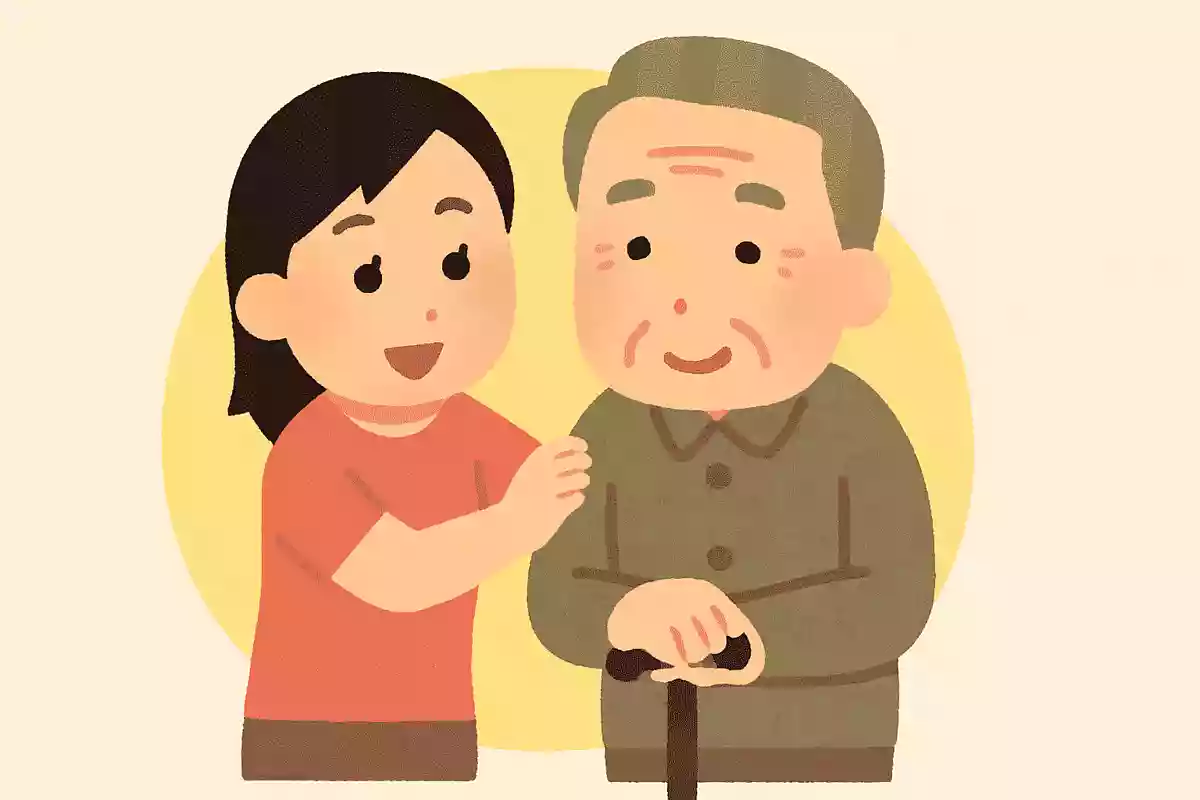
Even if I thought I’d been handling everything on my own, looking back I see that someone’s words or help quietly supported me.
This phrase makes me realize that.
As I grow older, while part of me doesn’t want to rely on others, I feel more deeply grateful for those who support me unobtrusively.
Independence and gratitude aren’t actually contradictory; both nurture our richness as human beings.
When we notice this in our daily lives, our connections with others feel all the more precious.
It’s a single phrase I want to keep close to my heart, like a small amulet.
Words come back to you. Both gratitude and insults will properly return to yourself.
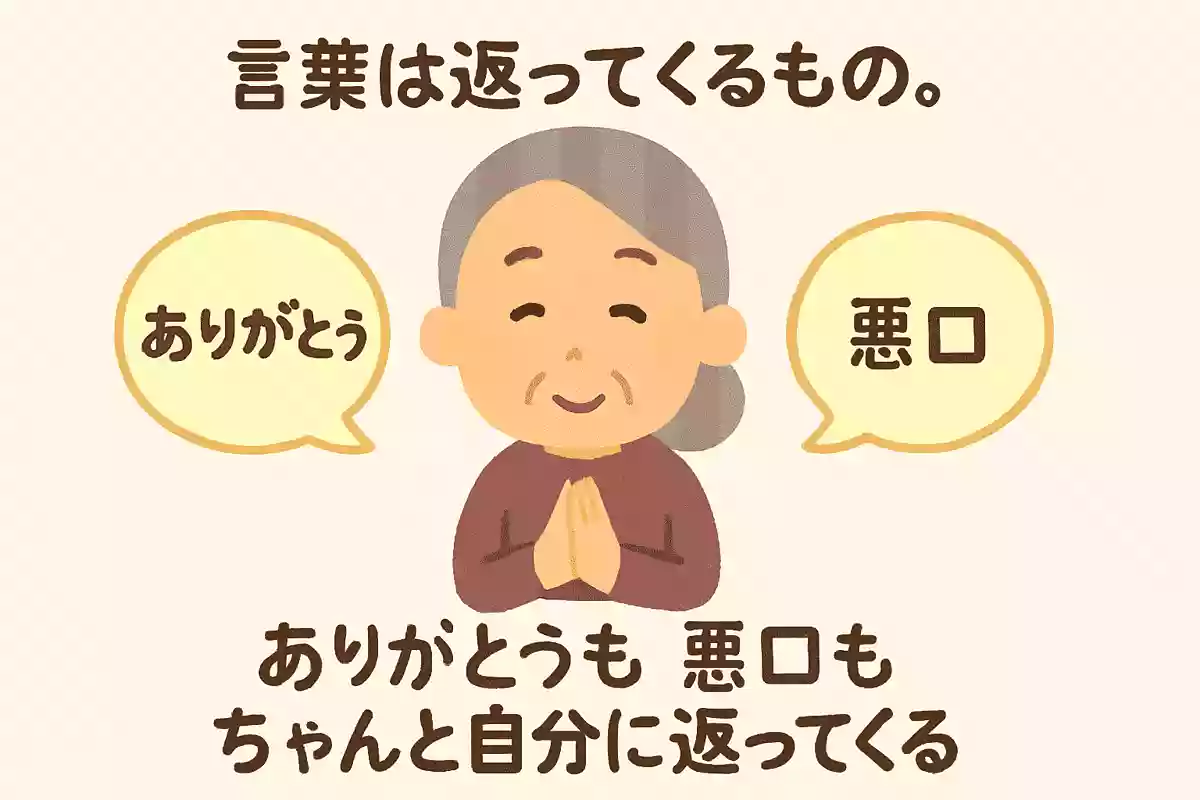
We’ve all had the experience of blurting out a sarcastic remark or an insult.
Even if we regret it, once words are spoken, they can’t be taken back.
Some of us have probably learned that the hard way.
To avoid repeating those mistakes, keep this saying in mind: everything you say and do comes back to you.
If you speak kindly to others, kindness will return to you; if you hurl harsh words, you’ll get badmouthing in return.
Let’s share with those around us the kinds of words we ourselves would be happy to hear.