

Hand games that liven things up for seniors—also great brain training

Hand-based activities are a fun and effective way for older adults to stimulate the brain.
Even simple hand games can stimulate the brain by moving the fingertips, helping to maintain or improve cognitive function.
In addition, doing them to music or together with others naturally brings more smiles and increases opportunities for communication.
In this article, we introduce hand games that are easy for seniors to enjoy without strain and also work as brain training.
Incorporate easy activities into your routine to maintain your health while having fun!
- [For Seniors] Hand and finger play roundup: Finger exercises that lead to brain training
- [For Seniors] Extremely Effective Brain Training! A Fun Collection of Hand Games
- [For Seniors] Fun and Engaging Brain-Training Recreation
- [Brain Training for Seniors] Recommended Hand-Play Recreation for Dementia Prevention
- [For Seniors] Recommended Muscle Training Gear. Simple and Easy
- Fun Brain Training! Memory Games for Seniors
- [For Seniors] Fun! Games and Ideas to Boost Memory
- [For Seniors] Easy to try. Fun, crowd-pleasing recreation
- [For Seniors] Let’s Have Fun While Training the Brain! Handmade Card Game Ideas
- [For Seniors] Enjoy Easily! Hand Play 'Shimoshika Meyo' (If If, Tortoise)
- [For Seniors] Popular Hand-Play Songs: Fun Brain-Training Ideas
- [For Seniors] Recommended Handmade Activities! Simple Ideas
- [For Seniors] Winter Haiku: Introducing Beautiful Masterpieces by Famous Haiku Poets
[For Seniors] Fun Hand Games That Liven Things Up: Also Great Brain Training (11–20)
Balance game with paper cups and a ball
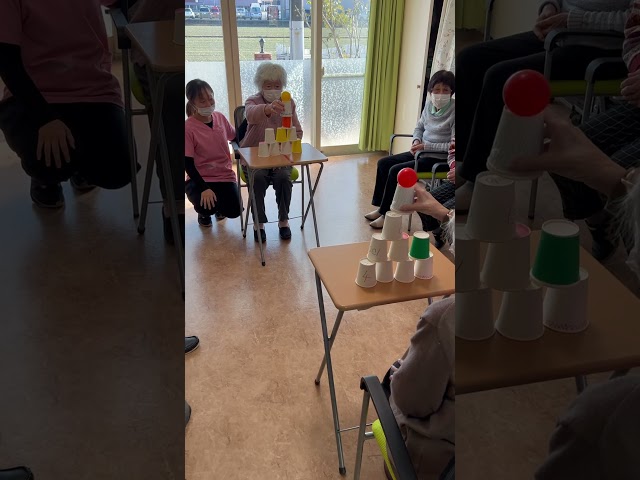
Introducing a unique balance game for seniors that uses paper cups and a ball: “Balance Game with Paper Cups and a Ball.” Stack paper cups into a pyramid and place a ping-pong ball or similar ball on the topmost cup to begin.
Carefully move the cups one by one, stacking each onto the cup below while making sure the ball doesn’t fall.
With movements similar to sport stacking, you clear the game once you’ve finished nesting all the paper cups into one stack! It’s a fun way to train concentration, finger dexterity, and sense of balance.
Since it can be played while seated, even those who aren’t confident in their physical stamina can participate with peace of mind.
It’s a recreational activity full of thrilling, heart-pounding moments.

Beanbag Bingo

Here’s a bingo-style game using beanbags that you can enjoy with one hand.
Prepare a sheet of paper with a 5-by-5 grid.
Take turns with your opponent placing one beanbag on a single square.
The first person to line up four beanbags in a row—vertically, horizontally, or diagonally—wins.
Beanbags are light, so there’s little risk of injury if they fall, which is a plus.
While aiming to make your own line of four, you’ll also try to block your opponent.
It’s a game that encourages focused thinking and may help stimulate the brain.
Try playing while seated in chairs with older adults, and have fun getting lively together.

clothespin tree

Let me introduce the Clothespin Tree.
Gather some beanbags and secure them to a pair of chopsticks, then clip clothespins onto the chopsticks in alternating positions.
If the structure topples or the chopsticks break when adding a clothespin, you lose.
The action of opening and closing clothespins also stimulates the brain.
For gameplay, preparing clothespins in various colors is recommended—you’ll end up with a colorful tree that’s visually enjoyable.
It’s a fun activity using familiar materials, and once your Clothespin Tree is complete, displaying it as a decoration can also spark conversation.

Paper cup: Don’t take the last one game

Let me introduce a fun game you can play with paper cups.
The rules are simple: place several paper cups on a table, and on your turn you may take up to three cups.
You can take one, two, or three cups.
The player who takes the very last cup on the table loses.
As the game nears the end, you’ll start carefully considering how many cups to take.
Who will be the one to pick up that final cup? It’s a thrilling, edge-of-your-seat paper cup game.
Paper cups are light, so you can hold them with one hand.
It’s a game that people with hemiparesis might also enjoy.
Stick Stack

Introducing “Stick Staff,” a senior-friendly game that builds balance and concentration while having fun.
You can buy a commercial version, but a homemade one is just as enjoyable.
It’s easy to make: create a base from cardboard, stand a straw in the center, and fix a shallowly cut paper cup on top.
Players then take turns placing one straw or chopstick at a time.
The tension of moving your hand gently so the tower doesn’t collapse is irresistible.
If a straw falls or the base topples, that player loses—simple rules with big appeal.
It’s thrilling to watch, too! A quick, accessible indoor activity that’s engaging for both groups and individuals, with surprising depth.
A balance game using toilet paper rolls
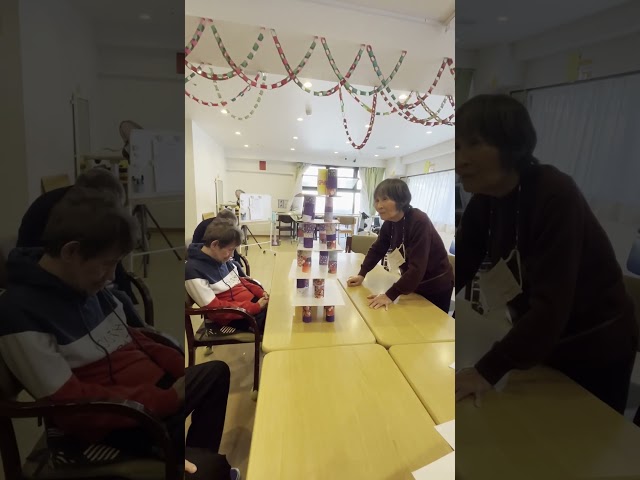
Introducing a thrilling and laughter-filled recreation activity for seniors: the Toilet Paper Roll Balance Game.
First, randomly place toilet paper cores on a table and stack thick paper or cardboard on top to build a tower.
That’s when the real challenge begins! Take turns gently removing one roll at a time without toppling the rest.
Much like Jenga, it helps train fingertip control, decision-making, and concentration.
The rules are simple: whoever causes the collapse loses, so anyone can jump in right away.
It’s easy to prepare with everyday materials.
This safe, exciting game is perfect for homes and care facilities, letting participants enjoy it comfortably without overexertion.
[For Seniors] Engaging Hand Games That Get Everyone Involved—Also Great for Brain Training (21–30)
Balance UFO Game
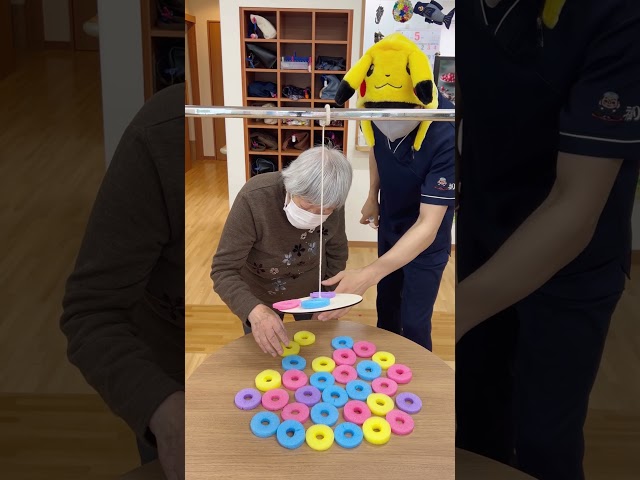
We’d like to introduce an indoor activity for seniors—the “Balance UFO Game,” which lets anyone enjoy a little excitement.
First, make a hole in the center of a paper plate, thread a string through it, and hang it from above.
The key is that the paper plate dangles and gently sways, like a floating UFO.
Participants take turns placing small, cross-section slices of a pool cue (or similar stick) onto the plate one by one.
If you don’t pay attention to the center of gravity, the plate will tilt and pieces will fall, so the game develops concentration and fine motor skills.
It also adds a strategic element as players consider where to place each piece, and the group can cheer each other on, making it fun for everyone.
The materials are easy to find, so preparation is simple.
By adjusting the hanging height and the weight of the items, it can be enjoyed by a wide range of players from beginners to advanced.