

![[For Seniors] How many can you read? A comprehensive showcase of difficult food kanji](https://media.ragnet.co.jp/img/1200__png__https://www.studiorag.com/files/2025/04/a40b8b45bd6b54c3922fae6e94d25c86.webp)


Quizzes for guessing the readings of difficult kanji are a classic recreational activity at day service centers and other senior facilities.
Food-related quizzes are a topic that people of all ages find engaging.
This time, we’ll introduce some difficult kanji for foods.
Recalling how to read them and thinking of associations from foods provide excellent stimulation for the brain.
Even for foods you eat all the time, you might find some whose kanji readings you don’t know.
Be sure to make use of these and have fun!
- [For Seniors] Challenging but Exciting! Kanji Quiz
- [For Seniors] Fun and Exciting! Difficult Kanji Quiz
- [For Seniors] Fun Food Trivia Quizzes You'll Want to Share
- A Food Quiz for Seniors to Make Eating More Enjoyable
- Recommended for seniors’ brain training! Kanji quiz workbook of fish names
- [For Seniors] Difficult Country Names Kanji Quiz
- [For Seniors] Perfect for Dementia Prevention! Jumbled Kanji Quiz
- [For Seniors] Quiz on Kanji with Many Strokes
- [For Seniors] Have Fun with Wordplay Characters! A Collection of Funny Puzzles
- [Brain Training] Lively Word Quiz for Seniors
- [For Seniors] Kanji Decomposition Quiz: Assemble the scattered characters
- [For Seniors] Fun and Informative! Health Trivia Quiz
- [For Seniors] Fun Brain Training! A Collection of Tricky Quizzes You’ll Definitely Get Stumped By
[For Seniors] How many can you read? A comprehensive introduction to difficult food kanji (1–10)
bean sprouts (moyashi)

The kanji 糵 is read as 'moyashi,' meaning bean sprouts.
Bean sprouts are long and nutritious, so they’re very popular and used in many dishes.
It’s said that this kanji originated when people in the past observed sprouts emerging from grain seeds and created a character that looks like a drawing of that.
There are various types of bean sprouts, such as mung bean sprouts, soybean sprouts, and black bean sprouts.
Because bean sprouts spoil easily, it’s recommended to store them in the refrigerator after purchase and use them up quickly.
When presenting the kanji, writing it on a large sheet of paper to make it easy to see may help people understand it better.

asparagus (Asparagus officinalis)
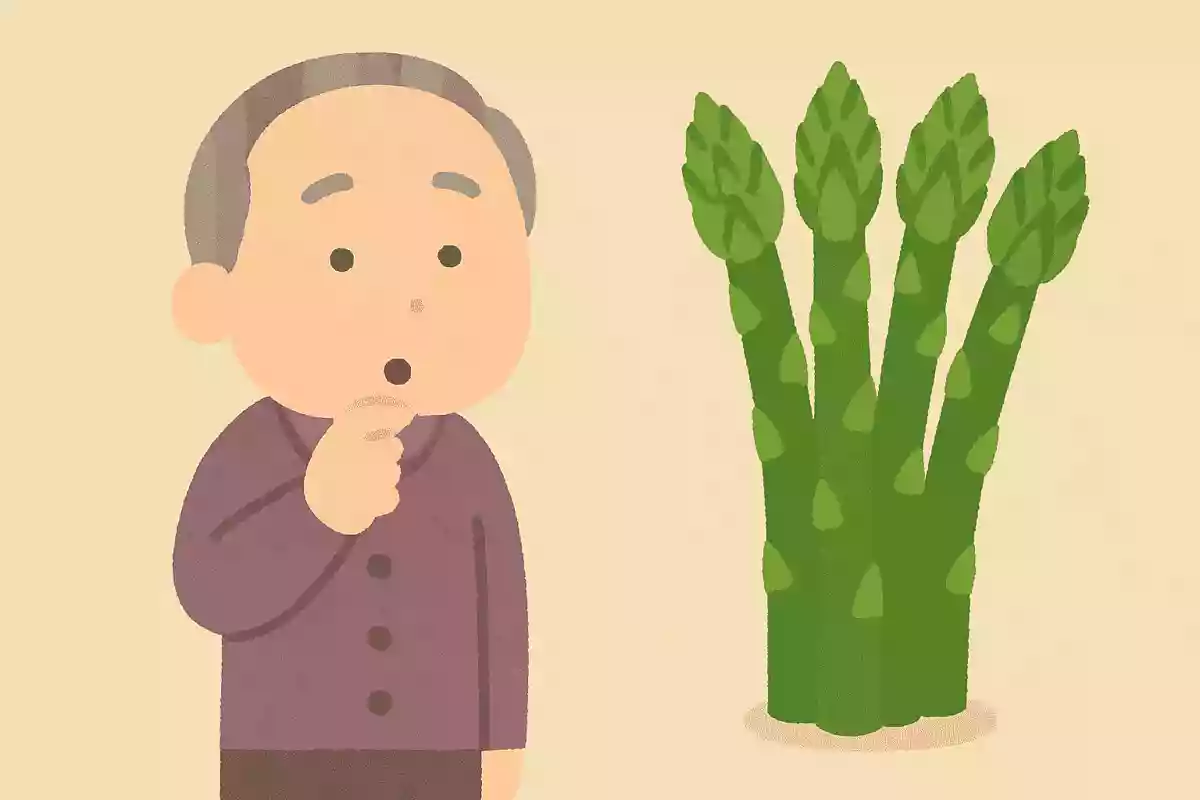
“Ryūhizuna” is a vegetable characterized by its long stalks and crisp texture.
The stalks can be green or white.
Some people peel them and stir-fry them with other vegetables, or wrap them with meat and grill them.
The correct reading of 竜髭菜 is “asparagus.” In Japan, it is mainly produced in Hokkaido and Nagano.
Asparagus is rich in a component called carotene, which helps boost resistance to illness.
Since our ability to fight disease tends to decline with age, it’s a food we especially recommend for older adults.

banana (Musa; lit. sweet plantain)
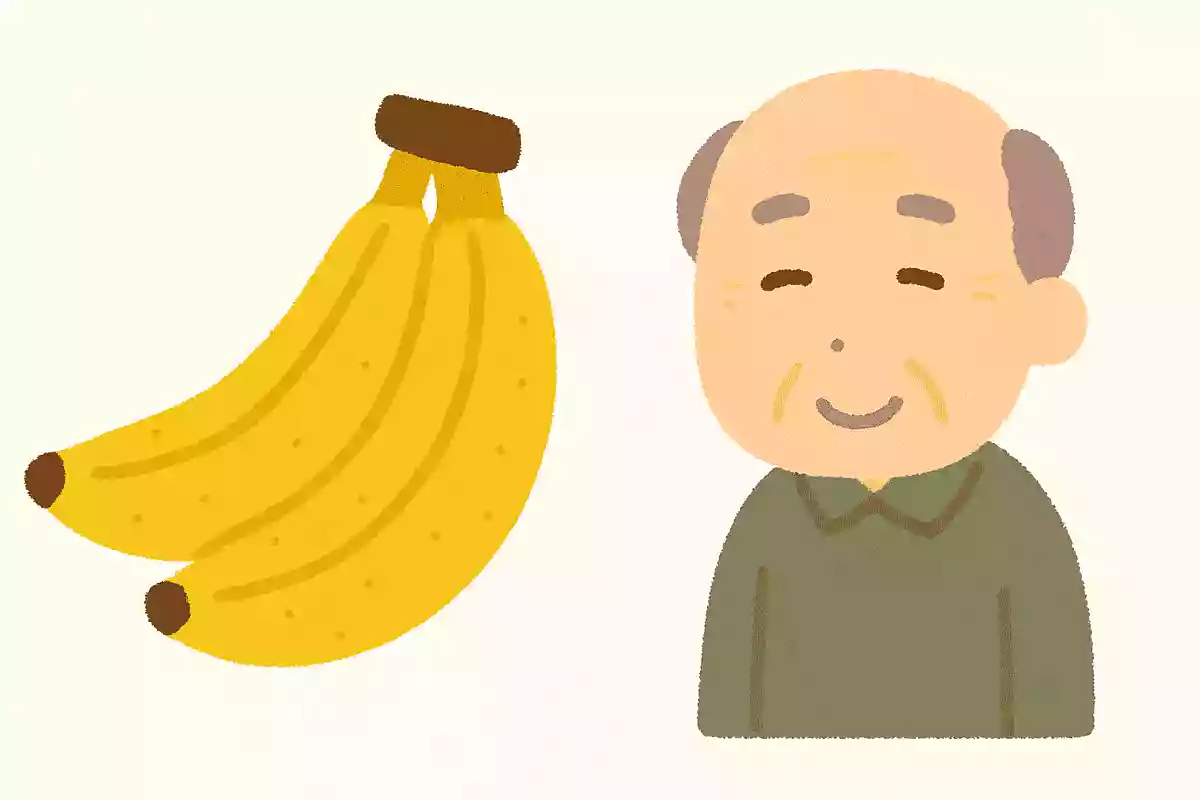
“甘蕉” is read as “banana.” Because many people write “banana” in katakana, some may find the kanji form a bit difficult.
The character “甘” represents the sweetness of bananas, and “蕉” is said to denote the type of plant.
Sweet bananas with yellow peels are popular with people of all ages.
There are many varieties—some are small, some are reddish, and so on.
While bananas are now a popular fruit easily found in supermarkets, they used to be a luxury item in the past.
The kanji may be a little challenging, but do try to remember it!
Egg sugar (Castella)
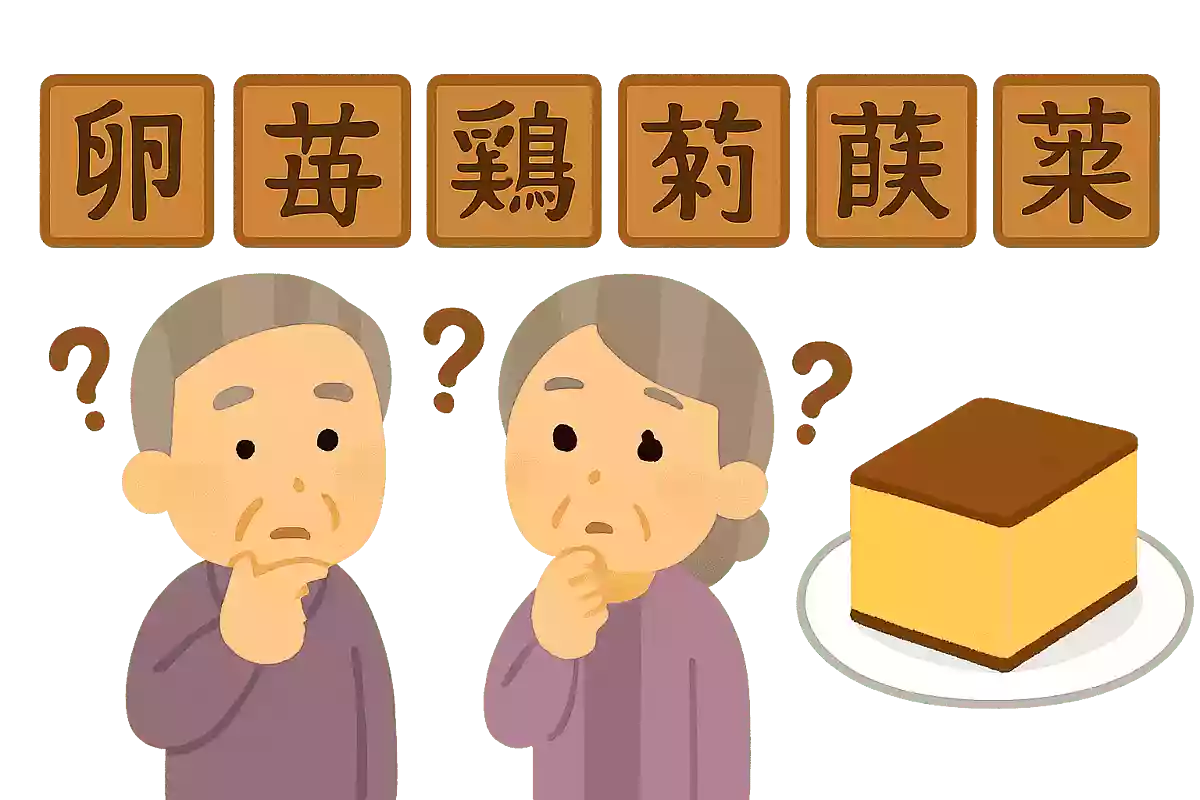
Tamago-to is read as “castella.” Tamago means chicken eggs, which are used as an ingredient in castella.
To means sugar, which is used to give castella its sweetness.
Castella used to have a high-end image, didn’t it? Nagasaki is famous for castella, and it’s said that the first castella in Japan was also made there.
Castella is greatly appreciated as a gift for others.
When giving a quiz to everyone, it might be easier to understand if you provide hints such as the ingredients.
cheese (dairy product "cheese")

Let me introduce you to cheese, a fermented food made from dairy that has been loved for many years! It’s known for its rich umami and depth of flavor, with varieties that can be sweet or salty.
It pairs wonderfully with wine.
Many of you may have already guessed the answer.
Yes, it’s cheese! Because cheese is a dairy product, it’s rich in protein and calcium.
It often appears in meal plans for older adults as a food that helps strengthen bones.
If you’re not a fan, try shaving it over salads or mixing it into dishes as a seasoning to make it more palatable!
Kiwi (kiwifruit)
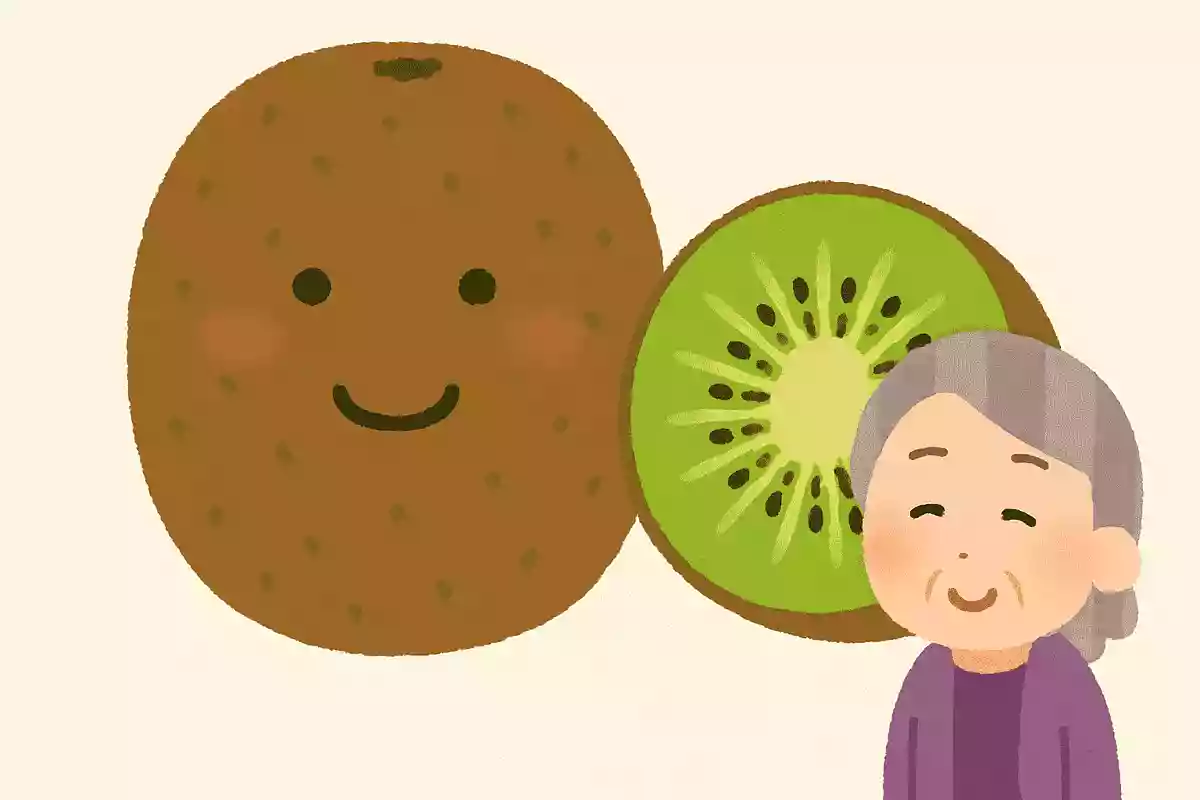
It’s written as “彌猴桃” and pronounced “kiwi.” The formal name is “kiwifruit.” It’s a fruit known for its sweetness and refreshing tartness.
Although it originated in China, it was selectively bred and cultivated in New Zealand, and when it was later exported to the United States, it was named after New Zealand’s national bird, the kiwi.
“彌猴桃” is a name of Chinese origin: 彌猴 refers to the rhesus macaque and 桃 means fruit, so it likely means “a fruit that rhesus macaques like to eat.”
Okra
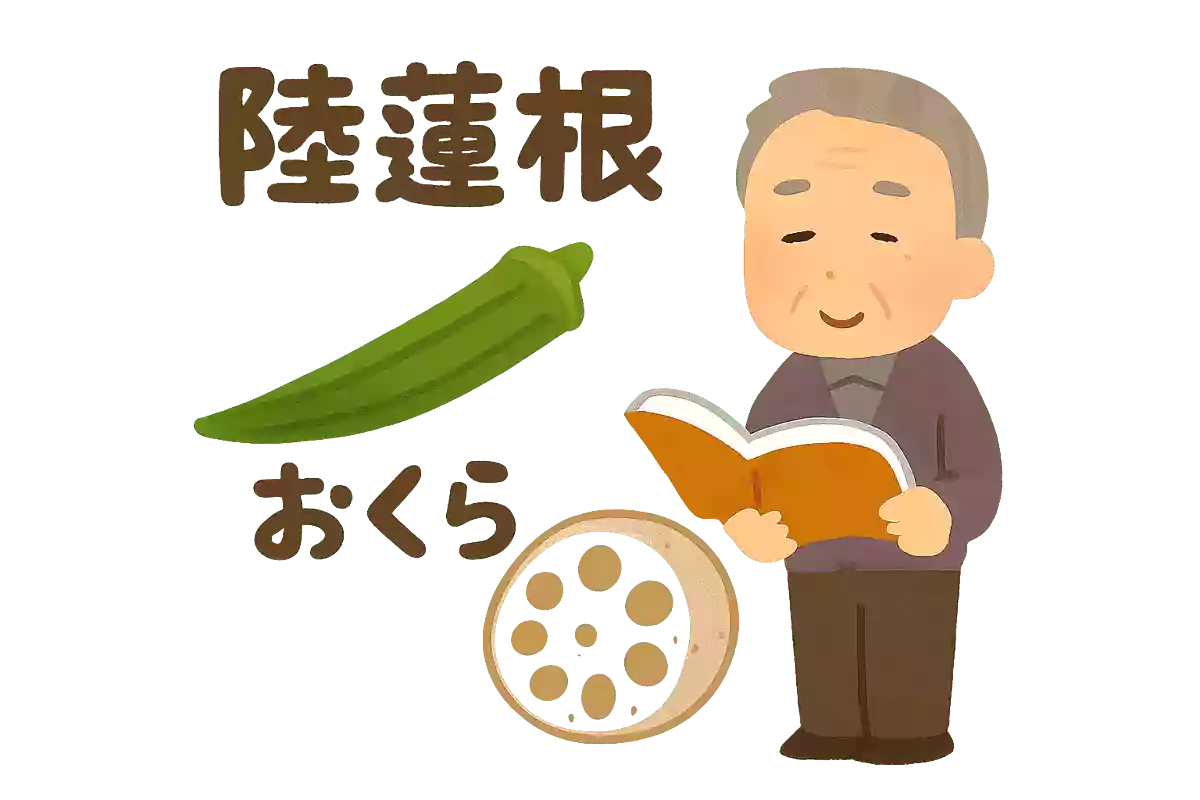
How do you read the word “陸蓮根”? It’s a vegetable native to Africa that was introduced to Japan in the Edo period and is now cultivated nationwide.
It is characterized by long pods about 10–20 cm in length and a sticky texture.
While green is the most common color, there are also yellow and red varieties.
The correct answer is “okra”! Okra is rich in nutrients such as vitamin C, beta-carotene, and dietary fiber.
Vitamin C can help prevent colds and promote healthy skin.
Beta-carotene has antioxidant properties and is effective in preventing aging and lifestyle-related diseases.