

[For Seniors] Fun Brain Training! Lively Mind Exercises


Activities like games and brain training exercises conducted in senior facilities—often called “mental workouts”—are said to help prevent dementia or slow its progression.
So this time, we’re introducing “mental workouts for seniors”!
Mental workouts not only provide a sense of accomplishment when a problem is solved and activate brain functions, but they also play an important role in creating opportunities for communication with other seniors.
They are also recommended as a way to relieve stress for seniors who may fall into repetitive daily routines.
By adjusting the difficulty level to suit each senior’s condition and adding creative touches to make the activities easier to engage with, you can further increase their sense of satisfaction.
Try incorporating them into your recreation time or daily routine.
- [For Seniors] Fun and Engaging Brain-Training Recreation
- [For Seniors] Guaranteed to Liven Things Up! A Collection of Brain Training Activities That Will Spark Laughter
- [For Seniors] A Brain-Training, Crowd-Pleasing Word Search Game
- [Brain Training for Seniors] Recommended Hand-Play Recreation for Dementia Prevention
- [For Seniors] Brain Training Recommended for Dementia Prevention
- Fun Brain Training! Memory Games for Seniors
- [For Seniors] Brain-Training Recreation Using a Whiteboard
- Simple games for preventing and improving dementia
- [For Seniors] Find daily brain training. Today’s recommended brain workout.
- [For seniors] Fun brain training! Let’s get excited with the “Aru-Nashi” quiz
- Recreation Activities Effective for Long-Term Care Prevention for Seniors
- Hand games that liven things up for seniors—also great brain training
- [For Seniors] Enjoyable Brain Training! Finger Exercises That Help Prevent Dementia
[For Seniors] Fun Brain Training! Lively Mind Exercises (41–50)
Kanji riddle problems

Here is an idea for a spark-of-inspiration style brain-training game themed around kanji: “Kanji Riddle Challenges.” Instead of focusing on readings or radicals, the appeal lies in a fresh way to enjoy kanji by paying attention to their appearance and how they combine.
What happens if you split this kanji in two? What if you flip the top and bottom? Seemingly simple, yet surprisingly deep—these puzzles demand a shift in perspective.
For those who’ve grown up familiar with kanji, the satisfaction and delight of reaching the answer are exceptional.
As you play, your concentration and memory are naturally stimulated.
It’s an intelligent and fun kanji riddle game, perfect both for quiet, thoughtful moments and for lively play with others.

[For Seniors] Fun Brain Training! Exciting Mind Exercises (51–60)
Brain-boosting riddles: activate your brain in 20 seconds

Let me introduce a perfect brain-training game for when you want to consciously get your mind moving: “Brain-Boost Riddles: Activate Your Brain in 20 Seconds.” By thinking of answers within a short 20-second time limit, you naturally train your concentration and quick thinking.
The problems are simple yet clever, stimulating creativity and memory to promote brain activation.
The sense of achievement when you solve them boosts motivation, and continued practice can be expected to deliver real results.
It’s a brain-training idea that works great for lively group fun or at your own pace solo.
Kanji that are easy to misread quiz

We use them all the time, but we might actually be reading them wrong! Here are some ideas for a quiz on kanji that are easy to misread.
There are countless idioms used in everyday life, right? It might be a quiz full of new discoveries like “Oh, I memorized that wrong!” or “I didn’t know that!” Be sure to try this quiz on commonly misread kanji! For example, a word like “肉汁” appears and you’re asked, “How do you read this kanji?” There are 20 such questions.
Each has a 10-second time limit, so just answer as you normally would.
Brain Teasers: Riddle Quiz

The “Brain Gym Riddle Quiz” that sparks inspiration is a wordplay game that’s fun to think through.
Each prompt has a little twist, so the answer won’t always come to you right away.
By shifting your perspective—looking at the order or appearance of words, or everyday events—you’re nudged closer to the solution.
Part of the charm is how the puzzles can make you go “aha!” or even laugh.
Since it’s about creativity rather than knowledge, anyone can join in casually, and the time spent thinking becomes a pleasantly stimulating experience.
It’s a brain-training game that gently loosens up your mind while you enjoy yourself, and it’s especially recommended for older adults.
Food Names Crossword Fill-in

Let’s jump in casually! Here are some ideas for a food-name cross fill-in puzzle.
It’s a quiz we’d love people with years of cooking experience or confidence in ingredient names to try.
Try making a cross fill-in with food names.
For example, imagine a 9-by-9 grid filled with hiragana, with the center square left blank.
When you put the correct hiragana into the center square, it completes two words—it’s a unique fill-in-the-blank puzzle! Getting the right answer will leave you feeling refreshed and satisfied, won’t it?
Kanji quiz with the fish radical
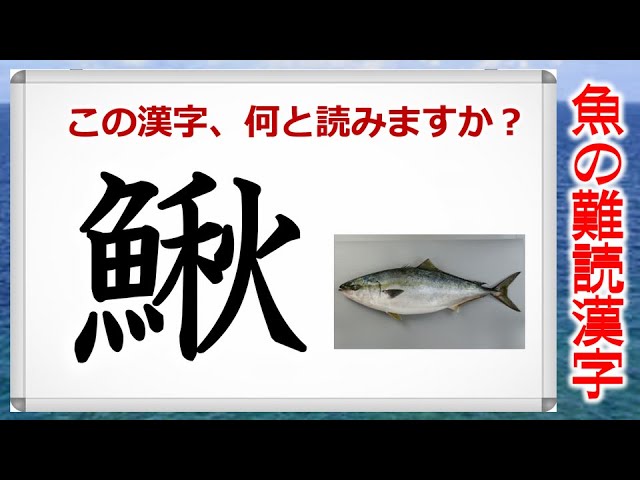
Here are some ideas for a tricky quiz on kanji with the “fish” radical.
The exact count varies depending on the dictionary and what you include, but it seems there are actually more than 200 such characters.
We might think we know the kanji for fish that commonly appear on the dining table, but if you don’t fish or work with fish, many of them can be quite difficult.
For example, there’s a quiz with 25 questions where a fish-radical kanji is shown and you’re asked, “How do you read this kanji?” The questions get more difficult in the latter half, but it really piques your curiosity.
Restricted Shiritori: Autumn Foods
@thinkbodyjapan Whiteboard lecture!CaregivingCaregiverNursing care facilitytranslationRecreation
♫ Original song – TBJ / Care • Rehabilitation • Nursing – TBJ / Care • Rehabilitation • Nursing
This is a word chain game that becomes brain training by intentionally setting constraints.
On a whiteboard, write “Starts with 〇 and ends with 〇,” then play shiritori using autumn foods that meet those conditions.
For example, with a word that starts with “sa” and ends with “n,” you could use “sanma” (Pacific saury).
The quiz master sets the conditions, and everyone thinks of words that fit.
By writing answers in sequence in a grid, it’s visually easy to follow, and the overall flow is clear, which helps build excitement.
Making the theme autumn foods lets you enjoy a seasonal feel while playing, and it also encourages broader conversation.
As autumn-specific foods keep coming up, participants can share memories and stories as well.
