

[For Seniors] Recommended for Brain Training! Ultra-Difficult Quizzes and Riddles

Quizzes are an easy activity to join and are one form of recreation that can help stimulate the brain.
Many senior and welfare facilities probably incorporate them as well, don’t they?
One of the great things about quizzes is that you can enjoy learning new facts and gaining new knowledge.
So this time, we’ve prepared a “Super-Difficult Quiz for Seniors” that’s a step up in difficulty from the usual quizzes!
In addition to quizzes, we’ve also gathered tough riddles and kanji problems.
These quizzes are on the challenging side, but solving them should give a real sense of accomplishment.
If the answers don’t come easily, try offering hints and have participants think their way to the solution.
Please make good use of the “Super-Difficult Quiz” and enjoy a fun time!
- [For Seniors] Fun Brain Training! A Collection of Tricky Quizzes You’ll Definitely Get Stumped By
- [Riddle Quiz for Seniors] Brain Training Perfect for Mental Exercise
- [For Seniors] Get Excited by Knowing the Answers! Tricky Quiz
- [For Seniors] Who Am I? Quiz: A Fun Set of Questions with Exciting Hints
- [For Seniors] Nostalgic quizzes that bring back memories! Showa-era entertainment and sports questions
- [For Seniors] Trivia Multiple-Choice Quiz
- [For Seniors] Today’s recommended quiz. Daily brain-training quiz!
- [For Seniors] Fun Riddles That Stimulate the Brain
- [For Seniors] Have Fun with Wordplay Characters! A Collection of Funny Puzzles
- [For Seniors] Fun Brain Training! Prefecture Quiz
- [For Seniors] Fun! Let’s Get Excited with Japan’s Number One Quiz
- [For Seniors] Lateral Thinking Game! Brain Training
- [Recreation for Seniors] Introducing Quizzes to Enjoy at Day Service Centers!
[For Seniors] Recommended for Brain Training! Ultra-Difficult Quizzes and Riddles (21–30)
What is the “niku” that’s sold at a greengrocer, not a butcher?
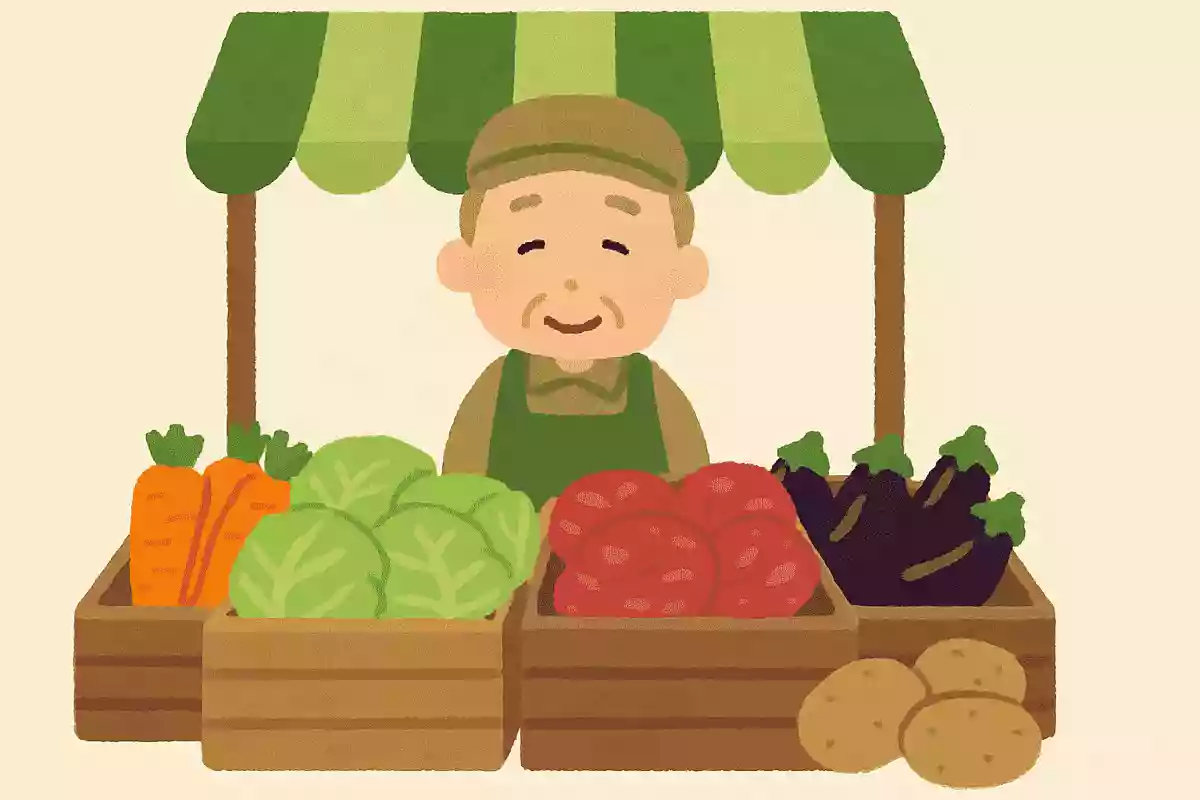
Let’s try a riddle that’s fun to solve! What is the “niku” that’s sold at a greengrocer, not at a butcher’s shop? When you hear “niku,” you probably think of pork, beef, or chicken—things sold at a butcher’s.
But in this riddle, the “niku” is something sold at a greengrocer.
Hint: the word “niku” is contained within the name of a vegetable! The answer is “ninniku” (garlic).
It’s definitely a kind of “niku” you’d find at a greengrocer!
A mosquito falls into a pond and transforms into a certain vegetable. What vegetable is it?

Here’s a riddle about mosquitoes that show up when it gets warm.
A mosquito falls into a pond and turns into a certain vegetable.
What vegetable is it? Of course, in reality a mosquito wouldn’t instantly turn into a vegetable just by falling into a pond, but since it’s a riddle, let’s think flexibly to find the answer! The hint is the sound it makes when it falls into the pond.
The correct answer is “pumpkin.” It’s a playful riddle based on the Japanese wordplay: a mosquito (ka) goes “bocha” (splash) into the pond—ka + bocha = kabocha (pumpkin).
Did you arrive at the answer cleanly?
What fruit appears when you ring the bell five times?
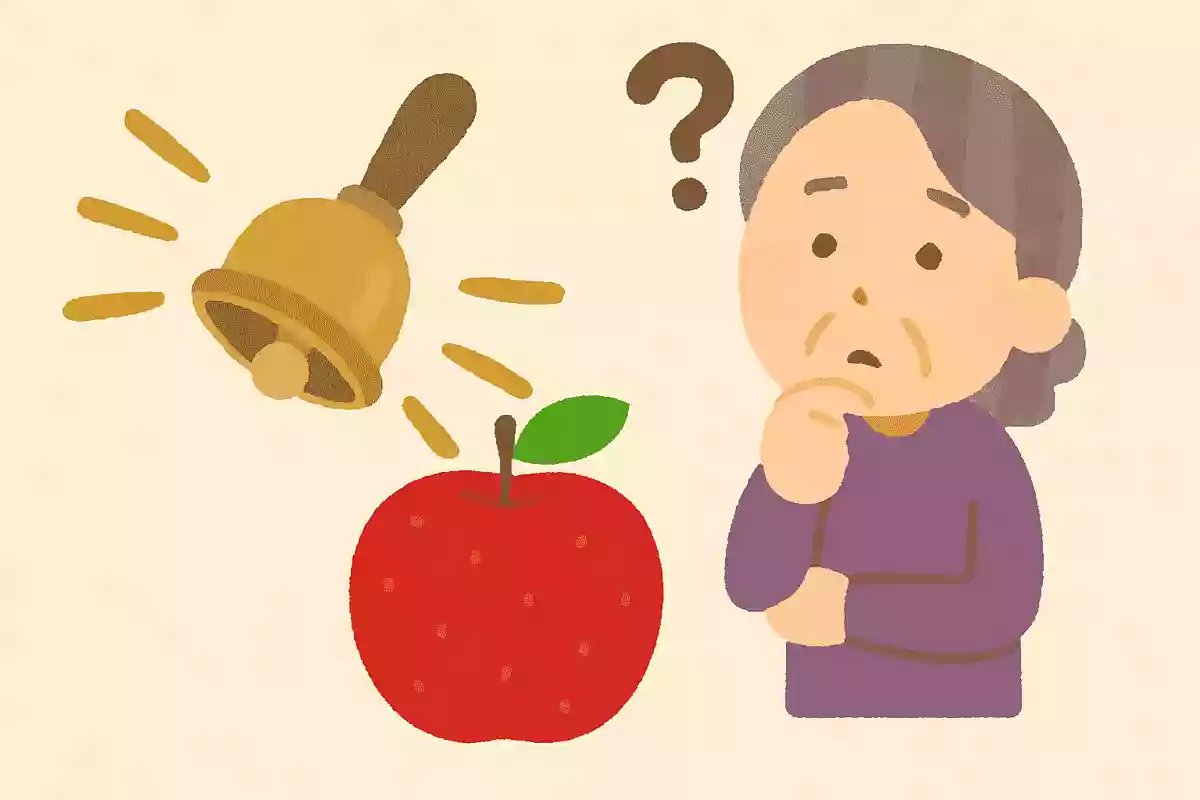
Here’s a simple riddle about fruit.
What fruit appears when you ring a bell five times? If you think of a common fruit, you might figure it out.
Hint: Try expressing the sound of a bell as onomatopoeia, and you’ll get closer to the answer! The correct answer is “apple.” The key is the bell going “rin-rin” and the number “five” in Japanese.
Apples are familiar to many people—not only can you eat them as they are, but you can also enjoy them as juice, jam, pie, jelly, and more.
A witty wordplay using “shō” and “jō”

Let’s solve a riddle that looks like an official-style problem! It’s a wordplay puzzle using “shou” and “jou.” The display shows “shou × 2” and “jou ÷ 2.” The hints are that it suggests a bustling crowd, and that “shou” is doubled while “jou” is halved.
The answer is “shoubai hanjou,” meaning “prosperous business.” It makes sense if you think of it as “shou” multiplied and “jou” halved—“shou-bai” and “han-jou.” It’s a perfect brain teaser with clever wordplay, and once you get it, it’s quite satisfying.
Give it a try!
I made one sheet of paper into ten without tearing or cutting it. How did I do it?

It’s a simple riddle whose answer you can figure out by recalling everyday actions.
I turned one piece of paper into ten without tearing or cutting it.
How did I do it? The hint is something related to money.
Think of a 10,000-yen bill or a 1,000-yen bill.
The answer is “exchange.” For example, you might exchange one 10,000-yen bill for ten 1,000-yen bills in various situations.
The number of pieces increases without tearing or cutting, right? It’s a simple yet humorous riddle.