

Challenging tongue twisters: Introducing high-difficulty phrases and sentences!

Tongue twisters exist in every country.
I think everyone in Japan has been familiar with them since childhood.
This time, I’ve picked out only the especially difficult tongue twisters.
You’ll find not only long, complicated ones, but also very short tongue twisters that are surprisingly hard to say.
Although tongue twisters might seem like they’re just for kids, adults can enjoy them too at parties or drinking gatherings.
If you practice in advance, you might even become the center of attention in those situations.
Now then, please sit back and enjoy!
- Tongue twisters that will make you laugh out loud! Super funny
- [Diction Training] A Collection of Tongue Twisters to Improve Articulation
- A collection of long tongue twisters. Also recommended for practicing announcements and narration.
- Nagoya dialect tongue twisters are exquisite! A fun collection where your tongue gets tied in knots with regional dialects
- Challenge together! A roundup of word games for adults
- “Chau chau, anta” — a Kansai-dialect tongue twister. A phrase only Kansai folks can say.
- Bursting into laughter! A roundup of Hakata dialect tongue twisters
- [Recreation] Challenge! A roundup of tongue twisters recommended for elementary school students
- [Challenging and Fun!] Quizzes & Riddles for Adults
- Chinese tongue twisters: A collection of rao kou ling helpful for learning Chinese
- Perfect for pronunciation practice! A collection of English tongue twisters.
- [Trick Quiz] Quiz Questions That Excite Everyone from Kids to Adults
- Get Caught? Or Not!? Simple Ways to Kill Time During Class
Tongue Twisters That Are Hard. Introducing High-Difficulty Phrases and Sentences! (1–10)
20 out of 22 emails are extracting fruit juice

The tricky part of this tongue twister is that tsū and chū get flipped or end up the same.
Even just the last ‘chūshutsu-chū’ part is hard, isn’t it? As a strategy, you might carefully check which parts are tsū and which are chū before you start, and try inserting breaks so you don’t get confused yourself.
This tongue twister is not only hard to say, its meaning as a sentence is also somewhat unclear, so imagining the scene might be interesting in a different way.
Please give it a try at least once.

First Author Second Author Third Author

This already seems tricky even just at the author part, doesn’t it? As a strategy for tackling this tongue twister, try not to be misled by the sounds—instead, visualize the kanji.
It’s also important to at least get to the point where you can say just the word “author” smoothly.
As a bit of trivia, the “first author” is the person who played the most central role in writing a paper.
Because it’s often necessary for earning a PhD and more, it’s a position many researchers aspire to.
Among tongue twisters, this one has a distinctly academic feel.
A singer came and told me to sing, but I would sing if I could sing like a singer; since I cannot sing like a singer, I will not sing.

Here’s a tongue twister where every word starts with “utauta.” It seems difficult, but if you tackle “utauta” as a single unit, like a rhythm practice, it might actually become relatively easy.
Also, if you keep repeating that part, your mouth is likely to get tired.
By the way, this tongue twister was used as the title of GReeeeN’s fourth album, and there’s a song with that title as well, so if you’re interested, give it a listen.
Challenging Tongue Twisters: Introducing High-Difficulty Phrases and Sentences! (11–20)
Newcomer chanson singer New Year Chanson Show

This tongue-twister repeatedly uses sounds that start with S, so it’s said to strengthen the orbicularis oris muscle around the lips.
It’s one of those classic, well-known tongue-twisters, isn’t it? You feel like you can take a brief breather during the “singer” part, but then the latter half comes rushing in and gets even harder.
As you keep saying “chanson” over and over, there’s even a risk of a kind of gestalt collapse.
Try practicing the difficult sections in parts before reading the whole thing—it makes it easier to get through.
Got beans from Mama Mamame, got covered in beans, and Mama Mamame struggled and writhed
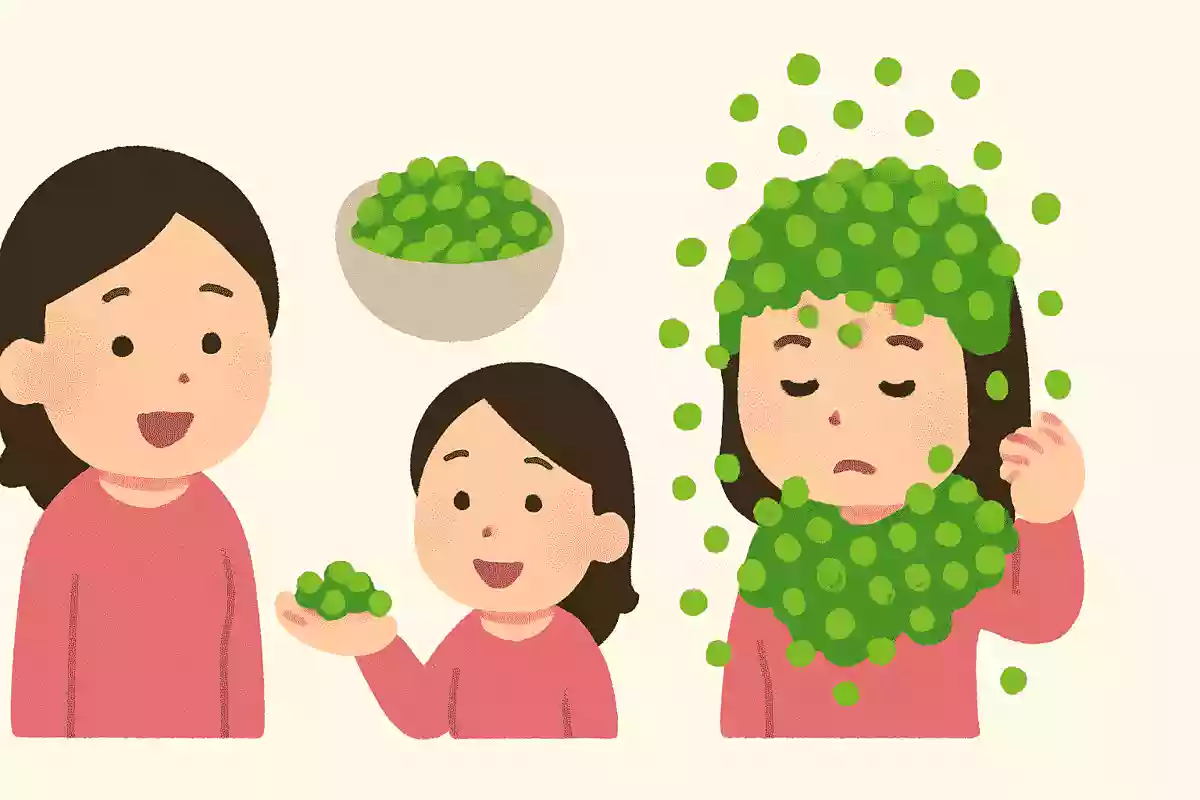
Isn’t this quite difficult? Tongue twisters with the ma- consonant are relatively few, but there are also exercises where you simply keep saying “mame, mame…” for vocal practice, so “mame” can be very challenging.
You need to release your lips for each sound, and the vowel changes as well.
First, try practicing just the “mame” part repeatedly.
Tongue-twister practice can be game-like, but it also helps you get used to sounds you find hard to pronounce.
I recommend objectively observing which sounds you personally struggle to pronounce.
Both the Japanese serow and deer are indeed deer, but a sea lion is certainly not a deer.

This tongue twister also became a hot topic thanks to a video where voice actor Hiroshi Kamiya delivers it fluently.
It’s tricky, but if you add a rap-like rhythm, you can get through it quite well.
Rather than reading it as kanji, I recommend treating it like a rhythm and singing it.
People tend to stumble when entering the latter half of the sentence, so it’s good to practice the transitions in particular.
Since the best approach varies depending on the type of tongue twister, try out different methods and see what works for you.
Parent is Kahee, child is Kahee; parent Kahee, child Kahee; child Kahee, parent Kahee.

While many commonly known tongue twisters combine two characters—such as ‘pyo’ and ‘ko’—there are numerous more challenging ones that combine three or more.
Among them, one I especially recommend is: “Oya mo Kahee, ko mo Kahee; oya Kahee ko Kahee; ko Kahee oya Kahee.” It’s a tongue twister where the sounds ‘ka,’ ‘ko,’ ‘he,’ and ‘mo’ get jumbled, leading to mistakes like saying ‘komo komo komo.’ Give it a try!
